

Personal Touch Skincare
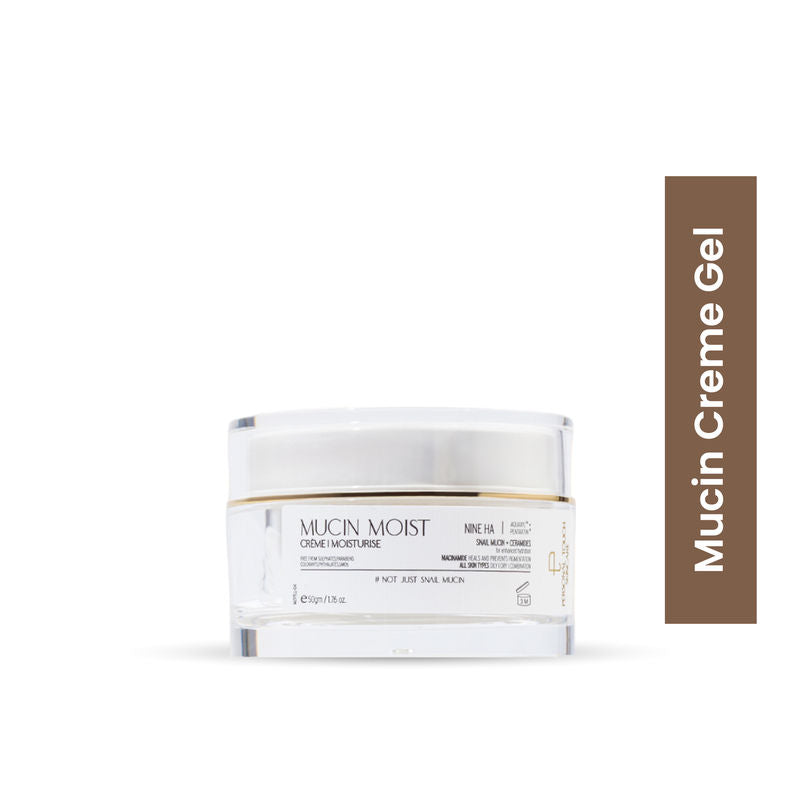
Personal Touch Snail Mucin Creme With Ceramides For Normal, Oily, Acne Prone & Dry Skin

Personal Touch Snail Mucin Creme With Ceramides For Normal, Oily, Acne Prone & Dry Skin
Personal Touch Skincare
personal-touch-snail-mucin-creme-with-ceramides-for-normal-oily-acne-prone-dry-skin
Moisturize
10084921409829
Morning or Evening?
How often will you use this product?
Notes


Highlights
WHAT IS IT?
Face moisturizer with multi-hyaluron complex containing nine types of hyaluronic acids
FEATURES
Creates protective barrier sealing moisture up to 72 hours, multi-layer hydration with nine types of HA, enhances skin elasticity and suppleness, lightweight and non-greasy, snail mucin for soothing and anti-acne benefits
BEST FOR
normal
CHECKS
Does not contain greasy residue, non-comedogenic
Who Is It For?
All Genders Suitable For Normal Oily Acne Prone Dry SkinWhat Does It Help With?
Hydrating Moisturizing Preventing Dehydration Reducing Wrinkles And Fine Lines Soothing Skin Improving Elasticity Anti-acneBudget
Mid-range ($30-$75)How To Use
Which routine should it be used in?
Instructions:
Key Information


What Personal Touch Skincare Says
Product Description:
Mucin Moist Creme creates a protective barrier sealing in moisture from previous skincare layers to prevent dehydration and ensures skin remains hydrated up to 72 hours. The Multi-Hyaluron Complex contains nine types of hyaluronic acids targeting different skin layers for deep hydration. Acetyl HA deeply hydrates the dermis reducing wrinkles and promoting elasticity. The creme is lightweight, non-comedogenic, quickly absorbed and contains snail mucin for moisturizing, soothing, and repairing the skin with anti-acne activity.
About the Brand:
Ingredients Overview
Ingredients List
Aqua,Snail-Secretion-Filtrate,Propanediol,Butylene-Glycol,Sodium-Polyacrylate,Dimethicone,Cyclopentasiloxane,Trideceth-6,Peg/Ppg-18/18-Dimethicone,Glycerin,Pentylene-Glycol,Sempervivum-Tectorum-Extract,Pullulan,Linum-Usitatissimum-(Linseed)-Seed-Extract,Tremella-Fuciformis-(Mushroom)-Extract,Ergothioneine,Acrylates-Copolymer,Xylitylglucoside-Anhydroxylitol,Xylitol,Niacinamide,Saccharide-Isomerate,Ceramide-3,Peg-7-Glyceryl-Cocoate-Betaine,Phenoxyethanol,Sodium-Hyaluronate-Crosspolymer,Sodium-Hyaluronate,Sodium-Acetylated-Hyaluronate,Hydrolyzed-Sodium-Hyaluronate,Ethylhexylglycerin,Cyamopsis-Tetragonoloba-(Guar-)Gum,Disodium-Loia,Panthenol,Hydroxyethyl-Acrylate/Sodium-Acryloyldimethyl-Taurate-Copolymer,Arginine,Hedera-Helix-(Ivy)-Leaf-Extract,Arnica-Montana-Flower-Extract,Sambucus-Nigra-Flower-Satnus,Cucumber-Fruit-Extract,Parie-Tara-Officialis-Extract,Sodium-Benzoate,Potasium-Sorbate,Escin,Ruscus-Aculeatus-Root-Extract,Ammonium-Glycyrrhizate,Centella-Asiatica-Extract,Hydrolyzed-Yeast-Protein,Calendula-Officinalis-Flower-Extract,Hydrolysed-Sodium-Hyaluronate,Honey,Phospholipids,Sphingolipids,Hyaluronic-Acid,Caffeine,Citric-Acid,Vanilla-Bean-Extract
Key Ingredients
Snail Secretion Filtrate, Multi-Hyaluron Complex, Acetyl HA, Ceramide 3, Niacinamide
Ingredients Details
Arginine
Common Name(s): L-arginine,2-amino-5-guanidinopentanoic acid
CAS Number: 74-79-3
DESCRIPTION
What It Does: Conditions skin, attracts moisture, supports wound healing, and improves microcirculation via no synthesis.
Why It's Used: Multi-functional amino acid for skin hydration, conditioning, and wound healing in peptide and nmf formulations.
How It Works: Guanidinium group binds water (humectant). substrate for nitric oxide synthase (enos) producing nitric oxide that vasodilates capillaries improving skin nutrition. stimulates fibroblast proliferation for wound healing.
Typically Found In: Anti-aging serums,wound healing products,nmf moisturizers,scalp treatments
TECHNICAL DETAILS
Primary Category: Active ingredient – amino acid
Secondary Functions: Wound healing,microcirculation,nmf component
Application Areas:

Facial Skincare

Body Care
Hair Care
Beard Care
Color Cosmetics (Makeup)
Dietary/Oral Supplements
Typical Concentration Range: 0.5%–5%
SOURCING & ETHICS
Vegan Status: Yes – plant-derived or synthetic
Halal Status: Yes
Source Notes: Fermentation-derived or synthetic. natural skin component.
SKIN COMPATIBILITY
Irritancy Rating: 1/5 – very low
Comedogenicity Rating: 0/5 – non-comedogenic
Sensitivity Concerns: Non-irritating; endogenous skin molecule.
Safe for Sensitive Skin: Yes
SAFETY & COMPATIBILITY
Safety Profile: Excellent safety profile. natural skin nmf component. ewg score: 1.
Works Well With: Hyaluronic acid,ceramides,peptides,other amino acids
Avoid Combining With: No significant incompatibilities
SCIENTIFIC NOTE
Arginine is a conditionally essential amino acid in wound healing where local demand exceeds synthesis capacity. topical arginine provides the nos substrate locally for no-mediated vasodilation and immune cell function in healing tissue.
Last Verified: Cosing database,cir safety assessment,witte & barbul arginine wound healing review
Primary Sources: 2026-03-12
Cyclopentasiloxane
Common Name(s): Cyclopentasiloxane,cyclic volatile silicone,dry-touch carrier solvent
CAS Number: N/a
DESCRIPTION
What It Does: Provides a dry, weightless application vehicle that evaporates cleanly leaving actives and non-volatile silicones deposited on skin — eliminating the residual heaviness of conventional liquid carrier solvents.
Why It's Used: Cyclosiloxanes are the unique volatile silicone solvents that dissolve non-volatile silicones (dimethicone, cyclomethicone), organic uv filters, and lipophilic actives, providing the sensory-superior dry-touch application experience in premium formulations.
How It Works: Cyclosiloxane vapour pressure (d5 cyclopentasiloxane ~0.3 mmhg at 25°c) provides clean evaporation at body temperature. the cyclic ring structure provides lower boiling point than equivalent linear dimethicone, enabling faster evaporation while the ring conformation maintains the silicone's low surface energy for smooth application.
Typically Found In: Primers,antiperspirants,sunscreens
TECHNICAL DETAILS
Primary Category: Functional ingredient – emollient
Secondary Functions: Barrier sealing,softening
Application Areas:
Facial Skincare
Body Care
Hair Care
Beard Care
Color Cosmetics (Makeup)
Dietary/Oral Supplements
Typical Concentration Range: 1%–50%
SOURCING & ETHICS
Vegan Status: Yes
Halal Status: Yes
Source Notes: Plant-derived, synthetic or animal-derived. verify source.
SKIN COMPATIBILITY
Irritancy Rating: 1/5 – very low
Comedogenicity Rating: 1/5 – low; formulation-dependent
Sensitivity Concerns: Non-irritating.
Safe for Sensitive Skin: Yes
SAFETY & COMPATIBILITY
Safety Profile: Excellent safety profile. ewg score: 1.
Works Well With: Humectants,ceramides,actives as carrier
Avoid Combining With: No significant incompatibilities
SCIENTIFIC NOTE
Cyclopentasiloxane (d5) and cyclohexasiloxane (d6) are under eu regulatory review for potential environmental persistence (pbt assessment) — formulators should monitor eu regulation 2018/35 implementation for restrictions in wash-off products.
Last Verified: Cosing database,eu cyclosiloxane regulatory review
Primary Sources: 2026-03-12
Dimethicone
Common Name(s): Pdms,polydimethylsiloxane,silicone fluid
CAS Number: 9006-65-9
DESCRIPTION
What It Does: Provides silicone-characteristic silky feel and skin protection with adjustable viscosity.
Why It's Used: The benchmark cosmetic silicone – sets the gold standard for silky application feel, spreadability, and skin protection in virtually all skin care categories.
How It Works: Polydimethylsiloxane chain flexibility provides extremely low surface tension and high spreadability. inert si-o backbone provides chemical stability and excellent skin tolerance. occlusive film formation reduces tewl. higher viscosity grades provide more intense conditioning.
Typically Found In: Moisturizers,foundations,primers,sunscreens – nearly universal
TECHNICAL DETAILS
Primary Category: Functional ingredient – polydimethylsiloxane
Secondary Functions: Barrier sealing,softening
Application Areas:
Facial Skincare
Body Care
Hair Care
Beard Care
Color Cosmetics (Makeup)
Dietary/Oral Supplements
Typical Concentration Range: 0.1%–30%
SOURCING & ETHICS
Vegan Status: Yes – synthetic
Halal Status: Yes
Source Notes: Plant-derived, synthetic or animal-derived. verify source.
SKIN COMPATIBILITY
Irritancy Rating: 1/5 – very low
Comedogenicity Rating: 1/5 – low; formulation-dependent
Sensitivity Concerns: Non-irritating.
Safe for Sensitive Skin: Yes
SAFETY & COMPATIBILITY
Safety Profile: Excellent safety profile. ewg score: 1.
Works Well With: Humectants,ceramides,actives as carrier
Avoid Combining With: No significant incompatibilities
SCIENTIFIC NOTE
Dimethicone's exceptional silky feel arises from its very low intermolecular attractive forces (weak van der waals forces due to non-polar methyl groups) that allow silicone chains to slide freely over skin. the coefficient of kinetic friction for pdms against skin (~0.04) is among the lowest of any cosmetic material – explaining why even small amounts transform product feel.
Last Verified: Cosing database,cir safety assessment
Primary Sources: 2026-03-12
Ergothioneine
Common Name(s): Egt,thiohistidine betaine
CAS Number: 497-30-3
DESCRIPTION
What It Does: Provides cellular-accumulating antioxidant protection with dedicated skin uptake transporter and exceptional singlet oxygen quenching.
Why It's Used: The only antioxidant with a dedicated skin cell uptake transporter — ergothioneine's octn1 transport ensures active accumulation in keratinocytes unlike passive-diffusion antioxidants.
How It Works: Thione form provides singlet oxygen quenching (ksoq ~1.3×10⁸ m⁻¹s⁻¹). octn1 transporter actively accumulates ergothioneine intracellularly. stable in formulation and in vivo. anti-glycation and anti-carbonylation activity.
Typically Found In: Premium anti-aging serums,anti-pollution products
TECHNICAL DETAILS
Primary Category: Active ingredient – antioxidant
Secondary Functions: Free radical scavenging,anti-aging
Application Areas:
Facial Skincare
Body Care
Hair Care
Beard Care
Color Cosmetics (Makeup)
Dietary/Oral Supplements
Typical Concentration Range: 0.1%–1%
SOURCING & ETHICS
Vegan Status: Yes – from mushroom fermentation
Halal Status: Yes
Source Notes: Plant-derived extract or synthetic.
SKIN COMPATIBILITY
Irritancy Rating: 1/5 – very low
Comedogenicity Rating: 0/5 – non-comedogenic
Sensitivity Concerns: Non-irritating; well-tolerated.
Safe for Sensitive Skin: Yes
SAFETY & COMPATIBILITY
Safety Profile: Excellent safety profile. ewg score: 1.
Works Well With: Vitamin c,vitamin e,ferulic acid,spf,other antioxidants
Avoid Combining With: No significant incompatibilities
SCIENTIFIC NOTE
Ergothioneine's octn1 transporter creates preferential accumulation in keratinocytes where uv-induced radical generation is greatest. this active cellular uptake mechanism provides intracellular ergothioneine concentrations 100–1000× above extracellular levels — a concentration gradient impossible for passively-diffusing antioxidants to achieve.
Last Verified: Cosing database,paul & snyder ergothioneine transporter study
Primary Sources: 2026-03-12
