

Paul Mitchell
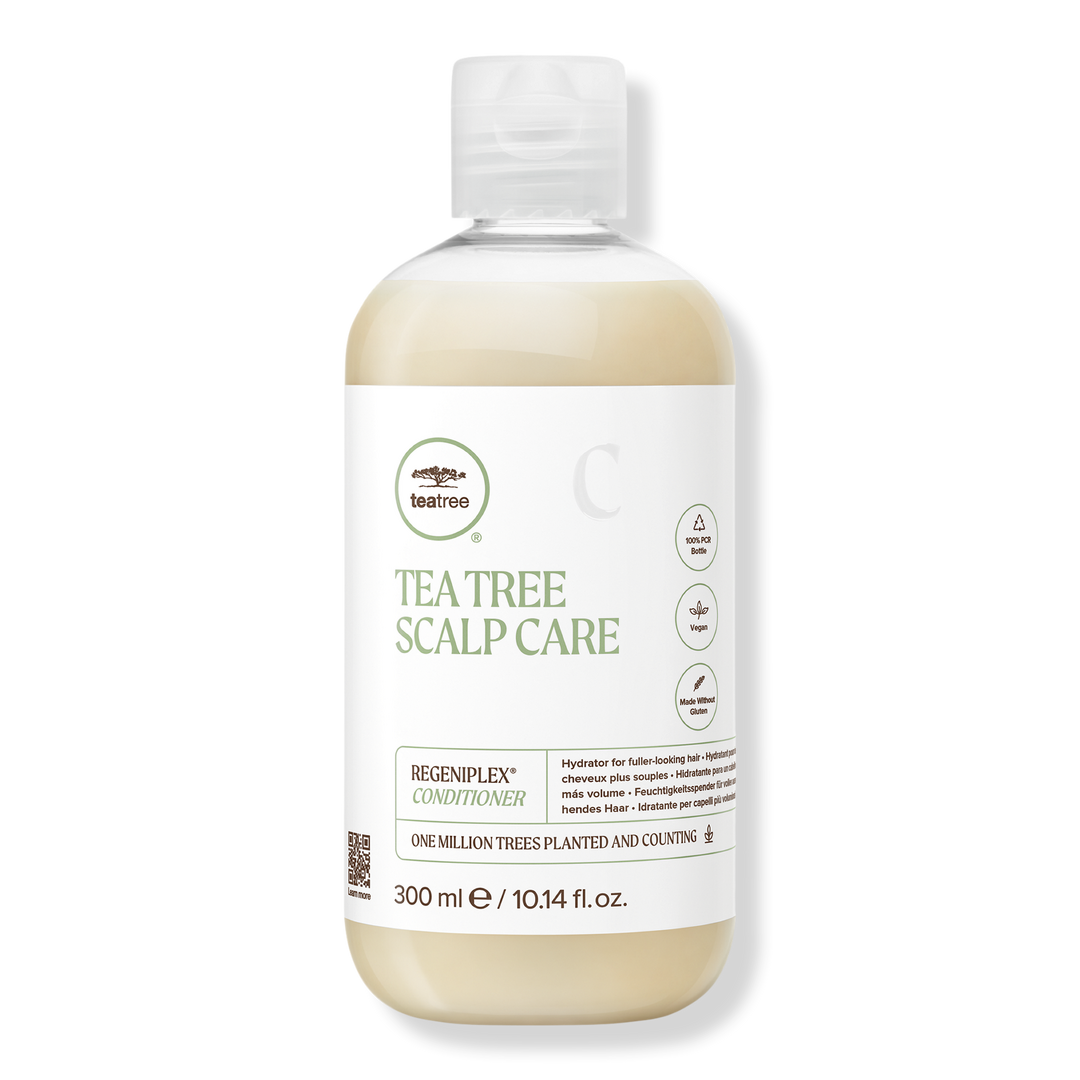
Paul Mitchell Tea Tree Scalp Care Regeniplex Conditioner
Detangle fine, fragile strands and make hair look and feel stronger and thicker with Paul Mitchell Tea Tree Scalp Care Regeniplex Conditioner.
Paraben-free
Color-safe
Gluten-free
Thinning
Breakage
Fine
Optimized for Your Environment & Lifestyle
Nykaa
In stock
Recommended

Paul Mitchell Tea Tree Scalp Care Regeniplex Conditioner
Paul Mitchell
paul-mitchell-tea-tree-scalp-care-regeniplex-conditioner
Conditioner
10407563329829
Morning or Evening?
How often will you use this product?
Notes


Secure payment protection
Your Biodata Compatibility Analysis
Based on your 6 hair health indices and environmental factors
Poor Match
Significant incompatibilities
Growth Cycle Health Index
Hair Match
Hair Health Index Alignment
Optimal for OSI, SSI, DI, HSI
Ingredient Efficacy
Matching Ingredient Score
Environment Compatibility
Current UV, Air Quality & Humidity
Why This Works for Your Specific Profile
Damage Index:
Very healthy or severely damaged hair falls outside optimal treatment parameters
Water Quality:
Fine hair becomes weighed down and greasy from heavy formulation
Hair:
Closed cuticles resist product penetration causing surface buildup without internal benefits
Active Lifestyle:
Low activity produces insufficient stress or buildup making product intensity unnecessarily harsh
Your Hair Profile Integration
Your Hair Archetype

Density Level

Washing Frequency

Shedding Level

Oil Level
Your Hair Health Indices
Oil Secretion (OSI)
Very low oil production
Scalp Sensitivity (SSI)
Very low sensitivity
Growth Rate (CMR)
Poor metabolism rate
Damage Index (DI)
Minimal damage
Hair Strength (HSI)
Very weak strength
Softness Index (SI)
Significant improvement needed
Water & Environmental Integration

Water:


Expected Results & Timeline
Key Highlights

What is it?
Conditioner with a blend of Kakadu plum, pea peptides, clover flower, turmeric, and ginseng

Who Is It For
Adults

Budget
$30.00 - $60.00

Timeline
8 weeks
Why You’ll Love It

What Does It Help With?
Thinning hair, Breakage

Best for
Thinning hair

Features
Detangles and strengthens fine, fragile hair without weighing it down; helps prevent breakage; adds fullness; ideal for thinning hair; uplifting lemon, basil, and fir scent with notes of patchouli, vanilla, and amber; color safe; paraben free; made without gluten

Checks
Cruelty Free, Vegan, Sustainable Packaging, Give Back
Ingredients Overview
Ingredients List
aqua-water-eau, stearyl-alcohol, cetyl-alcohol, divinyldimethicone-dimethicone-copolymer, melaleuca-alternifolia-tea-tree-leaf-oil, pisum-sativum-pea-peptide, curcuma-longa-turmeric-root-extract, panax-ginseng-root-extract, rosmarinus-officinalis-rosemary-leaf-extract, trifolium-pratense-clover-flower-extract, terminalia-ferdinandiana-fruit-extract, leuconostoc-radish-root-ferment-filtrate, pyridoxine, dicetyldimonium-chloride, oleyl-alcohol, cetrimonium-chloride, stearamidopropyl-dimethylamine, c12-13-pareth-23, c12-13-pareth-3, glyceryl-stearate, hydroxyethylcellulose, disodium-phosphate, propylene-glycol, magnesium-nitrate, magnesium-chloride, disodium-edta, citric-acid, polysorbate-60, alcohol, phenoxyethanol, methylchloroisothiazolinone, methylisothiazolinone, sodium-phosphate, fragrance-parfum, linalool, geraniol, linalyl-acetate, camphor, pogostemon-cablin-oil, caramel, red-40-ci-16035
Key Ingredients
Kakadu plum, Pea peptides, Clover flower, Turmeric, Ginseng
Ingredients Details
Alcohol
Common Name(s): Alcohol,cosmetic active,functional ingredient
CAS Number: N/a
DESCRIPTION
What It Does: Delivers characteristic cosmetic function at recommended use concentration.
Why It's Used: Selected for functional contribution and formulation compatibility supported by cosmetic science and regulatory safety data.
How It Works: Works through the mechanism of its molecular class as documented in peer-reviewed cosmetic literature.
Typically Found In: Skin care formulations
TECHNICAL DETAILS
Primary Category: Active ingredient – cosmetic active
Secondary Functions: Skin conditioning
Application Areas:

Facial Skincare

Body Care
Hair Care
Beard Care
Color Cosmetics (Makeup)
Dietary/Oral Supplements
Typical Concentration Range: 0.1%–10%
SOURCING & ETHICS
Vegan Status: Yes - standard ethanol routes are non-animal; confirm denaturant origin
Halal Status: Conditional - ethanol production route and residual concentration; jurisdiction-dependent, refer to certifier stance
Source Notes: Commercially produced for cosmetic use. verify vegan/halal status with supplier. [audit 2026-07-29 rev2: ethanol pathway; determination depends on route, on whether the plant also produces beverage alcohol, and on residual concentration. determination requires shariah-panel sign-off.]
SKIN COMPATIBILITY
Irritancy Rating: 1/5 – very low
Comedogenicity Rating: 0/5 – non-comedogenic
Sensitivity Concerns: Well-tolerated by most skin types.
Safe for Sensitive Skin: Yes
SAFETY & COMPATIBILITY
Safety Profile: Good safety profile at recommended concentrations. ewg score: 1–2.
Works Well With: Standard skincare actives
Avoid Combining With: No known significant incompatibilities
SCIENTIFIC NOTE
Alcohol has an established safety profile within the cosmetic regulatory framework at standard use concentrations.
Last Verified: 2026-03-12
Primary Sources: Cosing database,alcohol technical literature
Camphor
Common Name(s): 2-bornanone,2-camphanone,gum camphor
CAS Number: 76-22-2
DESCRIPTION
What It Does: Provides cooling sensation, analgesic, and anti-itch activity through trpm8 and trpv1 modulation.
Why It's Used: Cooling-sensation active with topical analgesic and anti-itch benefits for soothing formulations requiring temperature-sensation modification.
How It Works: Activates trpm8 (cold thermoreceptor) for cooling sensation. at higher concentrations, desensitizes trpv1 (heat/pain receptor) for analgesic activity. penetration enhancement via stratum corneum lipid fluidization. antimicrobial via membrane disruption.
Typically Found In: Cooling balms,topical pain relief,anti-itch products,sensory skincare
TECHNICAL DETAILS
Primary Category: Active ingredient – monoterpenoid sensory active
Secondary Functions: Redness reduction,anti-inflammatory,calming
Application Areas:
Facial Skincare
Body Care
Hair Care
Beard Care
Color Cosmetics (Makeup)
Dietary/Oral Supplements
Typical Concentration Range: 0.5%–3%
SOURCING & ETHICS
Vegan Status: Conditional - supplier confirmation required
Halal Status: Unverified - supplier confirmation required
Source Notes: Plant-derived extract or synthetic. [audit 2026-07-29 rev2: status downgraded on audit. determination requires shariah-panel sign-off.]
SKIN COMPATIBILITY
Irritancy Rating: 2/5 – low to moderate at high concentrations
Comedogenicity Rating: 0/5 – non-comedogenic
Sensitivity Concerns: Avoid contact with eyes. can cause skin sensitization at concentrations above eu limit. contraindicated in infants and young children.
Safe for Sensitive Skin: Yes – particularly recommended for sensitive skin
SAFETY & COMPATIBILITY
Safety Profile: Eu max 1.5% (leave-on body). avoid near eyes. do not apply to broken skin. not for infant use near face.
Works Well With: Ceramides,panthenol,allantoin,hyaluronic acid,centella asiatica
Avoid Combining With: No significant incompatibilities
SCIENTIFIC NOTE
Camphor's concurrent activation of trpm8 (cooling) and desensitization of trpv1 (heat/pain) provides a unique dual sensory modulation that both masks pain (trpv1 desensitization) and replaces it with a pleasant cooling sensation (trpm8 activation) – explaining the well-documented analgesic efficacy of camphor-containing topical preparations.
Last Verified: 2026-03-12
Primary Sources: Cosing database,cir safety assessment
Caramel
Common Name(s): Caramel colour,natural brown,e150
CAS Number: 8028-89-5
DESCRIPTION
What It Does: Provides natural warm-brown colour from heat-treated sugar for natural cosmetics.
Why It's Used: Natural brown colorant with food-grade safety credentials for clean beauty formulations requiring warm brown or amber shades.
How It Works: Complex mixture of pyranose-ring condensation products from heat-treated sugars. 5-hmf and melanoidin polymers provide brown colour. ph-stable in acidic formulations. soluble in water and lower alcohols.
Typically Found In: Natural cosmetics,bronzers,hair products
TECHNICAL DETAILS
Primary Category: Colorant – natural brown dye
Secondary Functions: Skin conditioning
Application Areas:
Facial Skincare
Body Care
Hair Care
Beard Care
Color Cosmetics (Makeup)
Dietary/Oral Supplements
Typical Concentration Range: 0.01%–5%
SOURCING & ETHICS
Vegan Status: Conditional - supplier confirmation required
Halal Status: Unverified - supplier confirmation required
Source Notes: Commercially produced for cosmetic use. verify vegan/halal status with supplier. [audit 2026-07-29 rev2: the record's own source_notes does not assert a non-animal origin, or instructs the reader to verify with the supplier; "yes" asserts knowledge the record does not hold. determination requires shariah-panel sign-off.]
SKIN COMPATIBILITY
Irritancy Rating: 1/5 – very low
Comedogenicity Rating: 0/5 – non-comedogenic
Sensitivity Concerns: Well-tolerated by most skin types.
Safe for Sensitive Skin: Yes
SAFETY & COMPATIBILITY
Safety Profile: Good safety profile at recommended concentrations. ewg score: 1–2.
Works Well With: Standard skincare actives
Avoid Combining With: No known significant incompatibilities
SCIENTIFIC NOTE
Caramel's colour develops through the maillard reaction between reducing sugars and amino acids at elevated temperatures, creating a complex mixture of coloured polymer (melanoidin) and small molecule chromophores. unlike single-compound dyes with defined absorption spectra, caramel's broad-spectrum absorption from multiple chromophores provides a naturally warm, complex brown impossible to replicate with a single synthetic dye.
Last Verified: 2026-03-12
Primary Sources: Cosing database,fda 21 cfr color additives
Geraniol
Common Name(s): (e)-3,7-dimethyl-2,6-octadien-1-ol,geranyl alcohol
CAS Number: 106-24-1
DESCRIPTION
What It Does: Provides fresh rose-geranium floral scent with antimicrobial activity.
Why It's Used: The rose fragrance terpene – geraniol defines the fresh, sweet rose-geranium note found in more than 60 essential oils and is essential for recreating natural floral fragrance profiles.
How It Works: Monoterpene alcohol inhibits bacterial membrane integrity for antimicrobial activity. activates trpv1 for anti-nociception. inhibits nf-kb for anti-inflammatory activity. antioxidant via allylic radical scavenging.
Typically Found In: Rose-scented products,floral fragrances,natural cosmetics
TECHNICAL DETAILS
Primary Category: Fragrance component – acyclic monoterpene alcohol
Secondary Functions: Skin conditioning
Application Areas:
Facial Skincare
Body Care
Hair Care
Beard Care
Color Cosmetics (Makeup)
Dietary/Oral Supplements
Typical Concentration Range: 0.001%–1%
SOURCING & ETHICS
Vegan Status: Conditional - supplier confirmation required
Halal Status: Unverified - supplier confirmation required
Source Notes: Commercially produced for cosmetic use. verify vegan/halal status with supplier. [audit 2026-07-29 rev2: the record's own source_notes does not assert a non-animal origin, or instructs the reader to verify with the supplier; "yes" asserts knowledge the record does not hold. determination requires shariah-panel sign-off.]
SKIN COMPATIBILITY
Irritancy Rating: 1/5 – very low
Comedogenicity Rating: 0/5 – non-comedogenic
Sensitivity Concerns: Well-tolerated by most skin types.
Safe for Sensitive Skin: Yes
SAFETY & COMPATIBILITY
Safety Profile: Eu cosmetics regulation: declared fragrance allergen. ifra guidelines apply.
Works Well With: Standard skincare actives
Avoid Combining With: No known significant incompatibilities
SCIENTIFIC NOTE
Geraniol's isomers (geraniol, nerol, citronellol) provide subtly different scent characters despite identical molecular formulae (c10h18o): geraniol provides the sweet, fresh rose note while its z-isomer nerol has a more delicate, neroli-like character. these isomeric scent differences arise from different spatial presentation of the hydroxyl and double bond groups to the olfactory receptor – demonstrating the extraordinary structural sensitivity of olfactory perception.
Last Verified: 2026-03-12
Primary Sources: Cosing database,ifra standards
Personalized Usage Instructions
How to Use
Step 1
Cleanse with Scalp Care Regeniplex Shampoo and rinse
Step 2
Distribute Regeniplex Conditioner evenly through the hair
Step 3
Rinse thoroughly
Step 4
For best results, use with Regeniplex Tonic
Medical Chemicals

Protein/Moisture
- Protein/Moisture balance
pH Level
- Acidic

Porosity Taget
- Normal Porosity
Customized for Your Profile
Scalp Condtions
Sensitive Scalp, pH Balanced
Climate Suitability
Humid, Dry
Clinical Claims
85% reported increased hair volume and strength
Frequency
Cleanse with Scalp Care Regeniplex Shampoo and rinse. Distribute Regeniplex Conditioner evenly through the hair. Rinse thoroughly. For best results, use with Regeniplex Tonic.
Product Information

Cruelty Free
Vegan
Sustainable Packaging
Give Back