

Palmer's
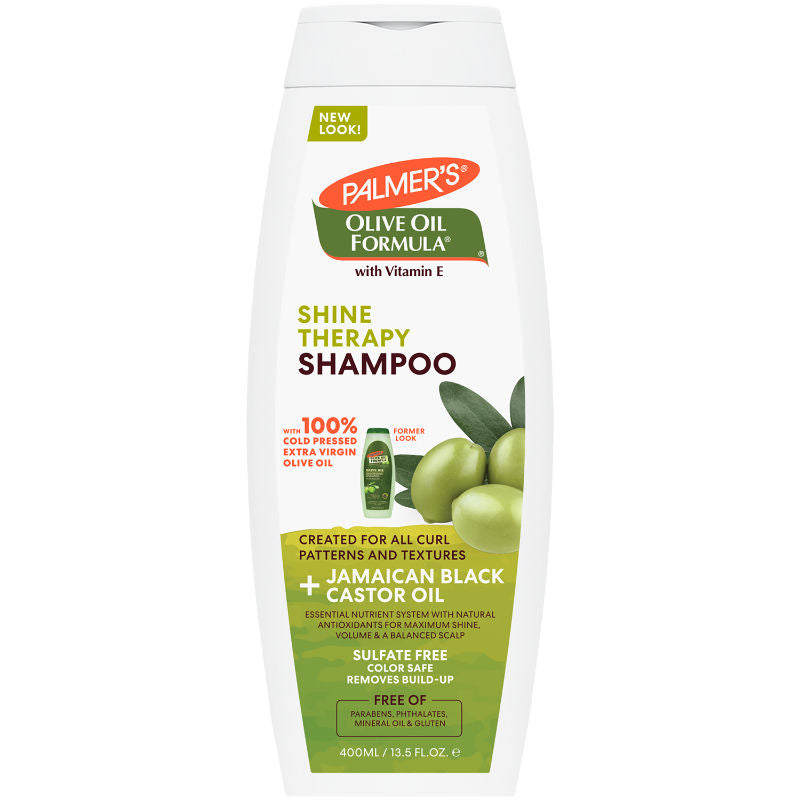
Palmer's Olive Oil Smoothing Shampoo For Extra Shine, Colour Safe, Free Of Sulfates, Parabens
Nourishing moisture for healthy hair & scalp. Thick, conditioning shampoo formulated with extra virgin olive oil highest concentration of vitamins and anti-oxidants. Light clean fragrance. Extra virgin olive oil is a superior hair nourisher and strengthener. Cleanses and removes product buildup without stripping. Leaves hair soft with a rich glow. Contains Extra Virgin Olive Oil, Jamaican Black Castor Oil and Vitamin E. Cold Pressed and commits to responsible sourcing. Free from Parabens, Phthalates, Mineral Oil, Gluten, or Dyes.
Sulfate-free
Color-safe
Paraben-free
Damage Repair
Dryness
Build-up
Optimized for Your Environment & Lifestyle
Nykaa
In stock
Recommended

Palmer's Olive Oil Smoothing Shampoo For Extra Shine, Colour Safe, Free Of Sulfates, Parabens
Palmer's
palmers-olive-oil-smoothing-shampoo-for-extra-shine-colour-safe-free-of-sulfates-parabens
shampoo
10202952892709
Morning or Evening?
How often will you use this product?
Notes


Secure payment protection
Your Biodata Compatibility Analysis
Based on your 6 hair health indices and environmental factors
Poor Match
Significant incompatibilities
Growth Cycle Health Index
Hair Match
Hair Health Index Alignment
Optimal for OSI, SSI, DI, HSI
Ingredient Efficacy
Matching Ingredient Score
Environment Compatibility
Current UV, Air Quality & Humidity
Why This Works for Your Specific Profile
Damage Index:
Very healthy or severely damaged hair falls outside optimal treatment parameters
Water Quality:
Soft or moderately hard water does not require intensive treatment causing over-cleansing and dryness
Hair:
Closed cuticles resist product penetration causing surface buildup without internal benefits
Active Lifestyle:
Activity levels outside optimal range affect product performance and maintenance requirements
Your Hair Profile Integration
Your Hair Archetype

Density Level

Washing Frequency

Shedding Level

Oil Level
Your Hair Health Indices
Oil Secretion (OSI)
Very low oil production
Scalp Sensitivity (SSI)
Very low sensitivity
Growth Rate (CMR)
Poor metabolism rate
Damage Index (DI)
Minimal damage
Hair Strength (HSI)
Very weak strength
Softness Index (SI)
Significant improvement needed
Water & Environmental Integration

Water:


Expected Results & Timeline
Key Highlights

What is it?
shampoo with approximately 20 ingredients

Who Is It For
Adults, All Genders

Budget
$6.33 - $12.66

Timeline
Why You’ll Love It

What Does It Help With?
Hair nourishment, Strengthening, Cleansing, Removing buildup

Best for
Damage Repair

Features
Sulfate free, color safe, removes buildup, creamy rich shampoo, no harsh detergents, gently lifts dirt and oil, prepares strands for conditioning, responsible sourcing

Checks
No Parabens, Phthalates, Mineral Oil, Gluten, or Dyes
Ingredients Overview
Ingredients List
Water-(Aqua), Sodium-C14-16-Olefin-Sulfonate, Cocamidopropyl-Betaine, Cocamide-DEA, Glycol-Stearate, Sodium-Chloride, Olea-Europaea-(Olive)-Oil, Hydrolyzed-Keratin, Tocopheryl-Acetate, Phenoxyethanol, Fragrance-(Parfum), Hydroxypropyl-Methylcellulose, Polyquaternium-10, Tetrasodium-EDTA, Methylisothiazolinone, Phosphoric-Acid, Red-4-(CI-14700), Yellow-5-(CI-19140), Blue-1-(CI-42090), Benzyl-Salicylate, Linalool
Key Ingredients
Extra Virgin Olive Oil, Jamaican Black Castor Oil, Vitamin E
Ingredients Details
Linalool
Common Name(s): 3,7-dimethyl-1,6-octadien-3-ol,linalyl alcohol
CAS Number: 78-70-6
DESCRIPTION
What It Does: Provides the most common natural floral-citrus fragrance note with additional anti-inflammatory properties.
Why It's Used: The most abundant fragrance terpene in nature – linalool forms the primary scent character of lavender, responsible for lavender's documented aromatherapy calming effects.
How It Works: Monoterpene alcohol activates gaba-a receptors for anti-anxiety activity (same receptor as benzodiazepines). inhibits glutamate-induced excitotoxicity. antimicrobial via membrane disruption. anti-inflammatory via nf-kb inhibition.
Typically Found In: Virtually all fragranced cosmetics
TECHNICAL DETAILS
Primary Category: Fragrance component – tertiary terpene alcohol
Secondary Functions: Skin conditioning
Application Areas:

Facial Skincare

Body Care
Hair Care
Beard Care
Color Cosmetics (Makeup)
Dietary/Oral Supplements
Typical Concentration Range: 0.001%–3%
SOURCING & ETHICS
Vegan Status: Conditional - supplier confirmation required
Halal Status: Unverified - supplier confirmation required
Source Notes: Commercially produced for cosmetic use. verify vegan/halal status with supplier. [audit 2026-07-29 rev2: the record's own source_notes does not assert a non-animal origin, or instructs the reader to verify with the supplier; "yes" asserts knowledge the record does not hold. determination requires shariah-panel sign-off.]
SKIN COMPATIBILITY
Irritancy Rating: 1/5 – very low
Comedogenicity Rating: 0/5 – non-comedogenic
Sensitivity Concerns: Well-tolerated by most skin types.
Safe for Sensitive Skin: Yes
SAFETY & COMPATIBILITY
Safety Profile: Eu cosmetics regulation: declared fragrance allergen on label when >0.001% (leave-on) or >0.01% (rinse-off). ifra guidelines apply.
Works Well With: Standard skincare actives
Avoid Combining With: No known significant incompatibilities
SCIENTIFIC NOTE
Linalool's gaba-a receptor activation provides a pharmacological basis for lavender aromatherapy's documented anxiolytic effects. the same receptor modulation used by benzodiazepine drugs (such as diazepam) is activated by inhaled linalool vapor, providing receptor-mediated calming without the tolerance and dependence associated with pharmaceutical gaba-a modulators.
Last Verified: 2026-03-12
Primary Sources: Cosing database,ifra standards,elisabetsky et al. linalool gaba study
Methylisothiazolinone
Common Name(s): Mit,kathon,neolone
CAS Number: 2682-20-4
DESCRIPTION
What It Does: Provides highly potent broad-spectrum preservation at very low concentrations in rinse-off formulations.
Why It's Used: Most potent cosmetic preservative — mit provides effective preservation at concentrations 10-100× lower than most other preservatives, enabling clean-label preservation at minimal ingredient load.
How It Works: Electrophilic isothiazolinone ring reacts with bacterial thiol enzymes (glutathione, coa-dependent enzymes) via michael addition for rapid kill. very potent — mic vs e. coli 0.06μg/ml (vs phenoxyethanol mic ~400μg/ml — 6000× more potent). rapidly biodegradable.
Typically Found In: Rinse-off shampoos,body washes,conditioners
TECHNICAL DETAILS
Primary Category: Functional ingredient – isothiazolinone preservative
Secondary Functions: Skin conditioning
Application Areas:
Facial Skincare
Body Care
Hair Care
Beard Care
Color Cosmetics (Makeup)
Dietary/Oral Supplements
Typical Concentration Range: 0.0015%–0.0015% (max 15ppm eu rinse-off)
SOURCING & ETHICS
Vegan Status: Conditional - supplier confirmation required
Halal Status: Unverified - supplier confirmation required
Source Notes: Commercially produced for cosmetic use. verify vegan/halal status with supplier. [audit 2026-07-29 rev2: the record's own source_notes does not assert a non-animal origin, or instructs the reader to verify with the supplier; "yes" asserts knowledge the record does not hold. determination requires shariah-panel sign-off.]
SKIN COMPATIBILITY
Irritancy Rating: 1/5 – very low
Comedogenicity Rating: 0/5 – non-comedogenic
Sensitivity Concerns: Well-tolerated by most skin types.
Safe for Sensitive Skin: Yes
SAFETY & COMPATIBILITY
Safety Profile: Eu regulation 2014/1298: mit banned from leave-on products. max 15ppm in rinse-off only. contact sensitiser — causes occupational dermatitis epidemic in hairdressers and consumers. sccs noted no safe level for leave-on. 2016 eu restriction driven by major sensitisation epidemic.
Works Well With: Standard skincare actives
Avoid Combining With: No known significant incompatibilities
SCIENTIFIC NOTE
Mit's sensitisation epidemic (2010-2015) is one of the most significant cosmetic safety events in modern dermatology: a dramatic increase in contact allergy patch test positive rates from <1% (2005) to 7% (2015) in the eu was directly traceable to the widespread introduction of mit in leave-on products. this epidemic prompted the fastest eu cosmetic regulatory action in history and demonstrates the critical importance of patch test surveillance in monitoring emerging cosmetic allergens.
Last Verified: 2026-03-12
Primary Sources: Cosing database,eu regulation 2014/1298,yazar et al. mit sensitisation epidemic study
Phenoxyethanol
Common Name(s): 2-phenoxyethanol,rose ether,ethylene glycol monophenyl ether
CAS Number: 122-99-6
DESCRIPTION
What It Does: Prevents microbial contamination and spoilage in cosmetic formulations.
Why It's Used: The benchmark cosmetic preservative – eu-permitted up to 1%, effective against virtually all cosmetically relevant microorganisms, and excellent tolerability.
How It Works: Phenol ring provides broad antimicrobial activity via disruption of bacterial and fungal cell membranes and inhibition of enzymatic activity. effective against gram-positive and gram-negative bacteria, yeasts (candida), and molds (aspergillus). activity ph range: 3-9.
Typically Found In: All cosmetic formulations as primary preservative
TECHNICAL DETAILS
Primary Category: Functional ingredient – broad-spectrum preservative
Secondary Functions: Skin conditioning
Application Areas:
Facial Skincare
Body Care
Hair Care
Beard Care
Color Cosmetics (Makeup)
Dietary/Oral Supplements
Typical Concentration Range: 0.1%–1% (eu max 1%)
SOURCING & ETHICS
Vegan Status: Conditional - supplier confirmation required
Halal Status: Unverified - supplier confirmation required
Source Notes: Commercially produced for cosmetic use. verify vegan/halal status with supplier. [audit 2026-07-29 rev2: the record's own source_notes does not assert a non-animal origin, or instructs the reader to verify with the supplier; "yes" asserts knowledge the record does not hold. determination requires shariah-panel sign-off.]
SKIN COMPATIBILITY
Irritancy Rating: 1/5 – very low
Comedogenicity Rating: 0/5 – non-comedogenic
Sensitivity Concerns: Well-tolerated by most skin types.
Safe for Sensitive Skin: Yes
SAFETY & COMPATIBILITY
Safety Profile: Eu cosmetics regulation max 1%. sccs assessed as safe at ≤1%. avoid use around eyes in baby products per some country regulations. ewg score: 4.
Works Well With: Standard skincare actives
Avoid Combining With: No known significant incompatibilities
SCIENTIFIC NOTE
Phenoxyethanol's widespread adoption as the primary cosmetic preservative followed the phaseout of parabens from many formulations in the 2000s-2010s. despite having a comparable or better safety profile to parabens, it is often cited in 'free-from' formulations – a consumer perception issue rather than a scientific safety concern.
Last Verified:
Polyquaternium-10
Common Name(s): Pq-10,hydroxyethylcellulose ethyl trimethylammonium chloride,jr-400
CAS Number: 54351-50-7
DESCRIPTION
What It Does: Provides film-forming conditioning and detangling with heat protection in a polymer that adsorbs substantively to hair.
Why It's Used: The most widely used cationic polymer conditioner – provides excellent conditioning and detangling while adsorbing strongly to damaged hair areas that need conditioning most.
How It Works: Cationic quaternary ammonium groups along the polymer backbone adsorb to anionic sites on hair keratin. higher charge density on damaged hair (more negative sites) leads to preferential adsorption where conditioning is needed. polymer film formation provides heat protection and volume.
Typically Found In: Shampoos,2-in-1 products,conditioners,styling products
TECHNICAL DETAILS
Primary Category: Functional ingredient – cationic polymer conditioner
Secondary Functions: Skin conditioning
Application Areas:
Facial Skincare
Body Care
Hair Care
Beard Care
Color Cosmetics (Makeup)
Dietary/Oral Supplements
Typical Concentration Range: 0.1%–2%
SOURCING & ETHICS
Vegan Status: Conditional - supplier confirmation required
Halal Status: Unverified - supplier confirmation required
Source Notes: Commercially produced for cosmetic use. verify vegan/halal status with supplier. [audit 2026-07-29 rev2: the record's own source_notes does not assert a non-animal origin, or instructs the reader to verify with the supplier; "yes" asserts knowledge the record does not hold. determination requires shariah-panel sign-off.]
SKIN COMPATIBILITY
Irritancy Rating: 1/5 – very low
Comedogenicity Rating: 0/5 – non-comedogenic
Sensitivity Concerns: Well-tolerated by most skin types.
Safe for Sensitive Skin: Yes
SAFETY & COMPATIBILITY
Safety Profile: Good safety profile at recommended concentrations. ewg score: 1–2.
Works Well With: Standard skincare actives
Avoid Combining With: No known significant incompatibilities
SCIENTIFIC NOTE
Polyquaternium-10's 'self-targeting' to damaged hair sites is a unique smart conditioning mechanism. as hair damage increases negative charge density by exposing keratin's aspartate and glutamate carboxylate groups, pq-10's cationic polymer backbone adsorbs preferentially to these high-charge damage sites – automatically delivering more conditioning where the hair needs it most.
Last Verified: 2026-03-12
Primary Sources: Cosing database,robbins hair science,cir safety assessment
Personalized Usage Instructions
How to Use
Step 1
Apply to wet hair and scalp working through from root to tip and massage into a rich lather for 1-2 minutes
Step 2
Rinse thoroughly
Step 3
Repeat if desired
Medical Chemicals

Protein/Moisture
- Protein/Moisture balance
pH Level
- Acidic

Porosity Taget
- Normal Porosity
Customized for Your Profile
Scalp Condtions
Sensitive Scalp, pH Balanced, Oil Control
Climate Suitability
Humid, Dry
Clinical Claims
Frequency
Apply to wet hair and scalp working through from root to tip and massage into a rich lather for 1-2 minutes. Rinse thoroughly. Repeat if desired.
Product Information

No Parabens
Phthalates
Mineral Oil
Gluten
or Dyes