

Ouidad
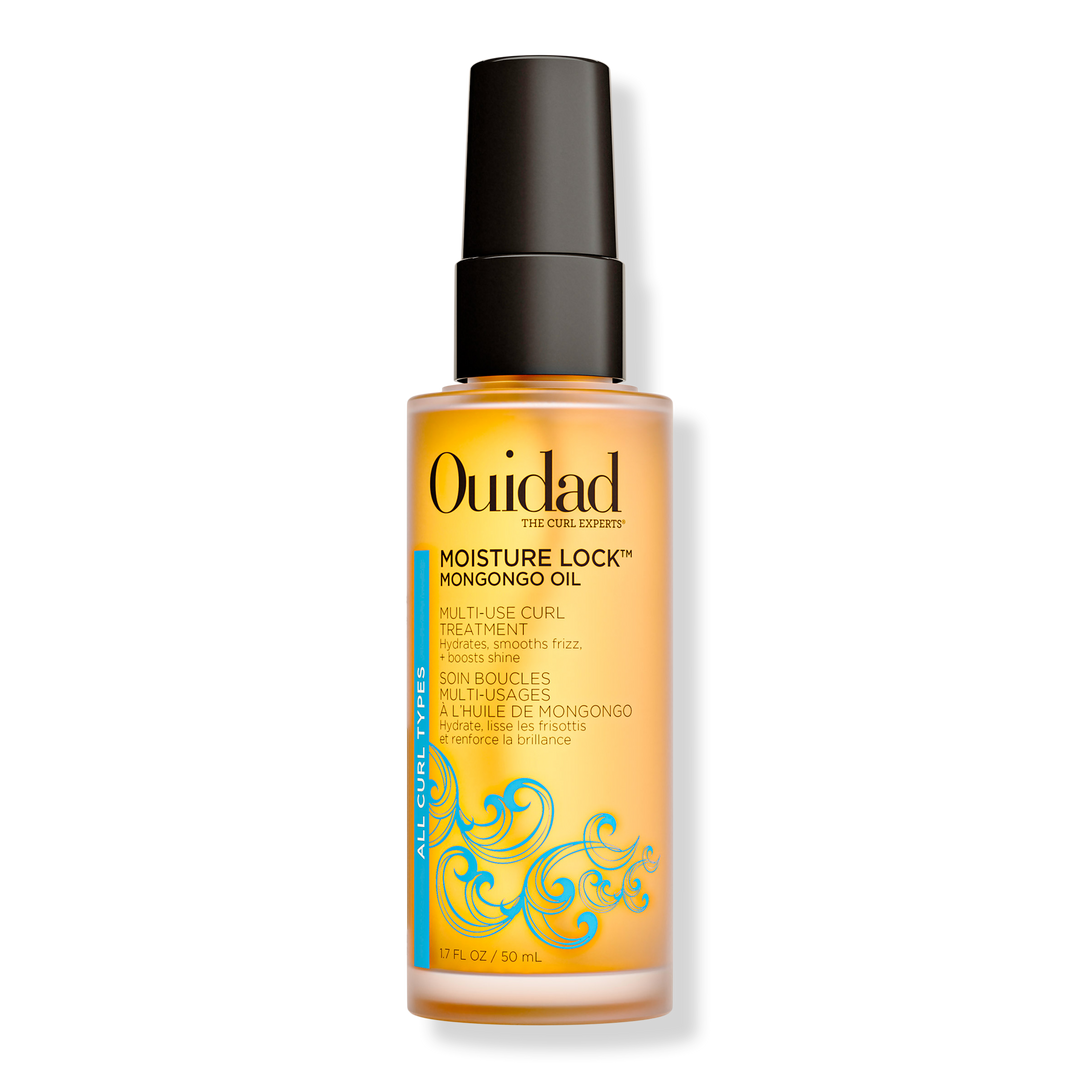
Ouidad Moisture Lock Mongongo Oil
Ouidad Moisture Lock Mongongo Oil is a fast-absorbing elixir that delivers intense hydration, restores natural luster, and helps prevent damage by creating a protective barrier to strands. The multi-use oil can be used as a leave-in treatment or styler.
Sulfate-free
Paraben-free
Silicone-free
Gluten-free
Vegan
Cruelty-free
Optimized for Your Environment & Lifestyle
Nykaa
In stock
Recommended

Ouidad Moisture Lock Mongongo Oil
Ouidad
ouidad-moisture-lock-mongongo-oil
Hair Oil
10365007397157
Morning or Evening?
How often will you use this product?
Notes


Secure payment protection
Your Biodata Compatibility Analysis
Based on your 6 hair health indices and environmental factors
Poor Match
Significant incompatibilities
Growth Cycle Health Index
Hair Match
Hair Health Index Alignment
Optimal for OSI, SSI, DI, HSI
Ingredient Efficacy
Matching Ingredient Score
Environment Compatibility
Current UV, Air Quality & Humidity
Why This Works for Your Specific Profile
Damage Index:
Damage levels outside specified range may not benefit optimally from product formulation
Water Quality:
Fine hair becomes weighed down and greasy from heavy formulation
Hair:
Closed cuticles resist product penetration causing surface buildup without internal benefits
Active Lifestyle:
High activity and frequent washing rapidly strip product benefits requiring excessive reapplication
Your Hair Profile Integration
Your Hair Archetype

Density Level

Washing Frequency

Shedding Level

Oil Level
Your Hair Health Indices
Oil Secretion (OSI)
Very low oil production
Scalp Sensitivity (SSI)
Very low sensitivity
Growth Rate (CMR)
Poor metabolism rate
Damage Index (DI)
Minimal damage
Hair Strength (HSI)
Very weak strength
Softness Index (SI)
Significant improvement needed
Water & Environmental Integration

Water:


Expected Results & Timeline
Key Highlights

What is it?
Hair Oil with 13 ingredients

Who Is It For
Adults, All Genders

Budget
$38.00 - $76.00

Timeline
Immediate
Why You’ll Love It

What Does It Help With?
Hydration, Luster, Damage Prevention

Best for
Dryness, Frizz, Damage Repair

Features
Fast-absorbing elixir, delivers intense hydration, restores natural luster, helps prevent damage, creates protective barrier, multi-use as leave-in treatment or styler

Checks
Paraben-free, Sulfate-free, Silicone-free, Mineral Oil-free, Petroleum-free, Gluten-free, Vegan, Cruelty-free
Ingredients Overview
Ingredients List
ppg-3-benzyl-ether-myristate, coconut-alkanes, coco-caprylate/caprate, brassica-oleracea-italica-broccoli-seed-oil, hydrogenated-castor-oil/sebacic-acid-copolymer, schinziophyton-rautanenii-kernel-oil, tocopheryl-acetate, elaeis-guineensis-palm-oil, carthamus-tinctorius-safflower-seed-oil, glycine-soja-soybean-oil, bixa-orellana-seed-oil, helianthus-annuus-sunflower-seed-oil, tocopherol, phenoxyethanol, red-17-cl-26100, annatto-ci-75120, fragrance-parfum, benzyl-benzoate, benzyl-salicylate, coumarin, limonene, hydroxycitronellal, methyl-ionone
Key Ingredients
mongongo-oil, broccoli-seed-oil, american-palm-seed-oil, coconut-alkanes
Ingredients Details
Coco-caprylate/caprate
Common Name(s): Coco-caprylate/caprate
DESCRIPTION
What It Does: Smooths and softens skin by filling intercorneocyte spaces, reducing friction, and providing a pleasant aesthetic skin feel in formulations.
Why It's Used: Synthetic esters provide tailored aesthetic properties — spreadability, skin feel, volatility, refractive index — that natural oils alone cannot consistently deliver.
How It Works: The ester molecule fills microscopic surface irregularities between corneocytes, reducing coefficient of friction, reflecting light uniformly, and providing a lubrication layer that protects the skin surface.
Typically Found In: Moisturizers,sunscreens,color cosmetics,body lotions,lip products
TECHNICAL DETAILS
Primary Category: Synthetic emollients
Secondary Functions: Emollient
Application Areas:

Facial Skincare

Body Care
Hair Care
Beard Care
Color Cosmetics (Makeup)
Dietary/Oral Supplements
Typical Concentration Range: 1–20%
SOURCING & ETHICS
Vegan Status: Yes
Halal Status: Yes
Source Notes: Synthetically produced ester emollient; no animal components.
SKIN COMPATIBILITY
Irritancy Rating: 1
Comedogenicity Rating: 1
Sensitivity Concerns: Low sensitization potential at recommended use concentrations.
Safe for Sensitive Skin: Yes
SAFETY & COMPATIBILITY
Safety Profile: Well-characterized cosmetic ingredient with established safety profile. generally non-irritating at typical use concentrations. suitable for leave-on and rinse-off cosmetics.
Works Well With: Silicones,uv filters,other emollients
Avoid Combining With: Strongly alkaline conditions (risk of saponification of ester-type emollients)
SCIENTIFIC NOTE
The spreading coefficient of an emollient is governed by its surface tension, viscosity, and polarity. esters with branched alkyl chains (e.g., isopropyl, isostearyl) spread rapidly and leave a non-tacky film; linear long-chain esters provide more substantive moisturization. hlb value determines the preferred formulation system (w/o vs o/w emulsions).
Last Verified: Cosing eu database; pcpc cosmetic ingredient safety reviews; ingredient-specific safety and efficacy literature
Primary Sources: 2025-01-15
Coumarin
Common Name(s): 2h-chromen-2-one,1,2-benzopyrone,tonka bean compound
CAS Number: 91-64-5
DESCRIPTION
What It Does: Provides the characteristic sweet hay-vanilla warmth central to fougère fragrance compositions.
Why It's Used: The fougère fragrance family-defining compound – coumarin is the essential warm-sweet note in lavender-oakmoss-coumarin fougère compositions that define men's cologne classics.
How It Works: Bicyclic lactone provides sweet hay-vanilla scent from its conjugated carbonyl system. good skin absorption for lasting fragrance. low volatility provides fixative properties.
Typically Found In: Fougère fragrances,men's cologne,warm oriental fragrances
TECHNICAL DETAILS
Primary Category: Fragrance component – lactone
Secondary Functions: Skin conditioning
Application Areas:
Facial Skincare
Body Care
Hair Care
Beard Care
Color Cosmetics (Makeup)
Dietary/Oral Supplements
Typical Concentration Range: 0.001%–1%
SOURCING & ETHICS
Vegan Status: Yes – synthetic; natural from dipteryx odorata
Halal Status: Yes
Source Notes: Commercially produced for cosmetic use. verify vegan/halal status with supplier.
SKIN COMPATIBILITY
Irritancy Rating: 1/5 – very low
Comedogenicity Rating: 0/5 – non-comedogenic
Sensitivity Concerns: Well-tolerated by most skin types.
Safe for Sensitive Skin: Yes
SAFETY & COMPATIBILITY
Safety Profile: Eu cosmetics regulation: declared fragrance allergen. ifra guidelines restrict due to hepatotoxicity at high oral doses (not from topical use).
Works Well With: Standard skincare actives
Avoid Combining With: No known significant incompatibilities
SCIENTIFIC NOTE
Coumarin's natural source (tonka beans, dipteryx odorata) led to its historical use in food flavouring until toxicological studies revealed hepatotoxicity at high oral doses. the restriction of coumarin from food flavouring (eu and fda) drove fragrance reformulation in some cosmetic categories, though topical exposure levels from cosmetics are orders of magnitude below hepatotoxic doses.
Last Verified: Cosing database,ifra standards
Primary Sources: 2026-03-12
Hydroxycitronellal
Common Name(s): Hydroxycitronellal,cosmetic active,functional ingredient
CAS Number: N/a
DESCRIPTION
What It Does: Delivers characteristic cosmetic function at recommended use concentration.
Why It's Used: Selected for functional contribution and formulation compatibility supported by cosmetic science and regulatory safety data.
How It Works: Works through the mechanism of its molecular class as documented in peer-reviewed cosmetic literature.
Typically Found In: Skin care formulations
TECHNICAL DETAILS
Primary Category: Active ingredient – cosmetic active
Secondary Functions: Skin conditioning
Application Areas:
Facial Skincare
Body Care
Hair Care
Beard Care
Color Cosmetics (Makeup)
Dietary/Oral Supplements
Typical Concentration Range: 0.1%–10%
SOURCING & ETHICS
Vegan Status: Conditional
Halal Status: Yes
Source Notes: Commercially produced for cosmetic use. verify vegan/halal status with supplier.
SKIN COMPATIBILITY
Irritancy Rating: 1/5 – very low
Comedogenicity Rating: 0/5 – non-comedogenic
Sensitivity Concerns: Well-tolerated by most skin types.
Safe for Sensitive Skin: Yes
SAFETY & COMPATIBILITY
Safety Profile: Good safety profile at recommended concentrations. ewg score: 1–2.
Works Well With: Standard skincare actives
Avoid Combining With: No known significant incompatibilities
SCIENTIFIC NOTE
Hydroxycitronellal has an established safety profile within the cosmetic regulatory framework at standard use concentrations.
Last Verified: Cosing database,hydroxycitronellal technical literature
Primary Sources: 2026-03-12
Limonene
Common Name(s): D-limonene,(r)-limonene,dipentene
CAS Number: 5989-27-5
DESCRIPTION
What It Does: Provides the defining fresh citrus fragrance note alongside solvent and antimicrobial properties.
Why It's Used: The citrus industry's primary fragrance compound and the most abundant terpene in essential oils – limonene provides the clean, universally appealing fresh citrus scent character.
How It Works: D-limonene activates trpv1 mildly at high concentrations. antimicrobial via membrane disruption. solvent for oils and lipophilic compounds. cleaning via emulsification of lipid soils.
Typically Found In: Citrus-scented products,cleaning products,fragrance compounds
TECHNICAL DETAILS
Primary Category: Fragrance component – cyclic monoterpene
Secondary Functions: Skin conditioning
Application Areas:
Facial Skincare
Body Care
Hair Care
Beard Care
Color Cosmetics (Makeup)
Dietary/Oral Supplements
Typical Concentration Range: 0.001%–3%
SOURCING & ETHICS
Vegan Status: Yes – from citrus peel essential oils
Halal Status: Yes
Source Notes: Commercially produced for cosmetic use. verify vegan/halal status with supplier.
SKIN COMPATIBILITY
Irritancy Rating: 1/5 – very low
Comedogenicity Rating: 0/5 – non-comedogenic
Sensitivity Concerns: Well-tolerated by most skin types.
Safe for Sensitive Skin: Yes
SAFETY & COMPATIBILITY
Safety Profile: Eu cosmetics regulation: declared fragrance allergen. oxidises to sensitising compounds (limonene hydroperoxides) on air exposure – use with antioxidant stabilisers. ifra guidelines apply.
Works Well With: Standard skincare actives
Avoid Combining With: No known significant incompatibilities
SCIENTIFIC NOTE
Limonene's sensitisation risk arises not from limonene itself but from its autooxidation products (limonene-1,2-epoxide and limonene hydroperoxides) formed on air exposure. fresh limonene has low sensitisation potential, but air-oxidised limonene's hydroperoxide products are potent skin sensitisers. this explains why oxidation-stabilised formulations (with bht or other antioxidants) are required to manage limonene safety.
Last Verified: Cosing database,ifra standards,bråred christensson et al. limonene oxidation study
Primary Sources: 2026-03-12
Personalized Usage Instructions
How to Use
Step 1
Apply to wet or dry hair as a leave-in treatment or finisher
Medical Chemicals

Protein/Moisture
- Moisture
pH Level
- Acidic

Porosity Taget
- High Porosity
Customized for Your Profile
Scalp Condtions
Sensitive Scalp, pH Balanced
Climate Suitability
Humid, Dry, UV Protection
Clinical Claims
Frequency
Apply to wet or dry hair as a leave-in treatment or finisher.
Product Information

Paraben-free
Sulfate-free
Silicone-free
Mineral Oil-free
Petroleum-free
Gluten-free
Vegan
Cruelty-free
