

ORGANIC AID
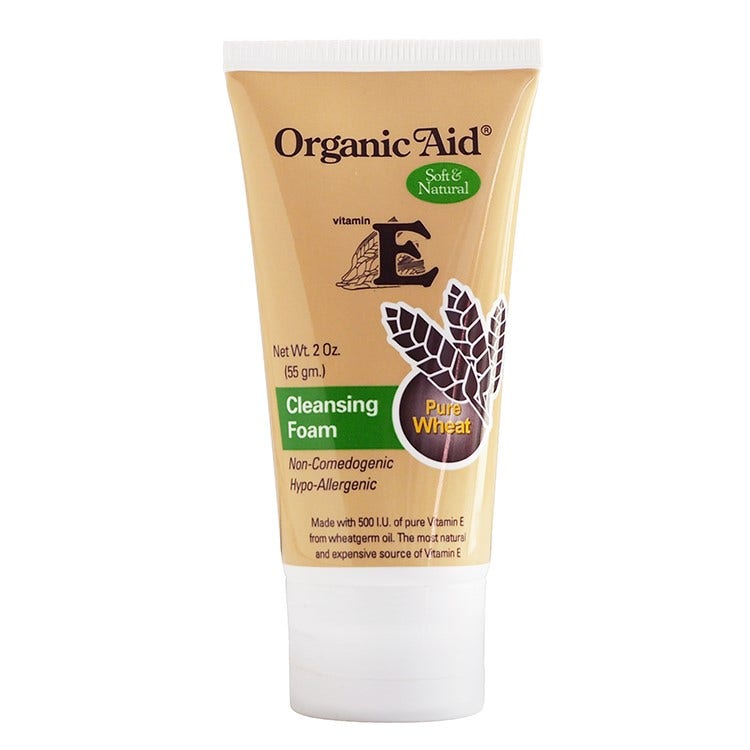
Organic Aid Vitamin E Cleansing Foam 55G

Organic Aid Vitamin E Cleansing Foam 55G
ORGANIC AID
organic-aid-vitamin-e-cleansing-foam-55g
Cleanse
10085048713509
Morning or Evening?
How often will you use this product?
Notes


Highlights
WHAT IS IT?
Cleansing Foam, ingredient count not specified
FEATURES
Contains Vitamin E antioxidant, gentle cleanser, leaves skin fresh, soft and smooth
BEST FOR
normal
CHECKS
For external use only, Not available for ingredient and contra indication details
Who Is It For?
What Does It Help With?
Protects Against Uv Rays DamageBudget
Affordable (under $30)How To Use
Which routine should it be used in?
Instructions:
Key Information


What ORGANIC AID Says
Product Description:
Vitamin E, a natural antioxidant for protecting against the harmful effects of UV rays from the sun. Organic Aid® Cleansing Foam Soft and Natural always leaves your skin feeling clean and gives you a natural clean feel. A gentle cleanser that leave skin fresh, soft and smooth.
About the Brand:
Ingredients Overview
Ingredients List
Deionized Water, Glycol Stearate, Sodium Oleate, Tea Laurel Sulphate, Propylene Glycol, Protein Hydrosylate, 500 I.U. Vitamin E, Methyl paraben, Quaternium 15, Propyl Paraben, Fragrance
Key Ingredients
Vitamin E
Ingredients Details
Fragrance
Common Name(s): Fragrance ingredient,eu allergen or aromatic component,olfactory/flavour
CAS Number: N/a
DESCRIPTION
What It Does: Provides the complete fragrance profile contributing to product sensory experience and consumer appeal.
Why It's Used: Fragrance is a major consumer purchase driver — up to 70% of consumers make purchasing decisions partially based on product scent.
How It Works: Fragrance blends interact with olfactory receptors providing the sensory profile — complex mixtures activate multiple receptor types for rich, multidimensional scent experiences.
Typically Found In: All fragrance products
TECHNICAL DETAILS
Primary Category: Active ingredient – cosmetic active
Secondary Functions: Skin conditioning
Application Areas:

Facial Skincare

Body Care
Hair Care
Beard Care
Color Cosmetics (Makeup)
Dietary/Oral Supplements
Typical Concentration Range: Standard use levels
SOURCING & ETHICS
Vegan Status: Conditional - supplier confirmation required
Halal Status: Unverified - supplier confirmation required
Source Notes: Commercially produced for cosmetic use. verify vegan/halal status with supplier. [audit 2026-07-29 rev2: the record's own source_notes does not assert a non-animal origin, or instructs the reader to verify with the supplier; "yes" asserts knowledge the record does not hold. determination requires shariah-panel sign-off.]
SKIN COMPATIBILITY
Irritancy Rating: 1/5 – very low
Comedogenicity Rating: 0/5 – non-comedogenic
Sensitivity Concerns: Well-tolerated by most skin types.
Safe for Sensitive Skin: Yes
SAFETY & COMPATIBILITY
Safety Profile: Good safety profile at recommended concentrations. ewg score: 1–2.
Works Well With: Standard skincare actives
Avoid Combining With: No known significant incompatibilities
SCIENTIFIC NOTE
Ifra guidelines set usage limits for fragrance ingredients based on skin sensitisation and phototoxicity assessment for each application category.
Last Verified: 2026-03-12
Primary Sources: Eu regulation 1223/2009 annex iii,ifra standards,fragrance allergen declaration requirements
Glycol Stearate
Common Name(s): Glycol stearate,cosmetic active,functional ingredient
CAS Number: N/a
DESCRIPTION
What It Does: Delivers characteristic cosmetic function at recommended use concentration.
Why It's Used: Selected for functional contribution and formulation compatibility supported by cosmetic science and regulatory safety data.
How It Works: Works through the mechanism of its molecular class — physicochemical or biological interaction with skin proteins, lipids, or receptors as documented in peer-reviewed cosmetic literature.
Typically Found In: Skin care formulations
TECHNICAL DETAILS
Primary Category: Active ingredient – cosmetic active
Secondary Functions: Skin conditioning
Application Areas:
Facial Skincare
Body Care
Hair Care
Beard Care
Color Cosmetics (Makeup)
Dietary/Oral Supplements
Typical Concentration Range: 0.1%–10%
SOURCING & ETHICS
Vegan Status: Conditional - feedstock declaration required
Halal Status: Unverified - feedstock declaration required (plant, animal and petrochemical routes all exist)
Source Notes: Commercially produced for cosmetic use. verify vegan/halal status with supplier. [audit 2026-07-29 rev2: origin-dependent: the same inci exists in plant, animal and petrochemical versions and the name does not discriminate. determination requires shariah-panel sign-off.]
SKIN COMPATIBILITY
Irritancy Rating: 1/5 – very low
Comedogenicity Rating: 0/5 – non-comedogenic
Sensitivity Concerns: Well-tolerated by most skin types.
Safe for Sensitive Skin: Yes
SAFETY & COMPATIBILITY
Safety Profile: Good safety profile at recommended concentrations. ewg score: 1–2.
Works Well With: Standard skincare actives
Avoid Combining With: No known significant incompatibilities
SCIENTIFIC NOTE
Glycol stearate has an established safety and efficacy profile within the cosmetic regulatory framework at standard use concentrations.
Last Verified: 2026-03-12
Primary Sources: Cosing database,glycol stearate technical literature
Propylene Glycol
Common Name(s): 1,2-propanediol,pdg,propane-1,2-diol
CAS Number: 57-55-6
DESCRIPTION
What It Does: Provides humectant hydration alongside solubilization of water-soluble actives and preservation boosting.
Why It's Used: Multi-function glycol for comprehensive formulation utility: hydration, solubilization, and preservation in a single cost-effective ingredient.
How It Works: Two hydroxyl groups provide water binding for humectant activity. propylene backbone provides solvent capacity for both polar and moderately non-polar actives. antimicrobial activity via membrane disruption enhancing preservative systems.
Typically Found In: Moisturizers,serums,toners,almost all aqueous formulations
TECHNICAL DETAILS
Primary Category: Functional ingredient – glycol humectant / solvent
Secondary Functions: Tewl reduction,skin plumping
Application Areas:
Facial Skincare
Body Care
Hair Care
Beard Care
Color Cosmetics (Makeup)
Dietary/Oral Supplements
Typical Concentration Range: 1%–15%
SOURCING & ETHICS
Vegan Status: Conditional - supplier confirmation required
Halal Status: Unverified - supplier confirmation required
Source Notes: Synthetic or naturally derived. excellent aqueous solubility. [audit 2026-07-29 rev2: status downgraded on audit. determination requires shariah-panel sign-off.]
SKIN COMPATIBILITY
Irritancy Rating: 2/5 – low to moderate; potential sensitizer in sensitive individuals at high concentrations
Comedogenicity Rating: 0/5 – non-comedogenic
Sensitivity Concerns: Non-irritating; suitable for all skin types.
Safe for Sensitive Skin: Yes
SAFETY & COMPATIBILITY
Safety Profile: Well-established safety profile. ewg score: 3. bio-based pg available from corn fermentation.
Works Well With: Ceramides,emollients,occlusives,glycerin,hyaluronic acid
Avoid Combining With: No significant incompatibilities
SCIENTIFIC NOTE
Propylene glycol's dual polarity (two hydroxyl groups + propylene hydrocarbon backbone) enables dissolution of ingredients spanning a wide hydrophilicity range – from highly polar actives (amino acids, glycerin) to moderately lipophilic actives (salicylic acid, retinol). this broad solubility range makes it uniquely versatile as a cosmetic solvent.
Last Verified: 2026-03-12
Primary Sources: Cosing database,cir safety assessment
Sodium Oleate
Common Name(s): Sodium oleate,fatty acid soap salt,cleansing emulsifier
CAS Number: N/a
DESCRIPTION
What It Does: Provides gentle lathering cleansing, conditions skin with the parent fatty acid's emollient character, and acts as a natural self-emulsifying agent in soap-based cream and lotion formulations.
Why It's Used: Natural soap salts are the original cosmetic surfactants — neutralised fatty acids provide cleansing, conditioning, and emulsification from a single renewable ingredient with millennia of safe use documentation.
How It Works: Fatty acid saponification: rcooh + sodiumoh → rcoo-sodium (soap). soap micelles encapsulate sebum and dirt for rinsing. the parent fatty acid determines foam character, conditioning, and melting point. ph-sensitive: function best above ph 6 where carboxylate (ionised) form predominates.
Typically Found In: Bar soaps,classical creams
TECHNICAL DETAILS
Primary Category: Active ingredient – cosmetic active
Secondary Functions: Skin conditioning
Application Areas:
Facial Skincare
Body Care
Hair Care
Beard Care
Color Cosmetics (Makeup)
Dietary/Oral Supplements
Typical Concentration Range: 5%–30%
SOURCING & ETHICS
Vegan Status: No - animal-derived
Halal Status: Conditional - animal origin stated in the record's own description; documentation required
Source Notes: Commercially produced for cosmetic use. verify vegan/halal status with supplier. [audit 2026-07-29 rev2: pass-1 miss: the record's own detail text states an animal derivation, but pass 1 classified on the name and source_notes only. determination requires shariah-panel sign-off.]
SKIN COMPATIBILITY
Irritancy Rating: 1/5 – very low
Comedogenicity Rating: 0/5 – non-comedogenic
Sensitivity Concerns: Well-tolerated by most skin types.
Safe for Sensitive Skin: Yes
SAFETY & COMPATIBILITY
Safety Profile: Good safety profile at recommended concentrations. ewg score: 1–2.
Works Well With: Standard skincare actives
Avoid Combining With: No known significant incompatibilities
SCIENTIFIC NOTE
Soap formulation ph: classical soap bars require ph 9–11 for stable carboxylate ionisation. at skin ph 5.5, partial protonation to free fatty acid occurs — providing the transition from soap (cleansing) to fatty acid (conditioning) on skin contact, explaining soap's combined clean-rinse and skin-soft feel.
Last Verified: 2026-03-12
Primary Sources: Cosing database,sodium oleate soap salt review