

Omeo
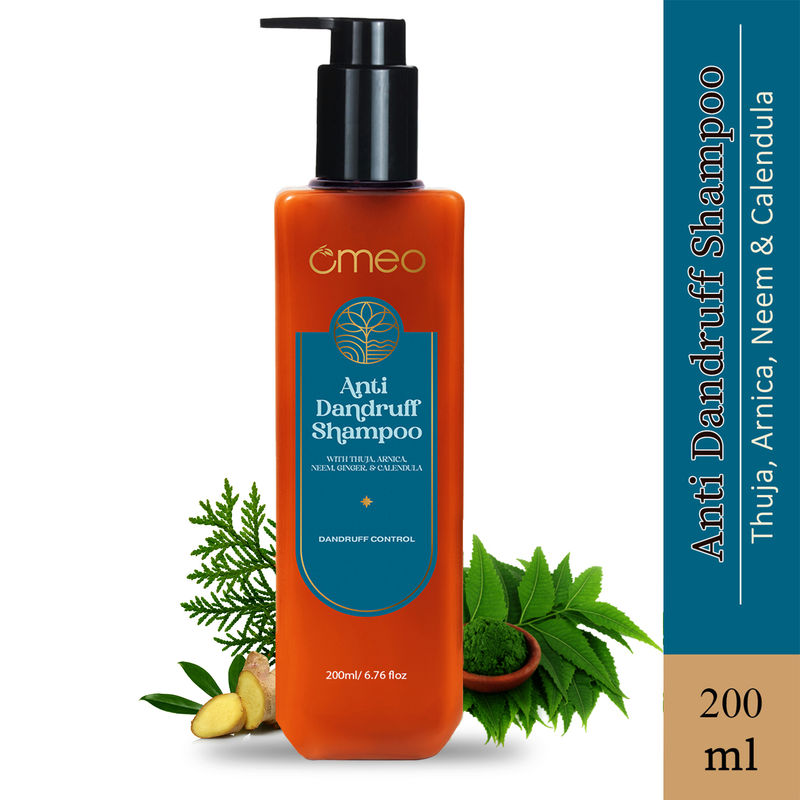
Omeo Anti Dandruff Shampoo With Green Natural Anti Dandruff Agent - Propanediol Caprylate
Neem produces antifungal, antibacterial, pain-relieving, and anti- compounds that would treat dandruff. Arnica montana stimulates scalp and hair follicles, prevents premature hair fall, and has anti-inflammatory and anti-dandruff properties. Calendula oil fights dandruff, flakiness, greasiness, irritation, and itching and moisturizes the scalp.
Natural
Sulfate-free
Scalp Issues
Dandruff
Itching
Flakiness
Optimized for Your Environment & Lifestyle
Nykaa
In stock
Recommended

Omeo Anti Dandruff Shampoo With Green Natural Anti Dandruff Agent - Propanediol Caprylate
Omeo
omeo-anti-dandruff-shampoo-with-green-natural-anti-dandruff-agent-propanediol-caprylate
Shampoo
10202950959397
Morning or Evening?
How often will you use this product?
Notes


Secure payment protection
Your Biodata Compatibility Analysis
Based on your 6 hair health indices and environmental factors
Poor Match
Significant incompatibilities
Growth Cycle Health Index
Hair Match
Hair Health Index Alignment
Optimal for OSI, SSI, DI, HSI
Ingredient Efficacy
Matching Ingredient Score
Environment Compatibility
Current UV, Air Quality & Humidity
Why This Works for Your Specific Profile
Damage Index:
Damage levels outside specified range may not benefit optimally from product formulation
Water Quality:
No water quality-specific conflicts
Hair:
No porosity-specific conflicts
Active Lifestyle:
Activity levels outside optimal range affect product performance and maintenance requirements
Your Hair Profile Integration
Your Hair Archetype

Density Level

Washing Frequency

Shedding Level

Oil Level
Your Hair Health Indices
Oil Secretion (OSI)
Very low oil production
Scalp Sensitivity (SSI)
Very low sensitivity
Growth Rate (CMR)
Poor metabolism rate
Damage Index (DI)
Minimal damage
Hair Strength (HSI)
Very weak strength
Softness Index (SI)
Significant improvement needed
Water & Environmental Integration

Water:


Expected Results & Timeline
Key Highlights

What is it?
Anti Dandruff Shampoo with 6 key ingredients

Who Is It For
All Ages, Unisex

Budget
$3.43 - $6.86

Timeline
Visible improvement after first wash, consistent results with regular use every 2-3 days
Why You’ll Love It

What Does It Help With?
Dandruff, Scalp flakiness, Itching, Hair fall prevention

Best for
Scalp Issues

Features
Contains natural ingredients like Neem, Arnica montana, and Calendula oil for antifungal, antibacterial, anti-inflammatory, and moisturizing effects; reduces dandruff and soothes scalp; stimulates hair follicles; suitable for regular use

Checks
100% Authentic
Ingredients Overview
Ingredients List
Arnica-montana-flower-extract, Calendula-officinalis-flower-extract, Thuja-occidentalis-leaf-oil, Melia-azadirachta-leaf-neem-extract, Zingiber-officinale-ginger-root-extract, Propanediol-caprylate, Lactic-acid
Key Ingredients
Arnica montana, Calendula oil, Thuja occidentalis leaf oil, Neem extract, Ginger root extract, Propanediol caprylate
Ingredients Details
Calendula Oil
Common Name(s): Calendula oil oil
DESCRIPTION
What It Does: Nourishes and softens skin through its balanced fatty acid profile, while antioxidant compounds protect against oxidative skin damage.
Why It's Used: Plant oils provide physiologically compatible lipid structures that integrate into the skin barrier and deliver fat-soluble antioxidants directly to skin cells.
How It Works: Fatty acids integrate into stratum corneum lipid lamellae, reinforcing the lipid barrier. antioxidants (tocopherols, carotenoids, polyphenols) neutralize ros through electron donation or singlet oxygen quenching.
Typically Found In: Face oils,serums,moisturizers,hair treatments,body oils
TECHNICAL DETAILS
Primary Category: Plant oils
Secondary Functions: Emollient,antioxidant
Application Areas:

Facial Skincare
Body Care
Hair Care

Beard Care
Color Cosmetics (Makeup)
Dietary/Oral Supplements
Typical Concentration Range: 0.5–30%
SOURCING & ETHICS
Vegan Status: Yes
Halal Status: Yes
Source Notes: Cold-pressed or solvent-extracted plant oil; no animal components.
SKIN COMPATIBILITY
Irritancy Rating: 1899-12-31 00:00:00 -0800
Comedogenicity Rating: 1900-01-01 00:00:00 -0800
Sensitivity Concerns: Low sensitization potential at recommended use concentrations.
Safe for Sensitive Skin: Yes
SAFETY & COMPATIBILITY
Safety Profile: Well-characterized cosmetic ingredient with established safety profile. generally non-irritating at typical use concentrations. suitable for leave-on and rinse-off cosmetics.
Works Well With: Vitamin e,ceramides,other plant oils,squalane
Avoid Combining With: Strong oxidizers (accelerate rancidity)
SCIENTIFIC NOTE
Vegetable oils are triglyceride matrices where the fatty acid composition determines skin compatibility, barrier function, and comedogenicity. oleic acid-rich oils (>60%) soften barrier lipids and enhance penetration; linoleic acid-rich oils reinforce ceramide-poor stratum corneum; saturated fatty acid-rich oils provide occlusion without skin penetration.
Last Verified: Cosing eu database; pcpc cosmetic ingredient safety reviews; aocs plant oil composition databases; fatty acid pharmacology reviews
Primary Sources: 2025-01-15
Ginger Root Extract
Common Name(s): Ginger root extract extract
DESCRIPTION
What It Does: Provides antioxidant protection, soothing anti-inflammatory effects, and skin-conditioning benefits through plant-derived polyphenols and phytochemicals.
Why It's Used: Plant extracts concentrate bioactive phytochemicals evolved for environmental protection — uv, microbial, and oxidative stressors — that translate to skin benefits.
How It Works: Polyphenols (flavonoids, phenolic acids) inhibit nf-κb-mediated inflammatory signaling, scavenge reactive oxygen species through electron donation, and chelate pro-oxidant metal ions to reduce oxidative skin damage.
Typically Found In: Serums,toners,moisturizers,masks,essences
TECHNICAL DETAILS
Primary Category: Botanical extracts
Secondary Functions: Antioxidant,anti-inflammatory
Application Areas:
Facial Skincare
Body Care
Hair Care
Beard Care
Color Cosmetics (Makeup)
Dietary/Oral Supplements
Typical Concentration Range: 0.1–10%
SOURCING & ETHICS
Vegan Status: Yes
Halal Status: Yes
Source Notes: Plant-derived extract; no animal components.
SKIN COMPATIBILITY
Irritancy Rating: 1899-12-31 00:00:00 -0800
Sensitivity Concerns: Low sensitization potential at recommended use concentrations.
Safe for Sensitive Skin: Yes
SAFETY & COMPATIBILITY
Safety Profile: Well-characterized cosmetic ingredient with established safety profile. generally non-irritating at typical use concentrations. suitable for leave-on and rinse-off cosmetics.
Works Well With: Niacinamide,hyaluronic acid,vitamin c,ceramides
Avoid Combining With: Strong oxidizing agents
SCIENTIFIC NOTE
Plant secondary metabolites (flavonoids, terpenes, phenolic acids) are biosynthesized as defense compounds against uv, herbivores, and pathogens. their anti-inflammatory activity typically derives from competitive inhibition of cox-2 and 5-lox enzymes (ic50 1–50 µm), while antioxidant activity involves single electron transfer (set) and hydrogen atom transfer (hat) mechanisms with structure-dependent rate constants.
Last Verified: Cosing eu database; pcpc cosmetic ingredient safety reviews; phytochemical and ethnobotanical literature
Primary Sources: 2025-01-15
Neem Extract
Common Name(s): Neem leaf extract,indian lilac extract
CAS Number: 84696-19-5
DESCRIPTION
What It Does: Provides nimbin anti-inflammatory and nimbidin antimicrobial activity for acne and inflammatory skin conditions.
Why It's Used: Multi-function ayurvedic anti-acne and anti-inflammatory from neem with comprehensive antimicrobial and anti-inflammatory activity.
How It Works: Nimbin inhibits phospholipase a2 for arachidonic acid cascade anti-inflammatory activity. nimbidin provides antimicrobial activity vs p. acnes and s. aureus. nimbidiol inhibits histamine release for anti-allergic activity.
Typically Found In: Anti-acne products,ayurvedic formulations,antimicrobial skin care
TECHNICAL DETAILS
Primary Category: Active ingredient – soothing / anti-inflammatory
Secondary Functions: Redness reduction,anti-inflammatory,calming
Application Areas:
Facial Skincare
Body Care
Hair Care
Beard Care
Color Cosmetics (Makeup)
Dietary/Oral Supplements
Typical Concentration Range: 0.1%–5%
SOURCING & ETHICS
Vegan Status: Yes – from azadirachta indica leaves
Halal Status: Yes
Source Notes: Plant-derived extract or synthetic.
SKIN COMPATIBILITY
Irritancy Rating: 1/5 – very low
Comedogenicity Rating: 0/5 – non-comedogenic
Sensitivity Concerns: Non-irritating; ideal for reactive and sensitive skin.
Safe for Sensitive Skin: Yes – particularly recommended for sensitive skin
SAFETY & COMPATIBILITY
Safety Profile: Excellent safety profile. ewg score: 1.
Works Well With: Ceramides,panthenol,allantoin,hyaluronic acid,centella asiatica
Avoid Combining With: No significant incompatibilities
SCIENTIFIC NOTE
Neem's phospholipase a2 inhibition provides anti-inflammatory activity at the most upstream point of the arachidonic acid cascade – before arachidonic acid is even released from membrane phospholipids, preventing the entire downstream cox and lox inflammatory pathway. this upstream inhibition provides theoretically more comprehensive inflammation prevention than cox or lox inhibitors acting downstream.
Last Verified: Cosing database,subapriya & nagini neem review
Primary Sources: 2026-03-12
Propanediol Caprylate
Common Name(s): Propanediol caprylate,propanediol caprylate,cosmetic functional ingredient,established active
CAS Number: N/a
DESCRIPTION
What It Does: Provides the characteristic cosmetic function of its ingredient class through molecular chemistry at recommended use concentration.
Why It's Used: Propanediol caprylate is selected for its c8 caprylic ester — the c-chain length provides ultra-light fast-dry short-chain emolliency, which distinguishes propanediol caprylate from esters of adjacent chain lengths in the same polarity tier.
How It Works: Functional groups interact with formulation components and skin through h-bonding, ionic association, surface adsorption, or receptor activity as appropriate to the molecular class.
Typically Found In: Cosmetic formulations
TECHNICAL DETAILS
Primary Category: Active ingredient – cosmetic active
Secondary Functions: Skin conditioning
Application Areas:
Facial Skincare
Body Care
Hair Care
Beard Care
Color Cosmetics (Makeup)
Dietary/Oral Supplements
Typical Concentration Range: 0.1%–10%
SOURCING & ETHICS
Vegan Status: Conditional
Halal Status: Yes
Source Notes: Commercially produced for cosmetic use. verify vegan/halal status with supplier.
SKIN COMPATIBILITY
Irritancy Rating: 1/5 – very low
Comedogenicity Rating: 0/5 – non-comedogenic
Sensitivity Concerns: Well-tolerated by most skin types.
Safe for Sensitive Skin: Yes
SAFETY & COMPATIBILITY
Safety Profile: Good safety profile at recommended concentrations. ewg score: 1–2.
Works Well With: Standard skincare actives
Avoid Combining With: No known significant incompatibilities
SCIENTIFIC NOTE
Safety documented in cosing at standard formulation concentrations.
Last Verified: Cosing database,propanediol caprylate technical review
Primary Sources: 2026-03-22
Personalized Usage Instructions
How to Use
Step 1
Wet scalp with lukewarm water
Step 2
Apply a coin-sized quantity to wet palm and lather
Step 3
Massage gently on scalp with fingertips for a few minutes
Step 4
Rinse with clean water
Step 5
Use every 2-3 days for best results
Medical Chemicals

Protein/Moisture
- Moisture
pH Level
- Acidic

Porosity Taget
- Normal Porosity
Customized for Your Profile
Scalp Condtions
Anti-Dandruff, Sensitive Scalp, Oil Control
Climate Suitability
Humid, Dry
Clinical Claims
Frequency
Wet scalp with lukewarm water. Apply a coin-sized quantity to wet palm and lather. Massage gently on scalp with fingertips for a few minutes. Rinse with clean water. Use every 2-3 days for best results.
Product Information

100% Authentic
