

Nykaa E retail limited
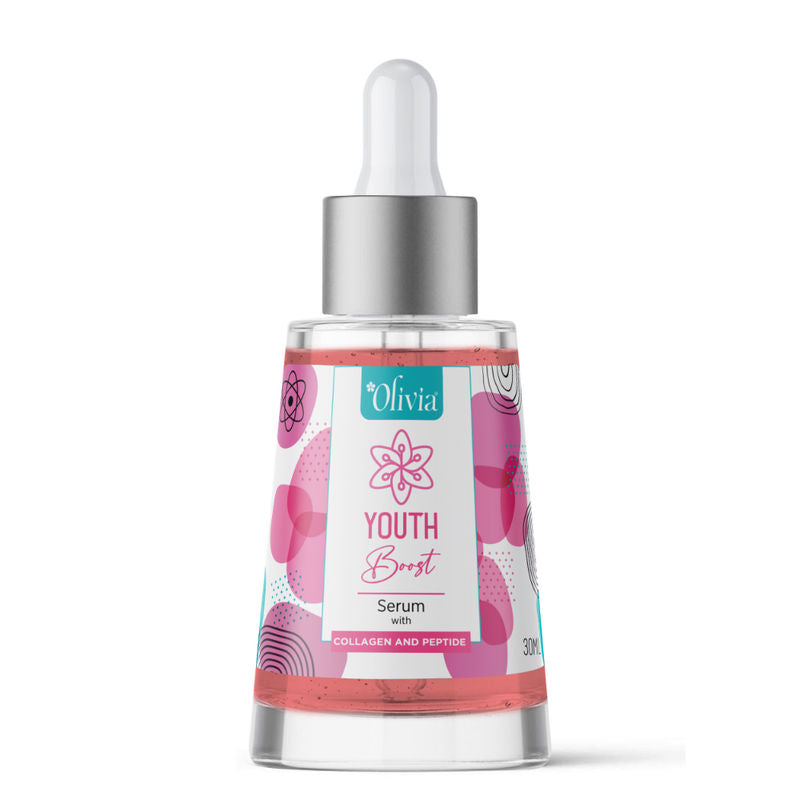
Olivia Youth Boost Face Serum With Collagen & Peptide for Firm, Youthful-Looking Skin

Olivia Youth Boost Face Serum With Collagen & Peptide for Firm, Youthful-Looking Skin
Nykaa E retail limited
olivia-youth-boost-face-serum-with-collagen-peptide-for-firm-youthful-looking-skin
Serum
10084920361253
Morning or Evening?
How often will you use this product?
Notes


Highlights
WHAT IS IT?
Face serum with collagen and peptide, 14 ingredients
FEATURES
Reduces signs of aging, nourishes and moisturizes, rejuvenates overnight, protects and recovers from environmental damage, vegan, cruelty-free
BEST FOR
normal
CHECKS
Contains fragrance
Who Is It For?
Women No Specific Age Range MentionedWhat Does It Help With?
Reduces Fine Lines And Wrinkles Improves Skin Elasticity Hydration And Skin TextureBudget
Affordable (under $30)How To Use
Which routine should it be used in?
Instructions:
Key Information


What Nykaa E retail limited Says
Product Description:
The Olivia Youth Boost Serum is a combination of collagen and peptide, which helps in reducing the signs of aging. It is designed to control aging and help the skin recover quickly from the depletion of collagen and elastin on the skin due to environmental oxidation and sunrays. The collagen and peptide combination in the serum helps to maintain the elasticity of the skin and helps in reduction of fine lines and wrinkles over a period of time. Reduces signs of aging: Face serum that effectively diminishes the appearance of fine lines and wrinkles, promoting a more youthful look. Nourishes and moisturizes: Provides deep nourishment and hydration, ensuring the skin remains supple and smooth. Rejuvenates overnight: Works while you sleep to rejuvenate and repair the skin, revealing a fresher complexion in the morning. Protects and recovers: Aids in the skin's recovery from environmental damage and sun exposure, maintaining skin health. Vegan and cruelty-free.
About the Brand:
Ingredients Overview
Ingredients List
Aqua, Aloe-Barbadensis-Leaf-Extract, Acrylates-Copolymer, Glycerin, Phenoxyethanol, Ethylhexylglycerin, Sodium-PCA, Panthenol, Sodium-Hyaluronate, Proline, Hydroxyproline, Sodium-Cocoyl-Amino-Acids, Sarcosine, Potassium-Aspartate, Magnesium-Aspartate, Fragrance, Triethanolamine, Sodium-Gluconate, Copper-Tripeptide-1, CI-16035
Key Ingredients
Collagen, Peptide
Ingredients Details
Ethylhexylglycerin
Common Name(s): Octylglycerin,2-ethylhexyl glycerol ether,sensiva sc 10
CAS Number: 70445-33-9
DESCRIPTION
What It Does: Provides antimicrobial skin conditioning with deodorant activity and preservation system enhancement.
Why It's Used: Multifunctional clean beauty preservation active — ethylhexylglycerin provides antimicrobial, deodorant, and skin conditioning in a single ingredient accepted in most natural cosmetic certification schemes.
How It Works: Glycerol ether provides antimicrobial via bacterial membrane phospholipid disruption. deodorant activity via reduction of underarm lipase enzyme activity (similar mechanism to triethyl citrate). skin conditioning from glycerol humectant component. synergistic with phenoxyethanol and diols.
Typically Found In: Natural preservation systems,deodorants,skin conditioning products
TECHNICAL DETAILS
Primary Category: Functional ingredient – antimicrobial glycerol ether
Secondary Functions: Skin conditioning
Application Areas:

Facial Skincare

Body Care
Hair Care
Beard Care
Color Cosmetics (Makeup)
Dietary/Oral Supplements
Typical Concentration Range: 0.1%–0.5%
SOURCING & ETHICS
Vegan Status: Conditional - supplier confirmation required
Halal Status: Unverified - supplier confirmation required
Source Notes: Commercially produced for cosmetic use. verify vegan/halal status with supplier. [audit 2026-07-29 rev2: the record's own source_notes does not assert a non-animal origin, or instructs the reader to verify with the supplier; "yes" asserts knowledge the record does not hold. determination requires shariah-panel sign-off.]
SKIN COMPATIBILITY
Irritancy Rating: 1/5 – very low
Comedogenicity Rating: 0/5 – non-comedogenic
Sensitivity Concerns: Well-tolerated by most skin types.
Safe for Sensitive Skin: Yes
SAFETY & COMPATIBILITY
Safety Profile: Good safety profile at recommended concentrations. ewg score: 1–2.
Works Well With: Standard skincare actives
Avoid Combining With: No known significant incompatibilities
SCIENTIFIC NOTE
Ethylhexylglycerin's deodorant mechanism is pharmacologically identical to triethyl citrate: both inhibit skin surface microbial lipase enzymes that convert odourless triglycerides to odorous free fatty acids. the glycerol ether structure of ethylhexylglycerin, combined with the 2-ethylhexyl chain, provides lipase inhibition similar to ester-based lipase inhibitors from a different chemical class.
Last Verified: 2026-03-12
Primary Sources: Cosing database,schülke sensiva sc 10 technical data,cir safety assessment
Fragrance
Common Name(s): Fragrance ingredient,eu allergen or aromatic component,olfactory/flavour
CAS Number: N/a
DESCRIPTION
What It Does: Provides the complete fragrance profile contributing to product sensory experience and consumer appeal.
Why It's Used: Fragrance is a major consumer purchase driver — up to 70% of consumers make purchasing decisions partially based on product scent.
How It Works: Fragrance blends interact with olfactory receptors providing the sensory profile — complex mixtures activate multiple receptor types for rich, multidimensional scent experiences.
Typically Found In: All fragrance products
TECHNICAL DETAILS
Primary Category: Active ingredient – cosmetic active
Secondary Functions: Skin conditioning
Application Areas:
Facial Skincare
Body Care
Hair Care
Beard Care
Color Cosmetics (Makeup)
Dietary/Oral Supplements
Typical Concentration Range: Standard use levels
SOURCING & ETHICS
Vegan Status: Conditional - supplier confirmation required
Halal Status: Unverified - supplier confirmation required
Source Notes: Commercially produced for cosmetic use. verify vegan/halal status with supplier. [audit 2026-07-29 rev2: the record's own source_notes does not assert a non-animal origin, or instructs the reader to verify with the supplier; "yes" asserts knowledge the record does not hold. determination requires shariah-panel sign-off.]
SKIN COMPATIBILITY
Irritancy Rating: 1/5 – very low
Comedogenicity Rating: 0/5 – non-comedogenic
Sensitivity Concerns: Well-tolerated by most skin types.
Safe for Sensitive Skin: Yes
SAFETY & COMPATIBILITY
Safety Profile: Good safety profile at recommended concentrations. ewg score: 1–2.
Works Well With: Standard skincare actives
Avoid Combining With: No known significant incompatibilities
SCIENTIFIC NOTE
Ifra guidelines set usage limits for fragrance ingredients based on skin sensitisation and phototoxicity assessment for each application category.
Last Verified: 2026-03-12
Primary Sources: Eu regulation 1223/2009 annex iii,ifra standards,fragrance allergen declaration requirements
Glycerin
Common Name(s): Glycerol,glycerine,1,2,3-propanetriol
CAS Number: 56-81-5
DESCRIPTION
What It Does: Glycerin pulls water from the environment and deeper skin layers into the outer skin layer (epidermis), boosting moisture levels and keeping skin soft, smooth, and plump.
Why It's Used: It is used in virtually every moisturizer, serum, and cleanser because it is highly effective at hydrating skin, is well-tolerated by all skin types, and enhances the texture and spreadability of formulations.
How It Works: As a humectant, glycerin forms hydrogen bonds with water molecules, trapping them in the skin. it also reinforces the skin barrier by integrating into lipid structures between skin cells.
Typically Found In: Moisturizers,serums,cleansers,toners,sheet masks,sunscreens,body lotions,shampoos,conditioners
TECHNICAL DETAILS
Primary Category: Humectant
Secondary Functions: Skin barrier support,emollient,solvent
Application Areas:
Facial Skincare
Body Care
Hair Care
Beard Care
Color Cosmetics (Makeup)
Dietary/Oral Supplements
Typical Concentration Range: 1%–30% (typical: 3–10%)
SOURCING & ETHICS
Vegan Status: Conditional - feedstock declaration required
Halal Status: Unverified - feedstock declaration required (plant, animal and petrochemical routes all exist)
Source Notes: Derived from plant oils via hydrolysis or saponification; synthetic versions also available. palm-derived glycerin carries sustainability concerns. [audit 2026-07-29 rev2: origin-dependent: the same inci exists in plant, animal and petrochemical versions and the name does not discriminate. determination requires shariah-panel sign-off.]
SKIN COMPATIBILITY
Irritancy Rating: 1/5 – very low; non-irritating at all standard concentrations
Comedogenicity Rating: 0/5 – non-comedogenic
Sensitivity Concerns: Extremely rare allergic reactions; generally safe for all skin types including sensitive and baby skin
Safe for Sensitive Skin: Yes
SAFETY & COMPATIBILITY
Safety Profile: Widely recognized as safe. ewg hazard score: 1. no significant concerns for irritation, sensitization, or toxicity at typical concentrations (up to 50%).
Works Well With: Hyaluronic acid,ceramides,niacinamide,panthenol,urea,peptides,retinol,ahas/bhas
Avoid Combining With: No known incompatibilities at standard concentrations
SCIENTIFIC NOTE
Glycerin is an endogenous skin component found naturally in the stratum corneum. aquaporin-3 channels in keratinocytes facilitate glycerin transport, making it integral to natural skin hydration pathways.
Last Verified: 2026-03-12
Primary Sources: Cosing database,cir safety assessment,ewg skin deep,inci decoder
Hydroxyproline
Common Name(s): (2s,4r)-4-hydroxyproline,4-hydroxy-l-proline,hyp
CAS Number: 51-35-4
DESCRIPTION
What It Does: Provides collagen-specific hydroxyproline for triple-helix stability support and nmf conditioning.
Why It's Used: The collagen-specific nmf amino acid — hydroxyproline's almost exclusive occurrence in collagen makes it the most targeted amino acid for collagen-associated skin conditioning.
How It Works: 4-hydroxyproline provides inter-chain hydrogen bonding stabilising collagen triple-helix at body temperature. without hydroxyproline, collagen triple helix melts at 24°c (below body temperature). nmf component from hydroxyl group water binding. marker of collagen turnover — urinary hydroxyproline indicates collagen catabolism rate.
Typically Found In: Collagen-support products,nmf moisturisers,wound healing
TECHNICAL DETAILS
Primary Category: Active ingredient – collagen structural amino acid
Secondary Functions: Skin conditioning
Application Areas:
Facial Skincare
Body Care
Hair Care
Beard Care
Color Cosmetics (Makeup)
Dietary/Oral Supplements
Typical Concentration Range: 0.5%–5%
SOURCING & ETHICS
Vegan Status: Conditional - supplier confirmation required
Halal Status: Unverified - supplier confirmation required
Source Notes: Commercially produced for cosmetic use. verify vegan/halal status with supplier. [audit 2026-07-29 rev2: the record's own source_notes does not assert a non-animal origin, or instructs the reader to verify with the supplier; "yes" asserts knowledge the record does not hold. determination requires shariah-panel sign-off.]
SKIN COMPATIBILITY
Irritancy Rating: 1/5 – very low
Comedogenicity Rating: 0/5 – non-comedogenic
Sensitivity Concerns: Well-tolerated by most skin types.
Safe for Sensitive Skin: Yes
SAFETY & COMPATIBILITY
Safety Profile: Good safety profile at recommended concentrations. ewg score: 1–2.
Works Well With: Standard skincare actives
Avoid Combining With: No known significant incompatibilities
SCIENTIFIC NOTE
Hydroxyproline's role in collagen stability was definitively established through ramachandran's analysis of collagen triple helix geometry: the 4-hydroxyl group of hydroxyproline forms a water-mediated inter-strand hydrogen bond network that raises the triple-helix melting temperature from 24°c (without oh) to 37°c (with oh). this 13°c thermal stability gain from a single hydroxyl group is essential for collagen function at human body temperature.
Last Verified: 2026-03-12
Primary Sources: Cosing database,bella et al. hydroxyproline collagen stability study,cir safety assessment