

Olay
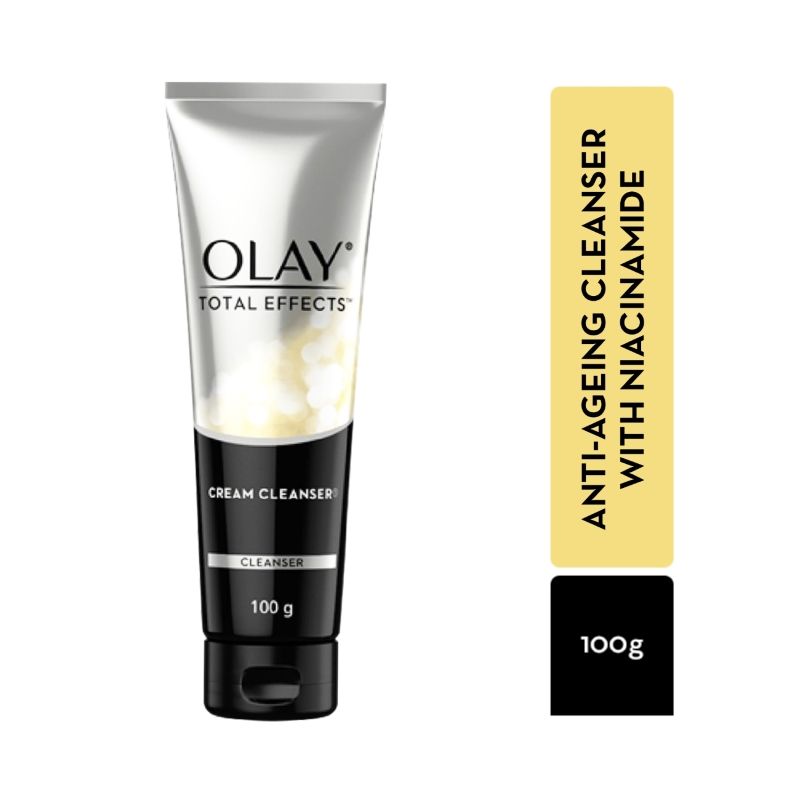
Olay Total Effects Foaming Cleanser & Face Wash, Fights 7 Signs of Ageing With Green Tea Extracts

Olay Total Effects Foaming Cleanser & Face Wash, Fights 7 Signs of Ageing With Green Tea Extracts
Olay
olay-total-effects-foaming-cleanser-face-wash-fights-7-signs-of-ageing-with-green-tea-extracts
Cleanse
10084986323237
Morning or Evening?
How often will you use this product?
Notes


Highlights
WHAT IS IT?
Foaming Cleanser, 7 benefits
FEATURES
Combats 7 signs of ageing, removes dirt, make-up and excess oil without over-drying, non-comedogenic, revitalizes skin, suitable for all skin types, gentle, radiant skin
BEST FOR
all
CHECKS
No over-drying, non-comedogenic
Who Is It For?
What Does It Help With?
Signs Of Ageing Dirt Make-up Excess Oil Dead Skin Cells DullnessBudget
Affordable (under $30)How To Use
Which routine should it be used in?
Instructions:
Key Information


What Olay Says
Product Description:
Olay Total Effects 7 In One Anti-Ageing Foaming Face Wash whisks away all the impurities and leaves your skin youthfully alive. The do-it-all formula of this face wash offers 7 cleansing benefits in one and imparts a stunning glow to your skin. Combats 7 signs of ageing to give you visibly younger and fresher looking skin. Removes dirt, make-up and excess oil, without over-drying your skin. Its non-comedogenic formula lifts away dead cells and revitalizes your skin. Suitable for all skin types. Gentle on your skin. Leaves your skin looking radiant and fresh.
About the Brand:
Ingredients Overview
Ingredients List
Water, Glycerin, Myristic Acid, Stearic Acid, Palmitic Acid, Sodium Lauroyl Sarcosinate, Potassium Hydroxide, Lauric Acid, Polyquaternium-10, DMDM Hydantoin, Fragrance, Pentasodium Pentetate, Butylene Glycol, Niacinamide, Iodopropynyl Butylcarbamate
Key Ingredients
Niacinamide
Ingredients Details
Butylene Glycol
Common Name(s): 1,3-butanediol,bg,1,3-butylene glycol
CAS Number: 107-88-0
DESCRIPTION
What It Does: Provides humectant hydration and active ingredient solubilization with excellent skin feel.
Why It's Used: Preferred glycol humectant in premium and k-beauty formulations for superior skin feel vs propylene glycol with equivalent functionality.
How It Works: Two hydroxyl groups at 1,3-positions provide water binding and solvent activity. better tolerated than propylene glycol with minimal sensitization risk. 4-carbon backbone provides slightly greater hydrophobic character enabling dissolution of less polar actives vs pg.
Typically Found In: Toners,essences,serums,k-beauty formulas
TECHNICAL DETAILS
Primary Category: Functional ingredient – glycol humectant
Secondary Functions: Tewl reduction,skin plumping
Application Areas:

Facial Skincare
Body Care
Hair Care

Beard Care
Color Cosmetics (Makeup)
Dietary/Oral Supplements
Typical Concentration Range: 1%–10%
SOURCING & ETHICS
Vegan Status: Yes – synthetic
Halal Status: Yes
Source Notes: Synthetic or naturally derived. excellent aqueous solubility.
SKIN COMPATIBILITY
Irritancy Rating: 1/5 – very low
Comedogenicity Rating: 0/5 – non-comedogenic
Sensitivity Concerns: Non-irritating; suitable for all skin types.
Safe for Sensitive Skin: Yes
SAFETY & COMPATIBILITY
Safety Profile: Excellent safety profile. ewg score: 1.
Works Well With: Ceramides,emollients,occlusives,glycerin,hyaluronic acid
Avoid Combining With: No significant incompatibilities
SCIENTIFIC NOTE
K-beauty's preference for butylene glycol over propylene glycol is driven by two factors: bg's superior skin feel (less tacky than pg's higher viscosity) and its lower sensitization potential (1,3-bg has better spatial distribution of hydroxyl groups that reduces protein interaction vs pg's 1,2-position oh groups).
Last Verified: 2026-03-12
Primary Sources: Cosing database,cir safety assessment
Dmdm Hydantoin
Common Name(s): Formaldehyde-releasing preservative,antimicrobial preservation,formaldehyde donor
CAS Number: N/a
DESCRIPTION
What It Does: Provides broad-spectrum preservation against bacteria and fungi through controlled formaldehyde release, maintaining product safety throughout shelf life at eu-permitted concentrations.
Why It's Used: Formaldehyde-releasing preservatives provide reliable broad-spectrum preservation but face increasing consumer and regulatory scrutiny — eu requires label declaration, and many brands adopt 'formaldehyde-free' positioning due to sensitisation concerns.
How It Works: Hydrolysis in aqueous formulation releases formaldehyde (hcho) at controlled rates depending on ph and temperature. free formaldehyde cross-links bacterial proteins and nucleic acids through schiff base formation with amine groups, providing bactericidal activity. sensitisation risk from free formaldehyde's reactivity with skin proteins forming haptens.
Typically Found In: All aqueous formulations
TECHNICAL DETAILS
Primary Category: Active ingredient – cosmetic active
Secondary Functions: Skin conditioning
Application Areas:
Facial Skincare
Body Care
Hair Care
Beard Care
Color Cosmetics (Makeup)
Dietary/Oral Supplements
Typical Concentration Range: Check eu annex v limits
SOURCING & ETHICS
Vegan Status: Conditional - supplier confirmation required
Halal Status: Unverified - supplier confirmation required
Source Notes: Commercially produced for cosmetic use. verify vegan/halal status with supplier. [audit 2026-07-29 rev2: the record's own source_notes does not assert a non-animal origin, or instructs the reader to verify with the supplier; "yes" asserts knowledge the record does not hold. determination requires shariah-panel sign-off.]
SKIN COMPATIBILITY
Irritancy Rating: 1/5 – very low
Comedogenicity Rating: 0/5 – non-comedogenic
Sensitivity Concerns: Well-tolerated by most skin types.
Safe for Sensitive Skin: Yes
SAFETY & COMPATIBILITY
Safety Profile: Good safety profile at recommended concentrations. ewg score: 1–2.
Works Well With: Standard skincare actives
Avoid Combining With: No known significant incompatibilities
SCIENTIFIC NOTE
Eu regulation 1223/2009 requires 'contains formaldehyde' label declaration when free formaldehyde >0.05% in the finished product. many formulators are transitioning away from formaldehyde-releasing preservatives to avoid this label requirement regardless of safety profile.
Last Verified: 2026-03-12
Primary Sources: Cosing database,eu annex v formaldehyde-releasing preservative declaration
Fragrance
Common Name(s): Fragrance ingredient,eu allergen or aromatic component,olfactory/flavour
CAS Number: N/a
DESCRIPTION
What It Does: Provides the complete fragrance profile contributing to product sensory experience and consumer appeal.
Why It's Used: Fragrance is a major consumer purchase driver — up to 70% of consumers make purchasing decisions partially based on product scent.
How It Works: Fragrance blends interact with olfactory receptors providing the sensory profile — complex mixtures activate multiple receptor types for rich, multidimensional scent experiences.
Typically Found In: All fragrance products
TECHNICAL DETAILS
Primary Category: Active ingredient – cosmetic active
Secondary Functions: Skin conditioning
Application Areas:
Facial Skincare
Body Care
Hair Care
Beard Care
Color Cosmetics (Makeup)
Dietary/Oral Supplements
Typical Concentration Range: Standard use levels
SOURCING & ETHICS
Vegan Status: Conditional - supplier confirmation required
Halal Status: Unverified - supplier confirmation required
Source Notes: Commercially produced for cosmetic use. verify vegan/halal status with supplier. [audit 2026-07-29 rev2: the record's own source_notes does not assert a non-animal origin, or instructs the reader to verify with the supplier; "yes" asserts knowledge the record does not hold. determination requires shariah-panel sign-off.]
SKIN COMPATIBILITY
Irritancy Rating: 1/5 – very low
Comedogenicity Rating: 0/5 – non-comedogenic
Sensitivity Concerns: Well-tolerated by most skin types.
Safe for Sensitive Skin: Yes
SAFETY & COMPATIBILITY
Safety Profile: Good safety profile at recommended concentrations. ewg score: 1–2.
Works Well With: Standard skincare actives
Avoid Combining With: No known significant incompatibilities
SCIENTIFIC NOTE
Ifra guidelines set usage limits for fragrance ingredients based on skin sensitisation and phototoxicity assessment for each application category.
Last Verified: 2026-03-12
Primary Sources: Eu regulation 1223/2009 annex iii,ifra standards,fragrance allergen declaration requirements
Glycerin
Common Name(s): Glycerol,glycerine,1,2,3-propanetriol
CAS Number: 56-81-5
DESCRIPTION
What It Does: Glycerin pulls water from the environment and deeper skin layers into the outer skin layer (epidermis), boosting moisture levels and keeping skin soft, smooth, and plump.
Why It's Used: It is used in virtually every moisturizer, serum, and cleanser because it is highly effective at hydrating skin, is well-tolerated by all skin types, and enhances the texture and spreadability of formulations.
How It Works: As a humectant, glycerin forms hydrogen bonds with water molecules, trapping them in the skin. it also reinforces the skin barrier by integrating into lipid structures between skin cells.
Typically Found In: Moisturizers,serums,cleansers,toners,sheet masks,sunscreens,body lotions,shampoos,conditioners
TECHNICAL DETAILS
Primary Category: Humectant
Secondary Functions: Skin barrier support,emollient,solvent
Application Areas:
Facial Skincare
Body Care
Hair Care
Beard Care
Color Cosmetics (Makeup)
Dietary/Oral Supplements
Typical Concentration Range: 1%–30% (typical: 3–10%)
SOURCING & ETHICS
Vegan Status: Conditional - feedstock declaration required
Halal Status: Unverified - feedstock declaration required (plant, animal and petrochemical routes all exist)
Source Notes: Derived from plant oils via hydrolysis or saponification; synthetic versions also available. palm-derived glycerin carries sustainability concerns. [audit 2026-07-29 rev2: origin-dependent: the same inci exists in plant, animal and petrochemical versions and the name does not discriminate. determination requires shariah-panel sign-off.]
SKIN COMPATIBILITY
Irritancy Rating: 1/5 – very low; non-irritating at all standard concentrations
Comedogenicity Rating: 0/5 – non-comedogenic
Sensitivity Concerns: Extremely rare allergic reactions; generally safe for all skin types including sensitive and baby skin
Safe for Sensitive Skin: Yes
SAFETY & COMPATIBILITY
Safety Profile: Widely recognized as safe. ewg hazard score: 1. no significant concerns for irritation, sensitization, or toxicity at typical concentrations (up to 50%).
Works Well With: Hyaluronic acid,ceramides,niacinamide,panthenol,urea,peptides,retinol,ahas/bhas
Avoid Combining With: No known incompatibilities at standard concentrations
SCIENTIFIC NOTE
Glycerin is an endogenous skin component found naturally in the stratum corneum. aquaporin-3 channels in keratinocytes facilitate glycerin transport, making it integral to natural skin hydration pathways.
Last Verified: 2026-03-12
Primary Sources: Cosing database,cir safety assessment,ewg skin deep,inci decoder