

Caudalie
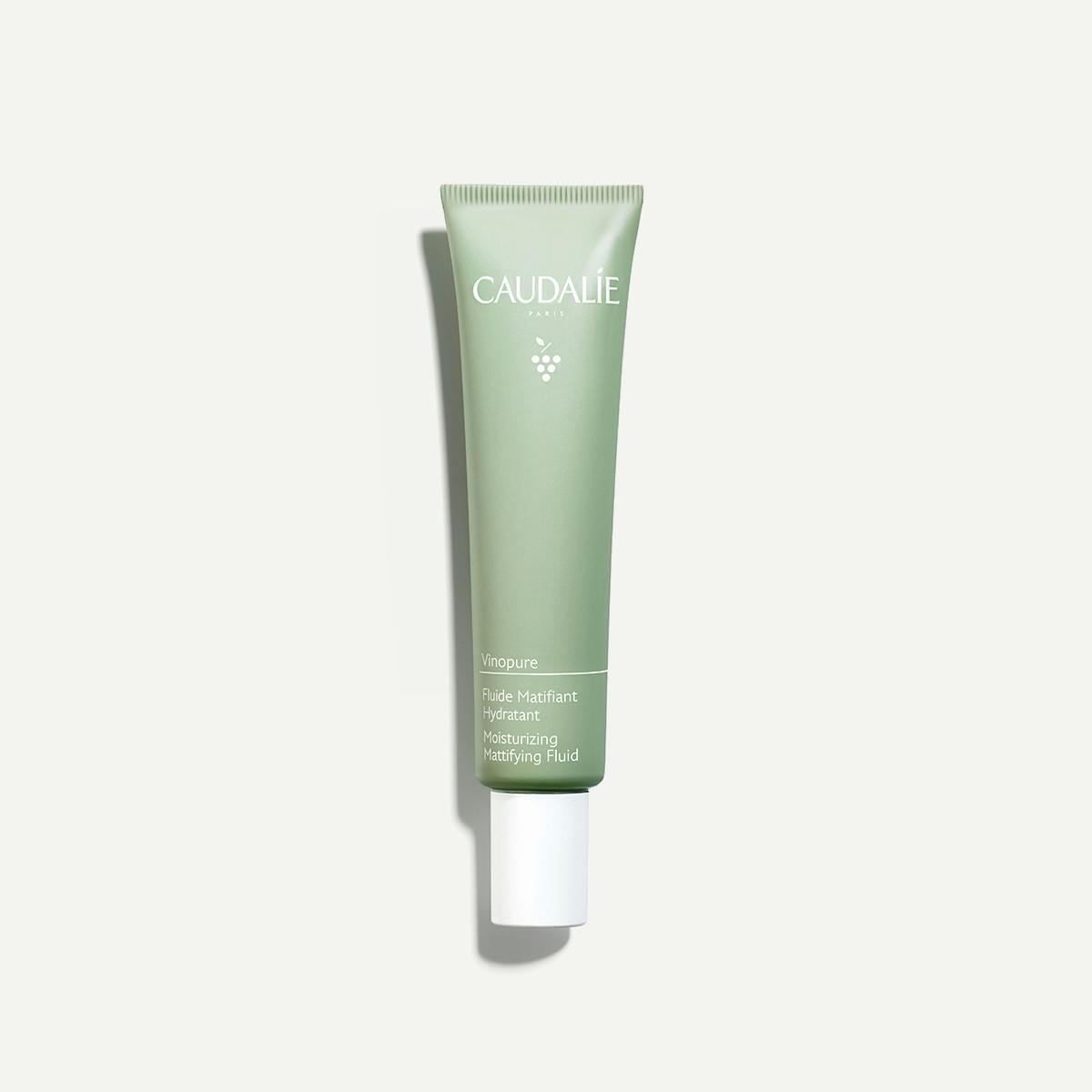
Oil-Control Moisturizer for Acne Prone Skin

Oil-Control Moisturizer for Acne Prone Skin
Caudalie
oil-control-moisturizer-for-acne-prone-skin
Moisturize
9818413728037
Morning or Evening?
How often will you use this product?
Notes


Highlights
WHAT IS IT?
Mattifying moisturizer with 96% natural origin ingredients
FEATURES
Offers all-day hydration, mattifies skin, absorbs excess oil, reduces appearance of blemishes and blackheads, refines skin texture
BEST FOR
combination
CHECKS
Free of chemical fragrances, Parabens, Silicones, Sulfates, PEG, Coconut, Petroleum-based
Who Is It For?
People With Combination Skin And Acne-prone SkinWhat Does It Help With?
Blemishes Breakouts Blackheads Excess Oil Skin TextureBudget
Mid-range ($30-$75)How To Use
Which routine should it be used in?
Instructions:
Key Information


What Caudalie Says
Product Description:
A lightweight, non-comedogenic, olive squalane based mattifying moisturizer that offers all-day hydration while mattifying skin and absorbing excess oil. This vegan moisturizer helps reduce the appearance of blemishes (breakouts and blackheads), and refines skin texture, for visibly mattified and healthy-looking skin.
About the Brand:
Ingredients Overview
Ingredients List
AQUA/WATER/EAU, BUTYLENE GLYCOL, COCO-CAPRYLATE/CAPRATE, VITIS VINIFERA (GRAPE) FRUIT WATER, SILICA, SQUALANE, GLYCERIN, TAPIOCA STARCH, GLYCERYL STEARATE, ISOSTEARYL ISOSTEARATE, PALMITOYL GRAPE SEED EXTRACT, ALCOHOL DENAT., ACRYLATES/ C10-30 ALKYL ACRYLATE CROSSPOLYMER, CAPRYLYL GLYCOL, XANTHAN GUM, ENANTIA CHLORANTHA BARK EXTRACT, PENTYLENE GLYCOL, POTASSIUM CETYL PHOSPHATE, VITIS VINIFERA (GRAPE) JUICE, TOCOPHEROL, HELIANTHUS ANNUUS (SUNFLOWER) SEED OIL, SODIUM PHYTATE, CITRIC ACID, PELARGONIUM GRAVEOLENS FLOWER OIL, SODIUM HYDROXIDE, SODIUM CARBOXYMETHYL BETA-GLUCAN, MENTHA PIPERITA (PEPPERMINT) OIL, CITRAL, CYMBOPOGON CITRATUS LEAF OIL, SODIUM BENZOATE, ROSMARINUS OFFICINALIS (ROSEMARY) LEAF OIL, CITRONELLOL, MALTODEXTRIN, ORTHOSIPHON STAMINEUS EXTRACT, POTASSIUM SORBATE, LAVANDULA HYBRIDA OIL, MELISSA OFFICINALIS LEAF OIL, OLEANOLIC ACID, GERANIOL, LINALOOL, LIMONENE
Key Ingredients
Grape fruit water, Squalane, Grape seed extract, Grape juice
Ingredients Details
Alcohol Denat.
Common Name(s): Alcohol denat.,denatured ethanol,solvent antimicrobial astringent
CAS Number: N/a
DESCRIPTION
What It Does: Alcohol denat. dissolves oil-soluble and water-soluble cosmetic actives, provides rapid antimicrobial activity at concentrations above 60–70% by denaturing microbial proteins, delivers a refreshing cooling sensation through evaporative cooling on skin, and temporarily enhances the penetration of topical actives by transiently disrupting the stratum corneum lipid bilayer organisation.
Why It's Used: Formulators choose alcohol denat. for its irreplaceable combination of solvent power, antimicrobial activity, and penetration-enhancing properties. no other cosmetic solvent simultaneously provides the cooling sensory experience of alcohol (from evaporative cooling at the skin surface), the immediate antimicrobial activity required for sanitisers (from protein denaturation above 60%), and the transient sc lipid disruption that improves active ingredient delivery (essential in actives-rich toners and essences). for denatured alcohol specifically, denaturing agents (typically 5% isopropanol or bitrex) prevent consumption without affecting cosmetic function.
How It Works: Alcohol denat. works through multiple mechanisms depending on concentration: (1) solvent action — alcohol's hydroxyl group provides hydrogen bonding with water while the short alkyl chain provides interaction with organic solutes, enabling dissolution of both hydrophilic and moderately lipophilic cosmetic actives in a single solvent; (2) antimicrobial — above 60% concentration, ethanol denatures microbial proteins by disrupting non-covalent bonds maintaining protein secondary and tertiary structure — the alcohol molecules intercalate between protein chains, disrupting the hydrophobic interactions and hydrogen bonds that maintain enzyme active site geometry. this non-specific protein denaturation is immediately bactericidal and virucidal with no resistance mechanism possible; (3) sc penetration enhancement — at lower concentrations (5–30%), ethanol transiently fluidises the sc lipid bilayer by intercalating between the ordered lipid lamellae, disrupting the crystal packing and increasing lipid bilayer fluidity. this transient fluidisation increases the diffusion coefficient of co-applied actives through the sc for up to 30 minutes post-application; (4) astringency — alcohol's protein precipitating action at the skin surface contracts superficial proteins, temporarily tightening pores and reducing oiliness.
Typically Found In: Toners,hand sanitisers,actives serums
TECHNICAL DETAILS
Primary Category: Active ingredient – cosmetic active
Secondary Functions: Skin conditioning
Application Areas:

Facial Skincare

Body Care
Hair Care
Beard Care
Color Cosmetics (Makeup)
Dietary/Oral Supplements
Typical Concentration Range: 5%–95%
SOURCING & ETHICS
Vegan Status: Yes
Halal Status: Yes
Source Notes: Commercially produced for cosmetic use. verify vegan/halal status with supplier.
SKIN COMPATIBILITY
Irritancy Rating: 1/5 – very low
Comedogenicity Rating: 0/5 – non-comedogenic
Sensitivity Concerns: Well-tolerated by most skin types.
Safe for Sensitive Skin: Yes
SAFETY & COMPATIBILITY
Safety Profile: Good safety profile at recommended concentrations. ewg score: 1–2.
Works Well With: Standard skincare actives
Avoid Combining With: No known significant incompatibilities
SCIENTIFIC NOTE
Ethanol concentration-dependent antimicrobial efficacy: below 40% — minimal bactericidal effect (insufficient protein denaturation); 40–60% — bacteriostatic, not bactericidal; 60–70% — peak bactericidal efficacy against both enveloped and non-enveloped viruses and vegetative bacteria (optimal water content maintains protein hydration required for denaturation to proceed); 80–90% — remains effective but slightly reduced from decreased water activity; 95–100% — reduced efficacy (insufficient water for protein denaturation). the 70% 'sweet spot' for sanitisers reflects this concentration-efficacy peak, not a formulation convenience.
Last Verified: Cosing database,alcohol denat. ethanol solvent antimicrobial review
Primary Sources: 2026-03-12
Butylene Glycol
Common Name(s): 1,3-butanediol,bg,1,3-butylene glycol
CAS Number: 107-88-0
DESCRIPTION
What It Does: Provides humectant hydration and active ingredient solubilization with excellent skin feel.
Why It's Used: Preferred glycol humectant in premium and k-beauty formulations for superior skin feel vs propylene glycol with equivalent functionality.
How It Works: Two hydroxyl groups at 1,3-positions provide water binding and solvent activity. better tolerated than propylene glycol with minimal sensitization risk. 4-carbon backbone provides slightly greater hydrophobic character enabling dissolution of less polar actives vs pg.
Typically Found In: Toners,essences,serums,k-beauty formulas
TECHNICAL DETAILS
Primary Category: Functional ingredient – glycol humectant
Secondary Functions: Tewl reduction,skin plumping
Application Areas:
Facial Skincare
Body Care
Hair Care
Beard Care
Color Cosmetics (Makeup)
Dietary/Oral Supplements
Typical Concentration Range: 1%–10%
SOURCING & ETHICS
Vegan Status: Yes – synthetic
Halal Status: Yes
Source Notes: Synthetic or naturally derived. excellent aqueous solubility.
SKIN COMPATIBILITY
Irritancy Rating: 1/5 – very low
Comedogenicity Rating: 0/5 – non-comedogenic
Sensitivity Concerns: Non-irritating; suitable for all skin types.
Safe for Sensitive Skin: Yes
SAFETY & COMPATIBILITY
Safety Profile: Excellent safety profile. ewg score: 1.
Works Well With: Ceramides,emollients,occlusives,glycerin,hyaluronic acid
Avoid Combining With: No significant incompatibilities
SCIENTIFIC NOTE
K-beauty's preference for butylene glycol over propylene glycol is driven by two factors: bg's superior skin feel (less tacky than pg's higher viscosity) and its lower sensitization potential (1,3-bg has better spatial distribution of hydroxyl groups that reduces protein interaction vs pg's 1,2-position oh groups).
Last Verified: Cosing database,cir safety assessment
Primary Sources: 2026-03-12
Coco Caprylate/caprate
Common Name(s): Coco caprylate/caprate
DESCRIPTION
What It Does: Smooths and softens skin by filling intercorneocyte spaces, reducing friction, and providing a pleasant aesthetic skin feel in formulations.
Why It's Used: Synthetic esters provide tailored aesthetic properties — spreadability, skin feel, volatility, refractive index — that natural oils alone cannot consistently deliver.
How It Works: The ester molecule fills microscopic surface irregularities between corneocytes, reducing coefficient of friction, reflecting light uniformly, and providing a lubrication layer that protects the skin surface.
Typically Found In: Moisturizers,sunscreens,color cosmetics,body lotions,lip products
TECHNICAL DETAILS
Primary Category: Synthetic emollients
Secondary Functions: Emollient
Application Areas:
Facial Skincare
Body Care
Hair Care
Beard Care
Color Cosmetics (Makeup)
Dietary/Oral Supplements
Typical Concentration Range: 1–20%
SOURCING & ETHICS
Vegan Status: Yes
Halal Status: Yes
Source Notes: Synthetically produced ester emollient; no animal components.
SKIN COMPATIBILITY
Irritancy Rating: 1
Comedogenicity Rating: 1
Sensitivity Concerns: Low sensitization potential at recommended use concentrations.
Safe for Sensitive Skin: Yes
SAFETY & COMPATIBILITY
Safety Profile: Well-characterized cosmetic ingredient with established safety profile. generally non-irritating at typical use concentrations. suitable for leave-on and rinse-off cosmetics.
Works Well With: Silicones,uv filters,other emollients
Avoid Combining With: Strongly alkaline conditions (risk of saponification of ester-type emollients)
SCIENTIFIC NOTE
The spreading coefficient of an emollient is governed by its surface tension, viscosity, and polarity. esters with branched alkyl chains (e.g., isopropyl, isostearyl) spread rapidly and leave a non-tacky film; linear long-chain esters provide more substantive moisturization. hlb value determines the preferred formulation system (w/o vs o/w emulsions).
Last Verified: Cosing eu database; pcpc cosmetic ingredient safety reviews; ingredient-specific safety and efficacy literature
Primary Sources: 2025-01-15
Glycerin
Common Name(s): Glycerol,glycerine,1,2,3-propanetriol
CAS Number: 56-81-5
DESCRIPTION
What It Does: Glycerin pulls water from the environment and deeper skin layers into the outer skin layer (epidermis), boosting moisture levels and keeping skin soft, smooth, and plump.
Why It's Used: It is used in virtually every moisturizer, serum, and cleanser because it is highly effective at hydrating skin, is well-tolerated by all skin types, and enhances the texture and spreadability of formulations.
How It Works: As a humectant, glycerin forms hydrogen bonds with water molecules, trapping them in the skin. it also reinforces the skin barrier by integrating into lipid structures between skin cells.
Typically Found In: Moisturizers,serums,cleansers,toners,sheet masks,sunscreens,body lotions,shampoos,conditioners
TECHNICAL DETAILS
Primary Category: Humectant
Secondary Functions: Skin barrier support,emollient,solvent
Application Areas:
Facial Skincare
Body Care
Hair Care
Beard Care
Color Cosmetics (Makeup)
Dietary/Oral Supplements
Typical Concentration Range: 1%–30% (typical: 3–10%)
SOURCING & ETHICS
Vegan Status: Yes – plant-derived (coconut, soy, palm) or synthetic
Halal Status: Yes – when plant-derived or synthetic; verify source with supplier
Source Notes: Derived from plant oils via hydrolysis or saponification; synthetic versions also available. palm-derived glycerin carries sustainability concerns.
SKIN COMPATIBILITY
Irritancy Rating: 1/5 – very low; non-irritating at all standard concentrations
Comedogenicity Rating: 0/5 – non-comedogenic
Sensitivity Concerns: Extremely rare allergic reactions; generally safe for all skin types including sensitive and baby skin
Safe for Sensitive Skin: Yes
SAFETY & COMPATIBILITY
Safety Profile: Widely recognized as safe. ewg hazard score: 1. no significant concerns for irritation, sensitization, or toxicity at typical concentrations (up to 50%).
Works Well With: Hyaluronic acid,ceramides,niacinamide,panthenol,urea,peptides,retinol,ahas/bhas
Avoid Combining With: No known incompatibilities at standard concentrations
SCIENTIFIC NOTE
Glycerin is an endogenous skin component found naturally in the stratum corneum. aquaporin-3 channels in keratinocytes facilitate glycerin transport, making it integral to natural skin hydration pathways.
Last Verified: Cosing database,cir safety assessment,ewg skin deep,inci decoder
Primary Sources: 2026-03-12
