

Nykaa E retail limited
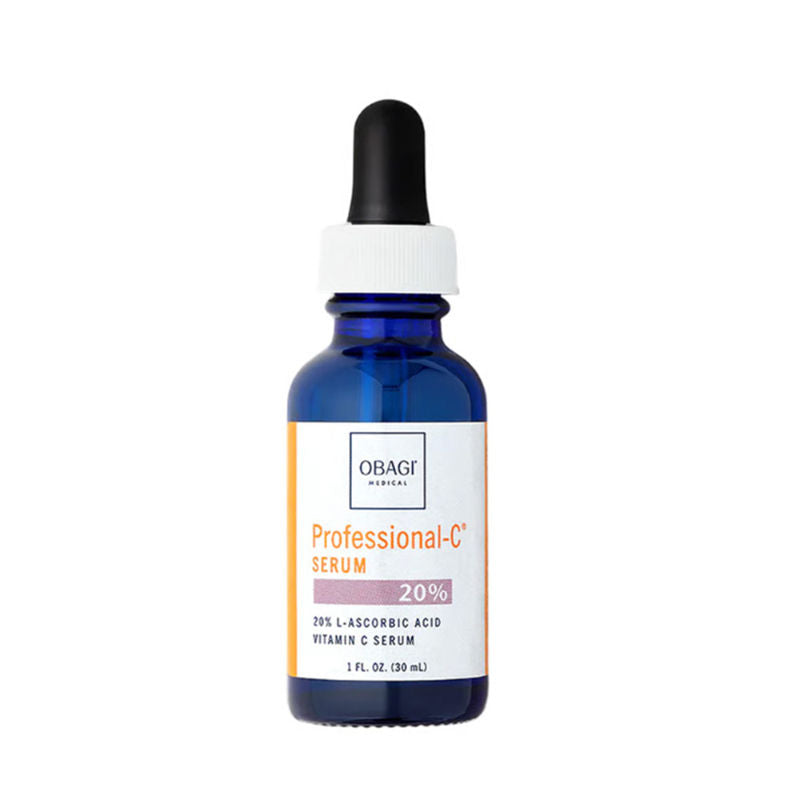
Obagi Professional -C Serum 20% Brightens The Skin Tone, Reduces Dark Spots, Fine Lines & Wrinkles

Obagi Professional -C Serum 20% Brightens The Skin Tone, Reduces Dark Spots, Fine Lines & Wrinkles
Nykaa E retail limited
obagi-professional-c-serum-20-brightens-the-skin-tone-reduces-dark-spots-fine-lines-wrinkles
Serum
10084796301605
Morning or Evening?
How often will you use this product?
Notes


Highlights
WHAT IS IT?
Professional C Serum with 9 key ingredients
FEATURES
Brightens and evens skin tone, reduces dark spots, reduces fine lines and wrinkles, fast-absorbing, antioxidant defense booster, hydrates skin, combats oxidative stress
BEST FOR
normal
CHECKS
Alcohol-free,Fragrance-free,Paraben-Free
Who Is It For?
Use By All Adults Gender Not SpecifiedWhat Does It Help With?
Brightening Anti-aging Hydration Antioxidant Protection Dark Spots Reduction Fine Lines And Wrinkles ReductionBudget
Premium ($76-$150)How To Use
Which routine should it be used in?
Instructions:
Key Information


What Nykaa E retail limited Says
Product Description:
Discover Obagi’s bestselling Professional C® Serum 20%, formulated with 20% L-Ascorbic Acid and Sodium Hyaluronate. Fast-absorbing serum helps to brighten and even skin tone, reduce the appearance of dark spots, strengthen antioxidant defenses, and improve the appearance of fine lines and wrinkles. For a supercharged, hydrated glow and more youthful-looking skin. Ideal for normal to oily skin types. Combats oxidative stress induced by blue light and infrared radiation that cause early signs of skin aging. Formulated with L-Ascorbic Acid to brighten skin. Helps to neutralize free radicals. Benefits: Brightening, Reduces Appearance of fine lines & wrinkles, Dermatologist-tested.
About the Brand:
Ingredients Overview
Ingredients List
propylene-glycol,aqua-water-eau,l-ascorbic-acid,alcohol,ascorbyl-glucoside,ethoxydiglycol,phenoxyethanol,sorbitol,sodium-hyaluronate,zinc-chloride,calcium-hydroxide,fragrance-parfum
Key Ingredients
L-Ascorbic Acid,Sodium Hyaluronate,Ascorbyl Glucoside
Ingredients Details
Alcohol
Common Name(s): Alcohol,cosmetic active,functional ingredient
CAS Number: N/a
DESCRIPTION
What It Does: Delivers characteristic cosmetic function at recommended use concentration.
Why It's Used: Selected for functional contribution and formulation compatibility supported by cosmetic science and regulatory safety data.
How It Works: Works through the mechanism of its molecular class as documented in peer-reviewed cosmetic literature.
Typically Found In: Skin care formulations
TECHNICAL DETAILS
Primary Category: Active ingredient – cosmetic active
Secondary Functions: Skin conditioning
Application Areas:

Facial Skincare

Body Care
Hair Care
Beard Care
Color Cosmetics (Makeup)
Dietary/Oral Supplements
Typical Concentration Range: 0.1%–10%
SOURCING & ETHICS
Vegan Status: Yes - standard ethanol routes are non-animal; confirm denaturant origin
Halal Status: Conditional - ethanol production route and residual concentration; jurisdiction-dependent, refer to certifier stance
Source Notes: Commercially produced for cosmetic use. verify vegan/halal status with supplier. [audit 2026-07-29 rev2: ethanol pathway; determination depends on route, on whether the plant also produces beverage alcohol, and on residual concentration. determination requires shariah-panel sign-off.]
SKIN COMPATIBILITY
Irritancy Rating: 1/5 – very low
Comedogenicity Rating: 0/5 – non-comedogenic
Sensitivity Concerns: Well-tolerated by most skin types.
Safe for Sensitive Skin: Yes
SAFETY & COMPATIBILITY
Safety Profile: Good safety profile at recommended concentrations. ewg score: 1–2.
Works Well With: Standard skincare actives
Avoid Combining With: No known significant incompatibilities
SCIENTIFIC NOTE
Alcohol has an established safety profile within the cosmetic regulatory framework at standard use concentrations.
Last Verified: 2026-03-12
Primary Sources: Cosing database,alcohol technical literature
Ethoxydiglycol
Common Name(s): Ethoxydiglycol,glycol co-solvent,humectant formulation aid
CAS Number: N/a
DESCRIPTION
What It Does: Provides co-solvent and penetration enhancer in cosmetic formulations, improving active ingredient dissolution and product texture while delivering mild skin conditioning.
Why It's Used: Glycol solvents are essential for dissolving actives with limited water or oil solubility — the intermediate polarity of glycol ethers provides access to the wider solubility parameter space between pure water and oil phases.
How It Works: Hydroxyl and ether groups provide h-bonding for water miscibility; the organic chain provides compatibility with lipophilic actives. medium-chain glycols (c3–c6) provide the optimal balance of water compatibility, lipophilic active dissolution, and skin-compatible humectancy.
Typically Found In: Skin care formulations,co-solvent systems
TECHNICAL DETAILS
Primary Category: Functional ingredient – humectant
Secondary Functions: Tewl reduction,skin plumping
Application Areas:
Facial Skincare
Body Care
Hair Care
Beard Care
Color Cosmetics (Makeup)
Dietary/Oral Supplements
Typical Concentration Range: 1%–30%
SOURCING & ETHICS
Vegan Status: Conditional - supplier confirmation required
Halal Status: Unverified - supplier confirmation required
Source Notes: Synthetic or naturally derived. excellent aqueous solubility. [audit 2026-07-29 rev2: status downgraded on audit. determination requires shariah-panel sign-off.]
SKIN COMPATIBILITY
Irritancy Rating: 1/5 – very low
Comedogenicity Rating: 0/5 – non-comedogenic
Sensitivity Concerns: Non-irritating; suitable for all skin types.
Safe for Sensitive Skin: Yes
SAFETY & COMPATIBILITY
Safety Profile: Excellent safety profile. ewg score: 1.
Works Well With: Ceramides,emollients,occlusives,glycerin,hyaluronic acid
Avoid Combining With: No significant incompatibilities
SCIENTIFIC NOTE
Glycol ether co-solvents enhance sc penetration of co-applied actives by increasing their thermodynamic activity in the sc lipid phase — high thermodynamic activity (near saturation) drives diffusion by concentration gradient even when absolute concentration is low.
Last Verified: 2026-03-12
Primary Sources: Cosing database,ethoxydiglycol glycol solvent review
Phenoxyethanol
Common Name(s): 2-phenoxyethanol,rose ether,ethylene glycol monophenyl ether
CAS Number: 122-99-6
DESCRIPTION
What It Does: Prevents microbial contamination and spoilage in cosmetic formulations.
Why It's Used: The benchmark cosmetic preservative – eu-permitted up to 1%, effective against virtually all cosmetically relevant microorganisms, and excellent tolerability.
How It Works: Phenol ring provides broad antimicrobial activity via disruption of bacterial and fungal cell membranes and inhibition of enzymatic activity. effective against gram-positive and gram-negative bacteria, yeasts (candida), and molds (aspergillus). activity ph range: 3-9.
Typically Found In: All cosmetic formulations as primary preservative
TECHNICAL DETAILS
Primary Category: Functional ingredient – broad-spectrum preservative
Secondary Functions: Skin conditioning
Application Areas:
Facial Skincare
Body Care
Hair Care
Beard Care
Color Cosmetics (Makeup)
Dietary/Oral Supplements
Typical Concentration Range: 0.1%–1% (eu max 1%)
SOURCING & ETHICS
Vegan Status: Conditional - supplier confirmation required
Halal Status: Unverified - supplier confirmation required
Source Notes: Commercially produced for cosmetic use. verify vegan/halal status with supplier. [audit 2026-07-29 rev2: the record's own source_notes does not assert a non-animal origin, or instructs the reader to verify with the supplier; "yes" asserts knowledge the record does not hold. determination requires shariah-panel sign-off.]
SKIN COMPATIBILITY
Irritancy Rating: 1/5 – very low
Comedogenicity Rating: 0/5 – non-comedogenic
Sensitivity Concerns: Well-tolerated by most skin types.
Safe for Sensitive Skin: Yes
SAFETY & COMPATIBILITY
Safety Profile: Eu cosmetics regulation max 1%. sccs assessed as safe at ≤1%. avoid use around eyes in baby products per some country regulations. ewg score: 4.
Works Well With: Standard skincare actives
Avoid Combining With: No known significant incompatibilities
SCIENTIFIC NOTE
Phenoxyethanol's widespread adoption as the primary cosmetic preservative followed the phaseout of parabens from many formulations in the 2000s-2010s. despite having a comparable or better safety profile to parabens, it is often cited in 'free-from' formulations – a consumer perception issue rather than a scientific safety concern.
Last Verified:
Sorbitol
Common Name(s): D-glucitol,l-glucitol,sorbol
CAS Number: 50-70-4
DESCRIPTION
What It Does: Attracts and retains moisture providing skin softening and hydration.
Why It's Used: Widely used, cost-effective humectant and formulation ingredient in moisturizers, toothpastes, and personal care.
How It Works: 6 hydroxyl groups provide strong water binding through hydrogen bonding. metabolized slowly by skin as an osmolyte.
Typically Found In: Moisturizers,body lotions,toothpaste,shampoos,many personal care products
TECHNICAL DETAILS
Primary Category: Functional ingredient – sugar alcohol humectant
Secondary Functions: Formulation solvent,viscosity modifier
Application Areas:
Facial Skincare
Body Care
Hair Care
Beard Care
Color Cosmetics (Makeup)
Dietary/Oral Supplements
Typical Concentration Range: 1%–30%
SOURCING & ETHICS
Vegan Status: Conditional - supplier confirmation required
Halal Status: Unverified - supplier confirmation required
Source Notes: Produced by catalytic hydrogenation of glucose. derived from corn starch or other carbohydrate sources. gras food-approved. [audit 2026-07-29 rev2: the record's own source_notes does not assert a non-animal origin, or instructs the reader to verify with the supplier; "yes" asserts knowledge the record does not hold. determination requires shariah-panel sign-off.]
SKIN COMPATIBILITY
Irritancy Rating: 1/5 – very low
Comedogenicity Rating: 0/5 – non-comedogenic
Sensitivity Concerns: Non-irritating; suitable for all skin types.
Safe for Sensitive Skin: Yes
SAFETY & COMPATIBILITY
Safety Profile: Excellent safety profile. ewg score: 1.
Works Well With: Ceramides,emollients,occlusives,glycerin,hyaluronic acid
Avoid Combining With: No significant incompatibilities
SCIENTIFIC NOTE
Sorbitol's osmolyte function in cells (accumulates in response to osmotic stress) suggests it may provide protection to skin cells under dehydrating environmental conditions, complementing its well-established surface humectant activity.
Last Verified: 2026-03-12
Primary Sources: Cosing database,cir safety assessment,ewg skin deep