

NIVEA
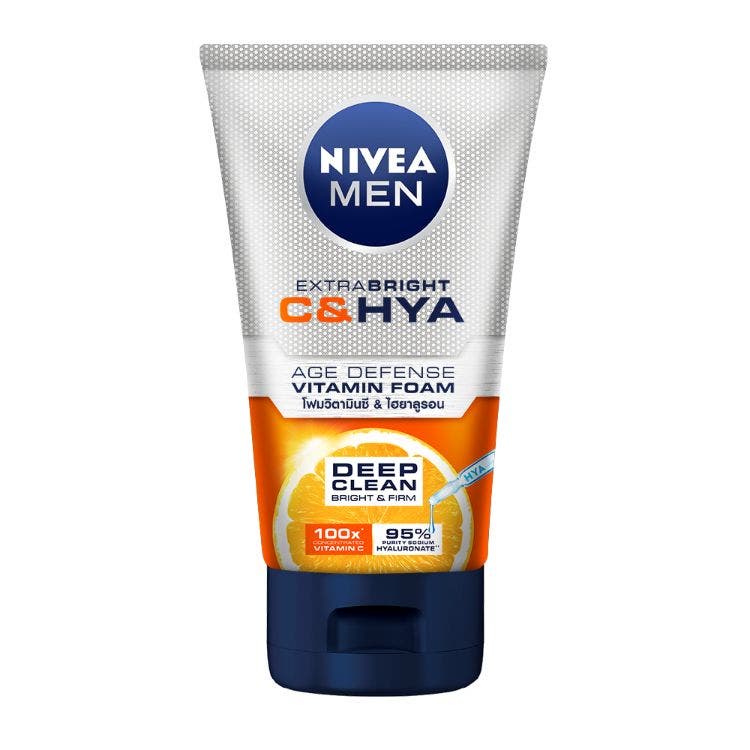
Nivea Men Extra Bright C&Hya Age Defense Vitamin Foam 100G

Nivea Men Extra Bright C&Hya Age Defense Vitamin Foam 100G
NIVEA
nivea-men-extra-bright-c-hya-age-defense-vitamin-foam-100g
Cleanse
10084762747173
Morning or Evening?
How often will you use this product?
Notes


Highlights
WHAT IS IT?
Vitamin Foam Face Wash with multiple ingredients count
FEATURES
Instantly freshens skin, reduces up to 90% accumulated dark spots, contains 100x concentrated Vitamin C, reduces pre-age wrinkles, tightens pores, light texture, fast absorption
BEST FOR
all skin types
CHECKS
Contains parfum (fragrance)
Who Is It For?
Men All AgesWhat Does It Help With?
Brightening Dark Spot Reduction Anti-aging Pore TighteningBudget
Affordable (under $30)How To Use
Which routine should it be used in?
Instructions:
Key Information


What NIVEA Says
Product Description:
NIVEA MEN Extra Bright C&Hya Age Defense Vitamin Foam works to instantly freshen the skin and reduce up to 90% of accumulated dark spots for brighter and firmer skin. The formula with 100x concentrated Vitamin C helps to reduce deep dark spots for brighter, smoother skin with Hyaluron that helps to reduce pre-age wrinkles and tightens pores. For revitalised skin and a more even skin complexion, get visible results in 2 weeks. Its light texture is gentle to the skin and promotes fast absorption. C&Hya is effective for all skin tones and skin types.
About the Brand:
Ingredients Overview
Ingredients List
Aqua, Myristic-Acid, Propylene-Glycol, Palmitic-Acid, Stearic-Acid, Potassium-Hydroxide, Glycerin, Lauric-Acid, PEG-8, PEG-150, Glyceryl-Stearate, Cera-Alba, Sodium-Methyl-Cocoyl-Taurate, Arachidic-Acid, Trisodium-EDTA, Sodium-Thiosulfate, Sodium-Chloride, Oleic-Acid, Sodium-Ascorbyl-Phosphate, Hydrogenated-Coconut-Acid, 4-Butylresorcinol, Tocopheryl-Acetate, Magnesium-Chloride, Panthenol, Sodium-Hyaluronate, Glucose, Myrciaria-Dubia-Fruit-Juice, PEG-40-Hydrogenated-Castor-Oil, Trideceth-9, Pantolactone, Citric-Acid, Sodium-Benzoate, Lactic-Acid, Centella-Asiatica-Extract, Citrus-Sinensis-Fruit-Extract, Ginkgo-Biloba-Leaf-Extract, Panax-Ginseng-Root-Extract, Glycyrrhiza-Glabra-Root-Extract, Potassium-Sorbate, Caramel, Parfum
Key Ingredients
Vitamin C (Sodium Ascorbyl Phosphate), Hyaluron (Sodium Hyaluronate), 4-Butylresorcinol, Panthenol, Tocopheryl Acetate
Ingredients Details
4-butylresorcinol
Common Name(s): P-butylresorcinol,rucinol
CAS Number: 18979-61-8
DESCRIPTION
What It Does: Provides exceptional brightening through the most potent tyrosinase inhibition of any commonly used cosmetic brightening agent.
Why It's Used: The most potent tyrosinase inhibitor available in cosmetics – exceptional for refractory hyperpigmentation and melasma where standard brighteners provide insufficient efficacy.
How It Works: Resorcinol backbone competitively inhibits both tyrosine hydroxylase (reaction 1) and dopa oxidase (reaction 2) activities of tyrosinase. n-butyl chain provides superior membrane affinity for enhanced delivery to melanosomes.
Typically Found In: High-potency brightening serums,melasma treatments,stubborn hyperpigmentation products
TECHNICAL DETAILS
Primary Category: Active ingredient – resorcinol tyrosinase inhibitor
Secondary Functions: Dual tyrosinase reaction inhibition,potent brightening
Application Areas:

Facial Skincare

Body Care
Hair Care
Beard Care
Color Cosmetics (Makeup)
Dietary/Oral Supplements
Typical Concentration Range: 0.1%–1%
SOURCING & ETHICS
Vegan Status: Yes – synthetic
Halal Status: Yes
Source Notes: Synthetic or plant-derived.
SKIN COMPATIBILITY
Irritancy Rating: 2/5 – low to moderate
Comedogenicity Rating: 0/5 – non-comedogenic
Sensitivity Concerns: Use with spf; introduce gradually. photosensitizing.
Safe for Sensitive Skin: Yes
SAFETY & COMPATIBILITY
Safety Profile: Excellent safety profile. use with spf for maximum efficacy. ewg score: 1.
Works Well With: Niacinamide,vitamin c,alpha-arbutin,tranexamic acid,spf
Avoid Combining With: No significant incompatibilities
SCIENTIFIC NOTE
4-butylresorcinol's inhibition of both tyrosinase catalytic reactions (tyrosine→dopa and dopa→dopaquinoneoxidase) is unique among common brighteners. most tyrosinase inhibitors only block the first reaction (tyrosine→dopa). blocking both steps provides more complete melanin biosynthesis inhibition.
Last Verified: Cosing database,choi et al. 4-butylresorcinol study,sccs opinion on butylresorcinol
Primary Sources: 2026-03-12
Caramel
Common Name(s): Caramel colour,natural brown,e150
CAS Number: 8028-89-5
DESCRIPTION
What It Does: Provides natural warm-brown colour from heat-treated sugar for natural cosmetics.
Why It's Used: Natural brown colorant with food-grade safety credentials for clean beauty formulations requiring warm brown or amber shades.
How It Works: Complex mixture of pyranose-ring condensation products from heat-treated sugars. 5-hmf and melanoidin polymers provide brown colour. ph-stable in acidic formulations. soluble in water and lower alcohols.
Typically Found In: Natural cosmetics,bronzers,hair products
TECHNICAL DETAILS
Primary Category: Colorant – natural brown dye
Secondary Functions: Skin conditioning
Application Areas:
Facial Skincare
Body Care
Hair Care
Beard Care
Color Cosmetics (Makeup)
Dietary/Oral Supplements
Typical Concentration Range: 0.01%–5%
SOURCING & ETHICS
Vegan Status: Yes – from sucrose, glucose (plant sugars)
Halal Status: Yes
Source Notes: Commercially produced for cosmetic use. verify vegan/halal status with supplier.
SKIN COMPATIBILITY
Irritancy Rating: 1/5 – very low
Comedogenicity Rating: 0/5 – non-comedogenic
Sensitivity Concerns: Well-tolerated by most skin types.
Safe for Sensitive Skin: Yes
SAFETY & COMPATIBILITY
Safety Profile: Good safety profile at recommended concentrations. ewg score: 1–2.
Works Well With: Standard skincare actives
Avoid Combining With: No known significant incompatibilities
SCIENTIFIC NOTE
Caramel's colour develops through the maillard reaction between reducing sugars and amino acids at elevated temperatures, creating a complex mixture of coloured polymer (melanoidin) and small molecule chromophores. unlike single-compound dyes with defined absorption spectra, caramel's broad-spectrum absorption from multiple chromophores provides a naturally warm, complex brown impossible to replicate with a single synthetic dye.
Last Verified: Cosing database,fda 21 cfr color additives
Primary Sources: 2026-03-12
Glucose
Common Name(s): Glucose,cosmetic active,functional ingredient
CAS Number: N/a
DESCRIPTION
What It Does: Delivers characteristic cosmetic function at recommended use concentration.
Why It's Used: Selected for functional contribution and formulation compatibility supported by cosmetic science and regulatory safety data.
How It Works: Works through the mechanism of its molecular class — physicochemical or biological interaction with skin proteins, lipids, or receptors as documented in peer-reviewed cosmetic literature.
Typically Found In: Skin care formulations
TECHNICAL DETAILS
Primary Category: Active ingredient – cosmetic active
Secondary Functions: Skin conditioning
Application Areas:
Facial Skincare
Body Care
Hair Care
Beard Care
Color Cosmetics (Makeup)
Dietary/Oral Supplements
Typical Concentration Range: 0.1%–10%
SOURCING & ETHICS
Vegan Status: Conditional
Halal Status: Yes
Source Notes: Commercially produced for cosmetic use. verify vegan/halal status with supplier.
SKIN COMPATIBILITY
Irritancy Rating: 1/5 – very low
Comedogenicity Rating: 0/5 – non-comedogenic
Sensitivity Concerns: Well-tolerated by most skin types.
Safe for Sensitive Skin: Yes
SAFETY & COMPATIBILITY
Safety Profile: Good safety profile at recommended concentrations. ewg score: 1–2.
Works Well With: Standard skincare actives
Avoid Combining With: No known significant incompatibilities
SCIENTIFIC NOTE
Glucose has an established safety and efficacy profile within the cosmetic regulatory framework at standard use concentrations.
Last Verified: Cosing database,glucose technical literature
Primary Sources: 2026-03-12
Glycerin
Common Name(s): Glycerol,glycerine,1,2,3-propanetriol
CAS Number: 56-81-5
DESCRIPTION
What It Does: Glycerin pulls water from the environment and deeper skin layers into the outer skin layer (epidermis), boosting moisture levels and keeping skin soft, smooth, and plump.
Why It's Used: It is used in virtually every moisturizer, serum, and cleanser because it is highly effective at hydrating skin, is well-tolerated by all skin types, and enhances the texture and spreadability of formulations.
How It Works: As a humectant, glycerin forms hydrogen bonds with water molecules, trapping them in the skin. it also reinforces the skin barrier by integrating into lipid structures between skin cells.
Typically Found In: Moisturizers,serums,cleansers,toners,sheet masks,sunscreens,body lotions,shampoos,conditioners
TECHNICAL DETAILS
Primary Category: Humectant
Secondary Functions: Skin barrier support,emollient,solvent
Application Areas:
Facial Skincare
Body Care
Hair Care
Beard Care
Color Cosmetics (Makeup)
Dietary/Oral Supplements
Typical Concentration Range: 1%–30% (typical: 3–10%)
SOURCING & ETHICS
Vegan Status: Yes – plant-derived (coconut, soy, palm) or synthetic
Halal Status: Yes – when plant-derived or synthetic; verify source with supplier
Source Notes: Derived from plant oils via hydrolysis or saponification; synthetic versions also available. palm-derived glycerin carries sustainability concerns.
SKIN COMPATIBILITY
Irritancy Rating: 1/5 – very low; non-irritating at all standard concentrations
Comedogenicity Rating: 0/5 – non-comedogenic
Sensitivity Concerns: Extremely rare allergic reactions; generally safe for all skin types including sensitive and baby skin
Safe for Sensitive Skin: Yes
SAFETY & COMPATIBILITY
Safety Profile: Widely recognized as safe. ewg hazard score: 1. no significant concerns for irritation, sensitization, or toxicity at typical concentrations (up to 50%).
Works Well With: Hyaluronic acid,ceramides,niacinamide,panthenol,urea,peptides,retinol,ahas/bhas
Avoid Combining With: No known incompatibilities at standard concentrations
SCIENTIFIC NOTE
Glycerin is an endogenous skin component found naturally in the stratum corneum. aquaporin-3 channels in keratinocytes facilitate glycerin transport, making it integral to natural skin hydration pathways.
Last Verified: Cosing database,cir safety assessment,ewg skin deep,inci decoder
Primary Sources: 2026-03-12
