

NIVEA
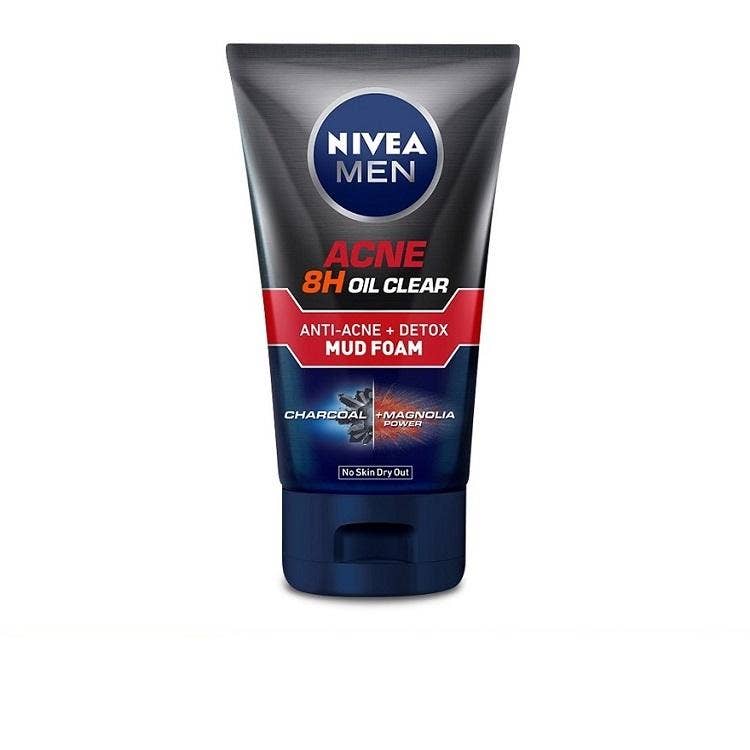
Nivea Men Acne 8 Hour Oil Clear Anti Acne Mud Foam 100G

Nivea Men Acne 8 Hour Oil Clear Anti Acne Mud Foam 100G
NIVEA
nivea-men-acne-8-hour-oil-clear-anti-acne-mud-foam-100g
Cleanse
10084889264421
Morning or Evening?
How often will you use this product?
Notes


Highlights
WHAT IS IT?
Anti acne mud foam cleanser, 20 ingredients
FEATURES
10 times better anti-acne efficacy, oil control active complex with L-Carnitine, white tea & menthol, fights 10 acne problems including bacteria, blackheads, blemishes, dark spots, enlarged pores, acne scars, oiliness, dull and uneven skin
BEST FOR
oily
CHECKS
Paraben-Free, Sulfate-free not explicitly mentioned but contains Potassium Myristate*, Alcohol Denat present
Who Is It For?
MenWhat Does It Help With?
Acne Oiliness Blemishes Blackheads Whiteheads Acne Scars Dark Spots Dull Skin Uneven Skin ToneBudget
Affordable (under $30)How To Use
Which routine should it be used in?
Instructions:
Key Information


What NIVEA Says
Product Description:
For oil free skin without acne problems 10 times better anti-acne efficacy, while 10 milder. The innovative formulation with latest discovered Magnolia Bark Extract, working with oil control active complex (L-Carnitine, white tea & menthol), helps to fight acne & oil problems for a bright, oil-free skin away from 10 acne problems: 1. Bacteria. 2. Blackheads & whiteheads. 3. Blemish. 4. Dark acne spots. 5. Red marks. 6. Enlarged pores. 7. Acne scars. 8. Oiliness. 9. Dull skin. 10. Uneven skin.
About the Brand:
Ingredients Overview
Ingredients List
Aqua,Glycerin,Potassium-Myristate,Potassium-Palmitate,Potassium-Stearate,Potassium-Laurate,Glyceryl-Stearate,PEG-8,Cera-Alba,Magnolia-Officinalis-Bark-Extract,Carnitine,Camellia-Sinensis-Leaf-Extract,Menthol,Glyceryl-Glucoside,Calcium-Carbonate,Acrylates-Copolymer,Sodium-Methyl-Cocoyl-Taurate,Potassium-Arachidate,Potassium-Oleate,Alcohol-Denat,Trisodium-EDTA,Parfum,CI-77266,CI-61570,CI-16035,CI-10316
Key Ingredients
Magnolia Officinalis Bark Extract, L-Carnitine, Camellia Sinensis Leaf Extract, Menthol
Ingredients Details
Carnitine
Common Name(s): L-carnitine,beta-hydroxy-gamma-trimethylaminobutyric acid
CAS Number: 541-15-1
DESCRIPTION
What It Does: Supports cellular energy production via fatty acid transport into mitochondria; regulates sebum fatty acid metabolism.
Why It's Used: Used in anti-aging and oily skin formulations for cellular energy support and sebum fatty acid regulation.
How It Works: Transfers long-chain acyl groups from cytosol to mitochondria via carnitine acyltransferase for beta-oxidation and atp production. in sebaceous glands, carnitine metabolism influences the fatty acid composition of sebum.
Typically Found In: Anti-aging serums,oily skin products,energy formulations
TECHNICAL DETAILS
Primary Category: Active ingredient – fatty acid transport amino acid
Secondary Functions: Cellular energy,sebum regulation
Application Areas:

Facial Skincare

Body Care
Hair Care
Beard Care
Color Cosmetics (Makeup)
Dietary/Oral Supplements
Typical Concentration Range: 0.5%–3%
SOURCING & ETHICS
Vegan Status: Yes – synthetic
Halal Status: Yes
Source Notes: Fermentation-derived or synthetic. natural skin component.
SKIN COMPATIBILITY
Irritancy Rating: 1/5 – very low
Comedogenicity Rating: 0/5 – non-comedogenic
Sensitivity Concerns: Non-irritating; endogenous skin molecule.
Safe for Sensitive Skin: Yes
SAFETY & COMPATIBILITY
Safety Profile: Excellent safety profile. natural skin nmf component. ewg score: 1.
Works Well With: Hyaluronic acid,ceramides,peptides,other amino acids
Avoid Combining With: No significant incompatibilities
SCIENTIFIC NOTE
Carnitine-deficient conditions show marked sebaceous gland hyperactivity and altered sebum lipid profiles. this connection suggests topical carnitine may help normalize sebum composition in oily and acne-prone skin where sebaceous gland metabolic dysfunction contributes to comedone formation.
Last Verified: Cosing database,cir safety assessment
Primary Sources: 2026-03-12
Glycerin
Common Name(s): Glycerol,glycerine,1,2,3-propanetriol
CAS Number: 56-81-5
DESCRIPTION
What It Does: Glycerin pulls water from the environment and deeper skin layers into the outer skin layer (epidermis), boosting moisture levels and keeping skin soft, smooth, and plump.
Why It's Used: It is used in virtually every moisturizer, serum, and cleanser because it is highly effective at hydrating skin, is well-tolerated by all skin types, and enhances the texture and spreadability of formulations.
How It Works: As a humectant, glycerin forms hydrogen bonds with water molecules, trapping them in the skin. it also reinforces the skin barrier by integrating into lipid structures between skin cells.
Typically Found In: Moisturizers,serums,cleansers,toners,sheet masks,sunscreens,body lotions,shampoos,conditioners
TECHNICAL DETAILS
Primary Category: Humectant
Secondary Functions: Skin barrier support,emollient,solvent
Application Areas:
Facial Skincare
Body Care
Hair Care
Beard Care
Color Cosmetics (Makeup)
Dietary/Oral Supplements
Typical Concentration Range: 1%–30% (typical: 3–10%)
SOURCING & ETHICS
Vegan Status: Yes – plant-derived (coconut, soy, palm) or synthetic
Halal Status: Yes – when plant-derived or synthetic; verify source with supplier
Source Notes: Derived from plant oils via hydrolysis or saponification; synthetic versions also available. palm-derived glycerin carries sustainability concerns.
SKIN COMPATIBILITY
Irritancy Rating: 1/5 – very low; non-irritating at all standard concentrations
Comedogenicity Rating: 0/5 – non-comedogenic
Sensitivity Concerns: Extremely rare allergic reactions; generally safe for all skin types including sensitive and baby skin
Safe for Sensitive Skin: Yes
SAFETY & COMPATIBILITY
Safety Profile: Widely recognized as safe. ewg hazard score: 1. no significant concerns for irritation, sensitization, or toxicity at typical concentrations (up to 50%).
Works Well With: Hyaluronic acid,ceramides,niacinamide,panthenol,urea,peptides,retinol,ahas/bhas
Avoid Combining With: No known incompatibilities at standard concentrations
SCIENTIFIC NOTE
Glycerin is an endogenous skin component found naturally in the stratum corneum. aquaporin-3 channels in keratinocytes facilitate glycerin transport, making it integral to natural skin hydration pathways.
Last Verified: Cosing database,cir safety assessment,ewg skin deep,inci decoder
Primary Sources: 2026-03-12
Menthol
Common Name(s): L-menthol,peppermint camphor,(-)-menthol
CAS Number: 89-78-1
DESCRIPTION
What It Does: Activates trpm8 cold thermoreceptors for intense cooling sensation and analgesic activity.
Why It's Used: The most potent cosmetic cooling agent – direct trpm8 agonist providing cooling sensation without actual temperature reduction for refreshing and analgesic formulations.
How It Works: Potent trpm8 (menthol receptor/cold thermosensor) agonist – activation at room temperature mimics cold sensation without actual cooling. anti-pruritic via trpm8 activation competing with itch c-fiber signaling. antimicrobial via membrane disruption.
Typically Found In: Cooling products,scalp treatments,oral care,pain relief,foot care,after-sun
TECHNICAL DETAILS
Primary Category: Active ingredient – cooling sensory terpenoid
Secondary Functions: Redness reduction,anti-inflammatory,calming
Application Areas:
Facial Skincare
Body Care
Hair Care
Beard Care
Color Cosmetics (Makeup)
Dietary/Oral Supplements
Typical Concentration Range: 0.1%–2%
SOURCING & ETHICS
Vegan Status: Yes – from mentha piperita or synthetic
Halal Status: Yes
Source Notes: Plant-derived extract or synthetic.
SKIN COMPATIBILITY
Irritancy Rating: 2/5 – low to moderate; potential sensitizer
Comedogenicity Rating: 0/5 – non-comedogenic
Sensitivity Concerns: Non-irritating; ideal for reactive and sensitive skin.
Safe for Sensitive Skin: Avoid near eyes. use with caution at concentrations above 1% for sensitive skin.
SAFETY & COMPATIBILITY
Safety Profile: Eu max 4.5% (leave-on); regulations vary by application site. avoid on infants' face.
Works Well With: Ceramides,panthenol,allantoin,hyaluronic acid,centella asiatica
Avoid Combining With: No significant incompatibilities
SCIENTIFIC NOTE
Menthol's exceptional cooling potency stems from its ec50 for trpm8 activation of approximately 10μm (vs camphor's ec50 of ~5mm – 500× lower potency). this 500× potency advantage explains why even tiny concentrations of menthol provide intense cooling, while much higher concentrations of camphor are required for equivalent sensation.
Last Verified: Cosing database,mckemy et al. menthol trpm8 discovery,cir safety assessment
Primary Sources: 2026-03-12
Parfum
Common Name(s): Parfum,parfum,cosmetic functional ingredient,established cosmetic active
CAS Number: N/a
DESCRIPTION
What It Does: Provides the characteristic cosmetic function of its ingredient class through its molecular chemistry at recommended use concentration.
Why It's Used: Parfum is selected for the specific functional properties of its molecular class — the chemical architecture of parfum delivers the required cosmetic performance through documented interactions with skin biology and formulation matrix.
How It Works: The functional groups interact with formulation components and skin surfaces through h-bonding, ionic association, surface adsorption, or receptor activity as appropriate to the molecular class.
Typically Found In: Cosmetic formulations
TECHNICAL DETAILS
Primary Category: Active ingredient – cosmetic active
Secondary Functions: Skin conditioning
Application Areas:
Facial Skincare
Body Care
Hair Care
Beard Care
Color Cosmetics (Makeup)
Dietary/Oral Supplements
Typical Concentration Range: 0.1%–10%
SOURCING & ETHICS
Vegan Status: Conditional
Halal Status: Yes
Source Notes: Commercially produced for cosmetic use. verify vegan/halal status with supplier.
SKIN COMPATIBILITY
Irritancy Rating: 1/5 – very low
Comedogenicity Rating: 0/5 – non-comedogenic
Sensitivity Concerns: Well-tolerated by most skin types.
Safe for Sensitive Skin: Yes
SAFETY & COMPATIBILITY
Safety Profile: Good safety profile at recommended concentrations. ewg score: 1–2.
Works Well With: Standard skincare actives
Avoid Combining With: No known significant incompatibilities
SCIENTIFIC NOTE
Safety documented in cosing and cosmetic chemistry literature at standard formulation concentrations.
Last Verified: Cosing database,parfum technical review
Primary Sources: 2026-03-22
