

Nioxin
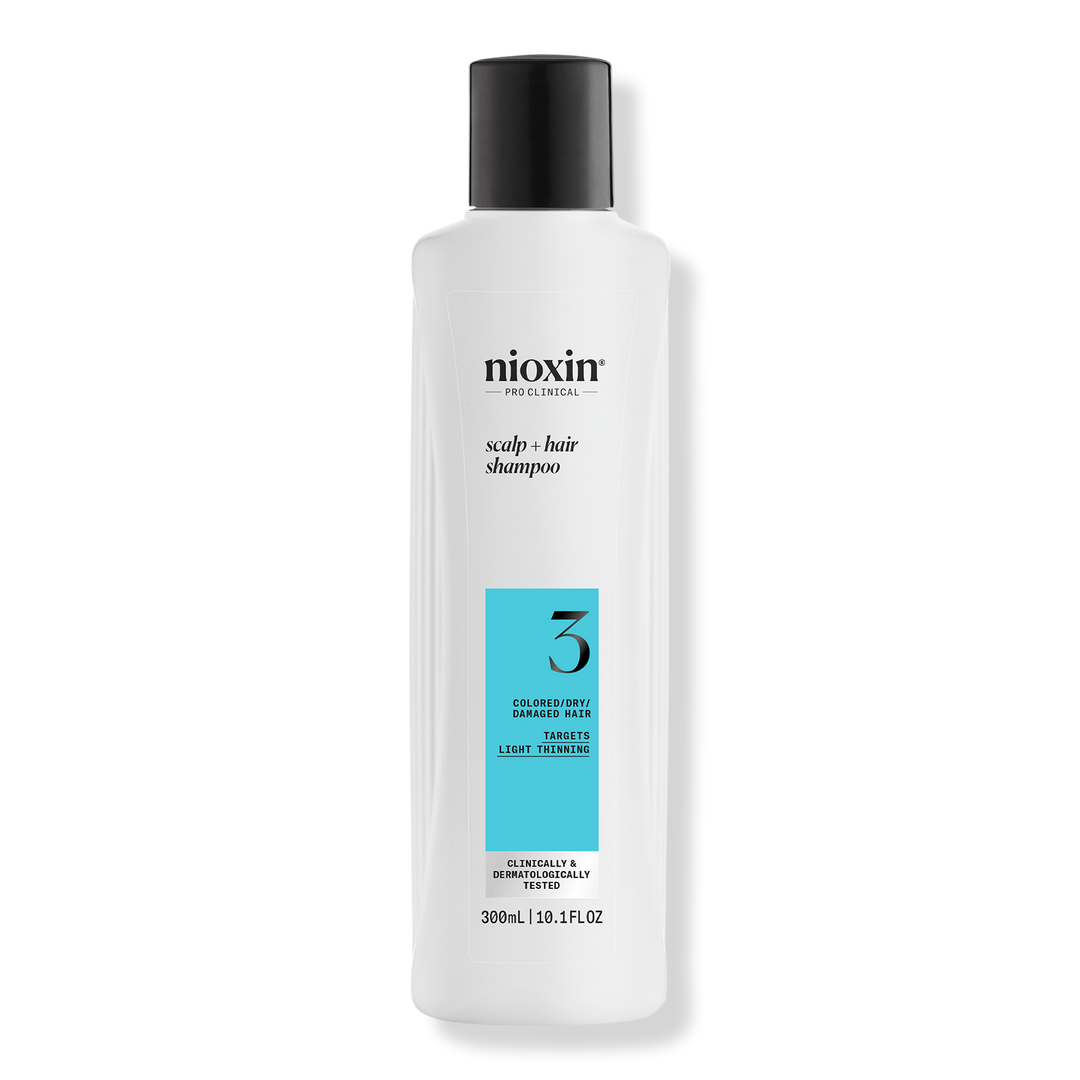
Nioxin Scalp + Hair Thickening System 3 Shampoo
Nioxin's System 3 Shampoo is designed for dry, damaged, color-treated hair with light thinning. Clinically and dermatologically tested, this shampoo nourishes and gently cleanses your hair to prevent against follicle-clogging sebum, resulting in thicker, fuller hair while protecting its color.
Color-safe
Volume
Thinning
Breakage
Fine
Color-treated
Optimized for Your Environment & Lifestyle
Nykaa
In stock
Recommended

Nioxin Scalp + Hair Thickening System 3 Shampoo
Nioxin
nioxin-scalp-hair-thickening-system-3-shampoo
Shampoo
10365019980069
Morning or Evening?
How often will you use this product?
Notes


Secure payment protection
Your Biodata Compatibility Analysis
Based on your 6 hair health indices and environmental factors
Poor Match
Significant incompatibilities
Growth Cycle Health Index
Hair Match
Hair Health Index Alignment
Optimal for OSI, SSI, DI, HSI
Ingredient Efficacy
Matching Ingredient Score
Environment Compatibility
Current UV, Air Quality & Humidity
Why This Works for Your Specific Profile
Damage Index:
Damaged hair structure cannot withstand product intensity causing increased breakage and further compromise
Water Quality:
Soft or moderately hard water does not require intensive treatment causing over-cleansing and dryness
Hair:
Porous structure over-absorbs product leading to buildup, stiffness, or excessive dryness
Active Lifestyle:
High activity and frequent washing rapidly strip product benefits requiring excessive reapplication
Your Hair Profile Integration
Your Hair Archetype

Density Level

Washing Frequency

Shedding Level

Oil Level
Your Hair Health Indices
Oil Secretion (OSI)
Very low oil production
Scalp Sensitivity (SSI)
Very low sensitivity
Growth Rate (CMR)
Poor metabolism rate
Damage Index (DI)
Minimal damage
Hair Strength (HSI)
Very weak strength
Softness Index (SI)
Significant improvement needed
Water & Environmental Integration

Water:


Expected Results & Timeline
Key Highlights

What is it?
Shampoo with 30 ingredients

Who Is It For
Adults

Budget
$26.00 - $52.00

Timeline
Visible results in 30 days
Why You’ll Love It

What Does It Help With?
Thinning, Breakage

Best for
Thinning hair

Features
Thickens the hair, Nourishes the scalp, Protects hair color

Checks
Clinically and dermatologically tested
Ingredients Overview
Ingredients List
aqua-water-eau, sodium-laureth-sulfate, sodium-lauryl-sulfate, sodium-chloride, ppg-2-hydroxyethyl-coco-isostearamide, citric-acid, salicylic-acid, mentha-arvensis-leaf-oil, mentha-piperita-peppermint-oil, tetrasodium-edta, trisodium-ethylenediamine-disuccinate, methylparaben, polyquaternium-10, propylene-glycol, sodium-benzoate, sodium-hydroxide, limonene, camellia-sinensis-leaf-extract, cystine-bis-pg-propyl-silanetriol, niacinamide, panthenol, biotin, lecithin, tocopheryl-acetate, foeniculum-vulgare-fennel-fruit-extract, blue-1-ci-42090, acer-saccharum-sugar-maple-extract, citrus-limon-lemon-peel-extract, saccharum-officinarum-sugar-cane-extract-extrait-de-canne-à-sucre, vaccinium-myrtillus-leaf-extract, faex-extract-yeast-extract-extrait-de-levure, propylparaben, phenoxyethanol, citrus-aurantium-dulcis-orange-fruit-extract, maltodextrin, potassium-sorbate, sodium-citrate, ethylparaben, butylparaben, sodium-xylenesulfonate
Key Ingredients
mentha-arvensis-leaf-oil, mentha-piperita-peppermint-oil, salicylic-acid
Ingredients Details
Biotin
Common Name(s): Vitamin b7,vitamin h,d-biotin
CAS Number: 58-85-5
DESCRIPTION
What It Does: Supports keratin production for stronger hair and nails.
Why It's Used: Hair and nail keratin infrastructure support; widely marketed despite evidence being primarily oral supplementation-based.
How It Works: Coenzyme for carboxylase enzymes essential for fatty acid synthesis and amino acid metabolism relevant to hair follicle function.
Typically Found In: Hair growth shampoos,nail treatments,multivitamin products
TECHNICAL DETAILS
Primary Category: Active ingredient – vitamin b7
Secondary Functions: Hair growth support,nail strengthening
Application Areas:

Facial Skincare

Body Care
Hair Care
Beard Care
Color Cosmetics (Makeup)
Dietary/Oral Supplements
Typical Concentration Range: 0.01%–0.5%
SOURCING & ETHICS
Vegan Status: Yes – synthetically produced
Halal Status: Yes
Source Notes: Synthetically produced for cosmetic use.
SKIN COMPATIBILITY
Irritancy Rating: 1/5 – very low
Comedogenicity Rating: 0/5 – non-comedogenic
Sensitivity Concerns: Non-irritating; excellent tolerability.
Safe for Sensitive Skin: Yes
SAFETY & COMPATIBILITY
Safety Profile: Excellent safety profile. ewg score: 1.
Works Well With: Other b vitamins,niacinamide,antioxidant complexes
Avoid Combining With: No significant incompatibilities
SCIENTIFIC NOTE
Evidence for topical biotin efficacy in hair growth is limited – most clinical evidence comes from oral supplementation in biotin-deficient individuals.
Last Verified: Cosing database,cir safety assessment,patel et al. (2017) skin appendage disorders
Primary Sources: 2026-03-12
Butylparaben
Common Name(s): Cosmetic preservative,microbial growth inhibitor,product stability agent
CAS Number: N/a
DESCRIPTION
What It Does: Prevents microbial contamination that would otherwise render water-containing cosmetics unsafe — inhibiting bacterial, fungal, and yeast growth through membrane disruption, enzyme inhibition, or metabolic interference at permitted regulatory concentrations.
Why It's Used: Preservatives are safety-critical — un-preserved water-containing cosmetics can develop dangerous microbial contamination (pseudomonas aeruginosa eye infections, s. aureus skin infections) within days. preservation is a regulatory requirement, not an optional enhancement.
How It Works: Mechanism varies by class: organic acids (benzoic, dehydroacetic) disrupt intracellular ph in bacteria and fungi by proton flux across membranes; parabens inhibit membrane-associated enzyme function; chlorhexidine disrupts bacterial and fungal membrane integrity through divalent ion chelation of membrane phospholipids.
Typically Found In: All aqueous formulations
TECHNICAL DETAILS
Primary Category: Active ingredient – cosmetic active
Secondary Functions: Skin conditioning
Application Areas:
Facial Skincare
Body Care
Hair Care
Beard Care
Color Cosmetics (Makeup)
Dietary/Oral Supplements
Typical Concentration Range: Check annex v eu limits
SOURCING & ETHICS
Vegan Status: Yes
Halal Status: Yes
Source Notes: Commercially produced for cosmetic use. verify vegan/halal status with supplier.
SKIN COMPATIBILITY
Irritancy Rating: 1/5 – very low
Comedogenicity Rating: 0/5 – non-comedogenic
Sensitivity Concerns: Well-tolerated by most skin types.
Safe for Sensitive Skin: Yes
SAFETY & COMPATIBILITY
Safety Profile: Good safety profile at recommended concentrations. ewg score: 1–2.
Works Well With: Standard skincare actives
Avoid Combining With: No known significant incompatibilities
SCIENTIFIC NOTE
Eu regulation 1223/2009 annex v lists all permitted preservatives with maximum concentrations — preservatives not listed are prohibited. formulators must verify both permitted status and maximum concentration for each market before finalising preservation systems.
Last Verified: Eu regulation 1223/2009 annex v,cosmetic preservative regulatory review
Primary Sources: 2026-03-12
Ethylparaben
Common Name(s): Cosmetic preservative,microbial growth inhibitor,product stability agent
CAS Number: N/a
DESCRIPTION
What It Does: Prevents microbial contamination that would otherwise render water-containing cosmetics unsafe — inhibiting bacterial, fungal, and yeast growth through membrane disruption, enzyme inhibition, or metabolic interference at permitted regulatory concentrations.
Why It's Used: Preservatives are safety-critical — un-preserved water-containing cosmetics can develop dangerous microbial contamination (pseudomonas aeruginosa eye infections, s. aureus skin infections) within days. preservation is a regulatory requirement, not an optional enhancement.
How It Works: Mechanism varies by class: organic acids (benzoic, dehydroacetic) disrupt intracellular ph in bacteria and fungi by proton flux across membranes; parabens inhibit membrane-associated enzyme function; chlorhexidine disrupts bacterial and fungal membrane integrity through divalent ion chelation of membrane phospholipids.
Typically Found In: All aqueous formulations
TECHNICAL DETAILS
Primary Category: Active ingredient – cosmetic active
Secondary Functions: Skin conditioning
Application Areas:
Facial Skincare
Body Care
Hair Care
Beard Care
Color Cosmetics (Makeup)
Dietary/Oral Supplements
Typical Concentration Range: Check annex v eu limits
SOURCING & ETHICS
Vegan Status: Yes
Halal Status: Yes
Source Notes: Commercially produced for cosmetic use. verify vegan/halal status with supplier.
SKIN COMPATIBILITY
Irritancy Rating: 1/5 – very low
Comedogenicity Rating: 0/5 – non-comedogenic
Sensitivity Concerns: Well-tolerated by most skin types.
Safe for Sensitive Skin: Yes
SAFETY & COMPATIBILITY
Safety Profile: Good safety profile at recommended concentrations. ewg score: 1–2.
Works Well With: Standard skincare actives
Avoid Combining With: No known significant incompatibilities
SCIENTIFIC NOTE
Eu regulation 1223/2009 annex v lists all permitted preservatives with maximum concentrations — preservatives not listed are prohibited. formulators must verify both permitted status and maximum concentration for each market before finalising preservation systems.
Last Verified: Eu regulation 1223/2009 annex v,cosmetic preservative regulatory review
Primary Sources: 2026-03-12
Lecithin
Common Name(s): Soy lecithin,sunflower lecithin,phosphatidylcholine complex
CAS Number: 8002-43-5
DESCRIPTION
What It Does: Provides natural phospholipid emulsification with barrier-compatible delivery and liposome-forming properties.
Why It's Used: The most biologically authentic emulsifier – identical to cell membrane composition providing barrier-compatible delivery and liposome formation unavailable from synthetic emulsifiers.
How It Works: Phosphatidylcholine (pc), phosphatidylethanolamine (pe), phosphatidylinositol (pi) mixture provides hlb 7-12 for o/w emulsification. forms liposomal bilayers for active encapsulation. pc/pe/pi composition mirrors cell membrane for barrier-compatible delivery.
Typically Found In: Natural cosmetics,liposomal products,barrier repair,penetration-enhanced formulas
TECHNICAL DETAILS
Primary Category: Functional ingredient – natural phospholipid emulsifier
Secondary Functions: Skin conditioning
Application Areas:
Facial Skincare
Body Care
Hair Care
Beard Care
Color Cosmetics (Makeup)
Dietary/Oral Supplements
Typical Concentration Range: 0.5%–10%
SOURCING & ETHICS
Vegan Status: Conditional – soy lecithin (vegan); egg lecithin (not vegan)
Halal Status: Conditional – soy (halal); egg (verify)
Source Notes: Commercially produced for cosmetic use. verify vegan/halal status with supplier.
SKIN COMPATIBILITY
Irritancy Rating: 1/5 – very low
Comedogenicity Rating: 0/5 – non-comedogenic
Sensitivity Concerns: Well-tolerated by most skin types.
Safe for Sensitive Skin: Yes
SAFETY & COMPATIBILITY
Safety Profile: Good safety profile at recommended concentrations. ewg score: 1–2.
Works Well With: Standard skincare actives
Avoid Combining With: No known significant incompatibilities
SCIENTIFIC NOTE
Lecithin's phospholipid composition mirrors the composition of the stratum corneum's own lamellar bodies that deliver barrier lipids to the skin surface. this structural mimicry allows lecithin-based delivery systems to integrate seamlessly with the barrier lipid structure, exploiting the same transport pathway the skin uses for its own lipid secretion.
Last Verified: Cosing database,cir safety assessment
Primary Sources: 2026-03-12
Personalized Usage Instructions
How to Use
Step 1
Apply shampoo to scalp and massage evenly
Step 2
Rinse thoroughly
Medical Chemicals

Protein/Moisture
- Protein/Moisture balance
pH Level
- Acidic

Porosity Taget
- Normal Porosity
Customized for Your Profile
Scalp Condtions
Oil Control
Climate Suitability
Humid, Dry
Clinical Claims
85% of consumers noticed a thickening effect, 80% noticed an increase in hair density, 80% noticed an increase in hair fullness
Frequency
Apply shampoo to scalp and massage evenly. Rinse thoroughly.
Product Information

Clinically and dermatologically tested
