

Neutrogena
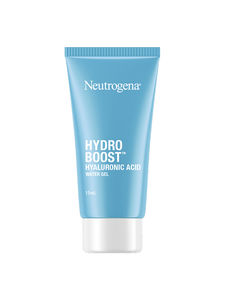
Neutrogena Hydro Boost Water Gel 15g

Neutrogena Hydro Boost Water Gel 15g
Neutrogena
neutrogena-hydro-boost-water-gel-15g
Moisturize
10085071782181
Morning or Evening?
How often will you use this product?
Notes


Highlights
WHAT IS IT?
Face Gel with Hyaluronic Acid and Prebiotics
FEATURES
Locks in abundant hydration, Strengthens skin barrier, Provides 72 hrs of hydration, Smoothness, firmness, translucency, trouble free and plumpness
BEST FOR
normal
CHECKS
No Oil, Non-comedogenic, Hypoallergenic
Who Is It For?
All Genders All AgesWhat Does It Help With?
Hydrates Skin Plumps Skin Smoothens Improves Firmness Suitable For Dehydrated And Dull SkinBudget
Affordable (under $30)How To Use
Which routine should it be used in?
Instructions:
Key Information


What Neutrogena Says
Product Description:
Neutrogen Hydro Boost Water Gel 50g with 50 more Hyaluronic Acid has a unique lightweighted fresh texture that can be instantly absorbed proven to effectively lock in abundant hydration deep within your skin and continuously quench your skin's thirst throughout the day. Key Features Works at new skin depth 2x deeper in skin Gives skin a pure boost of instant hydration.Strengthens skin barrier for protection against 5 aggressors.5 dimensions of healthy skin achieved smoothness firmness translucency trouble free and plumpness
About the Brand:
Ingredients Overview
Ingredients List
purified-hyaluronic-acid,glycerin,prebiotics,trehalose,antioxidant-olive-extract
Key Ingredients
Hyaluronic Acid, Glycerin, Prebiotics, Trehalose, Olive Extract
Ingredients Details
Glycerin
Common Name(s): Glycerol,glycerine,1,2,3-propanetriol
CAS Number: 56-81-5
DESCRIPTION
What It Does: Glycerin pulls water from the environment and deeper skin layers into the outer skin layer (epidermis), boosting moisture levels and keeping skin soft, smooth, and plump.
Why It's Used: It is used in virtually every moisturizer, serum, and cleanser because it is highly effective at hydrating skin, is well-tolerated by all skin types, and enhances the texture and spreadability of formulations.
How It Works: As a humectant, glycerin forms hydrogen bonds with water molecules, trapping them in the skin. it also reinforces the skin barrier by integrating into lipid structures between skin cells.
Typically Found In: Moisturizers,serums,cleansers,toners,sheet masks,sunscreens,body lotions,shampoos,conditioners
TECHNICAL DETAILS
Primary Category: Humectant
Secondary Functions: Skin barrier support,emollient,solvent
Application Areas:

Facial Skincare
Body Care
Hair Care
Beard Care

Color Cosmetics (Makeup)
Dietary/Oral Supplements
Typical Concentration Range: 1%–30% (typical: 3–10%)
SOURCING & ETHICS
Vegan Status: Conditional - feedstock declaration required
Halal Status: Unverified - feedstock declaration required (plant, animal and petrochemical routes all exist)
Source Notes: Derived from plant oils via hydrolysis or saponification; synthetic versions also available. palm-derived glycerin carries sustainability concerns. [audit 2026-07-29 rev2: origin-dependent: the same inci exists in plant, animal and petrochemical versions and the name does not discriminate. determination requires shariah-panel sign-off.]
SKIN COMPATIBILITY
Irritancy Rating: 1/5 – very low; non-irritating at all standard concentrations
Comedogenicity Rating: 0/5 – non-comedogenic
Sensitivity Concerns: Extremely rare allergic reactions; generally safe for all skin types including sensitive and baby skin
Safe for Sensitive Skin: Yes
SAFETY & COMPATIBILITY
Safety Profile: Widely recognized as safe. ewg hazard score: 1. no significant concerns for irritation, sensitization, or toxicity at typical concentrations (up to 50%).
Works Well With: Hyaluronic acid,ceramides,niacinamide,panthenol,urea,peptides,retinol,ahas/bhas
Avoid Combining With: No known incompatibilities at standard concentrations
SCIENTIFIC NOTE
Glycerin is an endogenous skin component found naturally in the stratum corneum. aquaporin-3 channels in keratinocytes facilitate glycerin transport, making it integral to natural skin hydration pathways.
Last Verified: 2026-03-12
Primary Sources: Cosing database,cir safety assessment,ewg skin deep,inci decoder
Trehalose
Common Name(s): Alpha,alpha-trehalose,mycose
CAS Number: 99-20-7
DESCRIPTION
What It Does: Provides superior moisture retention under dehydrating conditions – uniquely protective in extreme environments.
Why It's Used: Premium humectant for formulations targeting dehydration, environmental stress protection, and dry/mature skin hydration.
How It Works: Forms a protective glassy matrix that replaces water molecules around proteins and cell membranes during dehydration stress, preventing protein denaturation and membrane damage. stronger water binding than sucrose or glucose.
Typically Found In: Premium moisturizers,protective barrier formulas,anti-aging products
TECHNICAL DETAILS
Primary Category: Active ingredient – anhydrobiotic sugar / humectant
Secondary Functions: Stress protection,barrier support,cryoprotectant
Application Areas:
Facial Skincare
Body Care
Hair Care
Beard Care
Color Cosmetics (Makeup)
Dietary/Oral Supplements
Typical Concentration Range: 1%–10%
SOURCING & ETHICS
Vegan Status: Yes – fermentation-derived or from yeast
Halal Status: Yes
Source Notes: Produced by yeast fermentation or enzymatic conversion of starch. available as anhydrous or dihydrate form.
SKIN COMPATIBILITY
Irritancy Rating: 1/5 – very low
Comedogenicity Rating: 0/5 – non-comedogenic
Sensitivity Concerns: Non-irritating; exceptionally well-tolerated; endogenous to many organisms.
Safe for Sensitive Skin: Yes
SAFETY & COMPATIBILITY
Safety Profile: Excellent safety profile. ewg score: 1.
Works Well With: Ceramides,emollients,occlusives,glycerin,hyaluronic acid
Avoid Combining With: No significant incompatibilities
SCIENTIFIC NOTE
Trehalose's unique ability to form an amorphous glassy matrix during dehydration (replacing water molecules) explains the survival of tardigrades and resurrection plants. this property translates to exceptional skin protection under environmental dehydration stress.
Last Verified: 2026-03-12
Primary Sources: Cosing database,crowe et al. trehalose anhydrobiosis review,cir safety assessment