

NEUTROGENA
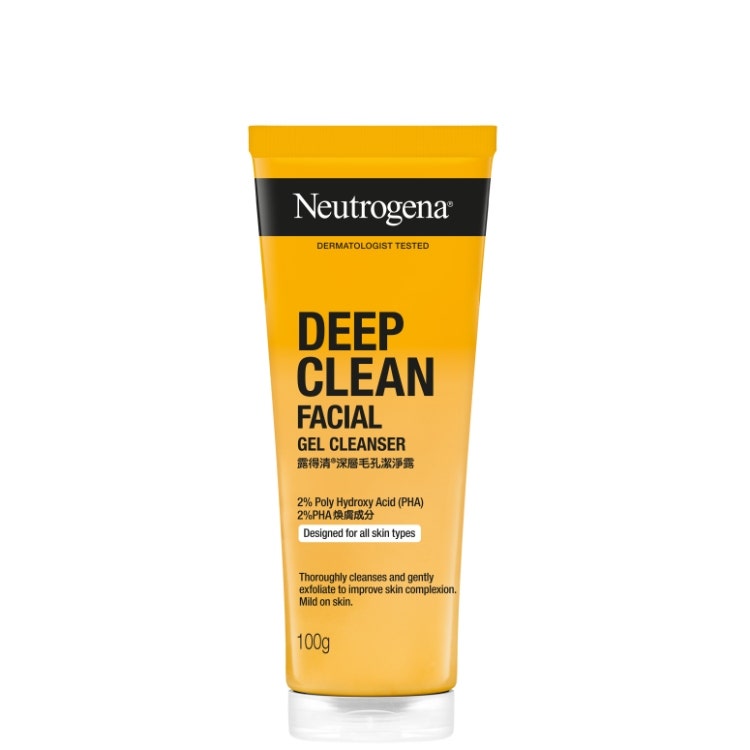
Neutrogena Deep Clean Facial Cleanser 100G

Neutrogena Deep Clean Facial Cleanser 100G
NEUTROGENA
neutrogena-deep-clean-facial-cleanser-100g
Cleanse
10084759503141
Morning or Evening?
How often will you use this product?
Notes


Highlights
WHAT IS IT?
Facial Cleanser containing hydroxy acid
FEATURES
Cleans deeply, removes dirt oil and make-up, removes dead skin cells, leaves skin soft and fresh, no pore clogging residue
BEST FOR
all skin types
CHECKS
Does not contain pore clogging residue
Who Is It For?
Adults UnisexWhat Does It Help With?
Cleansing Skin Removing Dead Skin Cells Improving Skin Look And FeelBudget
Affordable (under $30)How To Use
Which routine should it be used in?
Instructions:
Key Information


What NEUTROGENA Says
Product Description:
Neutrogena Deep Clean Facial Gel Cleanser leaves skin completely clean, soft & fresh with no pore clogging residue. It contains a hydroxy acid which penetrates deep into pores, dissolving dirt, oil & make-up. It also removes dead surface skin cell that can dry & dull your complexion.
About the Brand:
Ingredients Overview
Ingredients List
Water,Sodium-C14-16-Olefin-Sulfonate,Cocamidopropyl-Hydroxysultaine,Sorbitol,Propylene-Glycol,Gluconolactone,Salicylic-Acid,Sodium-Benzoate,Sodium-Hydroxide,Potassium-Acrylates-Copolymer,Acrylates-C10-30-Alkyl-Acrylate-Crosspolymer,Citric-Acid,Disodium-EDTA,2,6-Dimethyl-7-Octen-2-Ol,Methyldihydrojasmonate,Tricyclodecenyl-Propionate,Tetramethyl-Acetyloctahydronaphthaleness
Key Ingredients
Salicylic Acid, Gluconolactone
Ingredients Details
2,6-dimethyl-7-octen-2-ol
Common Name(s): 2,6-dimethyl-7-octen-2-ol
DESCRIPTION
What It Does: Delivers targeted skin-conditioning or bioactive benefits through a specific mechanism of action suited to the formulation's intended purpose.
Why It's Used: Specialty actives address specific skin concerns through targeted molecular mechanisms, providing efficacy beyond what base formulation ingredients alone can achieve.
How It Works: The bioactive compound interacts with specific molecular targets in skin cells or the extracellular matrix — enzymes, receptors, structural proteins, or signaling molecules — triggering beneficial biological responses.
Typically Found In: Serums,treatments,moisturizers,specialty products
TECHNICAL DETAILS
Primary Category: Specialty actives
Secondary Functions: Skin-conditioning,anti-aging
Application Areas:

Facial Skincare

Body Care
Hair Care
Beard Care
Color Cosmetics (Makeup)
Dietary/Oral Supplements
Typical Concentration Range: 0.01–5%
SOURCING & ETHICS
Vegan Status: Yes
Halal Status: Yes
Source Notes: Specialty active ingredient; check individual sourcing for vegan status.
SKIN COMPATIBILITY
Irritancy Rating: 1
Comedogenicity Rating: 0
Sensitivity Concerns: Low sensitization potential at recommended use concentrations.
Safe for Sensitive Skin: Yes
SAFETY & COMPATIBILITY
Safety Profile: Well-characterized cosmetic ingredient with established safety profile. generally non-irritating at typical use concentrations. suitable for leave-on and rinse-off cosmetics.
Works Well With: Niacinamide,hyaluronic acid,vitamin c,peptides
Avoid Combining With: Incompatible with oxidizing agents; check ph stability
SCIENTIFIC NOTE
Specialty actives typically work through enzyme inhibition (e.g., tyrosinase inhibition for brightening, mmp inhibition for anti-aging), receptor activation (e.g., retinoid receptors, ppar-γ for barrier genes), or transcription factor modulation (e.g., nrf2 for antioxidant gene upregulation). structure-activity relationships determine potency and selectivity.
Last Verified: Cosing eu database; pcpc cosmetic ingredient safety reviews; ingredient-specific safety and efficacy literature
Primary Sources: 2025-01-15
Gluconolactone
Common Name(s): D-gluconolactone,delta-gluconolactone
CAS Number: 90-80-2
DESCRIPTION
What It Does: Provides the gentlest chemical exfoliation with simultaneous antioxidant, moisture retention, and barrier support.
Why It's Used: Preferred exfoliant for rosacea, eczema, sensitive skin, and post-procedure recovery where standard ahas cause unacceptable irritation.
How It Works: Hydrolyzes slowly on skin surface to gluconic acid providing gentle exfoliation. multiple hydroxyl groups enable water binding (humectant) and metal chelation (antioxidant).
Typically Found In: Sensitive skin exfoliants,rosacea treatments,eczema care,post-procedure recovery
TECHNICAL DETAILS
Primary Category: Active ingredient – polyhydroxy acid (pha)
Secondary Functions: Gentle exfoliation,antioxidant,humectant
Application Areas:
Facial Skincare
Body Care
Hair Care
Beard Care
Color Cosmetics (Makeup)
Dietary/Oral Supplements
Typical Concentration Range: 5%–15%
SOURCING & ETHICS
Vegan Status: Yes – fermentation or synthetic
Halal Status: Yes
Source Notes: Fermentation-derived from glucose or synthetic. among the safest chemical exfoliants available.
SKIN COMPATIBILITY
Irritancy Rating: 1/5 – very low
Comedogenicity Rating: 0/5 – non-comedogenic
Sensitivity Concerns: No photosensitization; no stinging; suitable for very sensitive skin.
Safe for Sensitive Skin: Yes – ideal for sensitive, reactive, rosacea, and eczema-prone skin; no photosensitization
SAFETY & COMPATIBILITY
Safety Profile: Exceptional safety profile. no photosensitization. ewg score: 1.
Works Well With: Ceramides,niacinamide,hyaluronic acid,soothing actives
Avoid Combining With: No significant incompatibilities
SCIENTIFIC NOTE
Phas have molecular weights 2–3× larger than ahas, limiting penetration to superficial layers. combined humectant and antioxidant properties make them uniquely well-tolerated while providing meaningful exfoliation.
Last Verified: Cosing database,green & yu (2003) pha review,cir safety assessment
Primary Sources: 2026-03-12
Methyldihydrojasmonate
Common Name(s): Fragrance ingredient,eu allergen or aromatic component,olfactory/flavour
CAS Number: N/a
DESCRIPTION
What It Does: Provides specific aromatic character and olfactory experience contributing to product sensory experience and consumer appeal.
Why It's Used: Fragrance components are the primary cause of cosmetic contact sensitisation — eu requires individual label declaration of 26 identified fragrance allergens above threshold concentrations.
How It Works: Terpenoid and phenylpropanoid aromatic chemicals interact with olfactory receptor neurons (orns) in the nasal epithelium — small volatile molecules (logp 2–5, mw 100–300) bind g-protein coupled olfactory receptors triggering neurological scent perception. sensitisation risk from electrophilic reactivity of certain functional groups (aldehydes, α,β-unsaturated carbonyls) with skin proteins.
Typically Found In: All fragrance products
TECHNICAL DETAILS
Primary Category: Active ingredient – cosmetic active
Secondary Functions: Skin conditioning
Application Areas:
Facial Skincare
Body Care
Hair Care
Beard Care
Color Cosmetics (Makeup)
Dietary/Oral Supplements
Typical Concentration Range: Declare on label above threshold (eu)
SOURCING & ETHICS
Vegan Status: Conditional
Halal Status: Yes
Source Notes: Commercially produced for cosmetic use. verify vegan/halal status with supplier.
SKIN COMPATIBILITY
Irritancy Rating: 1/5 – very low
Comedogenicity Rating: 0/5 – non-comedogenic
Sensitivity Concerns: Well-tolerated by most skin types.
Safe for Sensitive Skin: Yes
SAFETY & COMPATIBILITY
Safety Profile: Good safety profile at recommended concentrations. ewg score: 1–2.
Works Well With: Standard skincare actives
Avoid Combining With: No known significant incompatibilities
SCIENTIFIC NOTE
Eu 1223/2009 annex iii allergen threshold: >0.001% in rinse-off, >0.0001% in leave-on — any listed allergen exceeding these levels requires individual inci label declaration separate from the generic fragrance/parfum declaration.
Last Verified: Eu regulation 1223/2009 annex iii,fragrance allergen declaration requirements
Primary Sources: 2026-03-12
Sorbitol
Common Name(s): D-glucitol,l-glucitol,sorbol
CAS Number: 50-70-4
DESCRIPTION
What It Does: Attracts and retains moisture providing skin softening and hydration.
Why It's Used: Widely used, cost-effective humectant and formulation ingredient in moisturizers, toothpastes, and personal care.
How It Works: 6 hydroxyl groups provide strong water binding through hydrogen bonding. metabolized slowly by skin as an osmolyte.
Typically Found In: Moisturizers,body lotions,toothpaste,shampoos,many personal care products
TECHNICAL DETAILS
Primary Category: Functional ingredient – sugar alcohol humectant
Secondary Functions: Formulation solvent,viscosity modifier
Application Areas:
Facial Skincare
Body Care
Hair Care
Beard Care
Color Cosmetics (Makeup)
Dietary/Oral Supplements
Typical Concentration Range: 1%–30%
SOURCING & ETHICS
Vegan Status: Yes – plant-derived (corn, apples) or synthetic
Halal Status: Yes
Source Notes: Produced by catalytic hydrogenation of glucose. derived from corn starch or other carbohydrate sources. gras food-approved.
SKIN COMPATIBILITY
Irritancy Rating: 1/5 – very low
Comedogenicity Rating: 0/5 – non-comedogenic
Sensitivity Concerns: Non-irritating; suitable for all skin types.
Safe for Sensitive Skin: Yes
SAFETY & COMPATIBILITY
Safety Profile: Excellent safety profile. ewg score: 1.
Works Well With: Ceramides,emollients,occlusives,glycerin,hyaluronic acid
Avoid Combining With: No significant incompatibilities
SCIENTIFIC NOTE
Sorbitol's osmolyte function in cells (accumulates in response to osmotic stress) suggests it may provide protection to skin cells under dehydrating environmental conditions, complementing its well-established surface humectant activity.
Last Verified: Cosing database,cir safety assessment,ewg skin deep
Primary Sources: 2026-03-12
