

JOHNSON & JOHNSON KOREA LTD
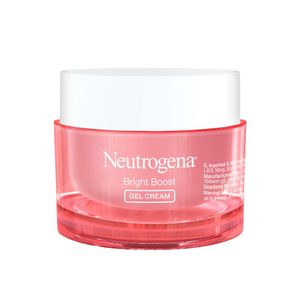
Neutrogena Bright Boost Gel Cream (15 gm)

Neutrogena Bright Boost Gel Cream (15 gm)
JOHNSON & JOHNSON KOREA LTD
neutrogena-bright-boost-gel-cream-15-gm
Moisturize
10084786962725
Morning or Evening?
How often will you use this product?
Notes


Highlights
WHAT IS IT?
Face Gel Cream with multiple active ingredients
FEATURES
Brightens skin in 1 week, increases natural surface cell turnover by 10x, visibly improves skin tone, texture and dark spots, hydrates skin
BEST FOR
dry
CHECKS
Does not specify preservatives, fragrance, silicones, PEGs or alcohol, but highlights skin safety and non-comedogenic nature
Who Is It For?
All Skin Types Including Dry And Dull Skin; No Specific Age Or Gender DetailedWhat Does It Help With?
Hyperpigmentation Dark Spots Dullness Dehydrated Skin Skin Texture Improvement BrighteningBudget
Affordable (under $30)How To Use
Which routine should it be used in?
Instructions:
Key Information


What JOHNSON & JOHNSON KOREA LTD Says
Product Description:
The Neutrogena ® Bright Boost Gel ™ Cream will give you a brighter more even toned skin in just 1 week and increases your natural surface cell turnover by 10x. Discover 3D brightening care that visibly improves skin tone, texture and the look of dark spots so you can dare to go makeup free in just 1 week. Formulated with Neoglucosamine, a prestige Amino Sugar scientifically proven to help prevent hyperpigmentation and reduce the appearance of dark spots. It hydrates, boosts natural surface skin cell turnover and improves skin tone. Contains AHA and PHA, scientifically proven to work on all skin tones to resurface, brighten and smoothen skin. Accelerated Brightening Complex™ helps prevent hyperpigmentation, improve skin tone and moisturize skin.
About the Brand:
Ingredients Overview
Ingredients List
neoglucosamine, aha, pha, glycerin, squalane
Key Ingredients
Neoglucosamine, AHA, PHA, Glycerin, Squalane
Ingredients Details
Aha
Common Name(s): Aha,alpha-hydroxy acid exfoliant,keratolytic active
CAS Number: N/a
DESCRIPTION
What It Does: Exfoliates dead skin cells by disrupting desmosomal adhesion bonds, brightens skin tone, stimulates collagen production, and improves product active penetration through the exfoliated sc.
Why It's Used: Aha exfoliation is the most evidence-backed chemical exfoliation mechanism with 30+ years of clinical use data; different acid sizes allow formulators to select penetration depth and intensity for specific skin types.
How It Works: Aha carboxylic groups donate h⁺ disrupting ca²⁺ coordination of desmoglein desmosomal proteins at formulation ph 3–4, weakening corneocyte cohesion. smaller ahas (glycolic, mw 76) penetrate fastest; larger (mandelic, mw 152) penetrate slower for gentler exfoliation.
Typically Found In: Exfoliating toners,aha serums,anti-aging
TECHNICAL DETAILS
Primary Category: Active ingredient – alpha hydroxy acid (aha)
Secondary Functions: Brightening,collagen stimulation
Application Areas:

Facial Skincare
Body Care

Hair Care
Beard Care
Color Cosmetics (Makeup)
Dietary/Oral Supplements
Typical Concentration Range: 1%–15%
SOURCING & ETHICS
Vegan Status: Yes
Halal Status: Yes
Source Notes: Fermentation-derived or synthetic. ph must be ≤4.0 for aha activity.
SKIN COMPATIBILITY
Irritancy Rating: 2/5 – low to moderate
Comedogenicity Rating: 0/5 – non-comedogenic
Sensitivity Concerns: Photosensitizing – mandatory spf use. start at low frequency.
Safe for Sensitive Skin: Use with caution – spf required
SAFETY & COMPATIBILITY
Safety Profile: Safe at otc concentrations. eu: ≤10% leave-on at ph ≥3.5. mandatory spf advisory.
Works Well With: Niacinamide,ceramides,hyaluronic acid,spf
Avoid Combining With: Retinol in same step; multiple exfoliants simultaneously
SCIENTIFIC NOTE
Glycolic acid is the most clinically studied aha; mandelic and lactic are preferred for sensitive or darker skin types from their larger molecular weight and slower penetration kinetics.
Last Verified: 2026-03-12
Primary Sources: Cosing database,aha aha exfoliant review
Glycerin
Common Name(s): Glycerol,glycerine,1,2,3-propanetriol
CAS Number: 56-81-5
DESCRIPTION
What It Does: Glycerin pulls water from the environment and deeper skin layers into the outer skin layer (epidermis), boosting moisture levels and keeping skin soft, smooth, and plump.
Why It's Used: It is used in virtually every moisturizer, serum, and cleanser because it is highly effective at hydrating skin, is well-tolerated by all skin types, and enhances the texture and spreadability of formulations.
How It Works: As a humectant, glycerin forms hydrogen bonds with water molecules, trapping them in the skin. it also reinforces the skin barrier by integrating into lipid structures between skin cells.
Typically Found In: Moisturizers,serums,cleansers,toners,sheet masks,sunscreens,body lotions,shampoos,conditioners
TECHNICAL DETAILS
Primary Category: Humectant
Secondary Functions: Skin barrier support,emollient,solvent
Application Areas:
Facial Skincare
Body Care
Hair Care
Beard Care
Color Cosmetics (Makeup)
Dietary/Oral Supplements
Typical Concentration Range: 1%–30% (typical: 3–10%)
SOURCING & ETHICS
Vegan Status: Conditional - feedstock declaration required
Halal Status: Unverified - feedstock declaration required (plant, animal and petrochemical routes all exist)
Source Notes: Derived from plant oils via hydrolysis or saponification; synthetic versions also available. palm-derived glycerin carries sustainability concerns. [audit 2026-07-29 rev2: origin-dependent: the same inci exists in plant, animal and petrochemical versions and the name does not discriminate. determination requires shariah-panel sign-off.]
SKIN COMPATIBILITY
Irritancy Rating: 1/5 – very low; non-irritating at all standard concentrations
Comedogenicity Rating: 0/5 – non-comedogenic
Sensitivity Concerns: Extremely rare allergic reactions; generally safe for all skin types including sensitive and baby skin
Safe for Sensitive Skin: Yes
SAFETY & COMPATIBILITY
Safety Profile: Widely recognized as safe. ewg hazard score: 1. no significant concerns for irritation, sensitization, or toxicity at typical concentrations (up to 50%).
Works Well With: Hyaluronic acid,ceramides,niacinamide,panthenol,urea,peptides,retinol,ahas/bhas
Avoid Combining With: No known incompatibilities at standard concentrations
SCIENTIFIC NOTE
Glycerin is an endogenous skin component found naturally in the stratum corneum. aquaporin-3 channels in keratinocytes facilitate glycerin transport, making it integral to natural skin hydration pathways.
Last Verified: 2026-03-12
Primary Sources: Cosing database,cir safety assessment,ewg skin deep,inci decoder
Pha
Common Name(s): Polyhydroxy acid (pha),gentle large-molecule exfoliant,sensitive skin aha
CAS Number: N/a
DESCRIPTION
What It Does: Provides gentle keratolytic exfoliation, skin brightening, and humectant moisture retention simultaneously — with a skin-irritation profile significantly lower than glycolic or lactic acid from slower penetration kinetics.
Why It's Used: The gold standard for sensitive skin chemical exfoliation — phas provide aha-class exfoliation efficacy in fitzpatrick iv–vi and rosacea skin types where glycolic acid is too aggressive.
How It Works: Multiple hydroxyl groups on the pha molecule slow sc penetration (fick's law: d ∝ mw^-0.7) providing gentler keratolytic action. the hydroxyl groups also bind water providing simultaneous humectancy and chelate ca²⁺ to disrupt desmosomal adhesion for exfoliation.
Typically Found In: Sensitive skin,exfoliating toners,post-procedure
TECHNICAL DETAILS
Primary Category: Active ingredient – alpha hydroxy acid (aha)
Secondary Functions: Brightening,collagen stimulation
Application Areas:
Facial Skincare
Body Care
Hair Care
Beard Care
Color Cosmetics (Makeup)
Dietary/Oral Supplements
Typical Concentration Range: 1%–15%
SOURCING & ETHICS
Vegan Status: Yes
Halal Status: Yes
Source Notes: Fermentation-derived or synthetic. ph must be ≤4.0 for aha activity.
SKIN COMPATIBILITY
Irritancy Rating: 2/5 – low to moderate
Comedogenicity Rating: 0/5 – non-comedogenic
Sensitivity Concerns: Photosensitizing – mandatory spf use. start at low frequency.
Safe for Sensitive Skin: Use with caution – spf required
SAFETY & COMPATIBILITY
Safety Profile: Safe at otc concentrations. eu: ≤10% leave-on at ph ≥3.5. mandatory spf advisory.
Works Well With: Niacinamide,ceramides,hyaluronic acid,spf
Avoid Combining With: Retinol in same step; multiple exfoliants simultaneously
SCIENTIFIC NOTE
Phas have a water of hydration shell from multiple oh groups that further slows sc penetration versus equivalent-mw ahas — the combined larger mw and greater hydration shell providing the gentlest keratolytic delivery kinetics of all acid exfoliants.
Last Verified: 2026-03-12
Primary Sources: Cosing database,polyhydroxy acid pha gentle exfoliant review
Squalane
Common Name(s): Perhydrosqualene,2,6,10,15,19,23-hexamethyltetracosane
CAS Number: 0111-01-03
DESCRIPTION
What It Does: Provides endogenous-skin-identical emolliency with exceptional stability and skin compatibility.
Why It's Used: The most skin-compatible emollient – chemically identical to human sebum squalene component with outstanding tolerability across all skin types.
How It Works: Fully saturated hydrocarbon with zero oxidation sites provides exceptional stability unlike squalene's 6 double bonds. integrates into stratum corneum lipid bilayers with near-perfect biocompatibility. provides antioxidant protection to formulation via radical quenching.
Typically Found In: Facial oils,serums,non-comedogenic moisturizers,luxury body care
TECHNICAL DETAILS
Primary Category: Functional ingredient – emollient
Secondary Functions: Maximum biocompatibility,antioxidant stabilizer,non-comedogenic
Application Areas:
Facial Skincare
Body Care
Hair Care
Beard Care
Color Cosmetics (Makeup)
Dietary/Oral Supplements
Typical Concentration Range: 1%–100%
SOURCING & ETHICS
Vegan Status: Conditional - feedstock declaration required
Halal Status: Unverified - feedstock declaration required (plant, animal and petrochemical routes all exist)
Source Notes: Sustainable plant-derived squalane from sugarcane fermentation (amyris) or olive oil fractionation is preferred over shark liver-derived. chemically identical regardless of source. [audit 2026-07-29 rev2: origin-dependent: the same inci exists in plant, animal and petrochemical versions and the name does not discriminate. determination requires shariah-panel sign-off.]
SKIN COMPATIBILITY
Irritancy Rating: 1/5 – very low
Comedogenicity Rating: 0/5 – non-comedogenic
Sensitivity Concerns: Non-irritating.
Safe for Sensitive Skin: Yes
SAFETY & COMPATIBILITY
Safety Profile: Excellent safety profile. ewg score: 1.
Works Well With: Humectants,ceramides,actives as carrier
Avoid Combining With: No significant incompatibilities
SCIENTIFIC NOTE
Squalene constitutes approximately 12-15% of human sebum – the highest proportion of any skin lipid. topical squalane (stable, hydrogenated form) replenishes this abundant endogenous skin lipid. the complete absence of oxidizable double bonds (unlike squalene's 6 double bonds) eliminates the pro-oxidant concerns of natural squalene oxidation.
Last Verified: 2026-03-12
Primary Sources: Cosing database,huang et al. squalane review,cir safety assessment