

Nykaa E retail limited
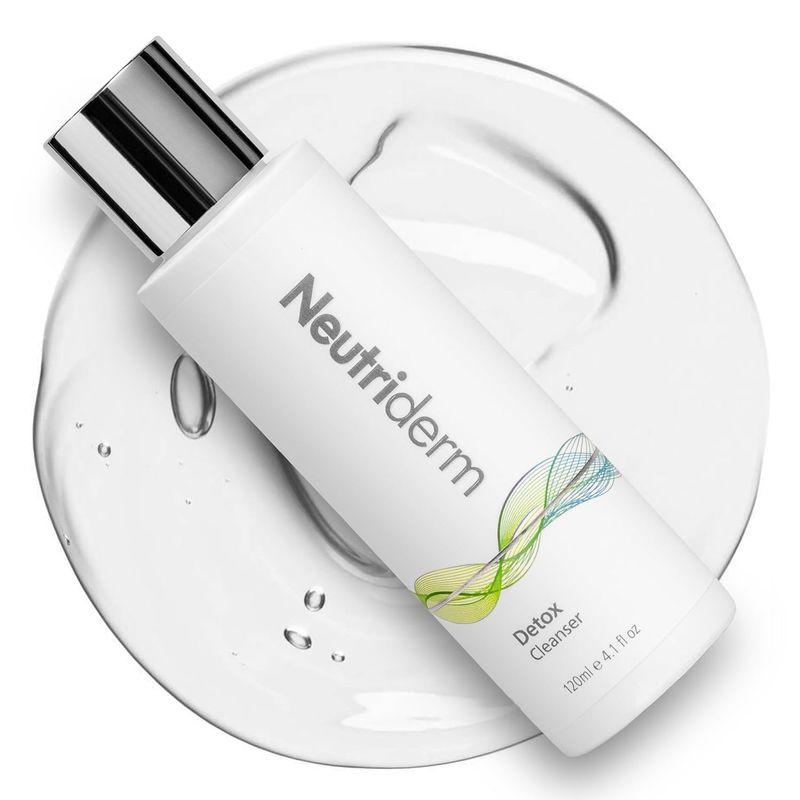
Neutriderm Detox Cleanser

Neutriderm Detox Cleanser
Nykaa E retail limited
neutriderm-detox-cleanser
Cleanse
10085109596453
Morning or Evening?
How often will you use this product?
Notes


Highlights
WHAT IS IT?
Face wash cleanser with glycolic acid 2%
FEATURES
Gently exfoliates and removes dead skin cells, stimulates collagen production for firmer, younger-looking skin, protects against environmental damage and pollution, provides deep hydration without drying out the skin
BEST FOR
normal
CHECKS
Paraben-Free,Sulfate-free,Alcohol-free
Who Is It For?
All Ages And GendersWhat Does It Help With?
Exfoliation Collagen Stimulation Deep Hydration Protection Against PollutionBudget
Affordable (under $30)How To Use
Which routine should it be used in?
Instructions:
Key Information


What Nykaa E retail limited Says
Product Description:
Neutriderm Detox Cleanser is ideal for introducing AHAs into your skincare routine with its mild yet effective formula, suitable for all skin types, ensuring revitalizing effects without irritation. Features include gentle exfoliation, stimulation of collagen production for firmer skin, protection against environmental damage and pollution, and deep hydration without drying out the skin.
About the Brand:
Ingredients Overview
Ingredients List
Water,Sodium-Lauroyl-Lactylate,Cocamidopropyl-Betaine,Cetyl-Betaine,Sodium-Methyl-2-Sulfolaurate,Glycolic-Acid,Decyl-Glucoside,Copper-Pca,Sodium-Pca,Trehalose,Disodium-2-Sulfolaurate,Lauryl-Betaine,Parfum,Sodium-Chloride,Lactic-Acid,Phenoxyethanol,Benzoic-Acid,Dehydroecetic-Acid,Glycolic-Acid,Sodium-Pca
Key Ingredients
Glycolic Acid, Copper PCA, Sodium PCA
Ingredients Details
Parfum
Common Name(s): Parfum,parfum,cosmetic functional ingredient,established cosmetic active
CAS Number: N/a
DESCRIPTION
What It Does: Provides the characteristic cosmetic function of its ingredient class through its molecular chemistry at recommended use concentration.
Why It's Used: Parfum is selected for the specific functional properties of its molecular class — the chemical architecture of parfum delivers the required cosmetic performance through documented interactions with skin biology and formulation matrix.
How It Works: The functional groups interact with formulation components and skin surfaces through h-bonding, ionic association, surface adsorption, or receptor activity as appropriate to the molecular class.
Typically Found In: Cosmetic formulations
TECHNICAL DETAILS
Primary Category: Active ingredient – cosmetic active
Secondary Functions: Skin conditioning
Application Areas:

Facial Skincare

Body Care
Hair Care
Beard Care
Color Cosmetics (Makeup)
Dietary/Oral Supplements
Typical Concentration Range: 0.1%–10%
SOURCING & ETHICS
Vegan Status: Conditional - supplier confirmation required
Halal Status: Unverified - supplier confirmation required
Source Notes: Commercially produced for cosmetic use. verify vegan/halal status with supplier. [audit 2026-07-29 rev2: the record's own source_notes does not assert a non-animal origin, or instructs the reader to verify with the supplier; "yes" asserts knowledge the record does not hold. determination requires shariah-panel sign-off.]
SKIN COMPATIBILITY
Irritancy Rating: 1/5 – very low
Comedogenicity Rating: 0/5 – non-comedogenic
Sensitivity Concerns: Well-tolerated by most skin types.
Safe for Sensitive Skin: Yes
SAFETY & COMPATIBILITY
Safety Profile: Good safety profile at recommended concentrations. ewg score: 1–2.
Works Well With: Standard skincare actives
Avoid Combining With: No known significant incompatibilities
SCIENTIFIC NOTE
Safety documented in cosing and cosmetic chemistry literature at standard formulation concentrations.
Last Verified: 2026-03-22
Primary Sources: Cosing database,parfum technical review
Phenoxyethanol
Common Name(s): 2-phenoxyethanol,rose ether,ethylene glycol monophenyl ether
CAS Number: 122-99-6
DESCRIPTION
What It Does: Prevents microbial contamination and spoilage in cosmetic formulations.
Why It's Used: The benchmark cosmetic preservative – eu-permitted up to 1%, effective against virtually all cosmetically relevant microorganisms, and excellent tolerability.
How It Works: Phenol ring provides broad antimicrobial activity via disruption of bacterial and fungal cell membranes and inhibition of enzymatic activity. effective against gram-positive and gram-negative bacteria, yeasts (candida), and molds (aspergillus). activity ph range: 3-9.
Typically Found In: All cosmetic formulations as primary preservative
TECHNICAL DETAILS
Primary Category: Functional ingredient – broad-spectrum preservative
Secondary Functions: Skin conditioning
Application Areas:
Facial Skincare
Body Care
Hair Care
Beard Care
Color Cosmetics (Makeup)
Dietary/Oral Supplements
Typical Concentration Range: 0.1%–1% (eu max 1%)
SOURCING & ETHICS
Vegan Status: Conditional - supplier confirmation required
Halal Status: Unverified - supplier confirmation required
Source Notes: Commercially produced for cosmetic use. verify vegan/halal status with supplier. [audit 2026-07-29 rev2: the record's own source_notes does not assert a non-animal origin, or instructs the reader to verify with the supplier; "yes" asserts knowledge the record does not hold. determination requires shariah-panel sign-off.]
SKIN COMPATIBILITY
Irritancy Rating: 1/5 – very low
Comedogenicity Rating: 0/5 – non-comedogenic
Sensitivity Concerns: Well-tolerated by most skin types.
Safe for Sensitive Skin: Yes
SAFETY & COMPATIBILITY
Safety Profile: Eu cosmetics regulation max 1%. sccs assessed as safe at ≤1%. avoid use around eyes in baby products per some country regulations. ewg score: 4.
Works Well With: Standard skincare actives
Avoid Combining With: No known significant incompatibilities
SCIENTIFIC NOTE
Phenoxyethanol's widespread adoption as the primary cosmetic preservative followed the phaseout of parabens from many formulations in the 2000s-2010s. despite having a comparable or better safety profile to parabens, it is often cited in 'free-from' formulations – a consumer perception issue rather than a scientific safety concern.
Last Verified:
Trehalose
Common Name(s): Alpha,alpha-trehalose,mycose
CAS Number: 99-20-7
DESCRIPTION
What It Does: Provides superior moisture retention under dehydrating conditions – uniquely protective in extreme environments.
Why It's Used: Premium humectant for formulations targeting dehydration, environmental stress protection, and dry/mature skin hydration.
How It Works: Forms a protective glassy matrix that replaces water molecules around proteins and cell membranes during dehydration stress, preventing protein denaturation and membrane damage. stronger water binding than sucrose or glucose.
Typically Found In: Premium moisturizers,protective barrier formulas,anti-aging products
TECHNICAL DETAILS
Primary Category: Active ingredient – anhydrobiotic sugar / humectant
Secondary Functions: Stress protection,barrier support,cryoprotectant
Application Areas:
Facial Skincare
Body Care
Hair Care
Beard Care
Color Cosmetics (Makeup)
Dietary/Oral Supplements
Typical Concentration Range: 1%–10%
SOURCING & ETHICS
Vegan Status: Yes – fermentation-derived or from yeast
Halal Status: Yes
Source Notes: Produced by yeast fermentation or enzymatic conversion of starch. available as anhydrous or dihydrate form.
SKIN COMPATIBILITY
Irritancy Rating: 1/5 – very low
Comedogenicity Rating: 0/5 – non-comedogenic
Sensitivity Concerns: Non-irritating; exceptionally well-tolerated; endogenous to many organisms.
Safe for Sensitive Skin: Yes
SAFETY & COMPATIBILITY
Safety Profile: Excellent safety profile. ewg score: 1.
Works Well With: Ceramides,emollients,occlusives,glycerin,hyaluronic acid
Avoid Combining With: No significant incompatibilities
SCIENTIFIC NOTE
Trehalose's unique ability to form an amorphous glassy matrix during dehydration (replacing water molecules) explains the survival of tardigrades and resurrection plants. this property translates to exceptional skin protection under environmental dehydration stress.
Last Verified: 2026-03-12
Primary Sources: Cosing database,crowe et al. trehalose anhydrobiosis review,cir safety assessment
Water
Common Name(s): Water,purified water,deionised water,inci water
CAS Number: 7732-18-5
DESCRIPTION
What It Does: Provides the universal solvent and vehicle for water-soluble actives and the continuous phase of all o/w emulsions.
Why It's Used: The most essential cosmetic ingredient — aqua (water) is listed first on virtually all water-containing cosmetic inci labels as the highest-concentration ingredient, serving as the foundation of the global cosmetics industry.
How It Works: Acts as solvent for all water-soluble ingredients (glycols, amino acids, water-soluble actives). forms the continuous external phase of o/w emulsions (lotions, creams, serums). provides aqueous environment for enzymatic and chemical reactions between actives. ph adjustment medium.
Typically Found In: Virtually all cosmetic products — the most universal cosmetic ingredient globally
TECHNICAL DETAILS
Primary Category: Functional ingredient – water
Secondary Functions: Skin conditioning
Application Areas:
Facial Skincare
Body Care
Hair Care
Beard Care
Color Cosmetics (Makeup)
Dietary/Oral Supplements
Typical Concentration Range: Varies widely — up to 95% in some toners and serums
SOURCING & ETHICS
Vegan Status: Yes – water (deionised/purified)
Halal Status: Yes
Source Notes: Cosmetic-grade water is purified (deionised, distilled, or ro filtered) to prevent mineral content interference with formulation stability. european pharmacopoeial water (aqua purificata ph. eur.) is the quality standard for pharmaceutical and high-end cosmetic formulations.
SKIN COMPATIBILITY
Irritancy Rating: 1/5 – non-irritant
Comedogenicity Rating: 0/5 – non-comedogenic
Sensitivity Concerns: Well-tolerated by most skin types.
Safe for Sensitive Skin: Yes
SAFETY & COMPATIBILITY
Safety Profile: Good safety profile at recommended concentrations. ewg score: 1–2.
Works Well With: Standard skincare actives
Avoid Combining With: No known significant incompatibilities
SCIENTIFIC NOTE
Water's position as the first inci ingredient on most cosmetic labels reflects the regulatory requirement to list ingredients in descending concentration order — meaning water is the most abundant ingredient in the majority of cosmetic products. the fundamental role of water as the universal cosmetic solvent and vehicle makes it simultaneously the most important cosmetic ingredient and the one that requires the most sophisticated formulation chemistry to control — every emulsifier, thickener, preservative, and ph adjuster exists primarily to manage water's interaction with other ingredients in formulation.
Last Verified: 2026-03-12
Primary Sources: Cosing database,eu cosmetics regulation 1223/2009 inci requirements,ph. eur. aqua purificata monograph