

NatureLab Co.
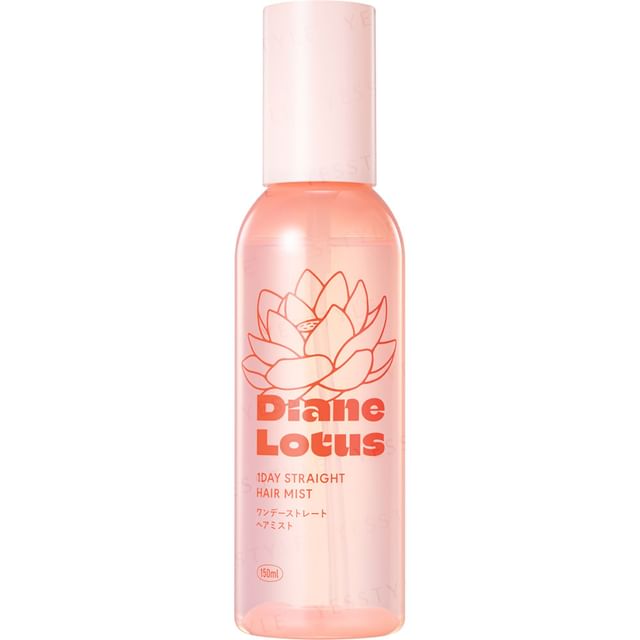
NatureLab Diane Lotus 1 Day Straight Hair Mist
A lightweight hair mist that straightens, smooths, and protects hair using thermoactive reconstruction technology, keeping hair straight and smooth all day long.
Heat Protection
Anti-Frizz
Frizz
Breakage
Wavy
Curly
Optimized for Your Environment & Lifestyle
Nykaa
In stock
Recommended

NatureLab Diane Lotus 1 Day Straight Hair Mist
NatureLab Co.
naturelab-diane-lotus-1-day-straight-hair-mist
Hair Mist
10523344044325
Morning or Evening?
How often will you use this product?
Notes


Secure payment protection
Your Biodata Compatibility Analysis
Based on your 6 hair health indices and environmental factors
Poor Match
Significant incompatibilities
Growth Cycle Health Index
Hair Match
Hair Health Index Alignment
Optimal for OSI, SSI, DI, HSI
Ingredient Efficacy
Matching Ingredient Score
Environment Compatibility
Current UV, Air Quality & Humidity
Why This Works for Your Specific Profile
Damage Index:
Water Quality:
Hair:
Active Lifestyle:
Your Hair Profile Integration
Your Hair Archetype

Density Level

Washing Frequency

Shedding Level

Oil Level
Your Hair Health Indices
Oil Secretion (OSI)
Very low oil production
Scalp Sensitivity (SSI)
Very low sensitivity
Growth Rate (CMR)
Poor metabolism rate
Damage Index (DI)
Minimal damage
Hair Strength (HSI)
Very weak strength
Softness Index (SI)
Significant improvement needed
Water & Environmental Integration

Water:


Expected Results & Timeline
Key Highlights

What is it?
Hair mist with 17 ingredients

Who Is It For
Adults

Budget
$19.28 - $38.56

Timeline
Immediate
Why You’ll Love It

What Does It Help With?
Frizz, Breakage

Best for
Frizz

Features
Holds straight hairstyle until evening, smooths waves and curls, tames frizz, repairs damage, protects against heat, pleasant tea and citrus scent.

Checks
Ingredients Overview
Ingredients List
water, dipropylene-glycol, butylene-glycol, polysilicone-29, levulinic-acid, γ-docosalactone, hydrolyzed-silk/pg-propyl-methylsilanediol-crosspolymer, hydrolyzed-keratin-wool, hydrolyzed-silk, hydrolyzed-collagen-pg-propyl-methylsilanediol, cladosiphon-novae-caledoniae-polysaccharide, tocopherol, glycolic-acid, tri-caprylic/capric-glyceryl, ppg-6-decyltetradeceth-30, pentylene-glycol, phenoxyethanol, fragrance
Key Ingredients
levulinic-acid, hydrolyzed-silk, hydrolyzed-keratin-wool, hydrolyzed-collagen-pg-propyl-methylsilanediol, cladosiphon-novae-caledoniae-polysaccharide, tocopherol
Ingredients Details
Fragrance
Common Name(s): Fragrance ingredient,eu allergen or aromatic component,olfactory/flavour
CAS Number: N/a
DESCRIPTION
What It Does: Provides the complete fragrance profile contributing to product sensory experience and consumer appeal.
Why It's Used: Fragrance is a major consumer purchase driver — up to 70% of consumers make purchasing decisions partially based on product scent.
How It Works: Fragrance blends interact with olfactory receptors providing the sensory profile — complex mixtures activate multiple receptor types for rich, multidimensional scent experiences.
Typically Found In: All fragrance products
TECHNICAL DETAILS
Primary Category: Active ingredient – cosmetic active
Secondary Functions: Skin conditioning
Application Areas:

Facial Skincare

Body Care
Hair Care
Beard Care
Color Cosmetics (Makeup)
Dietary/Oral Supplements
Typical Concentration Range: Standard use levels
SOURCING & ETHICS
Vegan Status: Conditional - supplier confirmation required
Halal Status: Unverified - supplier confirmation required
Source Notes: Commercially produced for cosmetic use. verify vegan/halal status with supplier. [audit 2026-07-29 rev2: the record's own source_notes does not assert a non-animal origin, or instructs the reader to verify with the supplier; "yes" asserts knowledge the record does not hold. determination requires shariah-panel sign-off.]
SKIN COMPATIBILITY
Irritancy Rating: 1/5 – very low
Comedogenicity Rating: 0/5 – non-comedogenic
Sensitivity Concerns: Well-tolerated by most skin types.
Safe for Sensitive Skin: Yes
SAFETY & COMPATIBILITY
Safety Profile: Good safety profile at recommended concentrations. ewg score: 1–2.
Works Well With: Standard skincare actives
Avoid Combining With: No known significant incompatibilities
SCIENTIFIC NOTE
Ifra guidelines set usage limits for fragrance ingredients based on skin sensitisation and phototoxicity assessment for each application category.
Last Verified: 2026-03-12
Primary Sources: Eu regulation 1223/2009 annex iii,ifra standards,fragrance allergen declaration requirements
Phenoxyethanol
Common Name(s): 2-phenoxyethanol,rose ether,ethylene glycol monophenyl ether
CAS Number: 122-99-6
DESCRIPTION
What It Does: Prevents microbial contamination and spoilage in cosmetic formulations.
Why It's Used: The benchmark cosmetic preservative – eu-permitted up to 1%, effective against virtually all cosmetically relevant microorganisms, and excellent tolerability.
How It Works: Phenol ring provides broad antimicrobial activity via disruption of bacterial and fungal cell membranes and inhibition of enzymatic activity. effective against gram-positive and gram-negative bacteria, yeasts (candida), and molds (aspergillus). activity ph range: 3-9.
Typically Found In: All cosmetic formulations as primary preservative
TECHNICAL DETAILS
Primary Category: Functional ingredient – broad-spectrum preservative
Secondary Functions: Skin conditioning
Application Areas:
Facial Skincare
Body Care
Hair Care
Beard Care
Color Cosmetics (Makeup)
Dietary/Oral Supplements
Typical Concentration Range: 0.1%–1% (eu max 1%)
SOURCING & ETHICS
Vegan Status: Conditional - supplier confirmation required
Halal Status: Unverified - supplier confirmation required
Source Notes: Commercially produced for cosmetic use. verify vegan/halal status with supplier. [audit 2026-07-29 rev2: the record's own source_notes does not assert a non-animal origin, or instructs the reader to verify with the supplier; "yes" asserts knowledge the record does not hold. determination requires shariah-panel sign-off.]
SKIN COMPATIBILITY
Irritancy Rating: 1/5 – very low
Comedogenicity Rating: 0/5 – non-comedogenic
Sensitivity Concerns: Well-tolerated by most skin types.
Safe for Sensitive Skin: Yes
SAFETY & COMPATIBILITY
Safety Profile: Eu cosmetics regulation max 1%. sccs assessed as safe at ≤1%. avoid use around eyes in baby products per some country regulations. ewg score: 4.
Works Well With: Standard skincare actives
Avoid Combining With: No known significant incompatibilities
SCIENTIFIC NOTE
Phenoxyethanol's widespread adoption as the primary cosmetic preservative followed the phaseout of parabens from many formulations in the 2000s-2010s. despite having a comparable or better safety profile to parabens, it is often cited in 'free-from' formulations – a consumer perception issue rather than a scientific safety concern.
Last Verified:
Polysilicone-29
Common Name(s): Polysilicone-29
DESCRIPTION
What It Does: Creates a smooth, silky skin feel, reduces friction, and forms a breathable film on skin that enhances product application and wear.
Why It's Used: Silicones provide unmatched aesthetic elegance, thermal stability, and formulation flexibility that enhance both consumer experience and product performance.
How It Works: Siloxane backbone provides a flexible, chemically inert polymer that forms thin, breathable films on skin surface, filling surface irregularities and providing low surface energy for exceptional slip and spreadability.
Typically Found In: Moisturizers,primers,foundations,sunscreens,hair products
TECHNICAL DETAILS
Primary Category: Silicones
Secondary Functions: Emollient,film former
Application Areas:
Facial Skincare
Body Care
Hair Care
Beard Care
Color Cosmetics (Makeup)
Dietary/Oral Supplements
Typical Concentration Range: 0.5–30%
SOURCING & ETHICS
Vegan Status: Yes
Halal Status: Yes
Source Notes: Synthetic silicone polymer; not plant-derived but generally considered vegan.
SKIN COMPATIBILITY
Irritancy Rating: 1
Comedogenicity Rating: 0
Sensitivity Concerns: Low sensitization potential at recommended use concentrations.
Safe for Sensitive Skin: Yes
SAFETY & COMPATIBILITY
Safety Profile: Well-characterized cosmetic ingredient with established safety profile. generally non-irritating at typical use concentrations. suitable for leave-on and rinse-off cosmetics.
Works Well With: Other emollients,uv filters,pigments
Avoid Combining With: Silicone-sensitive formulations; biodegradability concerns in eco-formulations
SCIENTIFIC NOTE
Silicone polymers are poly(dimethylsiloxane) backbones with si-o bond energy (105 kcal/mol) significantly higher than c-c (83 kcal/mol), providing exceptional thermal and oxidative stability. the low surface energy (21 mn/m vs 30+ mn/m for organic polymers) accounts for silicone's unique slip feel, and the si-o bond's flexibility (rotation barrier ~0.3 kcal/mol) enables fluid behavior across wide temperature ranges.
Last Verified: 2025-01-15
Primary Sources: Cosing eu database; pcpc cosmetic ingredient safety reviews; ingredient-specific safety and efficacy literature
Ppg-6-decyltetradeceth-30
Common Name(s): Ppg-6-decyltetradeceth-30
DESCRIPTION
What It Does: Reduces surface tension at oil-water interfaces, enabling effective cleansing, emulsification, and formulation stability.
Why It's Used: Surface-active agents are essential for emulsification, cleansing, and stabilization of cosmetic formulations containing both aqueous and lipid phases.
How It Works: The amphiphilic molecular structure positions the hydrophilic head in water and the lipophilic tail in oils, creating micelles that solubilize sebum, dirt, and oil-soluble impurities for rinsing in cleansers or stable emulsions in leave-on products.
Typically Found In: Cleansers,shampoos,body washes,foaming treatments
TECHNICAL DETAILS
Primary Category: Surfactants
Secondary Functions: Emulsifying,cleansing
Application Areas:
Facial Skincare
Body Care
Hair Care
Beard Care
Color Cosmetics (Makeup)
Dietary/Oral Supplements
Typical Concentration Range: 0.5–30%
SOURCING & ETHICS
Vegan Status: Yes
Halal Status: Yes
Source Notes: Synthetic or semi-synthetic surfactant; no animal components.
SKIN COMPATIBILITY
Irritancy Rating: 2
Comedogenicity Rating: 0
Sensitivity Concerns: May cause irritation or stinging in sensitive or barrier-compromised skin at high concentrations; patch test recommended.
Safe for Sensitive Skin: Conditional
SAFETY & COMPATIBILITY
Safety Profile: Well-characterized cosmetic ingredient with established safety profile. mildly irritating to some individuals at typical use concentrations. suitable for leave-on and rinse-off cosmetics.
Works Well With: Other surfactants,thickeners,conditioning agents
Avoid Combining With: High concentrations in sensitive skin formulations
SCIENTIFIC NOTE
Surfactant critical micelle concentration (cmc) determines the threshold for emulsification: above the cmc, amphiphilic molecules self-assemble into micelles with hydrophobic cores that solubilize oils. hlb (hydrophile-lipophile balance) value predicts surfactant function: hlb 3–6 for w/o emulsifiers, 8–18 for o/w emulsifiers, >15 for solubilizers.
Last Verified: 2025-01-15
Primary Sources: Cosing eu database; pcpc cosmetic ingredient safety reviews; ingredient-specific safety and efficacy literature
Personalized Usage Instructions
How to Use
Step 1
Apply to damp or dry hair from a distance of 10-15 cm, evenly spraying the entire length
Step 2
Then blow-dry the hair to activate the straightening ingredients
Medical Chemicals

Protein/Moisture
- Protein
pH Level
- Acidic

Porosity Taget
- High Porosity
Customized for Your Profile
Scalp Condtions
Sensitive Scalp
Climate Suitability
Humid, Dry
Clinical Claims
Frequency
Apply to damp or dry hair from a distance of 10-15 cm, evenly spraying the entire length. Then blow-dry the hair to activate the straightening ingredients.