
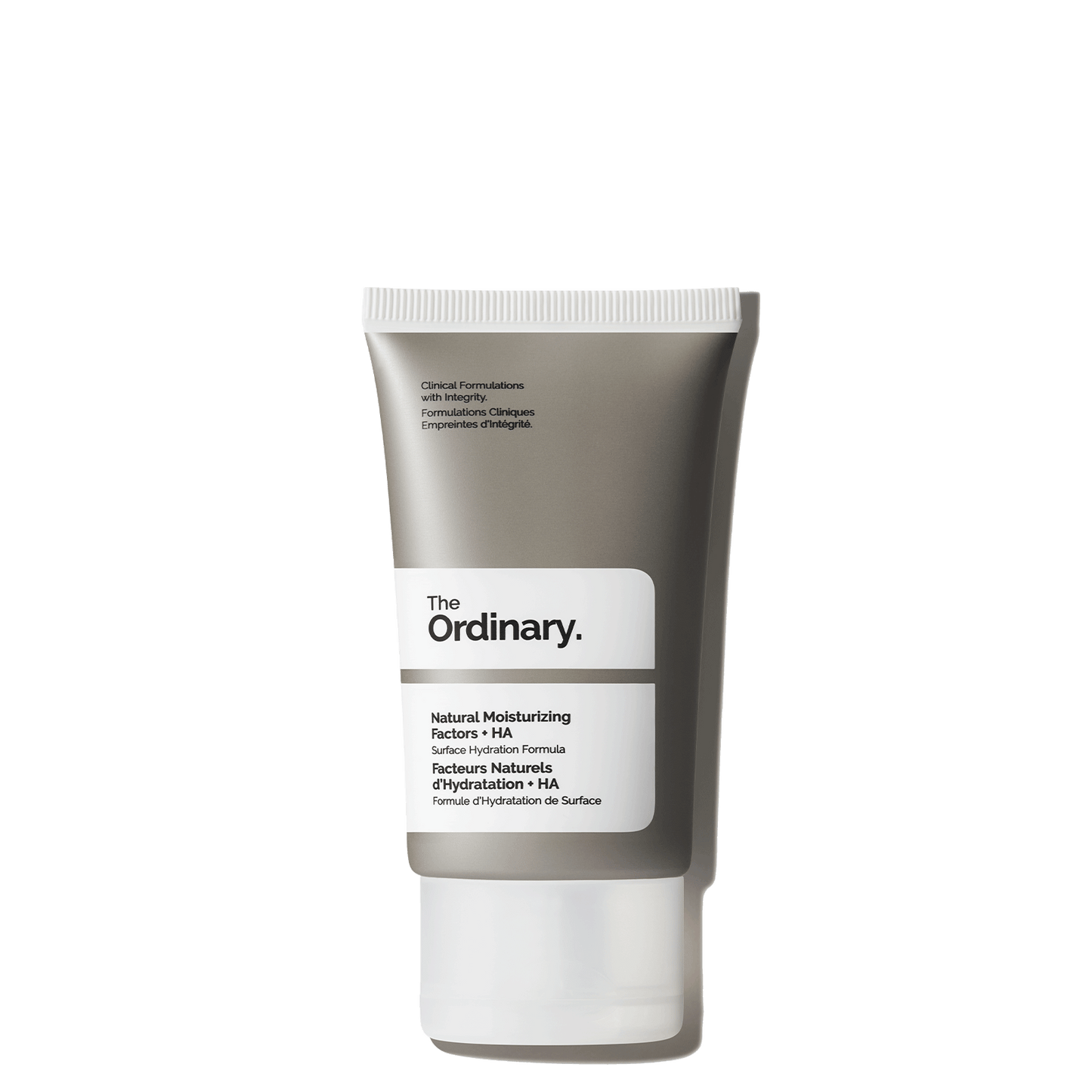

The Ordinary
Natural Moisturizing Factors + HA

Natural Moisturizing Factors + HA
The Ordinary
natural-moisturizing-factors-ha
Moisturize
9784782356773
Morning or Evening?
How often will you use this product?
Notes


Highlights
WHAT IS IT?
Surface hydrator moisturizer with multiple active ingredients
FEATURES
Provides immediate and lasting hydration, fortifies skin barrier, non-greasy formula
BEST FOR
All skin types
CHECKS
Oil-free, Alcohol-free, Silicone-free
Who Is It For?
All Ages And GendersWhat Does It Help With?
Dryness Dehydration Barrier SupportBudget
Affordable (under $30)How To Use
Which routine should it be used in?
Instructions:
Key Information


What The Ordinary Says
Product Description:
An effective moisturizer designed to mimic the composition of your skin's natural hydration system, infused with amino acids, fatty acids, triglycerides, urea, ceramides, phospholipids, glycerin, saccharides, sodium PCA, and hyaluronic acid
About the Brand:
Ingredients Overview
Ingredients List
Aqua,Caprylic-Capric-Triglyceride,Cetyl-Alcohol,Propanediol,Stearyl-Alcohol,Glycerin,Sodium-Hyaluronate,Arginine,Aspartic-Acid,Glycine,Alanine,Serine,Valine,Isoleucine,Proline,Threonine,Histidine,Phenylalanine,Glucose,Maltose,Fructose,Trehalose,Sodium-PCA,PCA,Sodium-Lactate,Urea,Allantoin,Linoleic-Acid,Oleic-Acid,Phytosteryl-Canola-Glycerides,Palmitic-Acid,Stearic-Acid,Lecithin,Triolein,Tocopherol,Carbomer,Isoceteth-20,Polysorbate-60,Sodium-Chloride,Citric-Acid,Trisodium-Ethylenediamine-Disuccinate,Pentylene-Glycol,Triethanolamine,Sodium-Hydroxide,Phenoxyethanol,Chlorphenesin
Key Ingredients
Hyaluronic Acid, Amino Acids, Fatty Acids, Natural Moisturizing Factors, Urea
Ingredients Details
Arginine
Common Name(s): L-arginine,2-amino-5-guanidinopentanoic acid
CAS Number: 74-79-3
DESCRIPTION
What It Does: Conditions skin, attracts moisture, supports wound healing, and improves microcirculation via no synthesis.
Why It's Used: Multi-functional amino acid for skin hydration, conditioning, and wound healing in peptide and nmf formulations.
How It Works: Guanidinium group binds water (humectant). substrate for nitric oxide synthase (enos) producing nitric oxide that vasodilates capillaries improving skin nutrition. stimulates fibroblast proliferation for wound healing.
Typically Found In: Anti-aging serums,wound healing products,nmf moisturizers,scalp treatments
TECHNICAL DETAILS
Primary Category: Active ingredient – amino acid
Secondary Functions: Wound healing,microcirculation,nmf component
Application Areas:

Facial Skincare

Body Care
Hair Care
Beard Care
Color Cosmetics (Makeup)
Dietary/Oral Supplements
Typical Concentration Range: 0.5%–5%
SOURCING & ETHICS
Vegan Status: Yes – plant-derived or synthetic
Halal Status: Yes
Source Notes: Fermentation-derived or synthetic. natural skin component.
SKIN COMPATIBILITY
Irritancy Rating: 1/5 – very low
Comedogenicity Rating: 0/5 – non-comedogenic
Sensitivity Concerns: Non-irritating; endogenous skin molecule.
Safe for Sensitive Skin: Yes
SAFETY & COMPATIBILITY
Safety Profile: Excellent safety profile. natural skin nmf component. ewg score: 1.
Works Well With: Hyaluronic acid,ceramides,peptides,other amino acids
Avoid Combining With: No significant incompatibilities
SCIENTIFIC NOTE
Arginine is a conditionally essential amino acid in wound healing where local demand exceeds synthesis capacity. topical arginine provides the nos substrate locally for no-mediated vasodilation and immune cell function in healing tissue.
Last Verified: Cosing database,cir safety assessment,witte & barbul arginine wound healing review
Primary Sources: 2026-03-12
Aspartic Acid
Common Name(s): Aminosuccinic acid,l-aspartate
CAS Number: 56-84-8
DESCRIPTION
What It Does: Provides nmf amino acid conditioning with cell energy metabolic support.
Why It's Used: Nmf acidic amino acid providing skin conditioning from naturally-occurring dicarboxylic amino acid in natural moisturising factor complex.
How It Works: Dicarboxylic amino acid provides dual water-binding ionic sites. aspartate shuttle for cell energy metabolism (nadh transport into mitochondria). mild keratolytic from dicarboxylic acid aha-like activity. nmf component providing moisture retention.
Typically Found In: Nmf-based moisturisers,skin conditioning products
TECHNICAL DETAILS
Primary Category: Active ingredient – acidic nmf amino acid
Secondary Functions: Skin conditioning
Application Areas:
Facial Skincare
Body Care
Hair Care
Beard Care
Color Cosmetics (Makeup)
Dietary/Oral Supplements
Typical Concentration Range: 0.5%–5%
SOURCING & ETHICS
Vegan Status: Yes – fermentation
Halal Status: Yes
Source Notes: Commercially produced for cosmetic use. verify vegan/halal status with supplier.
SKIN COMPATIBILITY
Irritancy Rating: 1/5 – very low
Comedogenicity Rating: 0/5 – non-comedogenic
Sensitivity Concerns: Well-tolerated by most skin types.
Safe for Sensitive Skin: Yes
SAFETY & COMPATIBILITY
Safety Profile: Good safety profile at recommended concentrations. ewg score: 1–2.
Works Well With: Standard skincare actives
Avoid Combining With: No known significant incompatibilities
SCIENTIFIC NOTE
Aspartic acid's dicarboxylic structure provides dual-site water binding via both alpha and beta carboxylate groups, providing greater molar water retention than monocarboxylic amino acids at equivalent concentration. this dual-site humectancy makes aspartic acid one of the most hydrating single amino acids per mole — a quantitative advantage of its dicarboxylic structure.
Last Verified: Cosing database,cir safety assessment
Primary Sources: 2026-03-12
Caprylic/capric Triglyceride
Common Name(s): Mct oil,fractionated coconut oil,c8/c10 triglyceride
CAS Number: 73398-61-5
DESCRIPTION
What It Does: Lightweight, stable emollient that solubilizes oil-soluble actives for excellent delivery without greasy feel.
Why It's Used: Universal lightweight emollient base and solubilizer for oil-soluble actives in serums and low-viscosity formulations where mineral oil or petrolatum would be too heavy.
How It Works: Medium-chain length provides ideal balance of spreading coefficient, penetration rate, and barrier-sealing properties. excellent solubilizer for vitamin e, retinoids, and other lipophilic actives.
Typically Found In: Serums,facial oils,sunscreens,anti-aging products,hair products
TECHNICAL DETAILS
Primary Category: Active ingredient – medium-chain triglyceride emollient
Secondary Functions: Active solubilizer,spreading agent
Application Areas:
Facial Skincare
Body Care
Hair Care
Beard Care
Color Cosmetics (Makeup)
Dietary/Oral Supplements
Typical Concentration Range: 1%–50%
SOURCING & ETHICS
Vegan Status: Yes – from coconut/palm kernel oil
Halal Status: Yes
Source Notes: Fractionated by hydrolysis and re-esterification of coconut oil. only c8 and c10 fatty acids retained.
SKIN COMPATIBILITY
Irritancy Rating: 1/5 – very low
Comedogenicity Rating: 1/5 – very low; medium-chain length generally non-comedogenic
Sensitivity Concerns: Non-irritating.
Safe for Sensitive Skin: Yes
SAFETY & COMPATIBILITY
Safety Profile: Excellent safety profile. ewg score: 1.
Works Well With: Humectants,ceramides,actives as carrier
Avoid Combining With: No significant incompatibilities
SCIENTIFIC NOTE
Mct oil's medium-chain length (c8/c10) provides superior oxidative stability vs longer polyunsaturated chains and better skin aesthetics (lighter, less greasy) vs longer chain emollients (c16/c18). excellent solubilizer for retinoic acid, tocopheryl esters, and other lipophilic actives.
Last Verified: Cosing database,cir safety assessment,ewg skin deep
Primary Sources: 2026-03-12
Cetyl Alcohol
Common Name(s): 1-hexadecanol,palmityl alcohol,n-cetyl alcohol
CAS Number: 36653-82-4
DESCRIPTION
What It Does: Provides c16 fatty alcohol emolliency and thickening for well-textured cosmetic emulsions.
Why It's Used: Lighter-textured fatty alcohol alternative to stearyl alcohol for creams and conditioners requiring less heavy emolliency.
How It Works: C16 chain length provides slightly lower melting point (49°c) than stearyl (60°c) giving softer, lighter emulsion texture. forms lamellar networks for thickening and stability. direct skin and hair conditioning via fatty alcohol film.
Typically Found In: Creams,hair conditioners,lotions
TECHNICAL DETAILS
Primary Category: Functional ingredient – fatty alcohol
Secondary Functions: Barrier sealing,softening
Application Areas:
Facial Skincare
Body Care
Hair Care
Beard Care
Color Cosmetics (Makeup)
Dietary/Oral Supplements
Typical Concentration Range: 1%–15%
SOURCING & ETHICS
Vegan Status: Yes – from vegetable or coconut/palm fatty acids
Halal Status: Yes
Source Notes: Plant-derived, synthetic or animal-derived. verify source.
SKIN COMPATIBILITY
Irritancy Rating: 1/5 – very low
Comedogenicity Rating: 1/5 – low; formulation-dependent
Sensitivity Concerns: Non-irritating.
Safe for Sensitive Skin: Yes
SAFETY & COMPATIBILITY
Safety Profile: Excellent safety profile. ewg score: 1.
Works Well With: Humectants,ceramides,actives as carrier
Avoid Combining With: No significant incompatibilities
SCIENTIFIC NOTE
Cetyl alcohol's c16 chain length is at the approximate thermal transition point for fatty alcohol lamellar crystallization at skin temperature (33°c). this transition (from ordered crystalline to disordered liquid phase near skin temperature) provides the characteristic 'melts on application' sensory profile that makes cetyl alcohol-containing products feel cooling and light on initial application.
Last Verified: Cosing database,cir safety assessment
Primary Sources: 2026-03-12
