
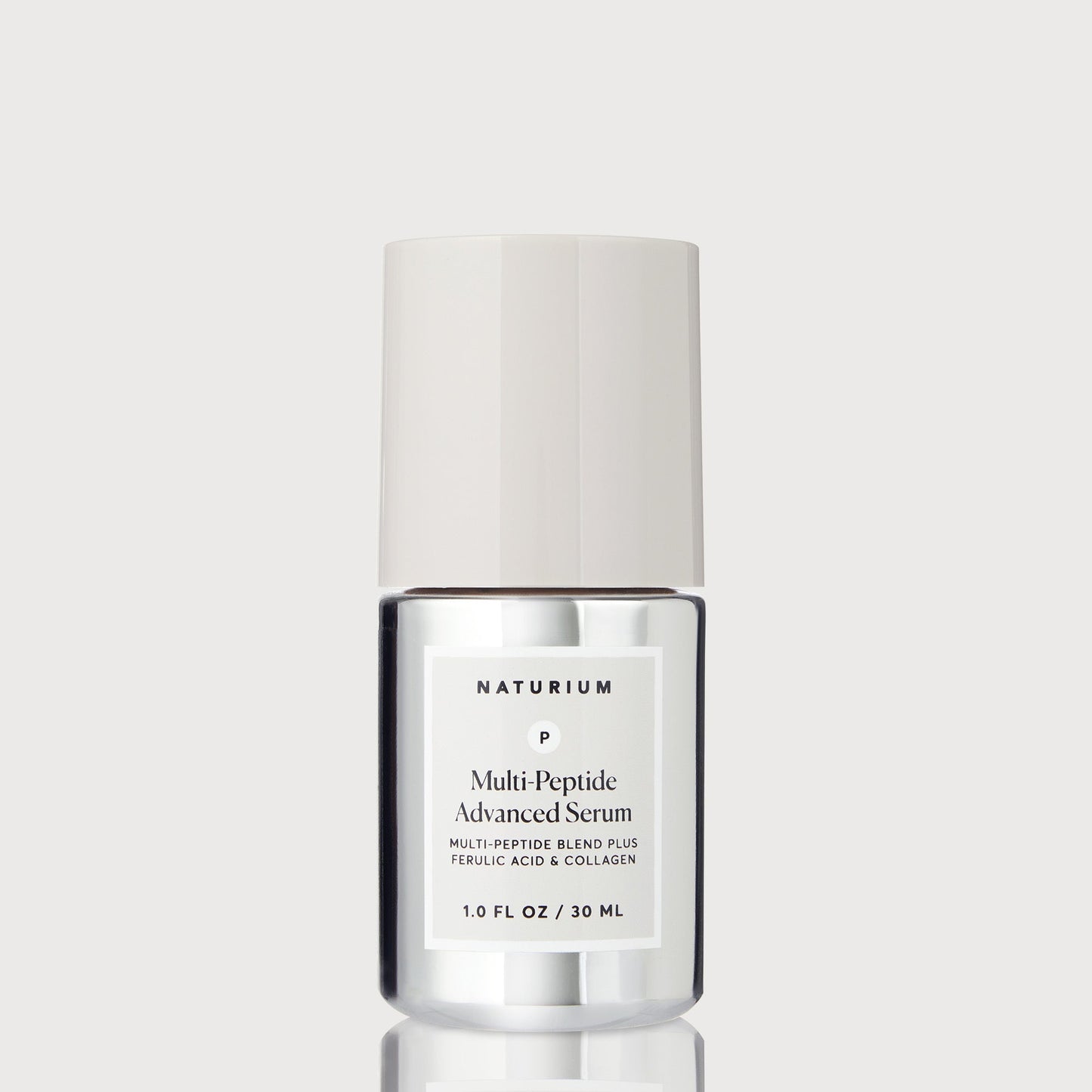

Naturium
Multi-Peptide Advanced Serum

Multi-Peptide Advanced Serum
Naturium
multi-peptide-advanced-serum
Serum
9643647533349
Morning or Evening?
How often will you use this product?
Notes


Highlights
WHAT IS IT?
Advanced multi-peptide serum with multiple active ingredients
FEATURES
Improves texture, reduces appearance of fine lines and wrinkles, firms skin's appearance
BEST FOR
All skin types
CHECKS
Does not contain parabens
Who Is It For?
Adults Both Women And MenWhat Does It Help With?
Fine Lines Wrinkles Texture FirmnessBudget
Mid-rangeHow To Use
Which routine should it be used in?
Instructions:
Key Information


What Naturium Says
Product Description:
Our powerful serum is formulated with an advanced multi-peptide blend, including encapsulated copper peptides and Argireline® Amplified peptide, to improve texture and reduce the appearance of fine lines and wrinkles. Plus, encapsulated ferulic acid and collagen help firm skin's appearance to support a more youthful-looking complexion.
About the Brand:
Ingredients Overview
Ingredients List
Aqua/Water/Eau, Propanediol, Caprylic/Capric Triglyceride, Isopentyldiol, Ethylhexyl Polyhydroxystearate, Squalane, Tetradecane, Glyceryl Stearate Citrate, Butyrospermum Parkii (Shea) Butter, Polyglyceryl-3 Stearate, Helianthus Annuus (Sunflower) Extract, Oryza Sativa (Rice) Bran Extract, Mannitol, Phosphatidylcholine, Ferulic Acid, Arginine, Acetyl Hexapeptide-8, Copper Palmitoyl Heptapeptide-14, Palmitoyl sh-Hexapeptide-13 Serine SP Amide, Hydrolyzed Collagen, Rosmarinus Officinalis (Rosemary) Leaf Extract, Lactic Acid/Glycolic Acid Copolymer, Glycerin, Tocopherol, Pullulan, Lysolecithin, Sclerotium Gum, Hydroxyethyl Acrylate/Sodium Acryloyldimethyl Taurate Copolymer, Dimethicone, Sodium Phytate, Diglycerin, Hydrogenated Lecithin, Silica, Cetyl Alcohol, Hydroxyacetophenone, Polysorbate 60, Sorbitan Isostearate, Sodium Hydroxide, Sodium Benzoate, Potassium Sorbate, Polyvinyl Alcohol, Decyl Glucoside, Xanthan Gum, Tocopheryl Acetate, Sodium Chloride, Citric Acid, Phenoxyethanol.
Key Ingredients
Multi-peptide blend, encapsulated copper peptides, Argireline® Amplified peptide, encapsulated ferulic acid, collagen
Ingredients Details
Aqua/water/eau
Common Name(s): Aqua/water/eau extract
DESCRIPTION
What It Does: Provides antioxidant protection, soothing anti-inflammatory effects, and skin-conditioning benefits through plant-derived polyphenols and phytochemicals.
Why It's Used: Plant extracts concentrate bioactive phytochemicals evolved for environmental protection — uv, microbial, and oxidative stressors — that translate to skin benefits.
How It Works: Polyphenols (flavonoids, phenolic acids) inhibit nf-κb-mediated inflammatory signaling, scavenge reactive oxygen species through electron donation, and chelate pro-oxidant metal ions to reduce oxidative skin damage.
Typically Found In: Serums,toners,moisturizers,masks,essences
TECHNICAL DETAILS
Primary Category: Botanical extracts
Secondary Functions: Antioxidant,anti-inflammatory
Application Areas:

Facial Skincare

Body Care
Hair Care
Beard Care
Color Cosmetics (Makeup)
Dietary/Oral Supplements
Typical Concentration Range: 0.1–10%
SOURCING & ETHICS
Vegan Status: Yes
Halal Status: Yes
Source Notes: Plant-derived extract; no animal components.
SKIN COMPATIBILITY
Irritancy Rating: 1
Comedogenicity Rating: 0
Sensitivity Concerns: Low sensitization potential at recommended use concentrations.
Safe for Sensitive Skin: Yes
SAFETY & COMPATIBILITY
Safety Profile: Well-characterized cosmetic ingredient with established safety profile. generally non-irritating at typical use concentrations. suitable for leave-on and rinse-off cosmetics.
Works Well With: Niacinamide,hyaluronic acid,vitamin c,ceramides
Avoid Combining With: Strong oxidizing agents
SCIENTIFIC NOTE
Plant secondary metabolites (flavonoids, terpenes, phenolic acids) are biosynthesized as defense compounds against uv, herbivores, and pathogens. their anti-inflammatory activity typically derives from competitive inhibition of cox-2 and 5-lox enzymes (ic50 1–50 µm), while antioxidant activity involves single electron transfer (set) and hydrogen atom transfer (hat) mechanisms with structure-dependent rate constants.
Last Verified: Cosing eu database; pcpc cosmetic ingredient safety reviews; phytochemical and ethnobotanical literature
Primary Sources: 2025-01-15
