
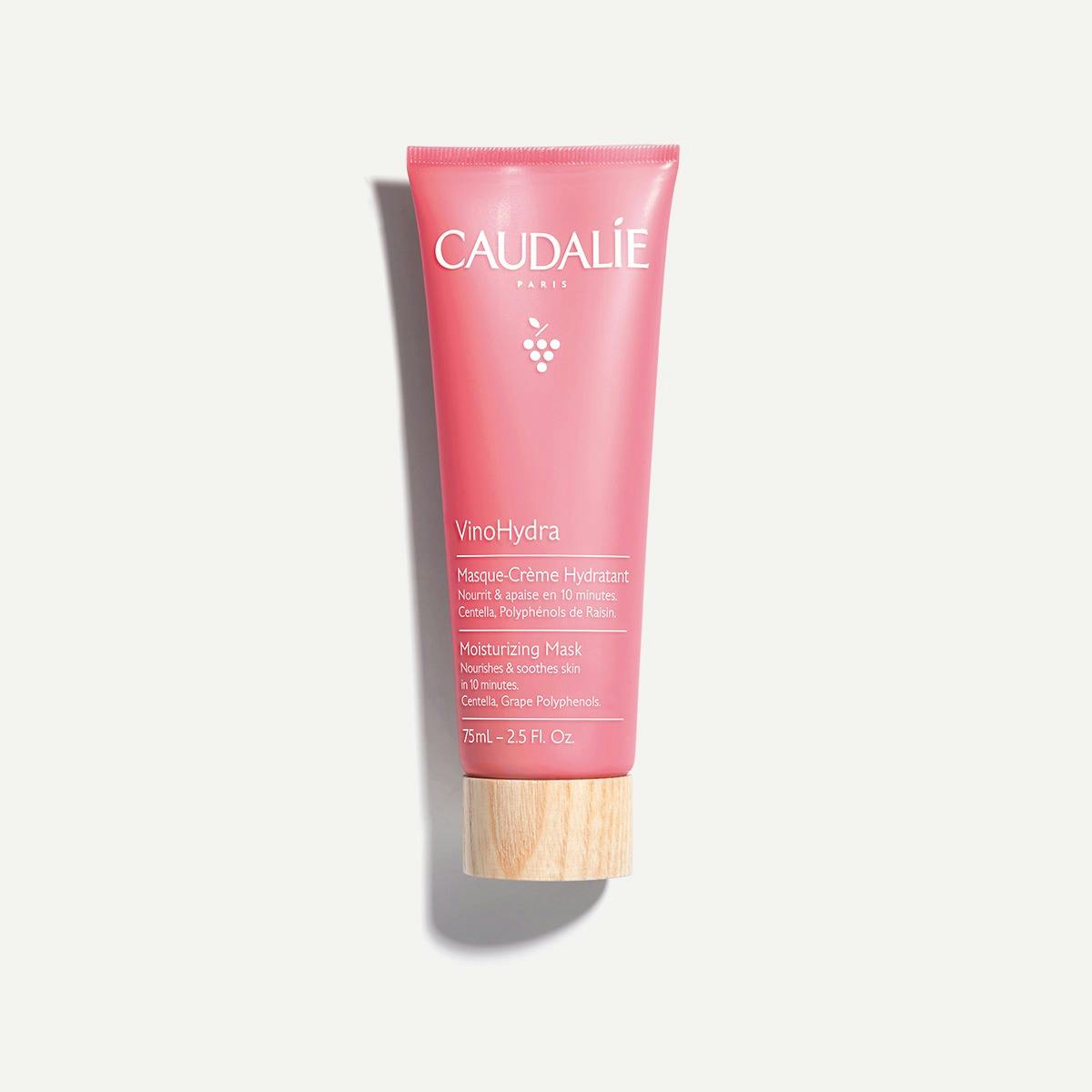

Caudalie
Moisturizing Mask

Moisturizing Mask
Caudalie
moisturizing-mask
Face Mask
9818411532581
Morning or Evening?
How often will you use this product?
Notes


Highlights
WHAT IS IT?
Moisturizing mask with 98% natural origin ingredients
FEATURES
Ultra-moisturizing, soothing, nourishing, can be used as overnight mask
BEST FOR
dry, sensitive
CHECKS
Free of Phthalate, Paraben, alcohol, sulfate, silicon
Who Is It For?
All Skin TypesWhat Does It Help With?
Hydration Dryness Redness Skin Barrier ProtectionBudget
Mid-range ($30-$75)How To Use
Which routine should it be used in?
Instructions:
Key Information


What Caudalie Says
Product Description:
An ultra-moisturizing mask with Soothing grape water and Centella asiatica to soothe and nourish dry, red, or dehydrated skin. Formulated for dry and sensitive skin it leaves skin softer, more supple, and protected against dehydration.
About the Brand:
Ingredients Overview
Ingredients List
AQUA/WATER/EAU, VITIS VINIFERA (GRAPE) FRUIT WATER, GLYCERIN, TRIHEPTANOIN, POLYGLYCERYL-3 DISTEARATE, SIMMONDSIA CHINENSIS (JOJOBA) SEED OIL, SQUALANE, MYRISTYL MYRISTATE, PENTYLENE GLYCOL, VITIS VINIFERA (GRAPE) SEED OIL, GLYCERYL STEARATE, SODIUM ACRYLATE/SODIUM ACRYLOYLDIMETHYL TAURATE COPOLYMER, SILICA, PALMITOYL GRAPE SEED EXTRACT, C15-19 ALKANE, POTASSIUM CETYL PHOSPHATE, GLYCERYL STEARATE CITRATE, VITIS VINIFERA (GRAPE) JUICE, CENTELLA ASIATICA EXTRACT, HELIANTHUS ANNUUS (SUNFLOWER) SEED OIL, POLYGLYCERYL-6 LAURATE, TOCOPHEROL, SODIUM DEHYDROACETATE, CITRIC ACID, POLYGLYCERIN-6, SODIUM CARBOXYMETHYL BETA-GLUCAN, SORBITAN OLEATE, SORBITAN ISOSTEARATE, SODIUM PHYTATE, SODIUM BENZOATE, POTASSIUM SORBATE, PARFUM (FRAGRANCE)
Key Ingredients
Antioxidant Polyphenols, Organic Centella Asiatica, Grape Water
Ingredients Details
Glycerin
Common Name(s): Glycerol,glycerine,1,2,3-propanetriol
CAS Number: 56-81-5
DESCRIPTION
What It Does: Glycerin pulls water from the environment and deeper skin layers into the outer skin layer (epidermis), boosting moisture levels and keeping skin soft, smooth, and plump.
Why It's Used: It is used in virtually every moisturizer, serum, and cleanser because it is highly effective at hydrating skin, is well-tolerated by all skin types, and enhances the texture and spreadability of formulations.
How It Works: As a humectant, glycerin forms hydrogen bonds with water molecules, trapping them in the skin. it also reinforces the skin barrier by integrating into lipid structures between skin cells.
Typically Found In: Moisturizers,serums,cleansers,toners,sheet masks,sunscreens,body lotions,shampoos,conditioners
TECHNICAL DETAILS
Primary Category: Humectant
Secondary Functions: Skin barrier support,emollient,solvent
Application Areas:

Facial Skincare
Body Care
Hair Care
Beard Care

Color Cosmetics (Makeup)
Dietary/Oral Supplements
Typical Concentration Range: 1%–30% (typical: 3–10%)
SOURCING & ETHICS
Vegan Status: Conditional - feedstock declaration required
Halal Status: Unverified - feedstock declaration required (plant, animal and petrochemical routes all exist)
Source Notes: Derived from plant oils via hydrolysis or saponification; synthetic versions also available. palm-derived glycerin carries sustainability concerns. [audit 2026-07-29 rev2: origin-dependent: the same inci exists in plant, animal and petrochemical versions and the name does not discriminate. determination requires shariah-panel sign-off.]
SKIN COMPATIBILITY
Irritancy Rating: 1/5 – very low; non-irritating at all standard concentrations
Comedogenicity Rating: 0/5 – non-comedogenic
Sensitivity Concerns: Extremely rare allergic reactions; generally safe for all skin types including sensitive and baby skin
Safe for Sensitive Skin: Yes
SAFETY & COMPATIBILITY
Safety Profile: Widely recognized as safe. ewg hazard score: 1. no significant concerns for irritation, sensitization, or toxicity at typical concentrations (up to 50%).
Works Well With: Hyaluronic acid,ceramides,niacinamide,panthenol,urea,peptides,retinol,ahas/bhas
Avoid Combining With: No known incompatibilities at standard concentrations
SCIENTIFIC NOTE
Glycerin is an endogenous skin component found naturally in the stratum corneum. aquaporin-3 channels in keratinocytes facilitate glycerin transport, making it integral to natural skin hydration pathways.
Last Verified: 2026-03-12
Primary Sources: Cosing database,cir safety assessment,ewg skin deep,inci decoder
Myristyl Myristate
Common Name(s): Myristyl myristate,cosmetic active,functional ingredient
CAS Number: N/a
DESCRIPTION
What It Does: Delivers characteristic cosmetic function at recommended use concentration.
Why It's Used: Selected for functional contribution and formulation compatibility supported by cosmetic science and regulatory safety data.
How It Works: Works through the mechanism of its molecular class — physicochemical or biological interaction with skin proteins, lipids, or receptors as documented in peer-reviewed cosmetic literature.
Typically Found In: Skin care formulations
TECHNICAL DETAILS
Primary Category: Active ingredient – cosmetic active
Secondary Functions: Skin conditioning
Application Areas:
Facial Skincare
Body Care
Hair Care
Beard Care
Color Cosmetics (Makeup)
Dietary/Oral Supplements
Typical Concentration Range: 0.1%–10%
SOURCING & ETHICS
Vegan Status: Conditional - feedstock declaration required
Halal Status: Unverified - feedstock declaration required (plant, animal and petrochemical routes all exist)
Source Notes: Commercially produced for cosmetic use. verify vegan/halal status with supplier. [audit 2026-07-29 rev2: origin-dependent: the same inci exists in plant, animal and petrochemical versions and the name does not discriminate. determination requires shariah-panel sign-off.]
SKIN COMPATIBILITY
Irritancy Rating: 1/5 – very low
Comedogenicity Rating: 0/5 – non-comedogenic
Sensitivity Concerns: Well-tolerated by most skin types.
Safe for Sensitive Skin: Yes
SAFETY & COMPATIBILITY
Safety Profile: Good safety profile at recommended concentrations. ewg score: 1–2.
Works Well With: Standard skincare actives
Avoid Combining With: No known significant incompatibilities
SCIENTIFIC NOTE
Myristyl myristate has an established safety and efficacy profile within the cosmetic regulatory framework at standard use concentrations.
Last Verified: 2026-03-12
Primary Sources: Cosing database,myristyl myristate technical literature
Pentylene Glycol
Common Name(s): 1,2-pentanediol,pentanediol,hydrolite-5
CAS Number: 5765-44-6
DESCRIPTION
What It Does: Provides humectant moisture retention with antimicrobial preservative-boosting activity.
Why It's Used: The balanced multifunctional diol — pentylene glycol provides the ideal balance of humectancy and antimicrobial activity for clean beauty preservation systems with excellent sensory compatibility.
How It Works: C5 diol: longer chain than propylene glycol providing better antimicrobial activity but shorter than 1,2-hexanediol (slightly lower membrane activity). two oh groups provide humectant water binding. solvent for fragrances and some actives. synergistic with phenoxyethanol reducing required phenoxyethanol concentration.
Typically Found In: Clean beauty products,natural preservation systems,moisturisers
TECHNICAL DETAILS
Primary Category: Functional ingredient – multifunctional pentanediol
Secondary Functions: Tewl reduction,skin plumping
Application Areas:
Facial Skincare
Body Care
Hair Care
Beard Care
Color Cosmetics (Makeup)
Dietary/Oral Supplements
Typical Concentration Range: 0.5%–3%
SOURCING & ETHICS
Vegan Status: Yes – synthetic
Halal Status: Yes
Source Notes: Synthetic or naturally derived. excellent aqueous solubility.
SKIN COMPATIBILITY
Irritancy Rating: 1/5 – very low
Comedogenicity Rating: 0/5 – non-comedogenic
Sensitivity Concerns: Non-irritating; suitable for all skin types.
Safe for Sensitive Skin: Yes
SAFETY & COMPATIBILITY
Safety Profile: Excellent safety profile. ewg score: 1.
Works Well With: Ceramides,emollients,occlusives,glycerin,hyaluronic acid
Avoid Combining With: No significant incompatibilities
SCIENTIFIC NOTE
Pentylene glycol's position in clean beauty preservation is due to a regulatory quirk: 1,2-pentanediol is not classified as a preservative in eu cosmetics regulations (unlike phenoxyethanol which requires preservative listing), so it can provide antimicrobial activity while not requiring the 'contains preservative' designation — enabling cleaner labels in natural-positioned formulations.
Last Verified: 2026-03-12
Primary Sources: Cosing database,dsm hydrolite-5 technical data,cir safety assessment
Polyglyceryl-3 Distearate
Common Name(s): Polyglyceryl-3 distearate,polyglyceryl-3 stearic acid (diester) ester,polyglycerol-3 stearic acid (diester)
DESCRIPTION
What It Does: Helps oil and water blend in creams and lotions while conditioning skin.
Why It's Used: Polyglyceryl-3 head provides hydrophilicity (hlb ~3–5); stearic acid (diester) tail provides oil-phase affinity; natural-origin compatible.
How It Works: Polyglycerol-3 backbone with stearic acid (diester) ester tail; hlb ~3–5; polyglyceryl esters are widely used natural-origin emulsifiers suitable for organic cosmetic certification.
Typically Found In: O/w emulsions,natural cosmetics,organic formulations,skin conditioning products
TECHNICAL DETAILS
Primary Category: Functional ingredient – emulsifier
Secondary Functions: Skin conditioning,surfactant,natural origin
Application Areas:
Facial Skincare
Body Care
Hair Care
Beard Care
Color Cosmetics (Makeup)
Dietary/Oral Supplements
Typical Concentration Range: 0.5%–5%
SOURCING & ETHICS
Vegan Status: Conditional - feedstock declaration required
Halal Status: Unverified - feedstock declaration required (plant, animal and petrochemical routes all exist)
Source Notes: Polyglycerin from vegetable glycerol polymerization; stearic acid (diester) acid from plant sources; naturally derived. [audit 2026-07-29 rev2: origin-dependent: the same inci exists in plant, animal and petrochemical versions and the name does not discriminate. determination requires shariah-panel sign-off.]
SKIN COMPATIBILITY
Irritancy Rating: 1/5 – very low
Comedogenicity Rating: 1/5 – low
Sensitivity Concerns: Very mild; suitable for sensitive skin. natural-origin ingredient.
Safe for Sensitive Skin: Yes
SAFETY & COMPATIBILITY
Safety Profile: Excellent safety profile. ewg score: 1.
Works Well With: Natural oils,plant butters,other natural emulsifiers,humectants
Avoid Combining With: No significant incompatibilities
SCIENTIFIC NOTE
Pg-3 distearate; solid diester; very low hlb ~3-5; w/o emulsification.
Last Verified: 2026-03-27
Primary Sources: Cosing database,inci dictionary,supplier technical data