

mogans
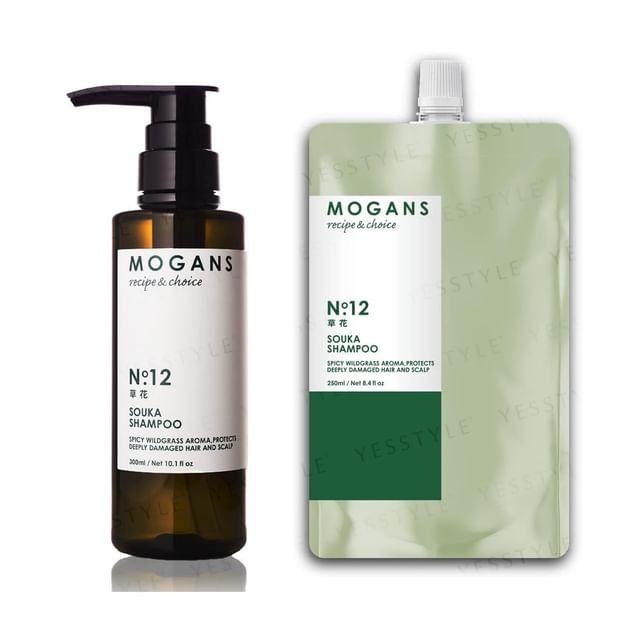
mogans No.12 Souka Hair Shampoo Spicy Wildgrass
A sulfate-free, paraben-free, and silicone-free shampoo formulated with 15 plant-derived amino acids and dipotassium glycyrrhizinate to improve scalp conditions such as dandruff, itching, and oiliness, while preventing hair loss and thinning. Infused with natural essential oils like coriander fruit oil, ylang-ylang, and geranium for a refreshing and soothing experience.
Sulfate-free
Paraben-free
Silicone-free
Natural
Scalp Issues
Hair Loss
Optimized for Your Environment & Lifestyle
Nykaa
In stock
Recommended

mogans No.12 Souka Hair Shampoo Spicy Wildgrass
mogans
mogans-no-12-souka-hair-shampoo-spicy-wildgrass
Shampoo
10523340734757
Morning or Evening?
How often will you use this product?
Notes


Secure payment protection
Your Biodata Compatibility Analysis
Based on your 6 hair health indices and environmental factors
Poor Match
Significant incompatibilities
Growth Cycle Health Index
Hair Match
Hair Health Index Alignment
Optimal for OSI, SSI, DI, HSI
Ingredient Efficacy
Matching Ingredient Score
Environment Compatibility
Current UV, Air Quality & Humidity
Why This Works for Your Specific Profile
Damage Index:
Damaged hair structure cannot withstand product intensity causing increased breakage and further compromise
Water Quality:
Soft or moderately hard water does not require intensive treatment causing over-cleansing and dryness
Hair:
Porous structure over-absorbs product leading to buildup, stiffness, or excessive dryness
Active Lifestyle:
High activity and frequent washing rapidly strip product benefits requiring excessive reapplication
Your Hair Profile Integration
Your Hair Archetype

Density Level

Washing Frequency

Shedding Level

Oil Level
Your Hair Health Indices
Oil Secretion (OSI)
Very low oil production
Scalp Sensitivity (SSI)
Very low sensitivity
Growth Rate (CMR)
Poor metabolism rate
Damage Index (DI)
Minimal damage
Hair Strength (HSI)
Very weak strength
Softness Index (SI)
Significant improvement needed
Water & Environmental Integration

Water:


Expected Results & Timeline
Key Highlights

What is it?
Shampoo with 15 plant-derived amino acids

Who Is It For
Adults

Budget
$28.90 - $57.80

Timeline
Why You’ll Love It

What Does It Help With?
Dandruff, Itching, Oily Scalp, Hair Loss, Thinning

Best for
Scalp Issues

Features
Sulfate-free, Paraben-free, Silicone-free, Natural essential oils

Checks
Sulfate-free, Paraben-free, Silicone-free
Ingredients Overview
Ingredients List
dipotassium-glycyrrhizinate, sodium-lauroyl-methyl-beta-alanine-solution, coconut-oil-fatty-acid-amidopropyl-betaine-solution, oligoglucose-decanol-glycoside-solution, polyoxyethylene-cetostearyl-hydroxymilistyrene-ether, trimethylglycine, citric-acid, disodium-edetate, l-glutamic-acid, purified-water, o-[2-hydroxy-3-(trimethylammonio)propyl]hydroxyethyl-cellulose-chloride, caramel, sodium-dl-pyrrolidone-carboxylate-solution, l-pyrrolidone-carboxylic-acid, sodium-hydroxide, sodium-lactate-solution, dl-pyrrolidone-carboxylic-acid, lidonic-acid, l-serine, l-alanine, glycine, lysine-hydrochloride, l-threonine, l-arginine, l-proline, sodium-benzoate, l-aspartic-acid, l-valine, l-isoleucine, l-histidine, l-phenylalanine, absolute-ethanol, swertia-japonica-extract, capsicum-tincture, ethanol, sodium-l-glutamate, l-cysteine, methylchloroisothiazolinone/methylisothiazolinone-solution, glycerin-mono-2-ethylhexyl-ether, olive-oil, camellia-oil, sunflower-oil, grape-seed-oil, evening-primrose-oil, fragrance, orange-oil
Key Ingredients
dipotassium-glycyrrhizinate, swertia-japonica-extract, capsicum-tincture, olive-oil, camellia-oil, sunflower-oil, grape-seed-oil, evening-primrose-oil, orange-oil
Ingredients Details
Caramel
Common Name(s): Caramel colour,natural brown,e150
CAS Number: 8028-89-5
DESCRIPTION
What It Does: Provides natural warm-brown colour from heat-treated sugar for natural cosmetics.
Why It's Used: Natural brown colorant with food-grade safety credentials for clean beauty formulations requiring warm brown or amber shades.
How It Works: Complex mixture of pyranose-ring condensation products from heat-treated sugars. 5-hmf and melanoidin polymers provide brown colour. ph-stable in acidic formulations. soluble in water and lower alcohols.
Typically Found In: Natural cosmetics,bronzers,hair products
TECHNICAL DETAILS
Primary Category: Colorant – natural brown dye
Secondary Functions: Skin conditioning
Application Areas:

Facial Skincare

Body Care
Hair Care
Beard Care
Color Cosmetics (Makeup)
Dietary/Oral Supplements
Typical Concentration Range: 0.01%–5%
SOURCING & ETHICS
Vegan Status: Conditional - supplier confirmation required
Halal Status: Unverified - supplier confirmation required
Source Notes: Commercially produced for cosmetic use. verify vegan/halal status with supplier. [audit 2026-07-29 rev2: the record's own source_notes does not assert a non-animal origin, or instructs the reader to verify with the supplier; "yes" asserts knowledge the record does not hold. determination requires shariah-panel sign-off.]
SKIN COMPATIBILITY
Irritancy Rating: 1/5 – very low
Comedogenicity Rating: 0/5 – non-comedogenic
Sensitivity Concerns: Well-tolerated by most skin types.
Safe for Sensitive Skin: Yes
SAFETY & COMPATIBILITY
Safety Profile: Good safety profile at recommended concentrations. ewg score: 1–2.
Works Well With: Standard skincare actives
Avoid Combining With: No known significant incompatibilities
SCIENTIFIC NOTE
Caramel's colour develops through the maillard reaction between reducing sugars and amino acids at elevated temperatures, creating a complex mixture of coloured polymer (melanoidin) and small molecule chromophores. unlike single-compound dyes with defined absorption spectra, caramel's broad-spectrum absorption from multiple chromophores provides a naturally warm, complex brown impossible to replicate with a single synthetic dye.
Last Verified: 2026-03-12
Primary Sources: Cosing database,fda 21 cfr color additives
Ethanol
Common Name(s): Ethanol,cosmetic active,functional ingredient
CAS Number: N/a
DESCRIPTION
What It Does: Delivers characteristic cosmetic function at recommended use concentration.
Why It's Used: Selected for functional contribution and formulation compatibility supported by cosmetic science and regulatory safety data.
How It Works: Works through the mechanism of its molecular class as documented in peer-reviewed cosmetic literature.
Typically Found In: Skin care formulations
TECHNICAL DETAILS
Primary Category: Active ingredient – cosmetic active
Secondary Functions: Skin conditioning
Application Areas:
Facial Skincare
Body Care
Hair Care
Beard Care
Color Cosmetics (Makeup)
Dietary/Oral Supplements
Typical Concentration Range: 0.1%–10%
SOURCING & ETHICS
Vegan Status: Yes - standard ethanol routes are non-animal; confirm denaturant origin
Halal Status: Conditional - ethanol production route and residual concentration; jurisdiction-dependent, refer to certifier stance
Source Notes: Commercially produced for cosmetic use. verify vegan/halal status with supplier. [audit 2026-07-29 rev2: ethanol pathway; determination depends on route, on whether the plant also produces beverage alcohol, and on residual concentration. determination requires shariah-panel sign-off.]
SKIN COMPATIBILITY
Irritancy Rating: 1/5 – very low
Comedogenicity Rating: 0/5 – non-comedogenic
Sensitivity Concerns: Well-tolerated by most skin types.
Safe for Sensitive Skin: Yes
SAFETY & COMPATIBILITY
Safety Profile: Good safety profile at recommended concentrations. ewg score: 1–2.
Works Well With: Standard skincare actives
Avoid Combining With: No known significant incompatibilities
SCIENTIFIC NOTE
Ethanol has an established safety profile within the cosmetic regulatory framework at standard use concentrations.
Last Verified: 2026-03-12
Primary Sources: Cosing database,ethanol technical literature
Glycine
Common Name(s): Aminoacetic acid,aminoethanoic acid,h-gly-oh
CAS Number: 56-40-6
DESCRIPTION
What It Does: Provides nmf amino acid skin conditioning and collagen-constituent support.
Why It's Used: The collagen amino acid — glycine is the most abundant amino acid in collagen (every third residue in the triple helix is glycine) making topical glycine the most physiologically relevant collagen-support amino acid.
How It Works: Nmf component via zwitterionic water retention. collagen triple helix requires gly-x-y repeat where glycine's small size allows close packing. wound healing via fibroblast glutathione synthesis support. anti-inflammatory via glycine-gated chloride channel activation (inhibitory neuromodulator).
Typically Found In: Skin conditioning products,wound healing,nmf moisturisers
TECHNICAL DETAILS
Primary Category: Active ingredient – simplest amino acid
Secondary Functions: Skin conditioning
Application Areas:
Facial Skincare
Body Care
Hair Care
Beard Care
Color Cosmetics (Makeup)
Dietary/Oral Supplements
Typical Concentration Range: 0.5%–5%
SOURCING & ETHICS
Vegan Status: Conditional - feedstock declaration required
Halal Status: Unverified - feedstock declaration required (plant, animal and petrochemical routes all exist)
Source Notes: Commercially produced for cosmetic use. verify vegan/halal status with supplier. [audit 2026-07-29 rev2: origin-dependent: the same inci exists in plant, animal and petrochemical versions and the name does not discriminate. determination requires shariah-panel sign-off.]
SKIN COMPATIBILITY
Irritancy Rating: 1/5 – very low
Comedogenicity Rating: 0/5 – non-comedogenic
Sensitivity Concerns: Well-tolerated by most skin types.
Safe for Sensitive Skin: Yes
SAFETY & COMPATIBILITY
Safety Profile: Good safety profile at recommended concentrations. ewg score: 1–2.
Works Well With: Standard skincare actives
Avoid Combining With: No known significant incompatibilities
SCIENTIFIC NOTE
Glycine's mandatory presence at every third position in collagen's triple helix (gly-x-y repeat) arises from its unique zero side-chain structure — only glycine is small enough to fit at the sterically restricted centre of the triple helix where the three polypeptide chains cross. no other amino acid can substitute for glycine in the collagen triple helix without disrupting the structure, making glycine irreplaceable in collagen biology.
Last Verified:
L-cysteine
Common Name(s): L-cysteine,cosmetic active,functional ingredient
CAS Number: N/a
DESCRIPTION
What It Does: Delivers characteristic cosmetic function at recommended use concentration.
Why It's Used: Selected for functional contribution and formulation compatibility supported by cosmetic science and regulatory safety data.
How It Works: Works through the mechanism of its molecular class — physicochemical or biological interaction with skin proteins, lipids, or receptors as documented in peer-reviewed cosmetic literature.
Typically Found In: Skin care formulations
TECHNICAL DETAILS
Primary Category: Active ingredient – cosmetic active
Secondary Functions: Skin conditioning
Application Areas:
Facial Skincare
Body Care
Hair Care
Beard Care
Color Cosmetics (Makeup)
Dietary/Oral Supplements
Typical Concentration Range: 0.1%–10%
SOURCING & ETHICS
Vegan Status: Conditional - feedstock declaration required
Halal Status: Unverified - feedstock declaration required (plant, animal and petrochemical routes all exist)
Source Notes: Commercially produced for cosmetic use. verify vegan/halal status with supplier. [audit 2026-07-29 rev2: origin-dependent: the same inci exists in plant, animal and petrochemical versions and the name does not discriminate. determination requires shariah-panel sign-off.]
SKIN COMPATIBILITY
Irritancy Rating: 1/5 – very low
Comedogenicity Rating: 0/5 – non-comedogenic
Sensitivity Concerns: Well-tolerated by most skin types.
Safe for Sensitive Skin: Yes
SAFETY & COMPATIBILITY
Safety Profile: Good safety profile at recommended concentrations. ewg score: 1–2.
Works Well With: Standard skincare actives
Avoid Combining With: No known significant incompatibilities
SCIENTIFIC NOTE
L-cysteine has an established safety and efficacy profile within the cosmetic regulatory framework at standard use concentrations.
Last Verified: 2026-03-12
Primary Sources: Cosing database,l-cysteine technical literature
Personalized Usage Instructions
How to Use
Step 1
Apply to wet hair, massage gently into a rich lather from roots to ends, rinse thoroughly
Medical Chemicals

Protein/Moisture
- Protein/Moisture balance
pH Level
- Acidic

Porosity Taget
- Normal Porosity
Customized for Your Profile
Scalp Condtions
Anti-Dandruff, Seborrheic Dermatitis Safe, Sensitive Scalp, pH Balanced, Oil Control
Climate Suitability
Humid, Dry, Hard Water, Soft Water
Clinical Claims
Frequency
Apply to wet hair, massage gently into a rich lather from roots to ends, rinse thoroughly.
Product Information

Sulfate-free
Paraben-free
Silicone-free