

Kypris
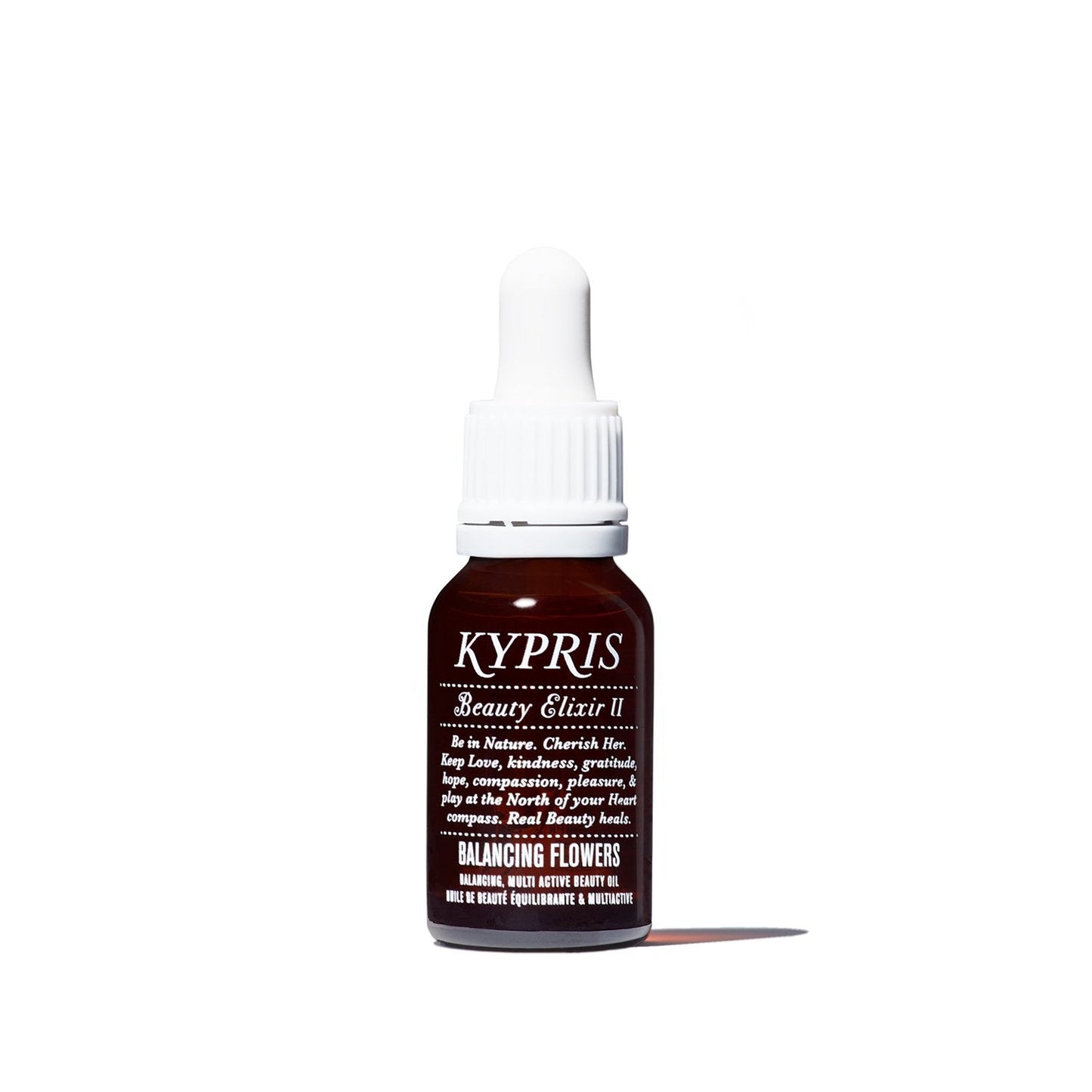
Mini Beauty Elixir II: Balancing Flowers

Mini Beauty Elixir II: Balancing Flowers
Kypris
mini-beauty-elixir-ii-balancing-flowers
Face Oil
9628184248613
Morning or Evening?
How often will you use this product?
Notes


Highlights
WHAT IS IT?
Face oil with multiple botanical ingredients
FEATURES
Light, moisturizing, contains bioidentical antioxidant complex
BEST FOR
Combination skin (oily and dry areas)
CHECKS
Free of sulfates, phthalates, parabens, petrochemicals, mineral oil, silicone, talc, synthetic fragrances, ethoxylate, plastic, GMOs, fillers
Who Is It For?
Adults Both Men And WomenWhat Does It Help With?
Balancing Oily And Dry Areas Diminishing Appearance Of Sun Damage Enhancing LuminosityBudget
PremiumHow To Use
Which routine should it be used in?
Instructions:
Key Information


What Kypris Says
Product Description:
Beauty Elixir II: Balancing Flowers is a light, moisturizing beauty oil powered by KYPRIS's unique Bioidentical Antioxidant Complex. Bioidentical CoQ10, Vitamin C Ester, Vitamin E, & ethically sourced botanicals including wild jasmine & lavender aromatherapy balance signs of oiliness, dryness, and upset, diminish the appearance of too much sun, and leave skin looking luminous and petal-soft.
About the Brand:
Ingredients Overview
Ingredients List
Helianthus Annuus Hybrid Oil, Cocos Nucifera (Coconut) Oil, Vitis Vinifera (Grape) Seed Oil, Adansonia Digitata Seed Oil, Aleurites Moluccana Seed Oil, Calophyllum Inophyllum Seed Oil, Cucurbita Pepo Seed Oil, Ubiquinone, Lavandula Angustifolia (Lavender) Oil, Rosa Canina Seed Extract, Opuntia Ficus-Indica Seed Oil, Vaccinium Macrocarpon Seed Oil, Tocopherol, Hippophae Rhamnoides Fruit Extract, Rubus Occidentalis Seed Oil, Punica Granatum Seed Oil, Tetrahexyldecyl Ascorbate, Jasminum Grandiflorum Flower Extract, Carthamus Tinctorius (Safflower) Seed Oil, Stearyl Glycyrrhetinate, Pogostemon Cablin Leaf Oil, Rosmarinus Officinalis (Rosemary) Leaf Extract, Ascorbyl Palmitate, Helianthus Annuus (Sunflower) Seed Oil, Pelargonium Graveolens Flower Oil, Aqua, Tocopheryl Acetate, Linalool, Benzyl Benzoate, Citronellol, Geraniol, Eugenol, Limonene
Key Ingredients
Bioidentical CoQ10, Vitamin C Ester, Vitamin E, wild jasmine, lavender
Ingredients Details
Adansonia Digitata Seed Oil
Common Name(s): Adansonia digitata seed oil,botanical oil,phytochemical active
CAS Number: N/a
DESCRIPTION
What It Does: Provides antioxidant protection from reactive oxygen species, reduces inflammatory cytokine production in skin, and conditions skin surface through the plant's secondary metabolite complex.
Why It's Used: Chosen for its natural origin narrative, traditional use heritage, and multi-functional phytochemical profile that supports several concurrent skin care claims from one ingredient.
How It Works: Polyphenols, terpenoids, and alkaloids in the oil scavenge ros via hydrogen atom transfer, inhibit nf-kb or cox-2 inflammatory pathways, and interact with skin surface proteins for conditioning.
Typically Found In: Botanical skin care,natural products
TECHNICAL DETAILS
Primary Category: Active ingredient – antioxidant
Secondary Functions: Free radical scavenging,anti-aging
Application Areas:

Facial Skincare
Body Care

Hair Care
Beard Care
Color Cosmetics (Makeup)
Dietary/Oral Supplements
Typical Concentration Range: 0.1%–10%
SOURCING & ETHICS
Vegan Status: Yes
Halal Status: Yes
Source Notes: Plant-derived extract or synthetic.
SKIN COMPATIBILITY
Irritancy Rating: 1/5 – very low
Comedogenicity Rating: 0/5 – non-comedogenic
Sensitivity Concerns: Non-irritating; well-tolerated.
Safe for Sensitive Skin: Yes
SAFETY & COMPATIBILITY
Safety Profile: Excellent safety profile. ewg score: 1.
Works Well With: Vitamin c,vitamin e,ferulic acid,spf,other antioxidants
Avoid Combining With: No significant incompatibilities
SCIENTIFIC NOTE
Plant secondary metabolites evolved as uv photoprotectants and antimicrobial agents — mechanisms that directly translate to cosmetic antioxidant and anti-inflammatory activity in human skin.
Last Verified: Cosing database,adansonia digitata seed oil botanical review
Primary Sources: 2026-03-12
Aleurites Moluccana Seed Oil
Common Name(s): Aleurites moluccana seed oil,botanical oil,phytochemical active
CAS Number: N/a
DESCRIPTION
What It Does: Provides antioxidant protection from reactive oxygen species, reduces inflammatory cytokine production in skin, and conditions skin surface through the plant's secondary metabolite complex.
Why It's Used: Chosen for its natural origin narrative, traditional use heritage, and multi-functional phytochemical profile that supports several concurrent skin care claims from one ingredient.
How It Works: Polyphenols, terpenoids, and alkaloids in the oil scavenge ros via hydrogen atom transfer, inhibit nf-kb or cox-2 inflammatory pathways, and interact with skin surface proteins for conditioning.
Typically Found In: Botanical skin care,natural products
TECHNICAL DETAILS
Primary Category: Active ingredient – antioxidant
Secondary Functions: Free radical scavenging,anti-aging
Application Areas:
Facial Skincare
Body Care
Hair Care
Beard Care
Color Cosmetics (Makeup)
Dietary/Oral Supplements
Typical Concentration Range: 0.1%–10%
SOURCING & ETHICS
Vegan Status: Yes
Halal Status: Yes
Source Notes: Plant-derived extract or synthetic.
SKIN COMPATIBILITY
Irritancy Rating: 1/5 – very low
Comedogenicity Rating: 0/5 – non-comedogenic
Sensitivity Concerns: Non-irritating; well-tolerated.
Safe for Sensitive Skin: Yes
SAFETY & COMPATIBILITY
Safety Profile: Excellent safety profile. ewg score: 1.
Works Well With: Vitamin c,vitamin e,ferulic acid,spf,other antioxidants
Avoid Combining With: No significant incompatibilities
SCIENTIFIC NOTE
Plant secondary metabolites evolved as uv photoprotectants and antimicrobial agents — mechanisms that directly translate to cosmetic antioxidant and anti-inflammatory activity in human skin.
Last Verified: Cosing database,aleurites moluccana seed oil botanical review
Primary Sources: 2026-03-12
Calophyllum Inophyllum Seed Oil
Common Name(s): Calophyllum inophyllum seed oil,botanical oil/butter,phytochemical active
CAS Number: N/a
DESCRIPTION
What It Does: Provides emollient conditioning, essential fatty acid supplementation, and barrier lipid support from the natural triglyceride/wax ester composition.
Why It's Used: Natural carrier oils provide sc-compatible lipid composition for genuine barrier integration rather than surface-only occlusion.
How It Works: Fatty acid triglycerides integrate into sc lipid bilayers delivering oleic, linoleic, and linolenic acid for emolliency and barrier repair; essential fatty acids serve as ceramide biosynthesis precursors.
Typically Found In: Botanical skin care,natural products
TECHNICAL DETAILS
Primary Category: Active ingredient – antioxidant
Secondary Functions: Free radical scavenging,anti-aging
Application Areas:
Facial Skincare
Body Care
Hair Care
Beard Care
Color Cosmetics (Makeup)
Dietary/Oral Supplements
Typical Concentration Range: 0.1%–30%
SOURCING & ETHICS
Vegan Status: Conditional
Halal Status: Conditional
Source Notes: Plant-derived extract or synthetic.
SKIN COMPATIBILITY
Irritancy Rating: 1/5 – very low
Comedogenicity Rating: 0/5 – non-comedogenic
Sensitivity Concerns: Non-irritating; well-tolerated.
Safe for Sensitive Skin: Yes
SAFETY & COMPATIBILITY
Safety Profile: Excellent safety profile. ewg score: 1.
Works Well With: Vitamin c,vitamin e,ferulic acid,spf,other antioxidants
Avoid Combining With: No significant incompatibilities
SCIENTIFIC NOTE
Plant secondary metabolites evolved for uv photoprotection and pathogen defence — mechanisms directly applicable to cosmetic antioxidant and anti-inflammatory activity in human skin.
Last Verified: Cosing database,calophyllum inophyllum seed oil botanical review
Primary Sources: 2026-03-12
Cocos Nucifera (coconut) Oil
Common Name(s): Cocos nucifera (coconut) oil,cosmetic active,functional ingredient
CAS Number: N/a
DESCRIPTION
What It Does: Delivers characteristic cosmetic function — skin conditioning, protection, preservation, or active biological benefit — at recommended use concentration.
Why It's Used: Selected for its functional contribution and formulation compatibility — supported by cosmetic science literature and regulatory safety assessment.
How It Works: Works through the mechanism of its molecular class — physicochemical interaction with the formulation or biological interaction with skin proteins, lipids, or receptors as documented in peer-reviewed literature.
Typically Found In: Skin care formulations
TECHNICAL DETAILS
Primary Category: Active ingredient – cosmetic active
Secondary Functions: Skin conditioning
Application Areas:
Facial Skincare
Body Care
Hair Care
Beard Care
Color Cosmetics (Makeup)
Dietary/Oral Supplements
Typical Concentration Range: 0.1%–10%
SOURCING & ETHICS
Vegan Status: Conditional
Halal Status: Yes
Source Notes: Commercially produced for cosmetic use. verify vegan/halal status with supplier.
SKIN COMPATIBILITY
Irritancy Rating: 1/5 – very low
Comedogenicity Rating: 0/5 – non-comedogenic
Sensitivity Concerns: Well-tolerated by most skin types.
Safe for Sensitive Skin: Yes
SAFETY & COMPATIBILITY
Safety Profile: Good safety profile at recommended concentrations. ewg score: 1–2.
Works Well With: Standard skincare actives
Avoid Combining With: No known significant incompatibilities
SCIENTIFIC NOTE
Cocos nucifera (coconut) oil delivers documented functional benefit with an established safety profile within the cosmetic regulatory framework (cosing eu, cir usa).
Last Verified: Cosing database,cocos nucifera (coconut) oil technical literature
Primary Sources: 2026-03-12
