
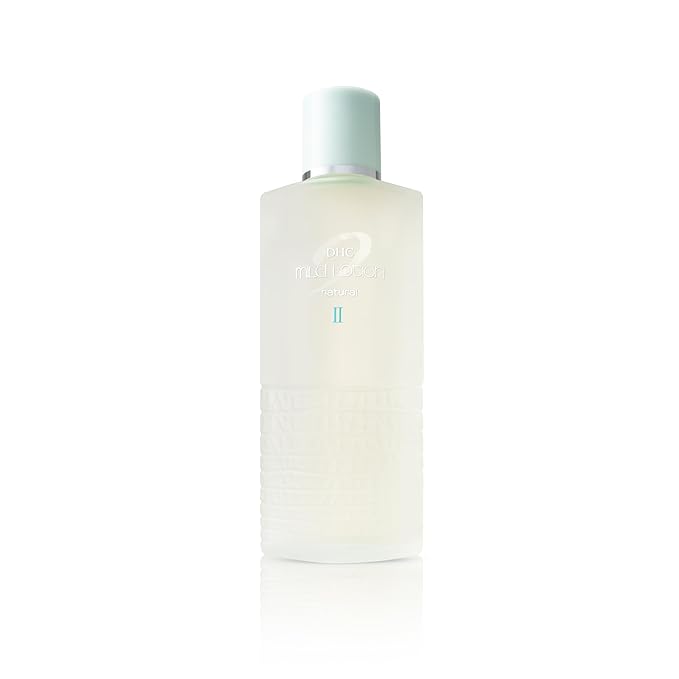

DHC
Mild Lotion II

Mild Lotion II
DHC
mild-lotion-ii
Tone
9706789863717
Morning or Evening?
How often will you use this product?
Notes


Highlights
WHAT IS IT?
Liquid toner with botanical extracts
FEATURES
Alcohol-free, hydrating, soothing
BEST FOR
All skin types, including dry
CHECKS
Free of parabens, colorants, fragrance
Who Is It For?
Adults Women And MenWhat Does It Help With?
Hydration Soothing SkinBudget
Mid-rangeHow To Use
Which routine should it be used in?
Instructions:
Key Information


What DHC Says
Product Description:
Liquid lotion is considered an essential step in the traditional Japanese skincare regimen, preparing your skin to get the maximum benefits from your moisturizer. This alcohol-free liquid lotion is formulated with a complex of eight botanicals including marigold, cornflower, calendula and chamomile flower extracts to help hydrate and soothe skin. Ideal for all skin types, including dry.
About the Brand:
Ingredients Overview
Ingredients List
water/aqua/eau, glycerin, butylene glycol, cucumis sativus (cucumber) juice, pentylene glycol, phenoxyethanol, dipotassium glycyrrhizate, rosmarinus officinalis (rosemary) leaf extract, placental protein, calendula officinalis flower extract, chamomilla recutita (matricaria) flower/leaf extract, centaurea cyanus flower extract, hypericum perforatum flower/leaf/stem extract, tilia cordata flower extract, anthemis nobilis flower extract
Key Ingredients
glycerin, cucumber juice, rosemary leaf extract, calendula flower extract, chamomile flower/leaf extract, cornflower extract
Ingredients Details
Butylene Glycol
Common Name(s): 1,3-butanediol,bg,1,3-butylene glycol
CAS Number: 107-88-0
DESCRIPTION
What It Does: Provides humectant hydration and active ingredient solubilization with excellent skin feel.
Why It's Used: Preferred glycol humectant in premium and k-beauty formulations for superior skin feel vs propylene glycol with equivalent functionality.
How It Works: Two hydroxyl groups at 1,3-positions provide water binding and solvent activity. better tolerated than propylene glycol with minimal sensitization risk. 4-carbon backbone provides slightly greater hydrophobic character enabling dissolution of less polar actives vs pg.
Typically Found In: Toners,essences,serums,k-beauty formulas
TECHNICAL DETAILS
Primary Category: Functional ingredient – glycol humectant
Secondary Functions: Tewl reduction,skin plumping
Application Areas:

Facial Skincare
Body Care
Hair Care

Beard Care
Color Cosmetics (Makeup)
Dietary/Oral Supplements
Typical Concentration Range: 1%–10%
SOURCING & ETHICS
Vegan Status: Yes – synthetic
Halal Status: Yes
Source Notes: Synthetic or naturally derived. excellent aqueous solubility.
SKIN COMPATIBILITY
Irritancy Rating: 1/5 – very low
Comedogenicity Rating: 0/5 – non-comedogenic
Sensitivity Concerns: Non-irritating; suitable for all skin types.
Safe for Sensitive Skin: Yes
SAFETY & COMPATIBILITY
Safety Profile: Excellent safety profile. ewg score: 1.
Works Well With: Ceramides,emollients,occlusives,glycerin,hyaluronic acid
Avoid Combining With: No significant incompatibilities
SCIENTIFIC NOTE
K-beauty's preference for butylene glycol over propylene glycol is driven by two factors: bg's superior skin feel (less tacky than pg's higher viscosity) and its lower sensitization potential (1,3-bg has better spatial distribution of hydroxyl groups that reduces protein interaction vs pg's 1,2-position oh groups).
Last Verified: Cosing database,cir safety assessment
Primary Sources: 2026-03-12
Calendula Officinalis Flower Extract
Common Name(s): Calendula officinalis flower extract,botanical extract,phytochemical active
CAS Number: N/a
DESCRIPTION
What It Does: Provides antioxidant protection, anti-inflammatory activity, and skin conditioning from polyphenols, terpenoids, and phytochemicals in the extract.
Why It's Used: Natural plant extracts provide multi-functional phytochemical profiles supporting concurrent skin care claims from one ingredient with authentic botanical heritage.
How It Works: Polyphenols scavenge ros via h• donation; terpenoids inhibit nf-kb or cox inflammatory pathways; vitamins and minerals provide cofactor skin nutrition.
Typically Found In: Botanical skin care,natural products
TECHNICAL DETAILS
Primary Category: Active ingredient – antioxidant
Secondary Functions: Free radical scavenging,anti-aging
Application Areas:
Facial Skincare
Body Care
Hair Care
Beard Care
Color Cosmetics (Makeup)
Dietary/Oral Supplements
Typical Concentration Range: 0.1%–30%
SOURCING & ETHICS
Vegan Status: Conditional
Halal Status: Conditional
Source Notes: Plant-derived extract or synthetic.
SKIN COMPATIBILITY
Irritancy Rating: 1/5 – very low
Comedogenicity Rating: 0/5 – non-comedogenic
Sensitivity Concerns: Non-irritating; well-tolerated.
Safe for Sensitive Skin: Yes
SAFETY & COMPATIBILITY
Safety Profile: Excellent safety profile. ewg score: 1.
Works Well With: Vitamin c,vitamin e,ferulic acid,spf,other antioxidants
Avoid Combining With: No significant incompatibilities
SCIENTIFIC NOTE
Plant secondary metabolites evolved for uv photoprotection and pathogen defence — mechanisms directly applicable to cosmetic antioxidant and anti-inflammatory activity in human skin.
Last Verified: Cosing database,calendula officinalis flower extrac botanical review
Primary Sources: 2026-03-12
Cucumis Sativus Cucumber Juice
Common Name(s): Cucumis sativus cucumber juice extract
DESCRIPTION
What It Does: Provides antioxidant protection, soothing anti-inflammatory effects, and skin-conditioning benefits through plant-derived polyphenols and phytochemicals.
Why It's Used: Plant extracts concentrate bioactive phytochemicals evolved for environmental protection — uv, microbial, and oxidative stressors — that translate to skin benefits.
How It Works: Polyphenols (flavonoids, phenolic acids) inhibit nf-κb-mediated inflammatory signaling, scavenge reactive oxygen species through electron donation, and chelate pro-oxidant metal ions to reduce oxidative skin damage.
Typically Found In: Serums,toners,moisturizers,masks,essences
TECHNICAL DETAILS
Primary Category: Botanical extracts
Secondary Functions: Antioxidant,anti-inflammatory
Application Areas:
Facial Skincare
Body Care
Hair Care
Beard Care
Color Cosmetics (Makeup)
Dietary/Oral Supplements
Typical Concentration Range: 0.1–10%
SOURCING & ETHICS
Vegan Status: Yes
Halal Status: Yes
Source Notes: Plant-derived extract; no animal components.
SKIN COMPATIBILITY
Irritancy Rating: 1899-12-31 00:00:00 -0800
Sensitivity Concerns: Low sensitization potential at recommended use concentrations.
Safe for Sensitive Skin: Yes
SAFETY & COMPATIBILITY
Safety Profile: Well-characterized cosmetic ingredient with established safety profile. generally non-irritating at typical use concentrations. suitable for leave-on and rinse-off cosmetics.
Works Well With: Niacinamide,hyaluronic acid,vitamin c,ceramides
Avoid Combining With: Strong oxidizing agents
SCIENTIFIC NOTE
Plant secondary metabolites (flavonoids, terpenes, phenolic acids) are biosynthesized as defense compounds against uv, herbivores, and pathogens. their anti-inflammatory activity typically derives from competitive inhibition of cox-2 and 5-lox enzymes (ic50 1–50 µm), while antioxidant activity involves single electron transfer (set) and hydrogen atom transfer (hat) mechanisms with structure-dependent rate constants.
Last Verified: Cosing eu database; pcpc cosmetic ingredient safety reviews; phytochemical and ethnobotanical literature
Primary Sources: 2025-01-15
Dipotassium Glycyrrhizate
Common Name(s): Dpg,dipotassium glycyrrhizinate,glycyrrhizic acid potassium salt
CAS Number: 68797-35-3
DESCRIPTION
What It Does: Provides glycyrrhizic acid anti-inflammatory and cortisol-potentiating soothing activity.
Why It's Used: The anti-inflammatory licorice active — dipotassium glycyrrhizate provides stronger anti-inflammatory activity than glabridin-containing licorice extract, making it the preferred licorice active for anti-inflammatory formulations.
How It Works: Glycyrrhizic acid inhibits 11-beta-hsd (11-beta-hydroxysteroid dehydrogenase) which inactivates cortisol to cortisone. local cortisol levels increase providing anti-inflammatory activity analogous to mild topical corticosteroid. also inhibits phospholipase a2 and prostaglandin synthesis directly.
Typically Found In: Sensitive skin serums,anti-inflammatory products,anti-itch formulas
TECHNICAL DETAILS
Primary Category: Active ingredient – anti-inflammatory licorice
Secondary Functions: Redness reduction,anti-inflammatory,calming
Application Areas:
Facial Skincare
Body Care
Hair Care
Beard Care
Color Cosmetics (Makeup)
Dietary/Oral Supplements
Typical Concentration Range: 0.1%–1%
SOURCING & ETHICS
Vegan Status: Yes – from glycyrrhiza glabra root
Halal Status: Yes
Source Notes: Plant-derived extract or synthetic.
SKIN COMPATIBILITY
Irritancy Rating: 1/5 – very low
Comedogenicity Rating: 0/5 – non-comedogenic
Sensitivity Concerns: Non-irritating; ideal for reactive and sensitive skin.
Safe for Sensitive Skin: Yes – particularly recommended for sensitive skin
SAFETY & COMPATIBILITY
Safety Profile: Excellent safety profile. ewg score: 1.
Works Well With: Ceramides,panthenol,allantoin,hyaluronic acid,centella asiatica
Avoid Combining With: No significant incompatibilities
SCIENTIFIC NOTE
Dipotassium glycyrrhizate's 11-beta-hsd inhibition provides a corticosteroid-potentiating mechanism: by preventing cortisol deactivation to cortisone, it effectively amplifies the anti-inflammatory activity of the skin's own naturally produced glucocorticoid without introducing exogenous steroids — providing a 'natural steroid potentiation' that explains why licorice preparations have been used as a topical anti-inflammatory for millennia.
Last Verified: Cosing database,armanini et al. glycyrrhizate review
Primary Sources: 2026-03-12
