

MEDICUBE
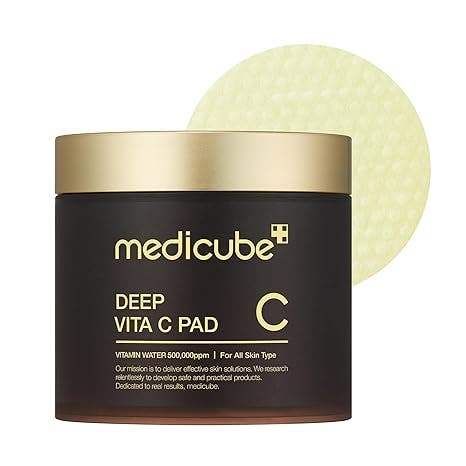
Medicube Deep Vita C Pad 70S

Medicube Deep Vita C Pad 70S
MEDICUBE
medicube-deep-vita-c-pad-70s
Face Mask
10084760977701
Morning or Evening?
How often will you use this product?
Notes


Highlights
WHAT IS IT?
Vitamin pads with key active ingredients for spot care and boosting blemish care
FEATURES
Brightening up skin with vitamin ingredients, Effective in fading dark spots and blemishes, Visible hyperpigmentation care from inner to outer skin
BEST FOR
sensitive
CHECKS
Avoid use if allergic to vitamin C or other active brightening agents
Who Is It For?
What Does It Help With?
Dark Spots Blemishes Hyperpigmentation Skin Brightening Skin Elasticity Facial Lifting Moisture RetentionBudget
Premium ($76-$150)How To Use
Which routine should it be used in?
Instructions:
Key Information


What MEDICUBE Says
Product Description:
Vitamin pads proved effective in making dark spots and blemishes visibly faded in short times. Benefits: 1. Clear and brighter skin while providing moisture to the skin 2. Boost skin elasticity and improve facial lifting 3. Maximized glowing effect by preventing moisture in the skin from evaporation
About the Brand:
Ingredients Overview
Ingredients List
Hippophae Rhamnoides Water, Water(Aqua), Methyl Gluceth-20, Methylpropanediol, Niacinamide, Glycereth-26, Methyl Gluceth-10, Polyglycerin-3, 1,2-Hexanediol, Gluconolactone, 3-O-Ethyl Ascorbic Acid, Ethylhexylglycerin, Cymbopogon Martini Oil , Cymbopogon Nardus (Citronella) Oil , Adenosine, Butylene Glycol, Disodium EDTA, Mentha Viridis (Spearmint) Extract , Lactobacillus/Lemon Peel Ferment Extract, Geraniol, Citronellol, Coptis Japonica Extract, Cucumis Melo (Melon) Seed Extract, Litsea Cubeba Fruit Oil, Pelargonium Graveolens Extract, Allantoin, Dipotassium Glycyrrhizate, Panthenol, Sodium Hyaluronate, Lactic Acid, Glucose, Beta-Glucan, Linalool, Hyaluronic Acid, Glycerin, Caprylic/Capric Triglyceride, Tocopherol, Cetyl Palmitate, Ubiquinone, Polysorbate 80, Sorbitan Stearate, Sodium Benzoate, Citric Acid, Hydrogenated Lecithin, Palmitoyl Tripeptide-5, Ergothioneine, Hesperidin, Palmitoyl Tetrapeptide-10
Key Ingredients
Sea buckthorn Extract (Vitamin Tree Water), Vitamin C Derivatives
Ingredients Details
3-o-ethyl Ascorbic Acid
Common Name(s): 3-o-ethyl ascorbic acid
DESCRIPTION
What It Does: Loosens corneocyte adhesion in the stratum corneum, accelerating cell turnover, refining skin texture, and improving radiance.
Why It's Used: Organic acids at cosmetic ph values provide controlled keratolytic exfoliation that improves skin texture, pore appearance, and radiance without mechanical irritation.
How It Works: At appropriate ph, the acid's undissociated form penetrates the stratum corneum and dissolves the ionic bonds between corneocyte desmosomes (calcium chelation mechanism), facilitating controlled desquamation and cell renewal.
Typically Found In: Toners,exfoliants,serums,peels,cleansers
TECHNICAL DETAILS
Primary Category: Exfoliants
Secondary Functions: Brightening,keratolytic
Application Areas:

Facial Skincare

Body Care
Hair Care
Beard Care
Color Cosmetics (Makeup)
Dietary/Oral Supplements
Typical Concentration Range: 0.5–20%
SOURCING & ETHICS
Vegan Status: Yes
Halal Status: Yes
Source Notes: Synthetic or plant-derived acid; no animal components.
SKIN COMPATIBILITY
Irritancy Rating: 2
Comedogenicity Rating: 0
Sensitivity Concerns: May cause irritation or stinging in sensitive or barrier-compromised skin at high concentrations; patch test recommended.
Safe for Sensitive Skin: Conditional
SAFETY & COMPATIBILITY
Safety Profile: Safe within recommended ph and concentration ranges. sensitization risk increases above 10% aha. patch test recommended for sensitive skin. mildly irritating to some individuals at typical cosmetic use concentrations.
Works Well With: Niacinamide,hyaluronic acid,ceramides,vitamin c
Avoid Combining With: High concentrations on sensitive/broken skin; avoid with physical exfoliants
SCIENTIFIC NOTE
Cosmetic acids function at the pka boundary: only the undissociated acid (rcooh) penetrates the stratum corneum lipid barrier, while the ionized carboxylate (rcoo⁻) does not. the henderson-hasselbalch equation governs the fraction of active species at formulation ph; typically 0.5–3.0% undissociated acid provides efficacy while minimizing irritation.
Last Verified: 2025-01-15
Primary Sources: Cosing eu database; pcpc cosmetic ingredient safety reviews; ingredient-specific safety and efficacy literature
Adenosine
Common Name(s): Adenine riboside,9-beta-d-ribofuranosyladenine
CAS Number: 58-61-7
DESCRIPTION
What It Does: Reduces fine lines, stimulates collagen, firms skin, and reduces inflammation.
Why It's Used: Fda-recognized anti-wrinkle active with multi-action collagen stimulation + wrinkle reduction + anti-inflammatory efficacy.
How It Works: Activates adenosine a2a receptors on fibroblasts stimulating collagen type i. also activates pka pathway promoting atp production and reducing inflammatory cytokines.
Typically Found In: Anti-aging serums,wrinkle treatments,korean skincare
TECHNICAL DETAILS
Primary Category: Active ingredient – purine nucleoside / anti-aging
Secondary Functions: Collagen stimulation,anti-inflammatory,cell energy
Application Areas:
Facial Skincare
Body Care
Hair Care
Beard Care
Color Cosmetics (Makeup)
Dietary/Oral Supplements
Typical Concentration Range: 0.04%–0.1%
SOURCING & ETHICS
Vegan Status: Conditional - supplier confirmation required
Halal Status: Unverified - supplier confirmation required
Source Notes: Synthetically produced for cosmetic use. [audit 2026-07-29 rev2: status downgraded on audit. determination requires shariah-panel sign-off.]
SKIN COMPATIBILITY
Irritancy Rating: 1/5 – very low
Comedogenicity Rating: 0/5 – non-comedogenic
Sensitivity Concerns: Non-irritating; excellent tolerability.
Safe for Sensitive Skin: Yes
SAFETY & COMPATIBILITY
Safety Profile: Excellent safety profile. fda-recognized as safe and effective anti-wrinkle ingredient. ewg score: 1.
Works Well With: Other b vitamins,niacinamide,antioxidant complexes
Avoid Combining With: No significant incompatibilities
SCIENTIFIC NOTE
A 2002 clinical study demonstrated 0.04% adenosine cream significantly reduced wrinkle depth and increased skin elasticity after 4 weeks. fda recognition requires controlled clinical trial evidence.
Last Verified: 2026-03-12
Primary Sources: Cosing database,adenosine anti-aging clinical data,fda otc anti-wrinkle monograph
Allantoin
Common Name(s): 5-ureidohydantoin,glyoxyldiureide,aluminum dihydroxy allantoinate
CAS Number: 97-59-6
DESCRIPTION
What It Does: Soothes irritation, accelerates wound healing, promotes skin cell renewal, and provides mild keratolytic exfoliation.
Why It's Used: Gold standard multi-function soothing active – one of the most widely used cosmetic ingredients across all product types for its exceptional tolerability and clinically proven multi-action skin conditioning.
How It Works: Promotes keratinocyte proliferation and fibroblast migration for wound healing. mild keratolytic activity by disrupting corneocyte binding. anti-irritant via direct protein binding and anti-inflammatory cytokine reduction. humectant activity via hydroxyl groups.
Typically Found In: Post-procedure products,sensitive skin formulas,wound care,anti-acne treatments,baby products
TECHNICAL DETAILS
Primary Category: Active ingredient – soothing / anti-inflammatory
Secondary Functions: Wound healing,keratolytic,anti-irritant
Application Areas:
Facial Skincare
Body Care
Hair Care
Beard Care
Color Cosmetics (Makeup)
Dietary/Oral Supplements
Typical Concentration Range: 0.1%–2%
SOURCING & ETHICS
Vegan Status: Conditional - feedstock declaration required
Halal Status: Unverified - feedstock declaration required (plant, animal and petrochemical routes all exist)
Source Notes: Plant-derived extract or synthetic. [audit 2026-07-29 rev2: origin-dependent: the same inci exists in plant, animal and petrochemical versions and the name does not discriminate. determination requires shariah-panel sign-off.]
SKIN COMPATIBILITY
Irritancy Rating: 1/5 – very low
Comedogenicity Rating: 0/5 – non-comedogenic
Sensitivity Concerns: Exceptionally well-tolerated; suitable for all skin types including baby and compromised skin.
Safe for Sensitive Skin: Yes – particularly recommended for sensitive skin
SAFETY & COMPATIBILITY
Safety Profile: Excellent safety profile. ewg score: 1.
Works Well With: Ceramides,panthenol,allantoin,hyaluronic acid,centella asiatica
Avoid Combining With: No significant incompatibilities
SCIENTIFIC NOTE
Allantoin's keratinocyte proliferation stimulation occurs via receptor-mediated signaling (possibly machr activation) rather than non-specific irritation-driven proliferation, making it a true wound-healing stimulant rather than a pro-inflammatory proliferative signal.
Last Verified: 2026-03-12
Primary Sources: Cosing database,cir safety assessment,araújo et al. allantoin review
Beta-glucan
Common Name(s): Beta-1,3/1,6-glucan,yeast beta-glucan,oat beta-glucan
CAS Number: 9041-22-9
DESCRIPTION
What It Does: Reduces inflammation, deeply hydrates, stimulates collagen synthesis, accelerates wound healing.
Why It's Used: Used in anti-aging, sensitive skin, post-procedure, and eczema care for multi-action anti-inflammatory, moisturizing, and regenerative benefits.
How It Works: Binds to dectin-1 and cr3 receptors on macrophages and keratinocytes activating tgf-beta and collagen synthesis pathways. also activates macrophage phagocytosis for wound healing. humectant from polysaccharide hydroxyl groups.
Typically Found In: Anti-aging serums,sensitive skin products,post-procedure care,eczema treatments
TECHNICAL DETAILS
Primary Category: Active ingredient – polysaccharide / immunomodulator
Secondary Functions: Immunomodulator,wound healing,collagen stimulation
Application Areas:
Facial Skincare
Body Care
Hair Care
Beard Care
Color Cosmetics (Makeup)
Dietary/Oral Supplements
Typical Concentration Range: 0.1%–5%
SOURCING & ETHICS
Vegan Status: Conditional - supplier confirmation required
Halal Status: Unverified - supplier confirmation required
Source Notes: Derived from saccharomyces cerevisiae yeast (1,3/1,6-linked) or avena sativa oats (1,3/1,4-linked). molecular weight affects penetration – lower mw for skin penetration vs high mw for surface hydration. [audit 2026-07-29 rev2: the record's own source_notes does not assert a non-animal origin, or instructs the reader to verify with the supplier; "yes" asserts knowledge the record does not hold. determination requires shariah-panel sign-off.]
SKIN COMPATIBILITY
Irritancy Rating: 1/5 – very low
Comedogenicity Rating: 0/5 – non-comedogenic
Sensitivity Concerns: Non-irritating; ideal for reactive and sensitive skin.
Safe for Sensitive Skin: Yes – particularly recommended for sensitive skin
SAFETY & COMPATIBILITY
Safety Profile: Excellent safety profile. ewg score: 1.
Works Well With: Ceramides,panthenol,allantoin,hyaluronic acid,centella asiatica
Avoid Combining With: No significant incompatibilities
SCIENTIFIC NOTE
Yeast beta-1,3/1,6-glucan receptor binding to dectin-1 on keratinocytes activates tgf-beta1, the key pro-collagen cytokine, stimulating fibroblast collagen production. this makes beta-glucan one of the few non-retinoid, non-peptide ingredients with direct receptor-mediated collagen stimulation.
Last Verified: 2026-03-12
Primary Sources: Cosing database,wasser (2002) beta-glucan review,cir safety assessment