

mCaffeine
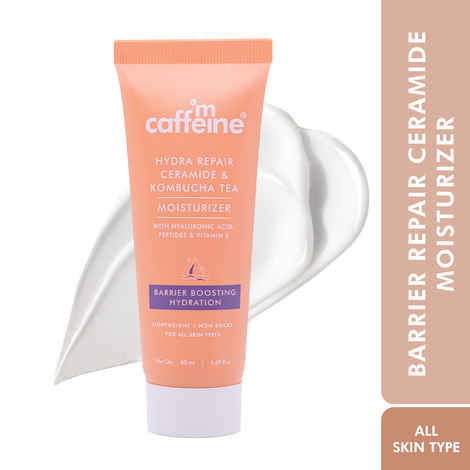
mCaffeine Kombucha Hydra Repair Moisturizer |Hydrates Repairs & strengthens skin barrier|Antioxidant Rich with vitamin E |50 ml

mCaffeine Kombucha Hydra Repair Moisturizer |Hydrates Repairs & strengthens skin barrier|Antioxidant Rich with vitamin E |50 ml
mCaffeine
mcaffeine-kombucha-hydra-repair-moisturizer-hydrates-repairs-strengthens-skin-barrier-antioxidant-rich-with-vitamin-e-50-ml
Moisturize
10084991467813
Morning or Evening?
How often will you use this product?
Notes


Highlights
WHAT IS IT?
Moisturizer, includes Kombucha and Hyaluronic Acid
FEATURES
12 Hour Hydration, Repair & Strengthens Skin Barrier, Antioxidant Rich, Kombucha Infused, PETA Certified, Paraben Free, SLS Free
BEST FOR
sensitive
CHECKS
Paraben, SLS, Toxic Ingredients
Who Is It For?
Both Women And Men; Age Range Not SpecifiedWhat Does It Help With?
Hydration Skin Barrier Repair Skin Elasticity Reducing Pigmentation Protection Against Pollution And Environmental StressorsBudget
Affordable (under ₹30 Is Approximately Under $30 Price Is ₹335 So Mid-range ($30-$75) Inr Equivalent)How To Use
Which routine should it be used in?
Instructions:
Key Information


What mCaffeine Says
Product Description:
Kombucha Hydra Repair Moisturizer An oilfree moisturizer that doubles up as a barrier repair cream All thanks to Kombucha, a fermented tea that’s packed with antioxidants & known worldwide for its hydrating properties that repair skin barrier by minimizing the effects of pollution & environmental stressors on the skin. Kombucha Hydra Repair Moisturizer is an ultralightweight moisturizer that contains Hyaluronic Acid to lock moisture and offer 12 hr of hydration leaving skin soft & supple. It contains moisture-retaining Ceramides that strengthen the skin barrier and Peptides that increase skin elasticity. Infused with Vitamin E it also reduces skin pigmentation. Get improved skin softness & a renewed skin barrier every day. Features include 12 Hour Hydration, 97.9% Reduction in Skin Dryness, 98.6% Improvement In Skin Softness, Based on a consumer study, and Based on dermatological assessment. Good for you and the planet, it is PETA Certified, free from Paraben, SLS and all other toxic ingredients, FDA-approved, dermatologically tested and has Zero Plastic Footprint.
About the Brand:
Ingredients Overview
Ingredients List
kombucha, hyaluronic-acid, ceramides, peptides, vitamin-e, caffeine
Key Ingredients
Kombucha, Hyaluronic Acid, Ceramides, Peptides, Vitamin E, Caffeine
Ingredients Details
Caffeine
Common Name(s): Caffeine,methylxanthine anti-cellulite,antioxidant vasoactive
CAS Number: N/a
DESCRIPTION
What It Does: Stimulates lipolysis in adipocytes by inhibiting phosphodiesterase (preventing camp breakdown), reduces eye puffiness through vasoconstriction of periorbital capillaries, and provides antioxidant dna repair stimulation for photoprotective benefit.
Why It's Used: The only cosmetic active with a well-defined mechanism for anti-cellulite claims — phosphodiesterase inhibition elevating adipocyte camp is the documented biochemical pathway, providing mechanism-based efficacy substantiation superior to most slimming actives.
How It Works: Caffeine inhibits phosphodiesterase (pde3, pde4) preventing camp hydrolysis → elevated camp activates protein kinase a → phosphorylates hormone-sensitive lipase → lipolysis of triglycerides in adipocytes. for eye puffiness: caffeine's adenosine receptor antagonism reduces prostaglandin-mediated capillary dilation in periorbital tissue, reducing fluid accumulation.
Typically Found In: Anti-cellulite,eye creams,antioxidant products
TECHNICAL DETAILS
Primary Category: Active ingredient – antioxidant
Secondary Functions: Free radical scavenging,anti-aging
Application Areas:

Facial Skincare
Body Care

Hair Care
Beard Care
Color Cosmetics (Makeup)
Dietary/Oral Supplements
Typical Concentration Range: 0.1%–3%
SOURCING & ETHICS
Vegan Status: Yes
Halal Status: Yes
Source Notes: Plant-derived extract or synthetic.
SKIN COMPATIBILITY
Irritancy Rating: 1/5 – very low
Comedogenicity Rating: 0/5 – non-comedogenic
Sensitivity Concerns: Non-irritating; well-tolerated.
Safe for Sensitive Skin: Yes
SAFETY & COMPATIBILITY
Safety Profile: Excellent safety profile. ewg score: 1.
Works Well With: Vitamin c,vitamin e,ferulic acid,spf,other antioxidants
Avoid Combining With: No significant incompatibilities
SCIENTIFIC NOTE
Caffeine has one of the highest sc penetration rates of any cosmetic active (logp -0.07, mw 194 da) — the combination of small size and moderate logp providing excellent aqueous solubility with sufficient sc lipid partitioning for effective transdermal delivery to adipose tissue.
Last Verified: Cosing database,caffeine pde inhibitor anti-cellulite lipolysis review
Primary Sources: 2026-03-12
Ceramides
Common Name(s): Ceramides,ceramide sphingolipid,sc barrier lipid
CAS Number: N/a
DESCRIPTION
What It Does: Restores sc lamellar lipid bilayers, reduces trans-epidermal water loss, repairs barrier dysfunction in dry and eczematous skin, and strengthens the physical barrier against environmental irritants.
Why It's Used: Provides direct structural barrier lipid replacement — unlike humectants that attract water, ceramides physically rebuild the lipid bilayer architecture required to retain moisture within the skin.
How It Works: Ceramides integrate into the sc intercellular lamellar bilayer, restoring the ordered orthorhombic packing disrupted in barrier-compromised skin. the sphingosine backbone's amide bond and hydroxyl groups form the h-bonding network that stabilises the lamellar structure.
Typically Found In: Barrier repair,dry skin,eczema-prone
TECHNICAL DETAILS
Primary Category: Functional ingredient – emollient
Secondary Functions: Barrier sealing,softening
Application Areas:
Facial Skincare
Body Care
Hair Care
Beard Care
Color Cosmetics (Makeup)
Dietary/Oral Supplements
Typical Concentration Range: 0.01%–5%
SOURCING & ETHICS
Vegan Status: Conditional
Halal Status: Yes
Source Notes: Plant-derived, synthetic or animal-derived. verify source.
SKIN COMPATIBILITY
Irritancy Rating: 1/5 – very low
Comedogenicity Rating: 1/5 – low; formulation-dependent
Sensitivity Concerns: Non-irritating.
Safe for Sensitive Skin: Yes
SAFETY & COMPATIBILITY
Safety Profile: Excellent safety profile. ewg score: 1.
Works Well With: Humectants,ceramides,actives as carrier
Avoid Combining With: No significant incompatibilities
SCIENTIFIC NOTE
Sc ceramides comprise ~50% of the sc lipid mass (by weight) and are essential for barrier function; ceramide depletion in atopic dermatitis and aged skin is a primary driver of barrier dysfunction and tewl elevation.
Last Verified: Cosing database,ceramides ceramide barrier review
Primary Sources: 2026-03-12
Peptides
Common Name(s): Peptides,functional category descriptor,skin care
CAS Number: N/a
DESCRIPTION
What It Does: Provides the functional class benefits described by the 'peptides' category — specific activity depends on the precise ingredient within this functional class.
Why It's Used: Used as a category label when listing ingredient classes rather than specific inci names — relevant for consumer-facing communication and ingredient disclosure frameworks.
How It Works: Activity depends on specific ingredient within the category; the category designation indicates the broad functional mechanism shared by all members of the group.
Typically Found In: Consumer communication,ingredient disclosure
TECHNICAL DETAILS
Primary Category: Active ingredient – cosmetic active
Secondary Functions: Skin conditioning
Application Areas:
Facial Skincare
Body Care
Hair Care
Beard Care
Color Cosmetics (Makeup)
Dietary/Oral Supplements
Typical Concentration Range: Varies
SOURCING & ETHICS
Vegan Status: Varies
Halal Status: Varies
Source Notes: Commercially produced for cosmetic use. verify vegan/halal status with supplier.
SKIN COMPATIBILITY
Irritancy Rating: 1/5 – very low
Comedogenicity Rating: 0/5 – non-comedogenic
Sensitivity Concerns: Well-tolerated by most skin types.
Safe for Sensitive Skin: Yes
SAFETY & COMPATIBILITY
Safety Profile: Good safety profile at recommended concentrations. ewg score: 1–2.
Works Well With: Standard skincare actives
Avoid Combining With: No known significant incompatibilities
SCIENTIFIC NOTE
Peptides as a category encompasses multiple specific inci ingredients each with individual safety and efficacy profiles; see individual ingredient entries for specific mechanistic detail.
Last Verified: Cosing database,functional category descriptor
Primary Sources: 2026-03-12
