
![Master Patch Intensive [36ea]](http://mosaique.skin/cdn/shop/files/master-patch-intensive-36ea-cosrx-official-1.jpg?v=1733855167&width=3840)
COSRX
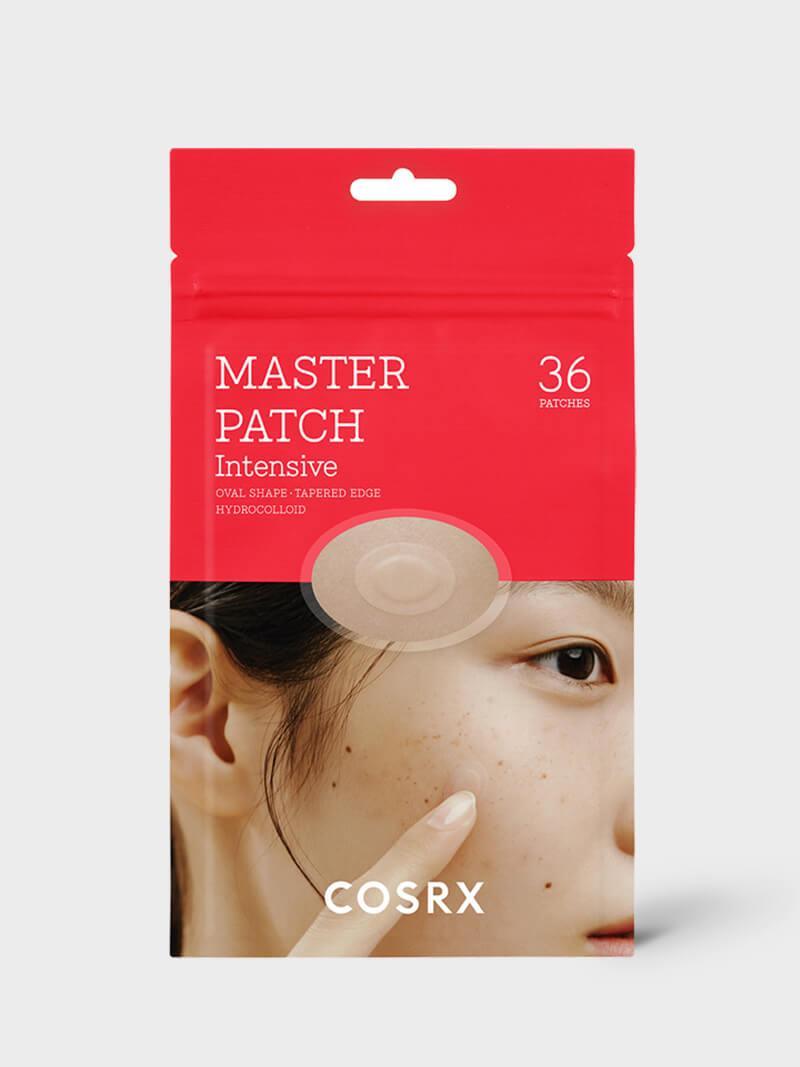
Master Patch Intensive [36ea]

Master Patch Intensive [36ea]
COSRX
master-patch-intensive-36ea
Spot Patches
9706796646693
Morning or Evening?
How often will you use this product?
Notes


Highlights
WHAT IS IT?
Acne patch with 6 ingredients
FEATURES
Protect, flatten & heal; Actively treats acne; Invisible spot treatment for a bare faced feeling; All day adhesion
BEST FOR
Acne-prone skin
CHECKS
Free of sulfates, parabens
Who Is It For?
Adults (18+) Both Men And WomenWhat Does It Help With?
Acne BlemishesBudget
AffordableHow To Use
Which routine should it be used in?
Instructions:
Key Information


What COSRX Says
Product Description:
The Original Acne Patch, Just More Intense. Comfortable spot treatment to solve your unplanned breakouts. Master Patch Intensive perfectly blends into any skin tone for discrete appearance. Leave on it on, and stress no more.
About the Brand:
Ingredients Overview
Ingredients List
Cellulose Gum, Hydrogenated Poly(C6-20 Olefin), Polyisobutene, Styrene/Isoprene Copolymer, Salicylic Acid, Melaleuca Alternifolia (Tea Tree) Leaf Oil
Key Ingredients
Hydrocolloid, 0.02% Salicylic acid, 0.02% Tea tree leaf Oil
Ingredients Details
Cellulose Gum
Common Name(s): Cellulose gum,cosmetic active,functional ingredient
CAS Number: N/a
DESCRIPTION
What It Does: Delivers characteristic cosmetic function at recommended use concentration.
Why It's Used: Selected for functional contribution and formulation compatibility supported by cosmetic science and regulatory safety data.
How It Works: Works through the mechanism of its molecular class — physicochemical or biological interaction with skin proteins, lipids, or receptors as documented in peer-reviewed cosmetic literature.
Typically Found In: Skin care formulations
TECHNICAL DETAILS
Primary Category: Active ingredient – cosmetic active
Secondary Functions: Skin conditioning
Application Areas:

Facial Skincare

Body Care
Hair Care
Beard Care
Color Cosmetics (Makeup)
Dietary/Oral Supplements
Typical Concentration Range: 0.1%–10%
SOURCING & ETHICS
Vegan Status: Conditional
Halal Status: Yes
Source Notes: Commercially produced for cosmetic use. verify vegan/halal status with supplier.
SKIN COMPATIBILITY
Irritancy Rating: 1/5 – very low
Comedogenicity Rating: 0/5 – non-comedogenic
Sensitivity Concerns: Well-tolerated by most skin types.
Safe for Sensitive Skin: Yes
SAFETY & COMPATIBILITY
Safety Profile: Good safety profile at recommended concentrations. ewg score: 1–2.
Works Well With: Standard skincare actives
Avoid Combining With: No known significant incompatibilities
SCIENTIFIC NOTE
Cellulose gum has an established safety and efficacy profile within the cosmetic regulatory framework at standard use concentrations.
Last Verified: Cosing database,cellulose gum technical literature
Primary Sources: 2026-03-12
Hydrogenated Poly(c6-20 Olefin)
Common Name(s): Hydrogenated poly(c6-20 olefin)
DESCRIPTION
What It Does: Delivers targeted skin-conditioning or bioactive benefits through a specific mechanism of action suited to the formulation's intended purpose.
Why It's Used: Specialty actives address specific skin concerns through targeted molecular mechanisms, providing efficacy beyond what base formulation ingredients alone can achieve.
How It Works: The bioactive compound interacts with specific molecular targets in skin cells or the extracellular matrix — enzymes, receptors, structural proteins, or signaling molecules — triggering beneficial biological responses.
Typically Found In: Serums,treatments,moisturizers,specialty products
TECHNICAL DETAILS
Primary Category: Specialty actives
Secondary Functions: Skin-conditioning,anti-aging
Application Areas:
Facial Skincare
Body Care
Hair Care
Beard Care
Color Cosmetics (Makeup)
Dietary/Oral Supplements
Typical Concentration Range: 0.01–5%
SOURCING & ETHICS
Vegan Status: Yes
Halal Status: Yes
Source Notes: Specialty active ingredient; check individual sourcing for vegan status.
SKIN COMPATIBILITY
Irritancy Rating: 1
Comedogenicity Rating: 0
Sensitivity Concerns: Low sensitization potential at recommended use concentrations.
Safe for Sensitive Skin: Yes
SAFETY & COMPATIBILITY
Safety Profile: Well-characterized cosmetic ingredient with established safety profile. generally non-irritating at typical use concentrations. suitable for leave-on and rinse-off cosmetics.
Works Well With: Niacinamide,hyaluronic acid,vitamin c,peptides
Avoid Combining With: Incompatible with oxidizing agents; check ph stability
SCIENTIFIC NOTE
Specialty actives typically work through enzyme inhibition (e.g., tyrosinase inhibition for brightening, mmp inhibition for anti-aging), receptor activation (e.g., retinoid receptors, ppar-γ for barrier genes), or transcription factor modulation (e.g., nrf2 for antioxidant gene upregulation). structure-activity relationships determine potency and selectivity.
Last Verified: Cosing eu database; pcpc cosmetic ingredient safety reviews; ingredient-specific safety and efficacy literature
Primary Sources: 2025-01-15
Polyisobutene
Common Name(s): Polyisobutene,cosmetic active,functional ingredient
CAS Number: N/a
DESCRIPTION
What It Does: Delivers characteristic cosmetic function at recommended use concentration.
Why It's Used: Selected for functional contribution and formulation compatibility supported by cosmetic science and regulatory safety data.
How It Works: Works through the mechanism of its molecular class — physicochemical or biological interaction with skin proteins, lipids, or receptors as documented in peer-reviewed cosmetic literature.
Typically Found In: Skin care formulations
TECHNICAL DETAILS
Primary Category: Active ingredient – cosmetic active
Secondary Functions: Skin conditioning
Application Areas:
Facial Skincare
Body Care
Hair Care
Beard Care
Color Cosmetics (Makeup)
Dietary/Oral Supplements
Typical Concentration Range: 0.1%–10%
SOURCING & ETHICS
Vegan Status: Conditional
Halal Status: Yes
Source Notes: Commercially produced for cosmetic use. verify vegan/halal status with supplier.
SKIN COMPATIBILITY
Irritancy Rating: 1/5 – very low
Comedogenicity Rating: 0/5 – non-comedogenic
Sensitivity Concerns: Well-tolerated by most skin types.
Safe for Sensitive Skin: Yes
SAFETY & COMPATIBILITY
Safety Profile: Good safety profile at recommended concentrations. ewg score: 1–2.
Works Well With: Standard skincare actives
Avoid Combining With: No known significant incompatibilities
SCIENTIFIC NOTE
Polyisobutene has an established safety and efficacy profile within the cosmetic regulatory framework at standard use concentrations.
Last Verified: Cosing database,polyisobutene technical literature
Primary Sources: 2026-03-12
Salicylic Acid
Common Name(s): Bha,2-hydroxybenzoic acid,orthohydroxybenzoic acid,willow bark acid
CAS Number: 69-72-7
DESCRIPTION
What It Does: Salicylic acid exfoliates the skin surface and inside pores, dissolves the 'glue' holding dead skin cells together, reduces sebum production, and combats acne-causing bacteria.
Why It's Used: Its oil solubility makes it uniquely effective at penetrating pores and dissolving sebum plugs – a function that water-soluble ahas cannot perform. it is the preferred exfoliant for oily, acne-prone, and congested skin.
How It Works: Salicylic acid disrupts desmosomal bonds between corneocytes, promoting exfoliation. its oil solubility allows it to penetrate the sebaceous follicle, dissolving sebum and dead cells. it also has anti-inflammatory properties by inhibiting prostaglandin synthesis.
Typically Found In: Cleansers,toners,serums,spot treatments,masks,chemical peels,anti-dandruff shampoos,acne treatments
TECHNICAL DETAILS
Primary Category: Active ingredient – beta hydroxy acid (bha)
Secondary Functions: Anti-acne,anti-dandruff,keratolytic
Application Areas:
Facial Skincare
Body Care
Hair Care
Beard Care
Color Cosmetics (Makeup)
Dietary/Oral Supplements
Typical Concentration Range: 0.5%–2% (otc acne treatment in us); up to 30% in professional chemical peels
SOURCING & ETHICS
Vegan Status: Yes – synthetic or willow bark derived
Halal Status: Yes
Source Notes: Naturally occurring in willow bark (salix alba) and wintergreen oil. commercially produced synthetically via kolbe-schmitt reaction for cosmetic use.
SKIN COMPATIBILITY
Irritancy Rating: 3/5 – moderate; can cause dryness, peeling, and irritation, especially at higher concentrations
Comedogenicity Rating: 0/5 – non-comedogenic; actually anti-comedogenic
Sensitivity Concerns: Can cause irritation, dryness, and sun sensitivity. avoid contact with eyes. not recommended during pregnancy at high concentrations. can be drying – follow with moisturizer.
Safe for Sensitive Skin: Use with caution – start with lower concentrations and frequency; may not be suitable for reactive or rosacea-prone skin
SAFETY & COMPATIBILITY
Safety Profile: Safe at otc concentrations (0.5–2%). regulated as a drug in some countries (us: fda category i acne treatment). avoid in pregnancy at high concentrations.
Works Well With: Niacinamide,zinc,tea tree oil,benzoyl peroxide (at different times),hyaluronic acid (to counteract dryness)
Avoid Combining With: High concentrations of retinol (cumulative irritation),multiple exfoliating acids simultaneously,benzoyl peroxide in same step (can increase irritation)
SCIENTIFIC NOTE
Salicylic acid is a member of the salicylate family and shares structural similarity with aspirin. its anti-inflammatory mechanism mirrors aspirin's cox inhibition pathway, making it uniquely effective for inflammatory acne.
Last Verified: Cosing database,cir safety assessment,us fda acne monograph,journal of the american academy of dermatology
Primary Sources: 2026-03-12
