

Ricaria Support Services Pvt Ltd
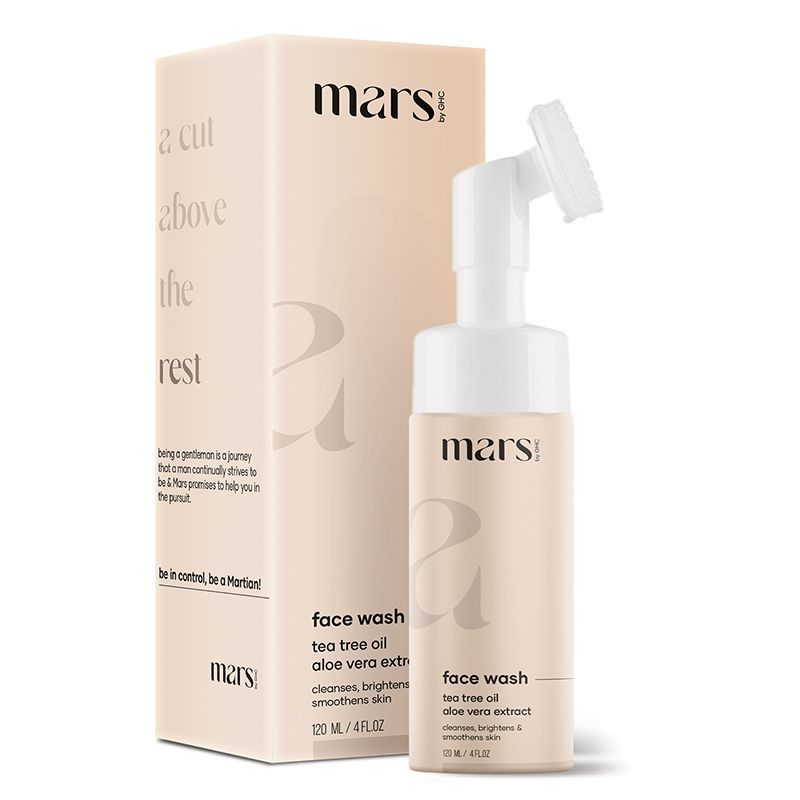
Mars by GHC Tea Tree Foaming Face Wash with Built-in Brush For Oil & Acne Control(120ML)

Mars by GHC Tea Tree Foaming Face Wash with Built-in Brush For Oil & Acne Control(120ML)
Ricaria Support Services Pvt Ltd
mars-by-ghc-tea-tree-foaming-face-wash-with-built-in-brush-for-oil-acne-control-120ml
Cleanse
10085020860709
Morning or Evening?
How often will you use this product?
Notes


Highlights
WHAT IS IT?
Foaming Face Wash with Tea Tree
FEATURES
Built-in brush, Controls oil and acne
BEST FOR
oily
CHECKS
Who Is It For?
What Does It Help With?
Oil Control Acne ControlBudget
Affordable (under $30)How To Use
Which routine should it be used in?
Instructions:
Key Information


What Ricaria Support Services Pvt Ltd Says
Product Description:
Tea tree foaming face wash with built-in brush for oil and acne control
About the Brand:
Ingredients Overview
Ingredients List
Deionized Water, Lauryl Glucoside, Disodium Laureth Sulfosuccinate, Pure Rose Oil, Cocamidopropyl Betaine, Aloe Vera Extract, Lemon Peel Extract, Orange Peel Extract, Tea Tree Extract, Niacinamide, Cocamidopropy Pg Dimonium Chloride, Stabilised Ascorbic Acid, Magnolia and Black Cumin Extract, Phenoxyethanol & Caprylyl Glycol, Essential Oil Blend, Disodium Cocmphoacetate, Fragrance
Key Ingredients
tea-tree-oil
Ingredients Details
Cocamidopropyl Betaine
Common Name(s): Capb,cocoamidopropyl betaine,coconut betaine
CAS Number: 61789-40-0
DESCRIPTION
What It Does: Boosts foam, enhances mildness, and conditions skin and hair when combined with primary surfactants.
Why It's Used: The standard foam booster and mildness enhancer in virtually all shampoos, body washes, and facial cleansers – provides synergistic mildness improvement with anionic surfactants.
How It Works: Amphoteric (zwitterionic) character provides positive charge interaction with hair keratin for antistatic conditioning. reduces irritation of co-formulated anionic surfactants via ionic complex formation. foam stabilization via bilayer reinforcement in foam lamellae.
Typically Found In: Shampoos,body washes,facial cleansers,baby products
TECHNICAL DETAILS
Primary Category: Functional ingredient – amphoteric surfactant
Secondary Functions: Skin conditioning
Application Areas:

Facial Skincare
Body Care
Hair Care

Beard Care
Color Cosmetics (Makeup)
Dietary/Oral Supplements
Typical Concentration Range: 2%–15%
SOURCING & ETHICS
Vegan Status: Yes – from coconut fatty acids and dimethylaminopropylamine
Halal Status: Yes
Source Notes: Commercially produced for cosmetic use. verify vegan/halal status with supplier.
SKIN COMPATIBILITY
Irritancy Rating: 1/5 – very low
Comedogenicity Rating: 0/5 – non-comedogenic
Sensitivity Concerns: Well-tolerated by most skin types.
Safe for Sensitive Skin: Yes
SAFETY & COMPATIBILITY
Safety Profile: Good safety profile at recommended concentrations. ewg score: 1–2.
Works Well With: Standard skincare actives
Avoid Combining With: No known significant incompatibilities
SCIENTIFIC NOTE
Capb's mildness-enhancing synergy with sls has a molecular mechanism: capb's positive imidazoline head group forms an ion pair complex with sls's anionic sulfate group, reducing sls's free monomer concentration (the irritation-causing species) without significantly reducing micelle-forming capacity (the cleansing species).
Last Verified: Cosing database,ananthapadmanabhan surfactant review,cir safety assessment
Primary Sources: 2026-03-12
Disodium Laureth Sulfosuccinate
Common Name(s): Disodium laureth sulfosuccinate,cosmetic active,functional ingredient
CAS Number: N/a
DESCRIPTION
What It Does: Delivers characteristic cosmetic function at recommended use concentration.
Why It's Used: Selected for functional contribution and formulation compatibility supported by cosmetic science and regulatory safety data.
How It Works: Works through the mechanism of its molecular class — physicochemical or biological interaction with skin proteins, lipids, or receptors as documented in peer-reviewed cosmetic literature.
Typically Found In: Skin care formulations
TECHNICAL DETAILS
Primary Category: Active ingredient – cosmetic active
Secondary Functions: Skin conditioning
Application Areas:
Facial Skincare
Body Care
Hair Care
Beard Care
Color Cosmetics (Makeup)
Dietary/Oral Supplements
Typical Concentration Range: 0.1%–10%
SOURCING & ETHICS
Vegan Status: Conditional
Halal Status: Yes
Source Notes: Commercially produced for cosmetic use. verify vegan/halal status with supplier.
SKIN COMPATIBILITY
Irritancy Rating: 1/5 – very low
Comedogenicity Rating: 0/5 – non-comedogenic
Sensitivity Concerns: Well-tolerated by most skin types.
Safe for Sensitive Skin: Yes
SAFETY & COMPATIBILITY
Safety Profile: Good safety profile at recommended concentrations. ewg score: 1–2.
Works Well With: Standard skincare actives
Avoid Combining With: No known significant incompatibilities
SCIENTIFIC NOTE
Disodium laureth sulfosuccinate has an established safety and efficacy profile within the cosmetic regulatory framework at standard use concentrations.
Last Verified: Cosing database,disodium laureth sulfosuccinate technical literature
Primary Sources: 2026-03-12
Fragrance
Common Name(s): Fragrance ingredient,eu allergen or aromatic component,olfactory/flavour
CAS Number: N/a
DESCRIPTION
What It Does: Provides the complete fragrance profile contributing to product sensory experience and consumer appeal.
Why It's Used: Fragrance is a major consumer purchase driver — up to 70% of consumers make purchasing decisions partially based on product scent.
How It Works: Fragrance blends interact with olfactory receptors providing the sensory profile — complex mixtures activate multiple receptor types for rich, multidimensional scent experiences.
Typically Found In: All fragrance products
TECHNICAL DETAILS
Primary Category: Active ingredient – cosmetic active
Secondary Functions: Skin conditioning
Application Areas:
Facial Skincare
Body Care
Hair Care
Beard Care
Color Cosmetics (Makeup)
Dietary/Oral Supplements
Typical Concentration Range: Standard use levels
SOURCING & ETHICS
Vegan Status: Conditional
Halal Status: Yes
Source Notes: Commercially produced for cosmetic use. verify vegan/halal status with supplier.
SKIN COMPATIBILITY
Irritancy Rating: 1/5 – very low
Comedogenicity Rating: 0/5 – non-comedogenic
Sensitivity Concerns: Well-tolerated by most skin types.
Safe for Sensitive Skin: Yes
SAFETY & COMPATIBILITY
Safety Profile: Good safety profile at recommended concentrations. ewg score: 1–2.
Works Well With: Standard skincare actives
Avoid Combining With: No known significant incompatibilities
SCIENTIFIC NOTE
Ifra guidelines set usage limits for fragrance ingredients based on skin sensitisation and phototoxicity assessment for each application category.
Last Verified: Eu regulation 1223/2009 annex iii,ifra standards,fragrance allergen declaration requirements
Primary Sources: 2026-03-12
Lauryl Glucoside
Common Name(s): C12 glucoside,dodecyl glucoside,apg surfactant
CAS Number: 110615-47-9
DESCRIPTION
What It Does: Provides mild, naturally-derived cleansing with excellent biodegradability from glucose and lauryl alcohol.
Why It's Used: The natural cleansing standard — lauryl glucoside's combination of renewability, biodegradability, mildness, and foaming makes it the benchmark natural surfactant for clean beauty facial cleansers.
How It Works: C12 alkyl chain provides cmc and foaming. glucose head group provides mild non-ionic/weakly anionic character from hydroxyl groups. very low irritation potential from polyol head group. excellent biodegradability >95% bod28 from glucoside hydrolysis. cosmos approved.
Typically Found In: Natural facial cleansers,baby shampoos,cosmos certified products
TECHNICAL DETAILS
Primary Category: Functional ingredient – alkyl glucoside surfactant
Secondary Functions: Skin conditioning
Application Areas:
Facial Skincare
Body Care
Hair Care
Beard Care
Color Cosmetics (Makeup)
Dietary/Oral Supplements
Typical Concentration Range: 2%–15%
SOURCING & ETHICS
Vegan Status: Yes – from corn glucose + coconut lauryl alcohol
Halal Status: Yes
Source Notes: Commercially produced for cosmetic use. verify vegan/halal status with supplier.
SKIN COMPATIBILITY
Irritancy Rating: 1/5 – very low
Comedogenicity Rating: 0/5 – non-comedogenic
Sensitivity Concerns: Well-tolerated by most skin types.
Safe for Sensitive Skin: Yes
SAFETY & COMPATIBILITY
Safety Profile: Good safety profile at recommended concentrations. ewg score: 1–2.
Works Well With: Standard skincare actives
Avoid Combining With: No known significant incompatibilities
SCIENTIFIC NOTE
Lauryl glucoside's mildness vs sls at equivalent foam performance is measurable by draize eye score: sls scores approximately 55 (mild irritant) while lauryl glucoside scores <15 (essentially non-irritant) in identical eye irritation testing. this quantitative mildness advantage explains why apg surfactants command premium pricing despite renewable/natural origin — actual performance superiority justifies the cost.
Last Verified: Cosing database,cosmos standard,cir safety assessment
Primary Sources: 2026-03-12
