
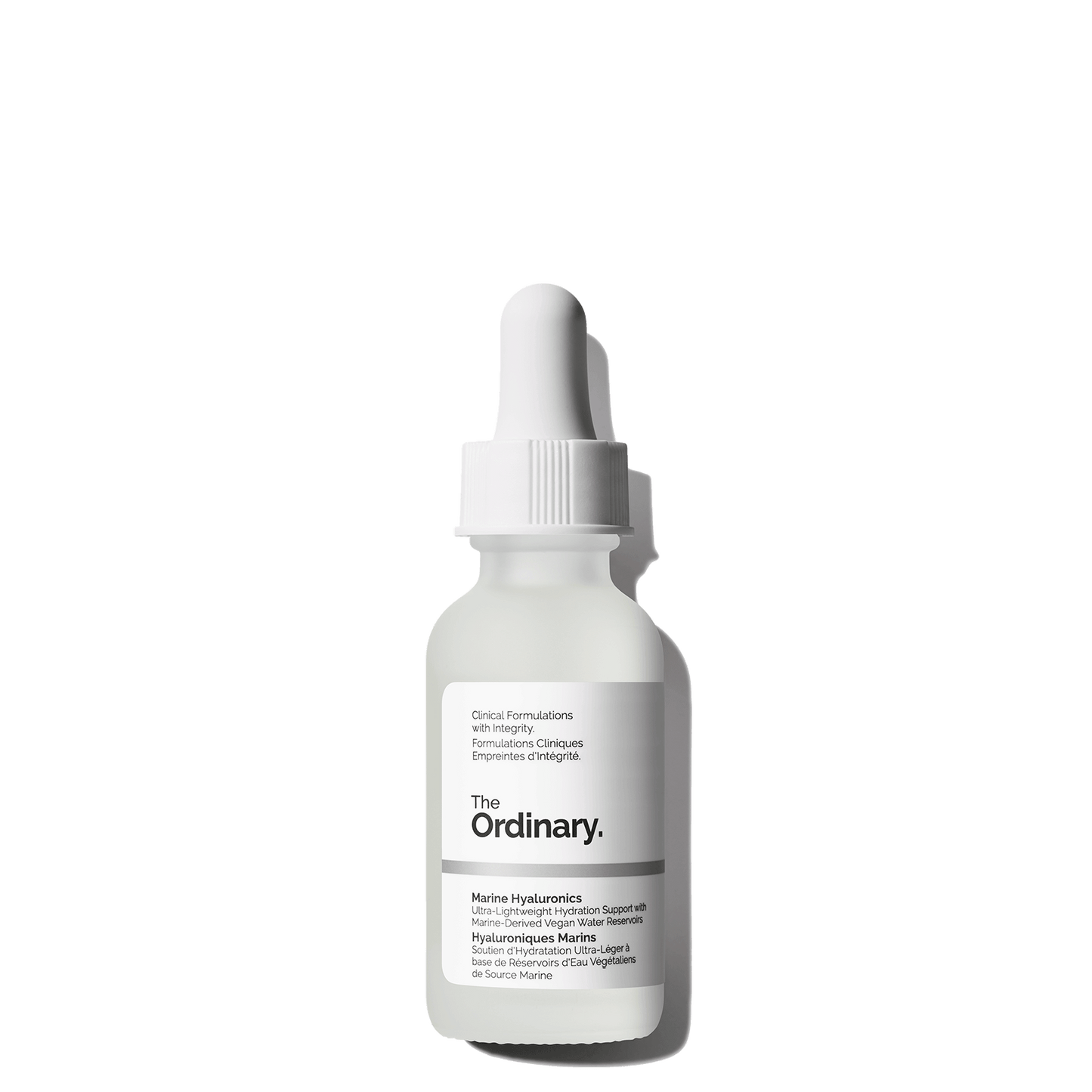

The Ordinary
Marine Hyaluronics

Marine Hyaluronics
The Ordinary
marine-hyaluronics
Serum
9784784912677
Morning or Evening?
How often will you use this product?
Notes


Highlights
WHAT IS IT?
Ultra-lightweight hydration serum
FEATURES
Exceptionally lightweight serum, acts as a hyaluronic acid-alternative, directs water where needed most
BEST FOR
All skin types
CHECKS
No alcohol, oil-free
Who Is It For?
All Ages And GendersWhat Does It Help With?
Dehydration DrynessBudget
Affordable (under $30)How To Use
Which routine should it be used in?
Instructions:
Key Information


What The Ordinary Says
Product Description:
A serum with an intensely hydrating effect that combines exopolysaccharides from skin-friendly marine bacteria, Hawaiian red algae, glycoproteins from Antarctic marine sources, micro-filtered blue-green algae, and several amino acids. This water-based formula targets hydration below the skin surface, resulting in a softer, plumper complexion.
About the Brand:
Ingredients Overview
Ingredients List
Aqua,Glycerin,Algae-Extract,Pseudoalteromonas-Exopolysaccharides,Pseudoalteromonas-Ferment-Extract,Ahnfeltia-Concinna-Extract,Arginine,Glycine,Alanine,Serine,Valine,Isoleucine,Proline,Threonine,Histidine,Phenylalanine,Aspartic-Acid,PCA,Sodium-PCA,Sodium-Lactate,Salicylic-Acid,Citric-Acid,Propanediol,Dimethyl-Isosorbide,Ethoxydiglycol,Polysorbate-20,Potassium-Sorbate,Sodium-Salicylate,Sodium-Benzoate,Hexylene-Glycol,1-2-Hexanediol,Phenoxyethanol,Caprylyl-Glycol
Key Ingredients
Pseudoalteromonas Exopolysaccharides, Pseudoalteromonas Ferment Extract, Ahnfeltia Concinna Extract
Ingredients Details
Ahnfeltia Concinna Extract
Common Name(s): Ahnfeltia concinna extract,botanical extract,phytochemical active
CAS Number: N/a
DESCRIPTION
What It Does: Provides antioxidant protection, anti-inflammatory activity, and skin conditioning from polyphenols, terpenoids, and phytochemicals in the extract.
Why It's Used: Natural plant extracts provide multi-functional phytochemical profiles supporting concurrent skin care claims from one ingredient with authentic botanical heritage.
How It Works: Polyphenols scavenge ros via h• donation; terpenoids inhibit nf-kb or cox inflammatory pathways; vitamins and minerals provide cofactor skin nutrition.
Typically Found In: Botanical skin care,natural products
TECHNICAL DETAILS
Primary Category: Active ingredient – antioxidant
Secondary Functions: Free radical scavenging,anti-aging
Application Areas:

Facial Skincare
Body Care

Hair Care
Beard Care
Color Cosmetics (Makeup)
Dietary/Oral Supplements
Typical Concentration Range: 0.1%–30%
SOURCING & ETHICS
Vegan Status: Conditional - supplier confirmation required
Halal Status: Conditional - basis not stated in source record; supplier origin confirmation required to determine what evidence applies
Source Notes: Plant-derived extract or synthetic. [audit 2026-07-29 rev2: status downgraded on audit. determination requires shariah-panel sign-off.]
SKIN COMPATIBILITY
Irritancy Rating: 1/5 – very low
Comedogenicity Rating: 0/5 – non-comedogenic
Sensitivity Concerns: Non-irritating; well-tolerated.
Safe for Sensitive Skin: Yes
SAFETY & COMPATIBILITY
Safety Profile: Excellent safety profile. ewg score: 1.
Works Well With: Vitamin c,vitamin e,ferulic acid,spf,other antioxidants
Avoid Combining With: No significant incompatibilities
SCIENTIFIC NOTE
Plant secondary metabolites evolved for uv photoprotection and pathogen defence — mechanisms directly applicable to cosmetic antioxidant and anti-inflammatory activity in human skin.
Last Verified: 2026-03-12
Primary Sources: Cosing database,ahnfeltia concinna extract botanical review
Alanine
Common Name(s): L-alanine,2-aminopropanoic acid
CAS Number: 56-41-7
DESCRIPTION
What It Does: Provides nmf-type humectant moisture retention and skin conditioning.
Why It's Used: Simple, well-tolerated nmf amino acid humectant for skin conditioning formulations.
How It Works: Small methyl side chain contributes to protein hydrophobic core but as free amino acid provides direct humectant activity via amino and carboxyl groups. converted to pyruvate for cellular atp production via gluconeogenesis.
Typically Found In: Nmf moisturizers,skin conditioning products
TECHNICAL DETAILS
Primary Category: Active ingredient – amino acid
Secondary Functions: Nmf component,cellular energy
Application Areas:
Facial Skincare
Body Care
Hair Care
Beard Care
Color Cosmetics (Makeup)
Dietary/Oral Supplements
Typical Concentration Range: 0.5%–5%
SOURCING & ETHICS
Vegan Status: Conditional - feedstock declaration required
Halal Status: Unverified - feedstock declaration required (plant, animal and petrochemical routes all exist)
Source Notes: Fermentation-derived or synthetic. natural skin component. [audit 2026-07-29 rev2: origin-dependent: the same inci exists in plant, animal and petrochemical versions and the name does not discriminate. determination requires shariah-panel sign-off.]
SKIN COMPATIBILITY
Irritancy Rating: 1/5 – very low
Comedogenicity Rating: 0/5 – non-comedogenic
Sensitivity Concerns: Non-irritating; endogenous skin molecule.
Safe for Sensitive Skin: Yes
SAFETY & COMPATIBILITY
Safety Profile: Excellent safety profile. natural skin nmf component. ewg score: 1.
Works Well With: Hyaluronic acid,ceramides,peptides,other amino acids
Avoid Combining With: No significant incompatibilities
SCIENTIFIC NOTE
Free alanine is among the most abundant amino acids in the stratum corneum nmf, where it contributes to the aqueous phase hydration that keeps the stratum corneum flexible and functional.
Last Verified: 2026-03-12
Primary Sources: Cosing database,cir safety assessment
Algae Extract
Common Name(s): Algae extract,botanical extract,phytochemical active
CAS Number: N/a
DESCRIPTION
What It Does: Provides antioxidant protection from reactive oxygen species, reduces inflammatory cytokine production in skin, and conditions skin surface through the plant's secondary metabolite complex.
Why It's Used: Chosen for its natural origin narrative, traditional use heritage, and multi-functional phytochemical profile that supports several concurrent skin care claims from one ingredient.
How It Works: Polyphenols, terpenoids, and alkaloids in the extract scavenge ros via hydrogen atom transfer, inhibit nf-kb or cox-2 inflammatory pathways, and interact with skin surface proteins for conditioning.
Typically Found In: Botanical skin care,natural products
TECHNICAL DETAILS
Primary Category: Active ingredient – antioxidant
Secondary Functions: Free radical scavenging,anti-aging
Application Areas:
Facial Skincare
Body Care
Hair Care
Beard Care
Color Cosmetics (Makeup)
Dietary/Oral Supplements
Typical Concentration Range: 0.1%–10%
SOURCING & ETHICS
Vegan Status: Yes
Halal Status: Yes
Source Notes: Plant-derived extract or synthetic.
SKIN COMPATIBILITY
Irritancy Rating: 1/5 – very low
Comedogenicity Rating: 0/5 – non-comedogenic
Sensitivity Concerns: Non-irritating; well-tolerated.
Safe for Sensitive Skin: Yes
SAFETY & COMPATIBILITY
Safety Profile: Excellent safety profile. ewg score: 1.
Works Well With: Vitamin c,vitamin e,ferulic acid,spf,other antioxidants
Avoid Combining With: No significant incompatibilities
SCIENTIFIC NOTE
Plant secondary metabolites evolved as uv photoprotectants and antimicrobial agents — mechanisms that directly translate to cosmetic antioxidant and anti-inflammatory activity in human skin.
Last Verified: 2026-03-12
Primary Sources: Cosing database,algae extract botanical review
Arginine
Common Name(s): L-arginine,2-amino-5-guanidinopentanoic acid
CAS Number: 74-79-3
DESCRIPTION
What It Does: Conditions skin, attracts moisture, supports wound healing, and improves microcirculation via no synthesis.
Why It's Used: Multi-functional amino acid for skin hydration, conditioning, and wound healing in peptide and nmf formulations.
How It Works: Guanidinium group binds water (humectant). substrate for nitric oxide synthase (enos) producing nitric oxide that vasodilates capillaries improving skin nutrition. stimulates fibroblast proliferation for wound healing.
Typically Found In: Anti-aging serums,wound healing products,nmf moisturizers,scalp treatments
TECHNICAL DETAILS
Primary Category: Active ingredient – amino acid
Secondary Functions: Wound healing,microcirculation,nmf component
Application Areas:
Facial Skincare
Body Care
Hair Care
Beard Care
Color Cosmetics (Makeup)
Dietary/Oral Supplements
Typical Concentration Range: 0.5%–5%
SOURCING & ETHICS
Vegan Status: Conditional - feedstock declaration required
Halal Status: Unverified - feedstock declaration required (plant, animal and petrochemical routes all exist)
Source Notes: Fermentation-derived or synthetic. natural skin component. [audit 2026-07-29 rev2: origin-dependent: the same inci exists in plant, animal and petrochemical versions and the name does not discriminate. determination requires shariah-panel sign-off.]
SKIN COMPATIBILITY
Irritancy Rating: 1/5 – very low
Comedogenicity Rating: 0/5 – non-comedogenic
Sensitivity Concerns: Non-irritating; endogenous skin molecule.
Safe for Sensitive Skin: Yes
SAFETY & COMPATIBILITY
Safety Profile: Excellent safety profile. natural skin nmf component. ewg score: 1.
Works Well With: Hyaluronic acid,ceramides,peptides,other amino acids
Avoid Combining With: No significant incompatibilities
SCIENTIFIC NOTE
Arginine is a conditionally essential amino acid in wound healing where local demand exceeds synthesis capacity. topical arginine provides the nos substrate locally for no-mediated vasodilation and immune cell function in healing tissue.
Last Verified: 2026-03-12
Primary Sources: Cosing database,cir safety assessment,witte & barbul arginine wound healing review