

Mamaearth
Mamaearth Vitamin C Moisture Therapy Lip Balm SPF 50 for Dry & Chapped Lips 15 gm

Mamaearth Vitamin C Moisture Therapy Lip Balm SPF 50 for Dry & Chapped Lips 15 gm
Mamaearth
mamaearth-vitamin-c-moisture-therapy-lip-balm-spf-50-for-dry-chapped-lips-15-gm
Lip care
10085007655205
Morning or Evening?
How often will you use this product?
Notes


Highlights
WHAT IS IT?
Lip balm with SPF 50 and Vitamin C, multiple natural ingredients, total 9 key ingredients mentioned
FEATURES
Protects lips from sun with SPF 50, hydrates and nourishes dry and chapped lips, reduces pigmentation, lightens and brightens lips, non-greasy, safe formulation free from petroleum jelly, parabens, silicones, sulfates and SLS
BEST FOR
sensitive
CHECKS
No petroleum jelly, No SLS/SLES, No LLP, No parabens, No mineral oil, No silicones
Who Is It For?
General Adult Users Suitable For Pregnancy-safe UseWhat Does It Help With?
Dry And Chapped Lips Pigmentation Reduction Lip Brightening Sun ProtectionBudget
Affordable (under $30)How To Use
Which routine should it be used in?
Instructions:
Key Information


What Mamaearth Says
Product Description:
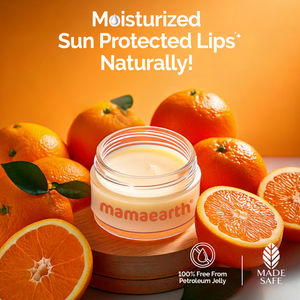
Sun protection for your face? Check. Arms? Check. But what about lips? Finally giving your lips a seat at the SPF table, we bring to you Mamaearth Vitamin C Moisture Therapy Lip Balm. Packed with SPF 50 and Vitamin C, it shields, heals, hydrates, nourishes, lightens and more! The cherry citrus on top? A glossy sheen & zesty flavor that makes every swipe a lip-smacking experience. This isn’t just a lip balm; it’s complete lip care crafted with a blend of loving ingredients. Ceramides, Shea Butter and Almond Oil moisturize dry and chapped lips. Plus, 100% natural Coconut Oil and Kojic Acid team up to reduce pigmentation. And our active hero - Vitamin C throws a spotlight on your lips by reducing the production of melanin to lighten & brighten. What’s more? No grease, no fuss, just soft sun protected lips with Mamaearth Vitamin C Moisture Therapy Lip Balm. It’s also Made Safe Approved and 100% free from Petroleum Jelly. That means no SLS/SLES, LLP, Parabens, Mineral Oil or Silicones. P.S. Heads up! This lip balm will soon find a place in your bag, on the nightstand, office desk and everywhere you go.
About the Brand:
Ingredients Overview
Ingredients List
Helianthus Annus (Sunflower) Seed Oil, Cera Alba, Butyrospermum Parkii (Shea)Butter, Capric/Caprylic Triglyceride, Octyle Methoxycinnamate, Helianthusannuus (Sunflower) Seed Wax, Cocos Nucifera (Coconut Oil), C18-30 Acid Glycolester, Hydrogenated Vegetable Glycerides, Butyl Methoxy Dibenzoylmethane,Prunus Amygdalus Dulcis (Sweet Almond) Oil, Flavour, Phenyl Benzinidazol Sulfonic Acid, Ethyl Hexyl Triazone, Bis –Ethylhexyloxyphenol Methoxyphenyl Trazin, Pentaerythrityl Tetra-Di-T-Butylhydroxyhydrocinnamate, Ceramide, Kojic Acid Dipalmitate, Ascorbyltetraisopalmitate (Vitamin C) & Mel (Honey) Extract
Key Ingredients
Vitamin C, Ceramides, Shea Butter, Almond Oil, Coconut Oil, Kojic Acid
Ingredients Details
Cera Alba
Common Name(s): Cera alba,beeswax,structuring wax occlusive emollient
CAS Number: N/a
DESCRIPTION
What It Does: Structures lip balms and anhydrous formulations through the wax crystal network, provides occlusive barrier protection reducing tewl, and conditions skin with the emollient fatty acids and esters in the wax composition.
Why It's Used: Beeswax as a traditional wax has both structure and emollient function from its complex wax ester (c32-c36) composition.
How It Works: Beeswax forms a crystalline wax network above its melting point (beeswax ~62°c; carnauba ~83°c; candelilla ~68°c). on cooling, wax crystals nucleate and grow forming a three-dimensional network that immobilises liquid oils — providing semi-solid stick structure. wax melting point determines temperature stability range for product use conditions.
Typically Found In: Lip care,anhydrous balms,emulsions
TECHNICAL DETAILS
Primary Category: Functional ingredient – emollient
Secondary Functions: Barrier sealing,softening
Application Areas:

Facial Skincare
Body Care
Hair Care

Beard Care
Color Cosmetics (Makeup)
Dietary/Oral Supplements
Typical Concentration Range: 1%–30%
SOURCING & ETHICS
Vegan Status: No - animal-derived
Halal Status: Conditional - bee-derived; widely held permissible, confirm certifier stance
Source Notes: Plant-derived, synthetic or animal-derived. verify source. [audit 2026-07-29 rev2: bee-derived; permissibility widely accepted but fatwa varies by jurisdiction. determination requires shariah-panel sign-off.]
SKIN COMPATIBILITY
Irritancy Rating: 1/5 – very low
Comedogenicity Rating: 1/5 – low; formulation-dependent
Sensitivity Concerns: Non-irritating.
Safe for Sensitive Skin: Yes
SAFETY & COMPATIBILITY
Safety Profile: Excellent safety profile. ewg score: 1.
Works Well With: Humectants,ceramides,actives as carrier
Avoid Combining With: No significant incompatibilities
SCIENTIFIC NOTE
Carnauba (highest melting wax at ~83°c) provides the hardest, most heat-stable wax structure; beeswax (~62°c) provides more pliable, skin-compatible structure; candelilla (~68°c) provides the vegan beeswax alternative used in certified natural and vegan formulations.
Last Verified: 2026-03-12
Primary Sources: Cosing database,natural wax structuring emollient review
Hydrogenated Vegetable Glycerides
Common Name(s): Hydrogenated vegetable glycerides
DESCRIPTION
What It Does: Delivers targeted skin-conditioning or bioactive benefits through a specific mechanism of action suited to the formulation's intended purpose.
Why It's Used: Specialty actives address specific skin concerns through targeted molecular mechanisms, providing efficacy beyond what base formulation ingredients alone can achieve.
How It Works: The bioactive compound interacts with specific molecular targets in skin cells or the extracellular matrix — enzymes, receptors, structural proteins, or signaling molecules — triggering beneficial biological responses.
Typically Found In: Serums,treatments,moisturizers,specialty products
TECHNICAL DETAILS
Primary Category: Specialty actives
Secondary Functions: Skin-conditioning,anti-aging
Application Areas:
Facial Skincare
Body Care
Hair Care
Beard Care
Color Cosmetics (Makeup)
Dietary/Oral Supplements
Typical Concentration Range: 0.01–5%
SOURCING & ETHICS
Vegan Status: Conditional - feedstock declaration required
Halal Status: Unverified - feedstock declaration required (plant, animal and petrochemical routes all exist)
Source Notes: Specialty active ingredient; check individual sourcing for vegan status. [audit 2026-07-29 rev2: origin-dependent: the same inci exists in plant, animal and petrochemical versions and the name does not discriminate. determination requires shariah-panel sign-off.]
SKIN COMPATIBILITY
Irritancy Rating: 1
Comedogenicity Rating: 0
Sensitivity Concerns: Low sensitization potential at recommended use concentrations.
Safe for Sensitive Skin: Yes
SAFETY & COMPATIBILITY
Safety Profile: Well-characterized cosmetic ingredient with established safety profile. generally non-irritating at typical use concentrations. suitable for leave-on and rinse-off cosmetics.
Works Well With: Niacinamide,hyaluronic acid,vitamin c,peptides
Avoid Combining With: Incompatible with oxidizing agents; check ph stability
SCIENTIFIC NOTE
Specialty actives typically work through enzyme inhibition (e.g., tyrosinase inhibition for brightening, mmp inhibition for anti-aging), receptor activation (e.g., retinoid receptors, ppar-γ for barrier genes), or transcription factor modulation (e.g., nrf2 for antioxidant gene upregulation). structure-activity relationships determine potency and selectivity.
Last Verified: 2025-01-15
Primary Sources: Cosing eu database; pcpc cosmetic ingredient safety reviews; ingredient-specific safety and efficacy literature
Prunus Amygdalus Dulcis (sweet Almond) Oil
Common Name(s): Prunus amygdalus dulcis (sweet almond) oil,botanical oil,phytochemical active
CAS Number: N/a
DESCRIPTION
What It Does: Provides antioxidant protection from reactive oxygen species, reduces inflammatory cytokine production in skin, and conditions skin through the plant's phytochemical complex.
Why It's Used: Natural origin narrative, traditional use heritage, and multi-functional phytochemical profile supporting concurrent skin care claims from one ingredient.
How It Works: Polyphenols, terpenoids, and alkaloids scavenge ros via h• donation, inhibit nf-kb or cox-2 inflammatory pathways, and interact with skin surface proteins for conditioning.
Typically Found In: Botanical skin care,natural products
TECHNICAL DETAILS
Primary Category: Active ingredient – antioxidant
Secondary Functions: Free radical scavenging,anti-aging
Application Areas:
Facial Skincare
Body Care
Hair Care
Beard Care
Color Cosmetics (Makeup)
Dietary/Oral Supplements
Typical Concentration Range: 0.1%–10%
SOURCING & ETHICS
Vegan Status: Conditional - supplier confirmation required
Halal Status: Yes
Source Notes: Plant-derived extract or synthetic. [audit 2026-07-29 rev2: status downgraded on audit. determination requires shariah-panel sign-off.]
SKIN COMPATIBILITY
Irritancy Rating: 1/5 – very low
Comedogenicity Rating: 0/5 – non-comedogenic
Sensitivity Concerns: Non-irritating; well-tolerated.
Safe for Sensitive Skin: Yes
SAFETY & COMPATIBILITY
Safety Profile: Excellent safety profile. ewg score: 1.
Works Well With: Vitamin c,vitamin e,ferulic acid,spf,other antioxidants
Avoid Combining With: No significant incompatibilities
SCIENTIFIC NOTE
Plant secondary metabolites evolved as photoprotectants and antimicrobials — mechanisms directly applicable to cosmetic antioxidant and anti-inflammatory activity in human skin.
Last Verified: 2026-03-12
Primary Sources: Cosing database,prunus amygdalus dulcis (sweet almo botanical review