

Mamaearth
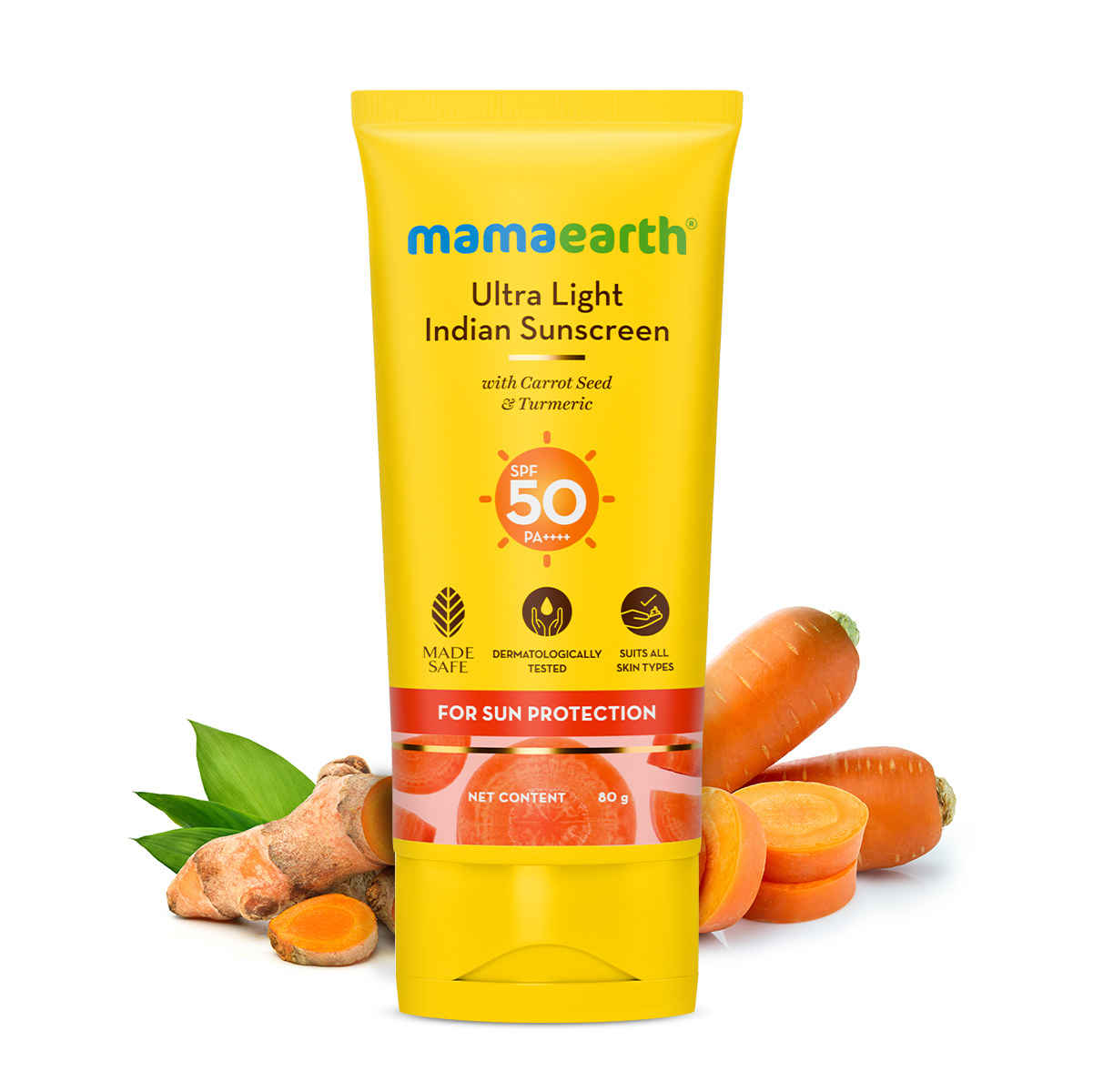
Mamaearth Ultra Light Indian Sunscreen with Carrot Seed Turmeric and SPF 50 PA+++ for Sun,tan Protection - 80 gm

Mamaearth Ultra Light Indian Sunscreen with Carrot Seed Turmeric and SPF 50 PA+++ for Sun,tan Protection - 80 gm
Mamaearth
mamaearth-ultra-light-indian-sunscreen-with-carrot-seed-turmeric-and-spf-50-pa-for-sun-tan-protection-80-gm
Suncare
10084765827365
Morning or Evening?
How often will you use this product?
Notes


Highlights
WHAT IS IT?
Sunscreen product with natural ingredients (Carrot Seed, Turmeric)
FEATURES
Provides up to 6 hours of UVA & UVB protection, moisturizes without patchiness, contains turmeric to treat tan and orange oil for better absorption, free from harmful toxins like paraben, mineral oil, silicone
BEST FOR
normal
CHECKS
No parabens, mineral oil, silicone
Who Is It For?
Unisex Adults Typical Usage Info Not Specific To Age RangeWhat Does It Help With?
Sun Protection Tan Removal Skin Glowing MoisturizingBudget
Mid-range ($30-$75)How To Use
Which routine should it be used in?
Instructions:
Key Information


What Mamaearth Says
Product Description:
Mamaearth's Ultra Light Indian Sunscreen with SPF 50 is specially curated for Indian skin tones. It provides upto 6 hours of protection against harsh UVA & UVB rays. It doesn't dry out your skin and keeps it moisturized without making it patchy. Natural ingredients such as turmeric treats tan and keeps your skin glowing whereas orange oil increases skin's ability to absorb the cream making it non oily. Mamaearth Ultra Light Indian Sunscreen is free from all harmful toxins such as paraben mineral oil silicone etc
About the Brand:
Ingredients Overview
Ingredients List
Aqua, Triheptanoin, Butyloctyl Salicylate, Titanium Dioxide, Alumina, Stearic Acid, Polyhydroxystearic Acid, Neopentyl Glycol Diheptanoate, Glyceryl Stearate Citrate, Parsol MCX, Avobenzone, Octocrylene, Propanediol, Glycerin, Glyceryl Monostearate, Dicaprylyl Carbonate, Silica, Butylene Glycol, Bemotrizinol, Cetostearyl Alcohol, Glyceryl Caprylate, Glyceryl Undecylenate, Carrot Seed Oil, Tetrahydrocurcumin (Turmeric), Acrylates/C10-30 Alkyl Acrylate Cross polymer, Acacia Senegal Gum, Xanthan Gum, Phospholipids, Sodium Hydroxide, Cananga Oil, Orange Oil
Key Ingredients
Carrot Seed, Turmeric, Orange Oil
Ingredients Details
Acacia Senegal Gum
Common Name(s): Acacia senegal gum,cosmetic active,functional ingredient
CAS Number: N/a
DESCRIPTION
What It Does: Delivers characteristic cosmetic function at recommended use concentration.
Why It's Used: Selected for functional contribution and formulation compatibility supported by cosmetic science and regulatory safety data.
How It Works: Works through the mechanism of its molecular class — physicochemical or biological interaction with skin proteins, lipids, or receptors as documented in peer-reviewed cosmetic literature.
Typically Found In: Skin care formulations
TECHNICAL DETAILS
Primary Category: Active ingredient – cosmetic active
Secondary Functions: Skin conditioning
Application Areas:

Facial Skincare

Body Care
Hair Care
Beard Care
Color Cosmetics (Makeup)
Dietary/Oral Supplements
Typical Concentration Range: 0.1%–10%
SOURCING & ETHICS
Vegan Status: Conditional
Halal Status: Yes
Source Notes: Commercially produced for cosmetic use. verify vegan/halal status with supplier.
SKIN COMPATIBILITY
Irritancy Rating: 1/5 – very low
Comedogenicity Rating: 0/5 – non-comedogenic
Sensitivity Concerns: Well-tolerated by most skin types.
Safe for Sensitive Skin: Yes
SAFETY & COMPATIBILITY
Safety Profile: Good safety profile at recommended concentrations. ewg score: 1–2.
Works Well With: Standard skincare actives
Avoid Combining With: No known significant incompatibilities
SCIENTIFIC NOTE
Acacia senegal gum has an established safety and efficacy profile within the cosmetic regulatory framework at standard use concentrations.
Last Verified: Cosing database,acacia senegal gum technical literature
Primary Sources: 2026-03-12
Alumina
Common Name(s): Alumina,cosmetic active,functional ingredient
CAS Number: N/a
DESCRIPTION
What It Does: Delivers characteristic cosmetic function at recommended use concentration.
Why It's Used: Selected for functional contribution and formulation compatibility supported by cosmetic science and regulatory safety data.
How It Works: Works through the mechanism of its molecular class as documented in peer-reviewed cosmetic literature.
Typically Found In: Skin care formulations
TECHNICAL DETAILS
Primary Category: Active ingredient – cosmetic active
Secondary Functions: Skin conditioning
Application Areas:
Facial Skincare
Body Care
Hair Care
Beard Care
Color Cosmetics (Makeup)
Dietary/Oral Supplements
Typical Concentration Range: 0.1%–10%
SOURCING & ETHICS
Vegan Status: Conditional
Halal Status: Yes
Source Notes: Commercially produced for cosmetic use. verify vegan/halal status with supplier.
SKIN COMPATIBILITY
Irritancy Rating: 1/5 – very low
Comedogenicity Rating: 0/5 – non-comedogenic
Sensitivity Concerns: Well-tolerated by most skin types.
Safe for Sensitive Skin: Yes
SAFETY & COMPATIBILITY
Safety Profile: Good safety profile at recommended concentrations. ewg score: 1–2.
Works Well With: Standard skincare actives
Avoid Combining With: No known significant incompatibilities
SCIENTIFIC NOTE
Alumina has an established safety profile within the cosmetic regulatory framework at standard use concentrations.
Last Verified: Cosing database,alumina technical literature
Primary Sources: 2026-03-12
Avobenzone
Common Name(s): Parsol 1789,avobenzone
DESCRIPTION
What It Does: Provides uva-i protection (340-400nm) critical for photoaging prevention — the only widely available chemical uva-i filter.
Why It's Used: The essential uva-i filter — avobenzone is the only commonly approved chemical filter providing protection in the photoaging-critical 340-400nm range essential for broad-spectrum sunscreen claims.
How It Works: Dibenzoylmethane chromophore absorbs uva-i (λmax 357nm, εmax ~36,000). photodegrades via photoisomerisation requiring photostabilisation (octocrylene, bemotrizinol) for durability.
Typically Found In: Broad-spectrum sunscreens,anti-aging spf products
TECHNICAL DETAILS
Primary Category: Active ingredient – chemical uva-i filter
Secondary Functions: Skin conditioning
Application Areas:
Facial Skincare
Body Care
Hair Care
Beard Care
Color Cosmetics (Makeup)
Dietary/Oral Supplements
Typical Concentration Range: Up to 5% (eu), 3% (us fda)
SOURCING & ETHICS
Vegan Status: Yes – synthetic
Halal Status: Yes
Source Notes: Commercially produced for cosmetic use. verify vegan/halal status with supplier.
SKIN COMPATIBILITY
Irritancy Rating: 1/5 – very low
Comedogenicity Rating: 0/5 – non-comedogenic
Sensitivity Concerns: Well-tolerated by most skin types.
Safe for Sensitive Skin: Yes
SAFETY & COMPATIBILITY
Safety Profile: Eu max 5%. fda: 3%. ewg score: 2. requires photostabilisation. photoallergy risk in some individuals.
Works Well With: Standard skincare actives
Avoid Combining With: No known significant incompatibilities
SCIENTIFIC NOTE
Avobenzone's photodegradation discovery drove development of photostabilisation technology — the period from avobenzone's 1978 introduction to development of effective photostabilisers in the 1990s was marked by sunscreens with inadequate uva durability. bemotrizinol (tinosorb s) development provided the most elegant solution by providing a photostable molecule with equivalent uva coverage.
Last Verified: Cosing database,fda uv filter otc monograph,shaath sunscreen photostabilisation review
Primary Sources: 2026-03-12
Butylene Glycol
Common Name(s): 1,3-butanediol,bg,1,3-butylene glycol
CAS Number: 107-88-0
DESCRIPTION
What It Does: Provides humectant hydration and active ingredient solubilization with excellent skin feel.
Why It's Used: Preferred glycol humectant in premium and k-beauty formulations for superior skin feel vs propylene glycol with equivalent functionality.
How It Works: Two hydroxyl groups at 1,3-positions provide water binding and solvent activity. better tolerated than propylene glycol with minimal sensitization risk. 4-carbon backbone provides slightly greater hydrophobic character enabling dissolution of less polar actives vs pg.
Typically Found In: Toners,essences,serums,k-beauty formulas
TECHNICAL DETAILS
Primary Category: Functional ingredient – glycol humectant
Secondary Functions: Tewl reduction,skin plumping
Application Areas:
Facial Skincare
Body Care
Hair Care
Beard Care
Color Cosmetics (Makeup)
Dietary/Oral Supplements
Typical Concentration Range: 1%–10%
SOURCING & ETHICS
Vegan Status: Yes – synthetic
Halal Status: Yes
Source Notes: Synthetic or naturally derived. excellent aqueous solubility.
SKIN COMPATIBILITY
Irritancy Rating: 1/5 – very low
Comedogenicity Rating: 0/5 – non-comedogenic
Sensitivity Concerns: Non-irritating; suitable for all skin types.
Safe for Sensitive Skin: Yes
SAFETY & COMPATIBILITY
Safety Profile: Excellent safety profile. ewg score: 1.
Works Well With: Ceramides,emollients,occlusives,glycerin,hyaluronic acid
Avoid Combining With: No significant incompatibilities
SCIENTIFIC NOTE
K-beauty's preference for butylene glycol over propylene glycol is driven by two factors: bg's superior skin feel (less tacky than pg's higher viscosity) and its lower sensitization potential (1,3-bg has better spatial distribution of hydroxyl groups that reduces protein interaction vs pg's 1,2-position oh groups).
Last Verified: Cosing database,cir safety assessment
Primary Sources: 2026-03-12
