
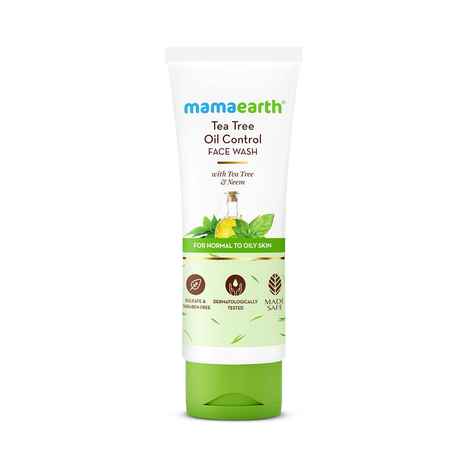

Mamaearth
Mamaearth Tea Tree Natural Face Wash For Acne & Pimples Wash (100 ml)

Mamaearth Tea Tree Natural Face Wash For Acne & Pimples Wash (100 ml)
Mamaearth
mamaearth-tea-tree-natural-face-wash-for-acne-pimples-wash-100-ml
Cleanse
10084842766629
Morning or Evening?
How often will you use this product?
Notes


Highlights
WHAT IS IT?
Face wash with multiple ingredients (exact count not specified)
FEATURES
SLS and Paraben free, removes skin tan, repairs sun damage, exfoliates dead skin cells, antioxidants protect and lighten skin tone, dermatologically tested, pH balanced, no harmful chemicals, leaves skin soft and smooth
BEST FOR
sensitive
CHECKS
No SLES, no sulfates, no phthalates, no artificial fragrances
Who Is It For?
Not Specifically Stated General Use For All Genders And Adult Age RangeWhat Does It Help With?
Acne Pimples Skin Tan Removal Sun Damage Repair Exfoliation Skin BrighteningBudget
Affordable (under $30)How To Use
Which routine should it be used in?
Instructions:
Key Information


What Mamaearth Says
Product Description:
Hi! I am Mamaearth's SLS and Paraben free Ubtan Face Wash for removing skin tan and giving you farer skin. Liquorice extract in me repairs sun damage while carrot oil removes tan from the upper layer of skin. I am enriched with walnut beads which exfoliate dead skin cells. Antioxidants in turmeric & saffron protect the skin cells from free radical damage and lighten the skin tone. Dermatologically tested and pH balanced, I gently take care of your skin. I leave skin soft and smooth and I do not contain any harmful chemicals like SLES, sulfates, phthalates and artificial fragrances
About the Brand:
Ingredients Overview
Ingredients List
Aqua, Sodium Lauroyl Sarcosinate, Disodium Cocoamphodiacetate, Glycerin, Sodium PCA, Neem Leaf Extract, Allantoin, Aloe Vera Extract, D Panthenol, Lavender Oil and Tea Tree Oil
Key Ingredients
Tea Tree, Neem, Liquorice extract, Carrot oil, Walnut beads, Turmeric, Saffron
Ingredients Details
Allantoin
Common Name(s): 5-ureidohydantoin,glyoxyldiureide,aluminum dihydroxy allantoinate
CAS Number: 97-59-6
DESCRIPTION
What It Does: Soothes irritation, accelerates wound healing, promotes skin cell renewal, and provides mild keratolytic exfoliation.
Why It's Used: Gold standard multi-function soothing active – one of the most widely used cosmetic ingredients across all product types for its exceptional tolerability and clinically proven multi-action skin conditioning.
How It Works: Promotes keratinocyte proliferation and fibroblast migration for wound healing. mild keratolytic activity by disrupting corneocyte binding. anti-irritant via direct protein binding and anti-inflammatory cytokine reduction. humectant activity via hydroxyl groups.
Typically Found In: Post-procedure products,sensitive skin formulas,wound care,anti-acne treatments,baby products
TECHNICAL DETAILS
Primary Category: Active ingredient – soothing / anti-inflammatory
Secondary Functions: Wound healing,keratolytic,anti-irritant
Application Areas:

Facial Skincare
Body Care

Hair Care
Beard Care
Color Cosmetics (Makeup)
Dietary/Oral Supplements
Typical Concentration Range: 0.1%–2%
SOURCING & ETHICS
Vegan Status: Conditional - feedstock declaration required
Halal Status: Unverified - feedstock declaration required (plant, animal and petrochemical routes all exist)
Source Notes: Plant-derived extract or synthetic. [audit 2026-07-29 rev2: origin-dependent: the same inci exists in plant, animal and petrochemical versions and the name does not discriminate. determination requires shariah-panel sign-off.]
SKIN COMPATIBILITY
Irritancy Rating: 1/5 – very low
Comedogenicity Rating: 0/5 – non-comedogenic
Sensitivity Concerns: Exceptionally well-tolerated; suitable for all skin types including baby and compromised skin.
Safe for Sensitive Skin: Yes – particularly recommended for sensitive skin
SAFETY & COMPATIBILITY
Safety Profile: Excellent safety profile. ewg score: 1.
Works Well With: Ceramides,panthenol,allantoin,hyaluronic acid,centella asiatica
Avoid Combining With: No significant incompatibilities
SCIENTIFIC NOTE
Allantoin's keratinocyte proliferation stimulation occurs via receptor-mediated signaling (possibly machr activation) rather than non-specific irritation-driven proliferation, making it a true wound-healing stimulant rather than a pro-inflammatory proliferative signal.
Last Verified: 2026-03-12
Primary Sources: Cosing database,cir safety assessment,araújo et al. allantoin review
Disodium Cocoamphodiacetate
Common Name(s): Dccda,sodium cocoamphoacetate
CAS Number: 68650-39-5
DESCRIPTION
What It Does: Provides gentle, low-irritation cleansing particularly suitable for eye area and baby products.
Why It's Used: Baby wash and eye-area cleanser primary surfactant for minimum-irritation cleansing at sensitive skin and eye contact areas.
How It Works: Amphoteric structure with lower cationicity than capb reduces positive charge-mediated protein binding. very low eye irritation in draize test. conditioning activity via residual cationic character interaction with keratin.
Typically Found In: Baby washes,eye makeup removers,gentle eye-area cleansers
TECHNICAL DETAILS
Primary Category: Functional ingredient – amphoteric mild surfactant
Secondary Functions: Skin conditioning
Application Areas:
Facial Skincare
Body Care
Hair Care
Beard Care
Color Cosmetics (Makeup)
Dietary/Oral Supplements
Typical Concentration Range: 2%–15%
SOURCING & ETHICS
Vegan Status: Conditional - supplier confirmation required
Halal Status: Unverified - supplier confirmation required
Source Notes: Commercially produced for cosmetic use. verify vegan/halal status with supplier. [audit 2026-07-29 rev2: the record's own source_notes does not assert a non-animal origin, or instructs the reader to verify with the supplier; "yes" asserts knowledge the record does not hold. determination requires shariah-panel sign-off.]
SKIN COMPATIBILITY
Irritancy Rating: 1/5 – very low
Comedogenicity Rating: 0/5 – non-comedogenic
Sensitivity Concerns: Well-tolerated by most skin types.
Safe for Sensitive Skin: Yes
SAFETY & COMPATIBILITY
Safety Profile: Good safety profile at recommended concentrations. ewg score: 1–2.
Works Well With: Standard skincare actives
Avoid Combining With: No known significant incompatibilities
SCIENTIFIC NOTE
Eye irritation testing (draize rabbit eye test and human volunteer eye sting test) demonstrates disodium cocoamphodiacetate has among the lowest irritation scores of any commercial surfactant, making it the preferred primary surfactant for 'no-more-tears' baby shampoo formulations and eye-area cleansers.
Last Verified: 2026-03-12
Primary Sources: Cosing database,cir safety assessment
Glycerin
Common Name(s): Glycerol,glycerine,1,2,3-propanetriol
CAS Number: 56-81-5
DESCRIPTION
What It Does: Glycerin pulls water from the environment and deeper skin layers into the outer skin layer (epidermis), boosting moisture levels and keeping skin soft, smooth, and plump.
Why It's Used: It is used in virtually every moisturizer, serum, and cleanser because it is highly effective at hydrating skin, is well-tolerated by all skin types, and enhances the texture and spreadability of formulations.
How It Works: As a humectant, glycerin forms hydrogen bonds with water molecules, trapping them in the skin. it also reinforces the skin barrier by integrating into lipid structures between skin cells.
Typically Found In: Moisturizers,serums,cleansers,toners,sheet masks,sunscreens,body lotions,shampoos,conditioners
TECHNICAL DETAILS
Primary Category: Humectant
Secondary Functions: Skin barrier support,emollient,solvent
Application Areas:
Facial Skincare
Body Care
Hair Care
Beard Care
Color Cosmetics (Makeup)
Dietary/Oral Supplements
Typical Concentration Range: 1%–30% (typical: 3–10%)
SOURCING & ETHICS
Vegan Status: Conditional - feedstock declaration required
Halal Status: Unverified - feedstock declaration required (plant, animal and petrochemical routes all exist)
Source Notes: Derived from plant oils via hydrolysis or saponification; synthetic versions also available. palm-derived glycerin carries sustainability concerns. [audit 2026-07-29 rev2: origin-dependent: the same inci exists in plant, animal and petrochemical versions and the name does not discriminate. determination requires shariah-panel sign-off.]
SKIN COMPATIBILITY
Irritancy Rating: 1/5 – very low; non-irritating at all standard concentrations
Comedogenicity Rating: 0/5 – non-comedogenic
Sensitivity Concerns: Extremely rare allergic reactions; generally safe for all skin types including sensitive and baby skin
Safe for Sensitive Skin: Yes
SAFETY & COMPATIBILITY
Safety Profile: Widely recognized as safe. ewg hazard score: 1. no significant concerns for irritation, sensitization, or toxicity at typical concentrations (up to 50%).
Works Well With: Hyaluronic acid,ceramides,niacinamide,panthenol,urea,peptides,retinol,ahas/bhas
Avoid Combining With: No known incompatibilities at standard concentrations
SCIENTIFIC NOTE
Glycerin is an endogenous skin component found naturally in the stratum corneum. aquaporin-3 channels in keratinocytes facilitate glycerin transport, making it integral to natural skin hydration pathways.
Last Verified: 2026-03-12
Primary Sources: Cosing database,cir safety assessment,ewg skin deep,inci decoder
Sodium Lauroyl Sarcosinate
Common Name(s): Sarcosyl nl,sodium laurylsarcosinate,sarcosinates
CAS Number: 137-16-6
DESCRIPTION
What It Does: Provides mild amino acid-derived cleansing with specific anti-caries activity in oral care applications.
Why It's Used: The oral care surfactant — sodium lauroyl sarcosinate provides mild foaming in toothpaste alongside documented anti-caries activity from sarcosinate's interaction with tooth enamel.
How It Works: N-methyl amino acid lauroyl amide provides mild anionic surfactancy from carboxylate head group. anti-caries via inhibition of plaque acid production by oral bacteria. foam in toothpaste provides mechanical cleaning delivery. milder than sls for oral mucous membrane compatibility.
Typically Found In: Toothpaste,mild cleansers,shampoos
TECHNICAL DETAILS
Primary Category: Functional ingredient – mild amino acid surfactant
Secondary Functions: Skin conditioning
Application Areas:
Facial Skincare
Body Care
Hair Care
Beard Care
Color Cosmetics (Makeup)
Dietary/Oral Supplements
Typical Concentration Range: 0.5%–3%
SOURCING & ETHICS
Vegan Status: Conditional - feedstock declaration required
Halal Status: Unverified - feedstock declaration required (plant, animal and petrochemical routes all exist)
Source Notes: Commercially produced for cosmetic use. verify vegan/halal status with supplier. [audit 2026-07-29 rev2: origin-dependent: the same inci exists in plant, animal and petrochemical versions and the name does not discriminate. determination requires shariah-panel sign-off.]
SKIN COMPATIBILITY
Irritancy Rating: 1/5 – very low
Comedogenicity Rating: 0/5 – non-comedogenic
Sensitivity Concerns: Well-tolerated by most skin types.
Safe for Sensitive Skin: Yes
SAFETY & COMPATIBILITY
Safety Profile: Good safety profile at recommended concentrations. ewg score: 1–2.
Works Well With: Standard skincare actives
Avoid Combining With: No known significant incompatibilities
SCIENTIFIC NOTE
Sodium lauroyl sarcosinate's anti-caries activity via plaque inhibition was discovered in the 1980s and is sufficiently documented that it's listed as an anticaries agent in some markets. the sarcosinate group (n-methylglycine amide) inhibits glucosyltransferase enzymes that synthesise the insoluble glucan matrix of dental plaque — inhibiting plaque adhesion, a complementary mechanism to fluoride's enamel strengthening.
Last Verified: