

Mamaearth
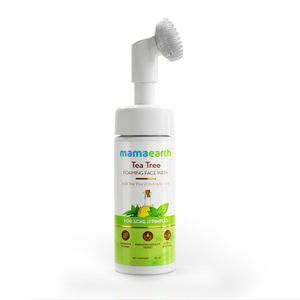
Mamaearth Tea Tree Foaming Face Wash with Tea Tree & Salicylic Acid for Acne & Pimples a 150 ml

Mamaearth Tea Tree Foaming Face Wash with Tea Tree & Salicylic Acid for Acne & Pimples a 150 ml
Mamaearth
mamaearth-tea-tree-foaming-face-wash-with-tea-tree-salicylic-acid-for-acne-pimples-aeu-150-ml
Cleanse
10084940644645
Morning or Evening?
How often will you use this product?
Notes


Highlights
WHAT IS IT?
Face wash with 4 main ingredients in variants
FEATURES
Antibacterial Tea Tree; Acne-fighting Salicylic Acid; Controls excess oil secretion; Clears pore congestion; Inbuilt silicone brush for application; Dermatologically tested; Free of Toxins, Parabens and Mineral Oils
BEST FOR
oily
CHECKS
Toxins, Parabens, Mineral Oils
Who Is It For?
Unspecified Age Range; Unspecified GenderWhat Does It Help With?
Acne Pimples Excess Oil Control Pore Congestion BacteriaBudget
Affordable (under ₹30 But Price Is ₹339 So Check Currency) - Price Is ₹339 Indian Rupees So Mid-range (₹250-₹750) In Inr TermsHow To Use
Which routine should it be used in?
Instructions:
Key Information


What Mamaearth Says
Product Description:
Acne-prone skin needs tender loving care. Say hello to your new BFF - Mamaearth Tea Tree Foaming Face Wash crafted with the antibacterial goodness of Tea Tree & acne-fighting benefits of Salicylic Acid. Together they clear pore congestion, fight bacteria, and control excess oil secretion. Acne and pimples wont stand a chance. Gentle and effective, this extremely hardworking face wash comes with an in-built silicone brush for easy application. Its gentle and at the same time enables deep penetration of the product for effective cleansing. Just pump, massage and wash! Dermatologically tested, the Tea Tree Foaming Face Wash has no harmful chemicals and is free of Toxins, Parabens, and Mineral Oils.
About the Brand:
Ingredients Overview
Ingredients List
Aqua, Cocamidopropyl Betaine, Disodium Cocoamphodiacetate, Decyl Glucoside, Sodium Lauroyl Sarcosinate, Glycerin, Polysorbate 20, Aloe Vera Extract, Tea Tree Oil, Sodium PCA, D- Panthenol, Cucumber Extract, Neem Oil, Citric Acid, Salicylic Acid, Disodium EDTA, Menthol, Sodium Benzoate, Potassium Sorbate and IFRA Certified Allergen Free Fragrance
Key Ingredients
Tea Tree, Salicylic Acid
Ingredients Details
Citric Acid
Common Name(s): Lemon acid,2-hydroxypropane-1,2,3-tricarboxylic acid
CAS Number: 77-92-9
DESCRIPTION
What It Does: Adjusts ph to optimal ranges, chelates destabilizing metal ions, provides mild exfoliation at higher concentrations.
Why It's Used: Universal cosmetic ph adjuster and chelating agent. aha exfoliant activity is secondary.
How It Works: As ph adjuster, donates protons. as chelating agent, three carboxylic groups bind divalent metals (ca²⁺, mg²⁺, fe²⁺) preventing oxidative degradation.
Typically Found In: Nearly all cosmetic formulations,brightening products,exfoliants
TECHNICAL DETAILS
Primary Category: Active ingredient – alpha hydroxy acid (aha)
Secondary Functions: Chelating agent,ph adjustment,preservation enhancement
Application Areas:

Facial Skincare
Body Care
Hair Care

Beard Care
Color Cosmetics (Makeup)
Dietary/Oral Supplements
Typical Concentration Range: 0.1%–10%
SOURCING & ETHICS
Vegan Status: Yes – synthetic or fermentation-derived
Halal Status: Yes
Source Notes: Produced by fermentation of sugars by aspergillus niger. gras (e330). most abundant organic acid in citrus.
SKIN COMPATIBILITY
Irritancy Rating: 1/5 – very low at low concentrations; 2/5 at exfoliant concentrations
Comedogenicity Rating: 0/5 – non-comedogenic
Sensitivity Concerns: Photosensitizing – mandatory spf use. start at low frequency.
Safe for Sensitive Skin: Use with caution – spf required
SAFETY & COMPATIBILITY
Safety Profile: Safe at otc concentrations. eu: ≤10% leave-on at ph ≥3.5. mandatory spf advisory.
Works Well With: Niacinamide,ceramides,hyaluronic acid,spf
Avoid Combining With: Retinol in same step; multiple exfoliants simultaneously
SCIENTIFIC NOTE
Three carboxylic acid groups provide multiple proton donation sites and stronger chelation than monocarboxylic ahas. this makes citric acid the preferred cosmetic chelating agent alongside edta.
Last Verified: Cosing database,cir safety assessment,ewg skin deep
Primary Sources: 2026-03-12
Cocamidopropyl Betaine
Common Name(s): Capb,cocoamidopropyl betaine,coconut betaine
CAS Number: 61789-40-0
DESCRIPTION
What It Does: Boosts foam, enhances mildness, and conditions skin and hair when combined with primary surfactants.
Why It's Used: The standard foam booster and mildness enhancer in virtually all shampoos, body washes, and facial cleansers – provides synergistic mildness improvement with anionic surfactants.
How It Works: Amphoteric (zwitterionic) character provides positive charge interaction with hair keratin for antistatic conditioning. reduces irritation of co-formulated anionic surfactants via ionic complex formation. foam stabilization via bilayer reinforcement in foam lamellae.
Typically Found In: Shampoos,body washes,facial cleansers,baby products
TECHNICAL DETAILS
Primary Category: Functional ingredient – amphoteric surfactant
Secondary Functions: Skin conditioning
Application Areas:
Facial Skincare
Body Care
Hair Care
Beard Care
Color Cosmetics (Makeup)
Dietary/Oral Supplements
Typical Concentration Range: 2%–15%
SOURCING & ETHICS
Vegan Status: Yes – from coconut fatty acids and dimethylaminopropylamine
Halal Status: Yes
Source Notes: Commercially produced for cosmetic use. verify vegan/halal status with supplier.
SKIN COMPATIBILITY
Irritancy Rating: 1/5 – very low
Comedogenicity Rating: 0/5 – non-comedogenic
Sensitivity Concerns: Well-tolerated by most skin types.
Safe for Sensitive Skin: Yes
SAFETY & COMPATIBILITY
Safety Profile: Good safety profile at recommended concentrations. ewg score: 1–2.
Works Well With: Standard skincare actives
Avoid Combining With: No known significant incompatibilities
SCIENTIFIC NOTE
Capb's mildness-enhancing synergy with sls has a molecular mechanism: capb's positive imidazoline head group forms an ion pair complex with sls's anionic sulfate group, reducing sls's free monomer concentration (the irritation-causing species) without significantly reducing micelle-forming capacity (the cleansing species).
Last Verified: Cosing database,ananthapadmanabhan surfactant review,cir safety assessment
Primary Sources: 2026-03-12
Cucumber Extract
Common Name(s): Cucumber extract,cucumber juice
DESCRIPTION
What It Does: Soothes and refreshes irritated skin with anti-inflammatory and astringent properties.
Why It's Used: Classic gentle soothing botanical for sensitive skin formulations with astringent, hydrating, and depuffing properties.
How It Works: Caffeic acid inhibits prostaglandin synthesis. cucurbitacins provide anti-inflammatory activity. high water content provides hydration. ascorbic acid provides antioxidant support. silica provides mild astringency.
Typically Found In: Toners,eye gels,sensitive skin products,after-sun formulations
TECHNICAL DETAILS
Primary Category: Active ingredient – soothing / anti-inflammatory
Secondary Functions: Gentle soothing,astringent,depuffing
Application Areas:
Facial Skincare
Body Care
Hair Care
Beard Care
Color Cosmetics (Makeup)
Dietary/Oral Supplements
Typical Concentration Range: 0.5%–20%
SOURCING & ETHICS
Vegan Status: Yes – plant-derived
Halal Status: Yes
Source Notes: Plant-derived extract or synthetic.
SKIN COMPATIBILITY
Irritancy Rating: 1/5 – very low
Comedogenicity Rating: 0/5 – non-comedogenic
Sensitivity Concerns: Non-irritating; ideal for reactive and sensitive skin.
Safe for Sensitive Skin: Yes – particularly recommended for sensitive skin
SAFETY & COMPATIBILITY
Safety Profile: Excellent safety profile. ewg score: 1.
Works Well With: Ceramides,panthenol,allantoin,hyaluronic acid,centella asiatica
Avoid Combining With: No significant incompatibilities
SCIENTIFIC NOTE
Cucumber's traditional use for puffy eyes has a physiological basis – the combination of mild astringency (silica-mediated protein contraction), anti-inflammatory (caffeic acid), and coolness (high water content evaporation) provides a triple-action depuffing effect that explains its enduring use.
Last Verified: Cosing database,cir safety assessment
Primary Sources: 2026-03-12
Decyl Glucoside
Common Name(s): Capryl glucoside,apg surfactant,alkyl polyglucoside
CAS Number: 68515-73-1
DESCRIPTION
What It Does: Provides gentle non-ionic cleansing from natural glucose-derived surfactant chemistry.
Why It's Used: Leading natural-origin surfactant for green/natural formulations requiring gentle, non-ionic cleansing with excellent biodegradability credentials.
How It Works: Non-ionic surfactant with glucoside headgroup and decyl (c10) chain provides mild cleansing via micelle formation. non-ionic character provides lower irritation potential than anionic surfactants. fully biodegradable and from renewable sources.
Typically Found In: Natural cleansers,baby products,green beauty formulas,scalp cleansers
TECHNICAL DETAILS
Primary Category: Functional ingredient – alkyl glucoside surfactant
Secondary Functions: Skin conditioning
Application Areas:
Facial Skincare
Body Care
Hair Care
Beard Care
Color Cosmetics (Makeup)
Dietary/Oral Supplements
Typical Concentration Range: 2%–20%
SOURCING & ETHICS
Vegan Status: Yes – from glucose (plant) and fatty alcohols
Halal Status: Yes
Source Notes: Commercially produced for cosmetic use. verify vegan/halal status with supplier.
SKIN COMPATIBILITY
Irritancy Rating: 1/5 – very low
Comedogenicity Rating: 0/5 – non-comedogenic
Sensitivity Concerns: Well-tolerated by most skin types.
Safe for Sensitive Skin: Yes
SAFETY & COMPATIBILITY
Safety Profile: Good safety profile at recommended concentrations. ewg score: 1–2.
Works Well With: Standard skincare actives
Avoid Combining With: No known significant incompatibilities
SCIENTIFIC NOTE
Alkyl glucosides' (apgs) non-ionic character means they have no electrical charge that could interact with skin surface proteins and phospholipids – a key reason for their exceptional mildness. ionic surfactants (sulfates, carboxylates) bind to positively charged protein lysine/arginine residues causing denaturation; apgs have no such binding affinity.
Last Verified: Cosing database,cir safety assessment
Primary Sources: 2026-03-12
