

Mamaearth
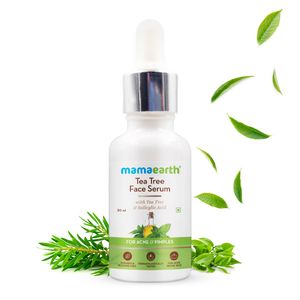
Mamaearth Tea Tree Face Serum With Tea Tree & Salicylic Acid For Acne & Pimples (30 ml)

Mamaearth Tea Tree Face Serum With Tea Tree & Salicylic Acid For Acne & Pimples (30 ml)
Mamaearth
mamaearth-tea-tree-face-serum-with-tea-tree-salicylic-acid-for-acne-pimples-30-ml
Serum
10084940513573
Morning or Evening?
How often will you use this product?
Notes


Highlights
WHAT IS IT?
Face Serum with 2 main ingredients
FEATURES
Controls oil, unclogs pores, kills bacteria, restores skin barrier, reduces acne marks, reverses pigmentation, lightweight, absorbs easily
BEST FOR
oily
CHECKS
Parabens, Mineral Oil, Silicones
Who Is It For?
What Does It Help With?
Acne Pimples Acne Marks PigmentationBudget
Mid-range ($30-$75)How To Use
Which routine should it be used in?
Instructions:
Key Information


What Mamaearth Says
Product Description:
Prevent acne breakouts and purify your skin with natures best! Its time to welcome clear, acne-free skin with Mamaearth Tea Tree Face Serum. Formulated with the goodness of Tea Tree Oil and the power of Salicylic Acid, the lightweight serum controls oil, gently unclogs pores and kills bacteria. It restores the skin's protective barrier to its optimum health leaving you with clear, acne-free skin. The powerful antioxidants in the serum help reduce acne marks and reverse UV triggered pigmentation leading to an even skin tone. Mamaearth Tea Tree Face Serum absorbs easily and is free of harmful toxins such as Parabens, Mineral Oil, Silicones, etc.
About the Brand:
Ingredients Overview
Ingredients List
Aqua, Methylpropanediol, Ethoxydiglycol, Polysorbate 20, Salicylic Acid, Licorice Extract, Hydroxyethyl Cellulose, Tea Tree Oil, Trisodium Ethylenediamine Disuccinate, Sodium Benzoate, Potassium Sorbate, Sodium Hydroxide & IFRA Certified Allergen Free Fragrance
Key Ingredients
Tea Tree Oil, Salicylic Acid
Ingredients Details
Ethoxydiglycol
Common Name(s): Ethoxydiglycol,glycol co-solvent,humectant formulation aid
CAS Number: N/a
DESCRIPTION
What It Does: Provides co-solvent and penetration enhancer in cosmetic formulations, improving active ingredient dissolution and product texture while delivering mild skin conditioning.
Why It's Used: Glycol solvents are essential for dissolving actives with limited water or oil solubility — the intermediate polarity of glycol ethers provides access to the wider solubility parameter space between pure water and oil phases.
How It Works: Hydroxyl and ether groups provide h-bonding for water miscibility; the organic chain provides compatibility with lipophilic actives. medium-chain glycols (c3–c6) provide the optimal balance of water compatibility, lipophilic active dissolution, and skin-compatible humectancy.
Typically Found In: Skin care formulations,co-solvent systems
TECHNICAL DETAILS
Primary Category: Functional ingredient – humectant
Secondary Functions: Tewl reduction,skin plumping
Application Areas:

Facial Skincare
Body Care
Hair Care

Beard Care
Color Cosmetics (Makeup)
Dietary/Oral Supplements
Typical Concentration Range: 1%–30%
SOURCING & ETHICS
Vegan Status: Yes
Halal Status: Yes
Source Notes: Synthetic or naturally derived. excellent aqueous solubility.
SKIN COMPATIBILITY
Irritancy Rating: 1/5 – very low
Comedogenicity Rating: 0/5 – non-comedogenic
Sensitivity Concerns: Non-irritating; suitable for all skin types.
Safe for Sensitive Skin: Yes
SAFETY & COMPATIBILITY
Safety Profile: Excellent safety profile. ewg score: 1.
Works Well With: Ceramides,emollients,occlusives,glycerin,hyaluronic acid
Avoid Combining With: No significant incompatibilities
SCIENTIFIC NOTE
Glycol ether co-solvents enhance sc penetration of co-applied actives by increasing their thermodynamic activity in the sc lipid phase — high thermodynamic activity (near saturation) drives diffusion by concentration gradient even when absolute concentration is low.
Last Verified: Cosing database,ethoxydiglycol glycol solvent review
Primary Sources: 2026-03-12
Licorice Extract
Common Name(s): Licorice triterpenoid,glycyrrhetinic acid active,anti-inflammatory brightening
CAS Number: N/a
DESCRIPTION
What It Does: Reduces skin inflammation and redness through 11β-hsd inhibition (cortisol-amplifying mechanism), inhibits tyrosinase and melanogenesis for brightening, and provides antioxidant protection from the triterpenoid phenol system.
Why It's Used: One of few botanicals with documented cortisone-amplifying anti-inflammatory mechanism — 11β-hsd inhibition elevates local cortisol concentration in skin tissue, providing a pharmaceutical-level anti-inflammatory effect without direct corticosteroid application.
How It Works: Glycyrrhetinic acid inhibits 11β-hydroxysteroid dehydrogenase (11β-hsd) — the enzyme that converts active cortisol to inactive cortisone in peripheral tissues. inhibition elevates local skin cortisol, amplifying the glucocorticoid anti-inflammatory response. simultaneously, glabridin (a flavonoid in licorice) inhibits tyrosinase for brightening.
Typically Found In: Anti-inflammatory,soothing,brightening
TECHNICAL DETAILS
Primary Category: Active ingredient – antioxidant
Secondary Functions: Free radical scavenging,anti-aging
Application Areas:
Facial Skincare
Body Care
Hair Care
Beard Care
Color Cosmetics (Makeup)
Dietary/Oral Supplements
Typical Concentration Range: 0.01%–2%
SOURCING & ETHICS
Vegan Status: Yes
Halal Status: Yes
Source Notes: Plant-derived extract or synthetic.
SKIN COMPATIBILITY
Irritancy Rating: 1/5 – very low
Comedogenicity Rating: 0/5 – non-comedogenic
Sensitivity Concerns: Non-irritating; well-tolerated.
Safe for Sensitive Skin: Yes
SAFETY & COMPATIBILITY
Safety Profile: Excellent safety profile. ewg score: 1.
Works Well With: Vitamin c,vitamin e,ferulic acid,spf,other antioxidants
Avoid Combining With: No significant incompatibilities
SCIENTIFIC NOTE
11β-hsd inhibition by glycyrrhetinic acid was first documented in the context of licorice consumption causing pseudoaldosteronism — the same enzyme inhibition applied topically provides localised cortisol amplification for cosmetic anti-inflammatory activity without systemic effects.
Last Verified: Cosing database,glycyrrhetinic acid 11β-hsd anti-inflammatory review
Primary Sources: 2026-03-12
Methylpropanediol
Common Name(s): 1,3-butylene glycol alternative,2-methyl-1,3-propanediol,proline-2-propanediol
CAS Number: 2163-42-0
DESCRIPTION
What It Does: Provides humectant and solvent functionality with improved skin feel vs butylene glycol.
Why It's Used: Premium humectant solvent with superior skin feel to conventional diols for elegant premium formulation textures.
How It Works: Branched c4 structure provides good humectant activity. branching reduces viscosity and stickiness vs linear propylene glycol. excellent solvent for challenging actives. antimicrobial boosting from diol structure.
Typically Found In: Premium serums,active delivery systems
TECHNICAL DETAILS
Primary Category: Functional ingredient – humectant
Secondary Functions: Tewl reduction,skin plumping
Application Areas:
Facial Skincare
Body Care
Hair Care
Beard Care
Color Cosmetics (Makeup)
Dietary/Oral Supplements
Typical Concentration Range: 1%–10%
SOURCING & ETHICS
Vegan Status: Yes – synthetic
Halal Status: Yes
Source Notes: Synthetic or naturally derived. excellent aqueous solubility.
SKIN COMPATIBILITY
Irritancy Rating: 1/5 – very low
Comedogenicity Rating: 0/5 – non-comedogenic
Sensitivity Concerns: Non-irritating; suitable for all skin types.
Safe for Sensitive Skin: Yes
SAFETY & COMPATIBILITY
Safety Profile: Excellent safety profile. ewg score: 1.
Works Well With: Ceramides,emollients,occlusives,glycerin,hyaluronic acid
Avoid Combining With: No significant incompatibilities
SCIENTIFIC NOTE
Methylpropanediol's methyl branch provides a 25% reduction in dynamic viscosity vs linear butylene glycol at equivalent concentration — a physically measurable skin feel improvement from the branching's reduction of intermolecular attractive forces. this viscosity reduction translates directly to the 'less sticky, lighter' skin feel that premium formulations require.
Last Verified: Cosing database,cir safety assessment
Primary Sources: 2026-03-12
Polysorbate 20
Common Name(s): Tween 20,poe(20) sorbitan monolaurate
CAS Number: 9005-64-5
DESCRIPTION
What It Does: Solubilizes fragrance oils and other lipophilic ingredients into water-based formulations.
Why It's Used: Standard fragrance solubilizer for water-based formulations – the industry standard for incorporating oil-soluble fragrances and actives into aqueous systems without separate oil phase.
How It Works: Hlb ~16.7 provides strong solubilization capacity for oils in water. laurate (c12) chain provides milder skin interaction than higher-hlb polysorbates. polyoxyethylene chains (20 eo units) provide high water solubility. effective solubilizer at 3-4:1 polysorbate:fragrance ratio.
Typically Found In: Toners,micellar waters,fragrance-containing aqueous products
TECHNICAL DETAILS
Primary Category: Functional ingredient – sorbitan ester emulsifier/solubilizer
Secondary Functions: Skin conditioning
Application Areas:
Facial Skincare
Body Care
Hair Care
Beard Care
Color Cosmetics (Makeup)
Dietary/Oral Supplements
Typical Concentration Range: 0.5%–5%
SOURCING & ETHICS
Vegan Status: Conditional – sorbitol from plant, peg from petroleum
Halal Status: Yes
Source Notes: Commercially produced for cosmetic use. verify vegan/halal status with supplier.
SKIN COMPATIBILITY
Irritancy Rating: 1/5 – very low
Comedogenicity Rating: 0/5 – non-comedogenic
Sensitivity Concerns: Well-tolerated by most skin types.
Safe for Sensitive Skin: Yes
SAFETY & COMPATIBILITY
Safety Profile: Same peg 1,4-dioxane concern as all peg compounds. quality-grade ps-20 should be tested for impurities.
Works Well With: Standard skincare actives
Avoid Combining With: No known significant incompatibilities
SCIENTIFIC NOTE
Polysorbate 20's optimal solubilization ratio (3-4 parts ps-20 per part fragrance oil) is lower than expected from pure hlb theory. this efficiency arises from polysorbate's formation of very small, stable oil-in-water microemulsions (droplets <50nm) rather than conventional emulsions, providing optically clear, thermodynamically stable fragrance incorporation that conventional emulsifiers cannot achieve.
Last Verified: Cosing database,cir safety assessment
Primary Sources: 2026-03-12
