

Nykaa E retail limited
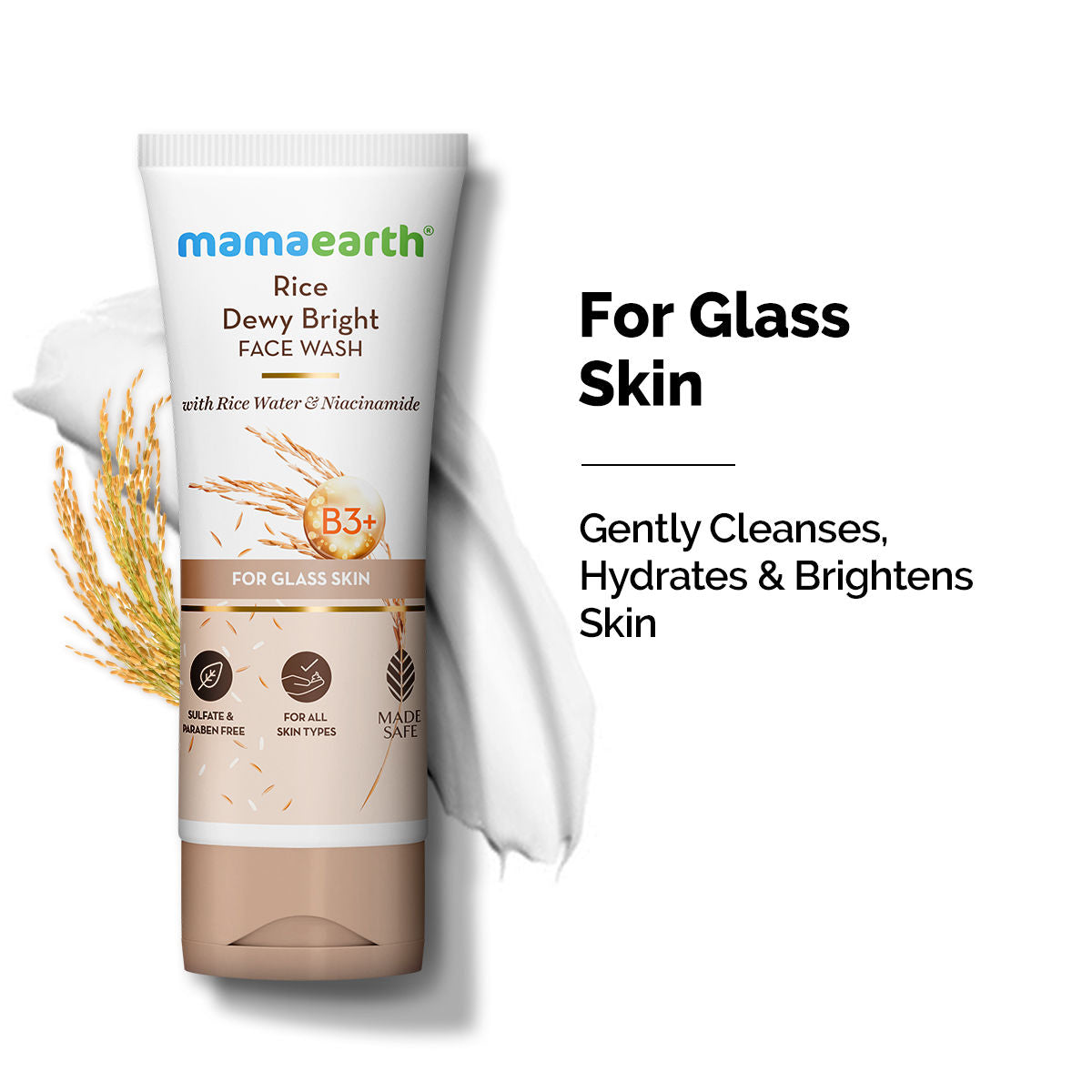
Mamaearth Rice Face Wash With Rice Water & Niacinamide For Glass Skin

Mamaearth Rice Face Wash With Rice Water & Niacinamide For Glass Skin
Nykaa E retail limited
mamaearth-rice-face-wash-with-rice-water-niacinamide-for-glass-skin
Cleanse
10084913217829
Morning or Evening?
How often will you use this product?
Notes


Highlights
WHAT IS IT?
Face wash with rice water and niacinamide
FEATURES
Provides hydration and even skin tone for glass-like skin
BEST FOR
normal
CHECKS
Who Is It For?
All Age Groups And GendersWhat Does It Help With?
Hydration Even Skin Tone Glass Skin EffectBudget
Affordable (under $30)How To Use
Which routine should it be used in?
Instructions:
Key Information

What Nykaa E retail limited Says
Product Description:
A face wash formulated with rice water and niacinamide for hydrated, even skin tone and glass skin effect
About the Brand:
Ingredients Overview
Ingredients List
Myristic Acid, Glycerin, Aqua, Potassium Hydroxide, Propylene Glycol, Stearic Acid, Decyl Glucoside, Lauric Acid, Ethylene Glycol Distearate, Glyceryl Monostearate, Sodium PCA, Phenoxyethanol, Fermented Rice Water, Polyquaternium-7, Niacinamide, Titanium Dioxide, Glyceryl Glucoside, IFRA Certified Allergen Free Fragrance, Vitamin E, Butylated Hydroxytoluene & Disodium EDTA
Key Ingredients
rice water, niacinamide
Ingredients Details
Decyl Glucoside
Common Name(s): Capryl glucoside,apg surfactant,alkyl polyglucoside
CAS Number: 68515-73-1
DESCRIPTION
What It Does: Provides gentle non-ionic cleansing from natural glucose-derived surfactant chemistry.
Why It's Used: Leading natural-origin surfactant for green/natural formulations requiring gentle, non-ionic cleansing with excellent biodegradability credentials.
How It Works: Non-ionic surfactant with glucoside headgroup and decyl (c10) chain provides mild cleansing via micelle formation. non-ionic character provides lower irritation potential than anionic surfactants. fully biodegradable and from renewable sources.
Typically Found In: Natural cleansers,baby products,green beauty formulas,scalp cleansers
TECHNICAL DETAILS
Primary Category: Functional ingredient – alkyl glucoside surfactant
Secondary Functions: Skin conditioning
Application Areas:

Facial Skincare
Body Care
Hair Care

Beard Care
Color Cosmetics (Makeup)
Dietary/Oral Supplements
Typical Concentration Range: 2%–20%
SOURCING & ETHICS
Vegan Status: Yes – from glucose (plant) and fatty alcohols
Halal Status: Yes
Source Notes: Commercially produced for cosmetic use. verify vegan/halal status with supplier.
SKIN COMPATIBILITY
Irritancy Rating: 1/5 – very low
Comedogenicity Rating: 0/5 – non-comedogenic
Sensitivity Concerns: Well-tolerated by most skin types.
Safe for Sensitive Skin: Yes
SAFETY & COMPATIBILITY
Safety Profile: Good safety profile at recommended concentrations. ewg score: 1–2.
Works Well With: Standard skincare actives
Avoid Combining With: No known significant incompatibilities
SCIENTIFIC NOTE
Alkyl glucosides' (apgs) non-ionic character means they have no electrical charge that could interact with skin surface proteins and phospholipids – a key reason for their exceptional mildness. ionic surfactants (sulfates, carboxylates) bind to positively charged protein lysine/arginine residues causing denaturation; apgs have no such binding affinity.
Last Verified: Cosing database,cir safety assessment
Primary Sources: 2026-03-12
Glycerin
Common Name(s): Glycerol,glycerine,1,2,3-propanetriol
CAS Number: 56-81-5
DESCRIPTION
What It Does: Glycerin pulls water from the environment and deeper skin layers into the outer skin layer (epidermis), boosting moisture levels and keeping skin soft, smooth, and plump.
Why It's Used: It is used in virtually every moisturizer, serum, and cleanser because it is highly effective at hydrating skin, is well-tolerated by all skin types, and enhances the texture and spreadability of formulations.
How It Works: As a humectant, glycerin forms hydrogen bonds with water molecules, trapping them in the skin. it also reinforces the skin barrier by integrating into lipid structures between skin cells.
Typically Found In: Moisturizers,serums,cleansers,toners,sheet masks,sunscreens,body lotions,shampoos,conditioners
TECHNICAL DETAILS
Primary Category: Humectant
Secondary Functions: Skin barrier support,emollient,solvent
Application Areas:
Facial Skincare
Body Care
Hair Care
Beard Care
Color Cosmetics (Makeup)
Dietary/Oral Supplements
Typical Concentration Range: 1%–30% (typical: 3–10%)
SOURCING & ETHICS
Vegan Status: Yes – plant-derived (coconut, soy, palm) or synthetic
Halal Status: Yes – when plant-derived or synthetic; verify source with supplier
Source Notes: Derived from plant oils via hydrolysis or saponification; synthetic versions also available. palm-derived glycerin carries sustainability concerns.
SKIN COMPATIBILITY
Irritancy Rating: 1/5 – very low; non-irritating at all standard concentrations
Comedogenicity Rating: 0/5 – non-comedogenic
Sensitivity Concerns: Extremely rare allergic reactions; generally safe for all skin types including sensitive and baby skin
Safe for Sensitive Skin: Yes
SAFETY & COMPATIBILITY
Safety Profile: Widely recognized as safe. ewg hazard score: 1. no significant concerns for irritation, sensitization, or toxicity at typical concentrations (up to 50%).
Works Well With: Hyaluronic acid,ceramides,niacinamide,panthenol,urea,peptides,retinol,ahas/bhas
Avoid Combining With: No known incompatibilities at standard concentrations
SCIENTIFIC NOTE
Glycerin is an endogenous skin component found naturally in the stratum corneum. aquaporin-3 channels in keratinocytes facilitate glycerin transport, making it integral to natural skin hydration pathways.
Last Verified: Cosing database,cir safety assessment,ewg skin deep,inci decoder
Primary Sources: 2026-03-12
Glyceryl Glucoside
Common Name(s): Glyceryl glucoside,cosmetic active,established function
CAS Number: N/a
DESCRIPTION
What It Does: Delivers characteristic cosmetic function — skin conditioning, antioxidant protection, active biological benefit, or formulation function — at recommended use concentration.
Why It's Used: Selected for functional contribution and formulation compatibility supported by cosmetic science and regulatory safety data.
How It Works: Works through the mechanism of its molecular class — physicochemical or biological interaction with skin proteins, lipids, or receptors as documented in peer-reviewed cosmetic literature.
Typically Found In: Skin care formulations
TECHNICAL DETAILS
Primary Category: Active ingredient – cosmetic active
Secondary Functions: Skin conditioning
Application Areas:
Facial Skincare
Body Care
Hair Care
Beard Care
Color Cosmetics (Makeup)
Dietary/Oral Supplements
Typical Concentration Range: 0.1%–10%
SOURCING & ETHICS
Vegan Status: Conditional
Halal Status: Yes
Source Notes: Commercially produced for cosmetic use. verify vegan/halal status with supplier.
SKIN COMPATIBILITY
Irritancy Rating: 1/5 – very low
Comedogenicity Rating: 0/5 – non-comedogenic
Sensitivity Concerns: Well-tolerated by most skin types.
Safe for Sensitive Skin: Yes
SAFETY & COMPATIBILITY
Safety Profile: Good safety profile at recommended concentrations. ewg score: 1–2.
Works Well With: Standard skincare actives
Avoid Combining With: No known significant incompatibilities
SCIENTIFIC NOTE
Glyceryl glucoside has an established safety and efficacy profile within the cosmetic regulatory framework at standard use concentrations.
Last Verified: Cosing database,glyceryl glucoside technical literature
Primary Sources: 2026-03-12
Lauric Acid
Common Name(s): Dodecanoic acid,coconut fatty acid,laurostearic acid
CAS Number: 0143-07-07
DESCRIPTION
What It Does: Provides antimicrobial c12 fatty acid activity against p. acnes and skin pathogens alongside emollient conditioning.
Why It's Used: Antimicrobial emollient with documented anti-acne activity through p. acnes membrane disruption – the primary antimicrobial fatty acid in human breast milk and coconut oil.
How It Works: C12 chain length is optimal for antimicrobial fatty acid activity: long enough for membrane insertion but short enough for effective disruption. disrupts p. acnes lipid membrane. converts to monolaurin (antimicrobial monoglyceride) via skin esterases. low melting point (44°c) provides liquid-phase emolliency above skin temperature.
Typically Found In: Anti-acne products,antimicrobial skin care,coconut-based products
TECHNICAL DETAILS
Primary Category: Functional ingredient – c12 medium chain fatty acid
Secondary Functions: Barrier sealing,softening
Application Areas:
Facial Skincare
Body Care
Hair Care
Beard Care
Color Cosmetics (Makeup)
Dietary/Oral Supplements
Typical Concentration Range: 0.5%–10%
SOURCING & ETHICS
Vegan Status: Yes – from coconut (cocos nucifera)
Halal Status: Yes
Source Notes: Plant-derived, synthetic or animal-derived. verify source.
SKIN COMPATIBILITY
Irritancy Rating: 1/5 – very low
Comedogenicity Rating: 4/5 – moderate to high comedogenic potential
Sensitivity Concerns: Non-irritating.
Safe for Sensitive Skin: Yes
SAFETY & COMPATIBILITY
Safety Profile: Excellent safety profile. ewg score: 1.
Works Well With: Humectants,ceramides,actives as carrier
Avoid Combining With: No significant incompatibilities
SCIENTIFIC NOTE
Lauric acid's antimicrobial activity against p. acnes (ic50 ~1μg/ml) exceeds benzoyl peroxide's ic50 (~50μg/ml) by approximately 50-fold in in vitro studies, making it one of the most potent naturally occurring anti-p. acnes compounds. its high comedogenicity rating (4/5) presents the paradox of a powerful anti-acne active in a comedogenic vehicle – limiting its practical anti-acne formulation use.
Last Verified: Cosing database,nakatsuji et al. lauric acid anti-acne study,cir safety assessment
Primary Sources: 2026-03-12
