

Mamaearth
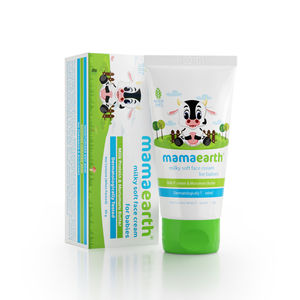
Mamaearth Milky Soft Baby Face Cream With Muru Muru Butter (60 gm)

Mamaearth Milky Soft Baby Face Cream With Muru Muru Butter (60 gm)
Mamaearth
mamaearth-milky-soft-baby-face-cream-with-muru-muru-butter-60-gm
Moisturize
10084939956517
Morning or Evening?
How often will you use this product?
Notes


Highlights
WHAT IS IT?
Face Cream, multiple key ingredients mentioned
FEATURES
Moisturizes baby's delicate skin, protects from dryness by forming a skin barrier; Contains almond oil, murumuru butter, milk protein; Soothes delicate skin; Improves skin texture; Provides relief from eczema, chapped, dry and itchy skin; Dermatologically tested; pH balanced; Free from harmful chemicals like SLS, paraben, sulfate, mineral oil, pegs, phthalates, artificial fragrances.
BEST FOR
sensitive
CHECKS
Contains no sls, paraben, sulfate, mineral oil, pegs, phthalates, or artificial fragrances
Who Is It For?
Babies; Gender Not SpecifiedWhat Does It Help With?
Dryness Eczema Chapped Skin Itchy Skin Delicate Skin CareBudget
Affordable (under $30)How To Use
Which routine should it be used in?
Instructions:
Key Information


What Mamaearth Says
Product Description:
Hi! I am mamaearth's milky soft face cream. With the goodness of almond oil and murumuru butter, I moisturize baby's delicate skin and protect it from dryness by forming a skin barrier. Milk protein in me locks in the moisture and soothes baby's delicate skin. Shea and cocoa butter improve skin texture by providing relief from eczema, chapped, dry and itchy skin. I am dermatologically tested, pH balanced and contain no harmful chemicals like SLS, paraben, sulfate, mineral oil, PEGs, phthalates or artificial fragrances.
About the Brand:
Ingredients Overview
Ingredients List
Aqua,Propanediol, Vegetable Glycerin, Isopropyl Myristate, Glyceryl Monostearate, Cetyl Stearyl Alcohol
Key Ingredients
almond oil,murumuru butter,milk protein,shea butter,cocoa butter
Ingredients Details
Isopropyl Myristate
Common Name(s): Ipm,isopropyl tetradecanoate
CAS Number: 110-27-0
DESCRIPTION
What It Does: Provides dry, non-greasy emolliency with spreading and penetration enhancement from an ester vehicle.
Why It's Used: Standard ester emollient for dry-touch formulations requiring spreading enhancement and non-greasy after-feel.
How It Works: Isopropyl ester of myristic acid provides low viscosity (4-5 cp) and low surface tension for excellent spreading. penetration enhancement via temporary stratum corneum lipid disruption. dry skin feel from rapid absorption without occlusive film.
Typically Found In: Dry-touch lotions,penetration-enhanced products,light skin care
TECHNICAL DETAILS
Primary Category: Functional ingredient – ester emollient
Secondary Functions: Barrier sealing,softening
Application Areas:

Facial Skincare
Body Care
Hair Care

Beard Care
Color Cosmetics (Makeup)
Dietary/Oral Supplements
Typical Concentration Range: 1%–10%
SOURCING & ETHICS
Vegan Status: Yes – from isopropyl alcohol and myristic acid (vegetable)
Halal Status: Yes
Source Notes: Plant-derived, synthetic or animal-derived. verify source.
SKIN COMPATIBILITY
Irritancy Rating: 1/5 – very low
Comedogenicity Rating: 3/5 – moderate comedogenic potential
Sensitivity Concerns: Non-irritating.
Safe for Sensitive Skin: Yes
SAFETY & COMPATIBILITY
Safety Profile: Excellent safety profile. ewg score: 1.
Works Well With: Humectants,ceramides,actives as carrier
Avoid Combining With: No significant incompatibilities
SCIENTIFIC NOTE
Ipm's dry-touch emolliency arises from rapid penetration into the stratum corneum leaving no surface film – unlike occlusive oils that remain on the surface, ipm is quickly absorbed, providing conditioning from within the barrier without leaving greasy residue. this 'self-disappearing' emolliency made ipm revolutionary when introduced in cosmetics in the 1950s.
Last Verified: Cosing database,cir safety assessment
Primary Sources: 2026-03-12
Propanediol
Common Name(s): 1,3-propanediol,zemea,bio-propanediol
CAS Number: 504-63-2
DESCRIPTION
What It Does: Provides humectant and solvent functionality from sustainable corn-based fermentation.
Why It's Used: Bio-based propylene glycol alternative from renewable corn — propanediol provides equivalent functionality to propylene glycol with sustainable renewable feedstock and superior skin feel.
How It Works: Two oh groups provide humectant water binding. excellent solvent for fragrances, actives, and preservatives. mild antimicrobial from diol structure for preservative system boosting. renew corn fermentation origin (dupont zemea process). better skin feel than propylene glycol — less sticky.
Typically Found In: Virtually all cosmetic categories as pg alternative
TECHNICAL DETAILS
Primary Category: Functional ingredient – humectant
Secondary Functions: Tewl reduction,skin plumping
Application Areas:
Facial Skincare
Body Care
Hair Care
Beard Care
Color Cosmetics (Makeup)
Dietary/Oral Supplements
Typical Concentration Range: 1%–20%
SOURCING & ETHICS
Vegan Status: Yes – from corn sugar fermentation
Halal Status: Yes
Source Notes: Synthetic or naturally derived. excellent aqueous solubility.
SKIN COMPATIBILITY
Irritancy Rating: 1/5 – very low
Comedogenicity Rating: 0/5 – non-comedogenic
Sensitivity Concerns: Non-irritating; suitable for all skin types.
Safe for Sensitive Skin: Yes
SAFETY & COMPATIBILITY
Safety Profile: Excellent safety profile. ewg score: 1.
Works Well With: Ceramides,emollients,occlusives,glycerin,hyaluronic acid
Avoid Combining With: No significant incompatibilities
SCIENTIFIC NOTE
Propanediol's dupont tate & lyle bio products 'zemea' process ferments corn sugar to 1,3-propanediol using engineered e. coli — one of the first commercially viable bio-fermentation routes to a cosmetic diol previously made only from petroleum. the renewable route produces chemically identical 1,3-propanediol while reducing carbon footprint by approximately 40% vs petrochemical synthesis.
Last Verified: Cosing database,dupont tate & lyle zemea technical data,cir safety assessment
Primary Sources: 2026-03-12
Vegetable Glycerin
Common Name(s): Vegetable glycerol,plant-derived glycerin,sustainable glycerin
CAS Number: 56-81-5
DESCRIPTION
What It Does: Provides plant-derived glycerin humectancy with explicit vegan natural credentials.
Why It's Used: Credentialed natural humectant — vegetable glycerin's explicit plant origin provides the clean beauty and vegan credentials alongside glycerin's unmatched humectancy, safety, and barrier repair for natural cosmetic positioning.
How It Works: Glycerin (glycerol) from plant oil triglyceride hydrolysis during biodiesel production. chemically identical to synthetic glycerin but with plant-origin documentation. sustainable byproduct of renewable biodiesel production from rapeseed, soy, or palm.
Typically Found In: Natural cosmetics,vegan products,clean beauty — identical function to standard glycerin
TECHNICAL DETAILS
Primary Category: Functional ingredient – humectant
Secondary Functions: Tewl reduction,skin plumping
Application Areas:
Facial Skincare
Body Care
Hair Care
Beard Care
Color Cosmetics (Makeup)
Dietary/Oral Supplements
Typical Concentration Range: 1%–40%
SOURCING & ETHICS
Vegan Status: Yes – explicitly from plant sources (biodiesel byproduct)
Halal Status: Yes
Source Notes: Synthetic or naturally derived. excellent aqueous solubility.
SKIN COMPATIBILITY
Irritancy Rating: 2026-01-05 00:00:00 -0800
Comedogenicity Rating: 0/5
Sensitivity Concerns: Non-irritating; suitable for all skin types.
Safe for Sensitive Skin: Yes
SAFETY & COMPATIBILITY
Safety Profile: Excellent safety profile. ewg score: 1.
Works Well With: Ceramides,emollients,occlusives,glycerin,hyaluronic acid
Avoid Combining With: No significant incompatibilities
SCIENTIFIC NOTE
Vegetable glycerin's biodiesel byproduct origin provides circular economy sustainability: biodiesel production from plant triglycerides generates glycerin as a co-product (approximately 10% by mass of biodiesel). this abundant sustainable supply from renewable feedstocks makes vegetable glycerin one of cosmetics' most genuinely sustainable primary ingredients.
Last Verified: Cosing database,cir safety assessment
Primary Sources: 2026-03-12
