

Mamaearth
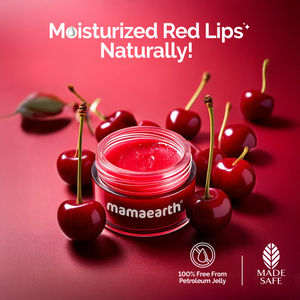
Mamaearth Cherry Moisture Therapy Lip Balm for Dry & Chapped Lips- 15 gm

Mamaearth Cherry Moisture Therapy Lip Balm for Dry & Chapped Lips- 15 gm
Mamaearth
mamaearth-cherry-moisture-therapy-lip-balm-for-dry-chapped-lips-15-gm
Lip care
10084987240741
Morning or Evening?
How often will you use this product?
Notes


Highlights
WHAT IS IT?
Lip Balm with 90% naturally-derived ingredients
FEATURES
Heals dry and chapped lips, moisturizes deeply, contains Vitamin E and Shea Butter for hydration and nourishment, Kojic Acid reduces pigmentation, Cherry Extract brightens lips, improves texture, tackles fine lines & wrinkles, leaves a glossy sheer red tint, free from petroleum jelly, SLS/SLES, Parabens, Mineral Oil and Silicones
BEST FOR
dry
CHECKS
No petroleum jelly, No SLS/SLES, No Parabens, No Mineral Oil, No Silicones
Who Is It For?
Unisex All AgesWhat Does It Help With?
Dry Lips Chapped Lips Pigmentation Fine Lines Wrinkles Lip Brightening Improving TextureBudget
Affordable (under $30)How To Use
Which routine should it be used in?
Instructions:
Key Information


What Mamaearth Says
Product Description:
Warning this lip balm may cause excessive smilingIntroducing Mamaearth Cherry Moisture Therapy Lip Balm a cherrylicious delight with 90 naturallyderived ingredients. It heals dry & chapped lips by wrapping them in a velvety soft blanket of moisture giving you that perfect smile. It&aposs like a spa but for your lips Vitamin E and Shea Butter restore hydration & offer deep nourishment while Kojic Acid reduces pigmentation. And the cherry on top Well its Cherry Rich in Vitamin C Cherry Extract brightens lips improves texture and tackles fine lines & wrinkles leaving a glossy sheer red tint.Pure lip care thats as natural as it is nourishing Mamaearth Cherry Moisture Therapy Lip Balm is Made Safe Approved & 100 free from petroleum jelly so no harsh chemicals like SLSSLES Parabens Mineral Oil and Silicones just a sweet fruity treat for your lipsP.S. Heads up This lip balm will soon find a place in your bag on the nightstand office desk and everywhere you go.
About the Brand:
Ingredients Overview
Ingredients List
Helianthus Annuus (Sunflower) Seed Oil, Cera Alba, Capric/Caprylic Triglyceride,Butyrospermum Parkii (Shea) Butter, Helianthus Annuus (Sunflower) Seed Wax,Cocos Nucifera (Coconut Oil), C18-30 Acid Glycol Ester, Hydrogenated Vegetableglycerides, Prunus Amygdalus Dulcis (Sweet Almond) Oil, Flavour, Ricinus Communis (Castor) Seed Oil, Ci No – 10116, Pentaerythrityltetra-Di-T-Butyl Hydroxyhydrocinnamate, Ceramide, Kojic Dipalmitate, Prunusavium (Sweet Cherry) Fruit Extract & Tocopheryl Acetate (Vitamin E)
Key Ingredients
Vitamin-E, Shea-Butter, Kojic-Acid, Cherry-Extract
Ingredients Details
C18-30 Acid Glycol Ester
Common Name(s): C18-30 acid glycol ester
DESCRIPTION
What It Does: Loosens corneocyte adhesion in the stratum corneum, accelerating cell turnover, refining skin texture, and improving radiance.
Why It's Used: Organic acids at cosmetic ph values provide controlled keratolytic exfoliation that improves skin texture, pore appearance, and radiance without mechanical irritation.
How It Works: At appropriate ph, the acid's undissociated form penetrates the stratum corneum and dissolves the ionic bonds between corneocyte desmosomes (calcium chelation mechanism), facilitating controlled desquamation and cell renewal.
Typically Found In: Toners,exfoliants,serums,peels,cleansers
TECHNICAL DETAILS
Primary Category: Exfoliants
Secondary Functions: Brightening,keratolytic
Application Areas:

Facial Skincare

Body Care
Hair Care
Beard Care
Color Cosmetics (Makeup)
Dietary/Oral Supplements
Typical Concentration Range: 0.5–20%
SOURCING & ETHICS
Vegan Status: Yes
Halal Status: Yes
Source Notes: Synthetic or plant-derived acid; no animal components.
SKIN COMPATIBILITY
Irritancy Rating: 2
Comedogenicity Rating: 0
Sensitivity Concerns: May cause irritation or stinging in sensitive or barrier-compromised skin at high concentrations; patch test recommended.
Safe for Sensitive Skin: Conditional
SAFETY & COMPATIBILITY
Safety Profile: Safe within recommended ph and concentration ranges. sensitization risk increases above 10% aha. patch test recommended for sensitive skin. mildly irritating to some individuals at typical cosmetic use concentrations.
Works Well With: Niacinamide,hyaluronic acid,ceramides,vitamin c
Avoid Combining With: High concentrations on sensitive/broken skin; avoid with physical exfoliants
SCIENTIFIC NOTE
Cosmetic acids function at the pka boundary: only the undissociated acid (rcooh) penetrates the stratum corneum lipid barrier, while the ionized carboxylate (rcoo⁻) does not. the henderson-hasselbalch equation governs the fraction of active species at formulation ph; typically 0.5–3.0% undissociated acid provides efficacy while minimizing irritation.
Last Verified: Cosing eu database; pcpc cosmetic ingredient safety reviews; ingredient-specific safety and efficacy literature
Primary Sources: 2025-01-15
Cera Alba
Common Name(s): Cera alba,beeswax,structuring wax occlusive emollient
CAS Number: N/a
DESCRIPTION
What It Does: Structures lip balms and anhydrous formulations through the wax crystal network, provides occlusive barrier protection reducing tewl, and conditions skin with the emollient fatty acids and esters in the wax composition.
Why It's Used: Beeswax as a traditional wax has both structure and emollient function from its complex wax ester (c32-c36) composition.
How It Works: Beeswax forms a crystalline wax network above its melting point (beeswax ~62°c; carnauba ~83°c; candelilla ~68°c). on cooling, wax crystals nucleate and grow forming a three-dimensional network that immobilises liquid oils — providing semi-solid stick structure. wax melting point determines temperature stability range for product use conditions.
Typically Found In: Lip care,anhydrous balms,emulsions
TECHNICAL DETAILS
Primary Category: Functional ingredient – emollient
Secondary Functions: Barrier sealing,softening
Application Areas:
Facial Skincare
Body Care
Hair Care
Beard Care
Color Cosmetics (Makeup)
Dietary/Oral Supplements
Typical Concentration Range: 1%–30%
SOURCING & ETHICS
Vegan Status: Conditional
Halal Status: Conditional
Source Notes: Plant-derived, synthetic or animal-derived. verify source.
SKIN COMPATIBILITY
Irritancy Rating: 1/5 – very low
Comedogenicity Rating: 1/5 – low; formulation-dependent
Sensitivity Concerns: Non-irritating.
Safe for Sensitive Skin: Yes
SAFETY & COMPATIBILITY
Safety Profile: Excellent safety profile. ewg score: 1.
Works Well With: Humectants,ceramides,actives as carrier
Avoid Combining With: No significant incompatibilities
SCIENTIFIC NOTE
Carnauba (highest melting wax at ~83°c) provides the hardest, most heat-stable wax structure; beeswax (~62°c) provides more pliable, skin-compatible structure; candelilla (~68°c) provides the vegan beeswax alternative used in certified natural and vegan formulations.
Last Verified: Cosing database,natural wax structuring emollient review
Primary Sources: 2026-03-12
Helianthus Annuus (sunflower) Seed Oil
Common Name(s): Helianthus annuus (sunflower) seed oil,botanical oil,phytochemical active
CAS Number: N/a
DESCRIPTION
What It Does: Provides antioxidant protection from reactive oxygen species, reduces inflammatory cytokine production in skin, and conditions skin through the plant's phytochemical complex.
Why It's Used: Natural origin narrative, traditional use heritage, and multi-functional phytochemical profile supporting concurrent skin care claims from one ingredient.
How It Works: Polyphenols, terpenoids, and alkaloids scavenge ros via h• donation, inhibit nf-kb or cox-2 inflammatory pathways, and interact with skin surface proteins for conditioning.
Typically Found In: Botanical skin care,natural products
TECHNICAL DETAILS
Primary Category: Active ingredient – antioxidant
Secondary Functions: Free radical scavenging,anti-aging
Application Areas:
Facial Skincare
Body Care
Hair Care
Beard Care
Color Cosmetics (Makeup)
Dietary/Oral Supplements
Typical Concentration Range: 0.1%–10%
SOURCING & ETHICS
Vegan Status: Conditional
Halal Status: Yes
Source Notes: Plant-derived extract or synthetic.
SKIN COMPATIBILITY
Irritancy Rating: 1/5 – very low
Comedogenicity Rating: 0/5 – non-comedogenic
Sensitivity Concerns: Non-irritating; well-tolerated.
Safe for Sensitive Skin: Yes
SAFETY & COMPATIBILITY
Safety Profile: Excellent safety profile. ewg score: 1.
Works Well With: Vitamin c,vitamin e,ferulic acid,spf,other antioxidants
Avoid Combining With: No significant incompatibilities
SCIENTIFIC NOTE
Plant secondary metabolites evolved as photoprotectants and antimicrobials — mechanisms directly applicable to cosmetic antioxidant and anti-inflammatory activity in human skin.
Last Verified: Cosing database,helianthus annuus (sunflower) seed botanical review
Primary Sources: 2026-03-12
Helianthus Annuus (sunflower) Seed Wax
Common Name(s): Helianthus annuus (sunflower) seed wax,cosmetic active,functional ingredient
CAS Number: N/a
DESCRIPTION
What It Does: Delivers characteristic cosmetic function at recommended use concentration.
Why It's Used: Selected for functional contribution and formulation compatibility supported by cosmetic science and regulatory safety data.
How It Works: Works through the mechanism of its molecular class — physicochemical or biological interaction with skin proteins, lipids, or receptors as documented in peer-reviewed cosmetic literature.
Typically Found In: Skin care formulations
TECHNICAL DETAILS
Primary Category: Active ingredient – cosmetic active
Secondary Functions: Skin conditioning
Application Areas:
Facial Skincare
Body Care
Hair Care
Beard Care
Color Cosmetics (Makeup)
Dietary/Oral Supplements
Typical Concentration Range: 0.1%–10%
SOURCING & ETHICS
Vegan Status: Conditional
Halal Status: Yes
Source Notes: Commercially produced for cosmetic use. verify vegan/halal status with supplier.
SKIN COMPATIBILITY
Irritancy Rating: 1/5 – very low
Comedogenicity Rating: 0/5 – non-comedogenic
Sensitivity Concerns: Well-tolerated by most skin types.
Safe for Sensitive Skin: Yes
SAFETY & COMPATIBILITY
Safety Profile: Good safety profile at recommended concentrations. ewg score: 1–2.
Works Well With: Standard skincare actives
Avoid Combining With: No known significant incompatibilities
SCIENTIFIC NOTE
Helianthus annuus (sunflower) seed wax has an established safety and efficacy profile within the cosmetic regulatory framework at standard use concentrations.
Last Verified: Cosing database,helianthus annuus (sunflower) seed technical literature
Primary Sources: 2026-03-12
