
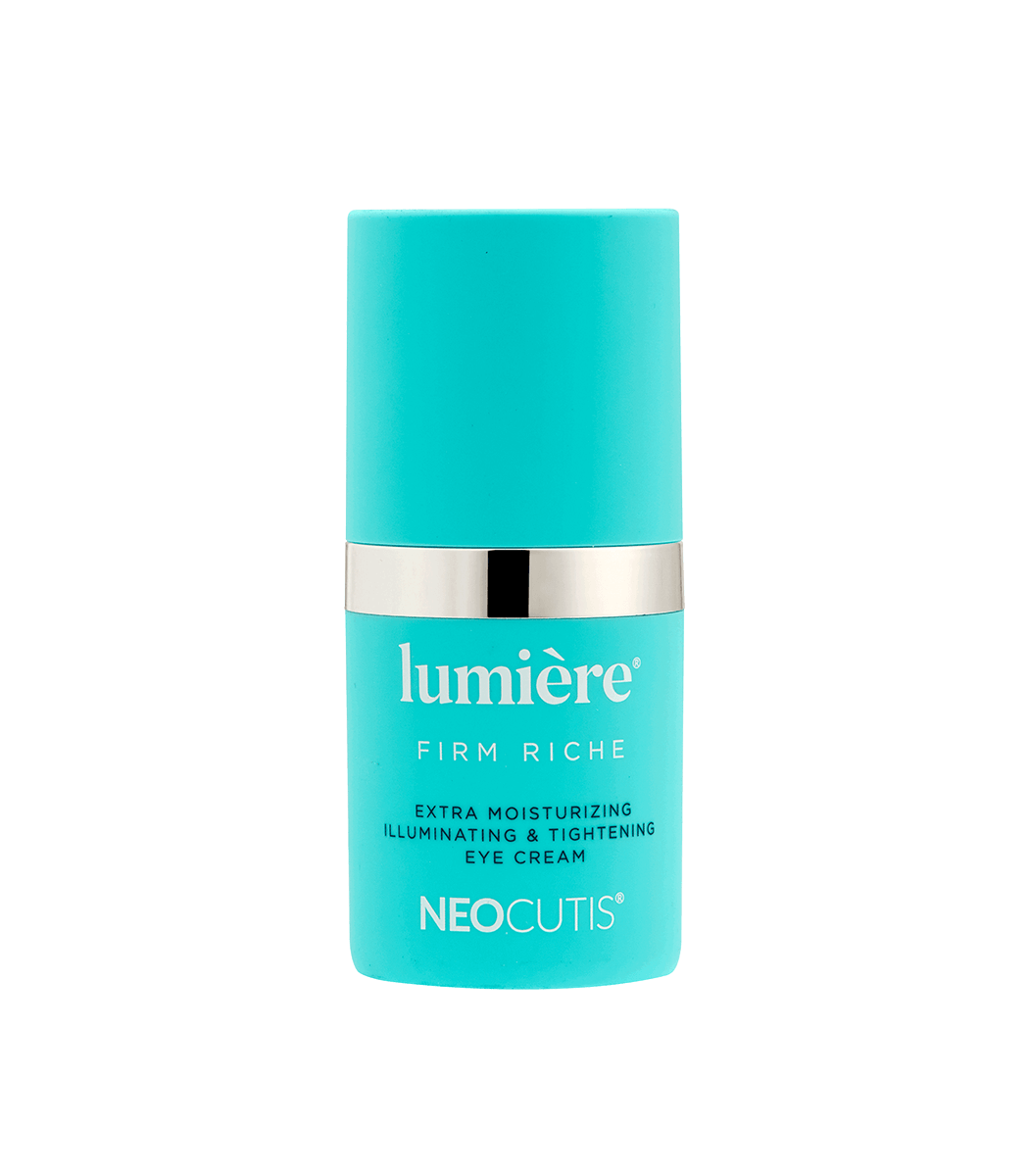

NEOCUTIS
LUMIÈRE FIRM RICHE

LUMIÈRE FIRM RICHE
NEOCUTIS
lumiere-firm-riche
Eyecare
9643592581413
Morning or Evening?
How often will you use this product?
Notes


Highlights
WHAT IS IT?
Advanced anti-aging eye cream with growth factors and peptides
FEATURES
Moisturizing, Illuminating, Tightening
BEST FOR
Dry, Normal, Combination skin
CHECKS
Paraben-free, dye-free, fragrance-free
Who Is It For?
Not Specified Likely For AdultsWhat Does It Help With?
Fine Lines Wrinkles Crow's Feet Puffiness Under-eye DarknessBudget
PremiumHow To Use
Which routine should it be used in?
Instructions:
Key Information


What NEOCUTIS Says
Product Description:
An advanced anti-aging eye cream that uses growth factors and peptides to target the delicate eye area and reduce the appearance of fine lines and wrinkles.
About the Brand:
Ingredients Overview
Ingredients List
Water (Aqua), C12-20 Acid Peg-8 Ester, Petrolatum, Caprylic/Capric Triglyceride, Hydrogenated Polyisobutene, Glycerin, Butylene Glycol, Saccharide Isomerate, Hydroxethyl Acrylate/Sodium Acryloyldimethyl Taurate Copolymer, Bisabolol, Caffeine, Tetrahexyldecyl Ascorbate, Beech Tree (Fagus Sylvatica) Bud Extract, Lecithin, Cutaneous Lysate, Tetrapeptide-21, Sodium Hyaluronate, Glycyrrhetinic Acid, Citric Acid, Wild Yam (Dioscorea Villosa) Root Extract, Tocotrienols, Palm (Elaeis Guineensis) Oil, Capryloyl Carnosine, Tocopherol, Benzoic Acid, Squalene, Palmitoyl Tripeptide-1 Acetate, Phytosterols, Sodium Citrate, Isohexadecane, Ethylhexylglycerin, Potassium Cetyl Phosphate, Acrylates/C10-30 Alkyl Acrylate Crosspolymer, Chlorphenesin, Polysorbate 60, Sodium Hydroxide, Disodium Edta, Sorbitan Isostearate, Phenoxyethanol, Benzyl Alcohol.
Key Ingredients
Growth Factors, Proprietary Peptides, Sodium Hyaluronate, Caffeine, Bisabolol, Glycyrrhetinic Acid, Glycerin, Vitamin C, Petrolatum, Wild Yam Root Extract
Ingredients Details
Bisabolol
Common Name(s): Alpha-bisabolol,levomenol,(-)-alpha-bisabolol
CAS Number: 515-69-5
DESCRIPTION
What It Does: Reduces skin inflammation, soothes irritation, promotes wound healing, and enhances penetration of co-formulated actives.
Why It's Used: Premium natural soothing active with combined anti-inflammatory, wound healing, and penetration-enhancing activity – clinically validated across sensitive, reactive, and irritated skin types.
How It Works: Inhibits nf-kb pathway reducing pro-inflammatory cytokines il-1β, il-6, tnf-α. enhances stratum corneum lipid fluidity increasing penetration of co-delivered actives. antimicrobial against s. aureus and c. albicans. promotes keratinocyte migration for wound healing.
Typically Found In: Sensitive skin products,post-procedure formulations,anti-irritant formulas,wound healing
TECHNICAL DETAILS
Primary Category: Active ingredient – soothing / anti-inflammatory
Secondary Functions: Anti-inflammatory,penetration enhancement,antimicrobial
Application Areas:

Facial Skincare
Body Care

Hair Care
Beard Care
Color Cosmetics (Makeup)
Dietary/Oral Supplements
Typical Concentration Range: 0.1%–1%
SOURCING & ETHICS
Vegan Status: Conditional - supplier confirmation required
Halal Status: Unverified - supplier confirmation required
Source Notes: Natural (-)-alpha-bisabolol from brazilian candeia tree is more sustainable and potent than chamomile-derived bisabolol. synthetic (±)-bisabolol is racemic with slightly lower anti-inflammatory potency. [audit 2026-07-29 rev2: status downgraded on audit. determination requires shariah-panel sign-off.]
SKIN COMPATIBILITY
Irritancy Rating: 1/5 – very low
Comedogenicity Rating: 0/5 – non-comedogenic
Sensitivity Concerns: Non-irritating; ideal for reactive and sensitive skin.
Safe for Sensitive Skin: Yes – particularly recommended for sensitive skin
SAFETY & COMPATIBILITY
Safety Profile: Excellent safety profile. ewg score: 1.
Works Well With: Ceramides,panthenol,allantoin,hyaluronic acid,centella asiatica
Avoid Combining With: No significant incompatibilities
SCIENTIFIC NOTE
Bisabolol's dual function as both an anti-inflammatory and a penetration enhancer is synergistic – by reducing the inflammatory response that increases barrier tightness while simultaneously fluidizing stratum corneum lipids, it provides enhanced delivery of co-formulated actives in the very conditions where delivery is most needed.
Last Verified: 2026-03-12
Primary Sources: Cosing database,piazza et al. bisabolol anti-inflammatory study,cir safety assessment
Butylene Glycol
Common Name(s): 1,3-butanediol,bg,1,3-butylene glycol
CAS Number: 107-88-0
DESCRIPTION
What It Does: Provides humectant hydration and active ingredient solubilization with excellent skin feel.
Why It's Used: Preferred glycol humectant in premium and k-beauty formulations for superior skin feel vs propylene glycol with equivalent functionality.
How It Works: Two hydroxyl groups at 1,3-positions provide water binding and solvent activity. better tolerated than propylene glycol with minimal sensitization risk. 4-carbon backbone provides slightly greater hydrophobic character enabling dissolution of less polar actives vs pg.
Typically Found In: Toners,essences,serums,k-beauty formulas
TECHNICAL DETAILS
Primary Category: Functional ingredient – glycol humectant
Secondary Functions: Tewl reduction,skin plumping
Application Areas:
Facial Skincare
Body Care
Hair Care
Beard Care
Color Cosmetics (Makeup)
Dietary/Oral Supplements
Typical Concentration Range: 1%–10%
SOURCING & ETHICS
Vegan Status: Yes – synthetic
Halal Status: Yes
Source Notes: Synthetic or naturally derived. excellent aqueous solubility.
SKIN COMPATIBILITY
Irritancy Rating: 1/5 – very low
Comedogenicity Rating: 0/5 – non-comedogenic
Sensitivity Concerns: Non-irritating; suitable for all skin types.
Safe for Sensitive Skin: Yes
SAFETY & COMPATIBILITY
Safety Profile: Excellent safety profile. ewg score: 1.
Works Well With: Ceramides,emollients,occlusives,glycerin,hyaluronic acid
Avoid Combining With: No significant incompatibilities
SCIENTIFIC NOTE
K-beauty's preference for butylene glycol over propylene glycol is driven by two factors: bg's superior skin feel (less tacky than pg's higher viscosity) and its lower sensitization potential (1,3-bg has better spatial distribution of hydroxyl groups that reduces protein interaction vs pg's 1,2-position oh groups).
Last Verified: 2026-03-12
Primary Sources: Cosing database,cir safety assessment
C12-20 Acid Peg-8 Ester
Common Name(s): C12-20 acid peg-8 ester
DESCRIPTION
What It Does: Loosens corneocyte adhesion in the stratum corneum, accelerating cell turnover, refining skin texture, and improving radiance.
Why It's Used: Organic acids at cosmetic ph values provide controlled keratolytic exfoliation that improves skin texture, pore appearance, and radiance without mechanical irritation.
How It Works: At appropriate ph, the acid's undissociated form penetrates the stratum corneum and dissolves the ionic bonds between corneocyte desmosomes (calcium chelation mechanism), facilitating controlled desquamation and cell renewal.
Typically Found In: Toners,exfoliants,serums,peels,cleansers
TECHNICAL DETAILS
Primary Category: Exfoliants
Secondary Functions: Brightening,keratolytic
Application Areas:
Facial Skincare
Body Care
Hair Care
Beard Care
Color Cosmetics (Makeup)
Dietary/Oral Supplements
Typical Concentration Range: 0.5–20%
SOURCING & ETHICS
Vegan Status: Yes
Halal Status: Yes
Source Notes: Synthetic or plant-derived acid; no animal components.
SKIN COMPATIBILITY
Irritancy Rating: 2
Comedogenicity Rating: 0
Sensitivity Concerns: May cause irritation or stinging in sensitive or barrier-compromised skin at high concentrations; patch test recommended.
Safe for Sensitive Skin: Conditional
SAFETY & COMPATIBILITY
Safety Profile: Safe within recommended ph and concentration ranges. sensitization risk increases above 10% aha. patch test recommended for sensitive skin. mildly irritating to some individuals at typical cosmetic use concentrations.
Works Well With: Niacinamide,hyaluronic acid,ceramides,vitamin c
Avoid Combining With: High concentrations on sensitive/broken skin; avoid with physical exfoliants
SCIENTIFIC NOTE
Cosmetic acids function at the pka boundary: only the undissociated acid (rcooh) penetrates the stratum corneum lipid barrier, while the ionized carboxylate (rcoo⁻) does not. the henderson-hasselbalch equation governs the fraction of active species at formulation ph; typically 0.5–3.0% undissociated acid provides efficacy while minimizing irritation.
Last Verified: 2025-01-15
Primary Sources: Cosing eu database; pcpc cosmetic ingredient safety reviews; ingredient-specific safety and efficacy literature
Caprylic/capric Triglyceride
Common Name(s): Mct oil,fractionated coconut oil,c8/c10 triglyceride
CAS Number: 73398-61-5
DESCRIPTION
What It Does: Lightweight, stable emollient that solubilizes oil-soluble actives for excellent delivery without greasy feel.
Why It's Used: Universal lightweight emollient base and solubilizer for oil-soluble actives in serums and low-viscosity formulations where mineral oil or petrolatum would be too heavy.
How It Works: Medium-chain length provides ideal balance of spreading coefficient, penetration rate, and barrier-sealing properties. excellent solubilizer for vitamin e, retinoids, and other lipophilic actives.
Typically Found In: Serums,facial oils,sunscreens,anti-aging products,hair products
TECHNICAL DETAILS
Primary Category: Active ingredient – medium-chain triglyceride emollient
Secondary Functions: Active solubilizer,spreading agent
Application Areas:
Facial Skincare
Body Care
Hair Care
Beard Care
Color Cosmetics (Makeup)
Dietary/Oral Supplements
Typical Concentration Range: 1%–50%
SOURCING & ETHICS
Vegan Status: Conditional - feedstock declaration required
Halal Status: Unverified - feedstock declaration required (plant, animal and petrochemical routes all exist)
Source Notes: Fractionated by hydrolysis and re-esterification of coconut oil. only c8 and c10 fatty acids retained. [audit 2026-07-29 rev2: origin-dependent: the same inci exists in plant, animal and petrochemical versions and the name does not discriminate. determination requires shariah-panel sign-off.]
SKIN COMPATIBILITY
Irritancy Rating: 1/5 – very low
Comedogenicity Rating: 1/5 – very low; medium-chain length generally non-comedogenic
Sensitivity Concerns: Non-irritating.
Safe for Sensitive Skin: Yes
SAFETY & COMPATIBILITY
Safety Profile: Excellent safety profile. ewg score: 1.
Works Well With: Humectants,ceramides,actives as carrier
Avoid Combining With: No significant incompatibilities
SCIENTIFIC NOTE
Mct oil's medium-chain length (c8/c10) provides superior oxidative stability vs longer polyunsaturated chains and better skin aesthetics (lighter, less greasy) vs longer chain emollients (c16/c18). excellent solubilizer for retinoic acid, tocopheryl esters, and other lipophilic actives.
Last Verified: 2026-03-12
Primary Sources: Cosing database,cir safety assessment,ewg skin deep