

Manash E-Commerce Private Limited - Bhiwandi
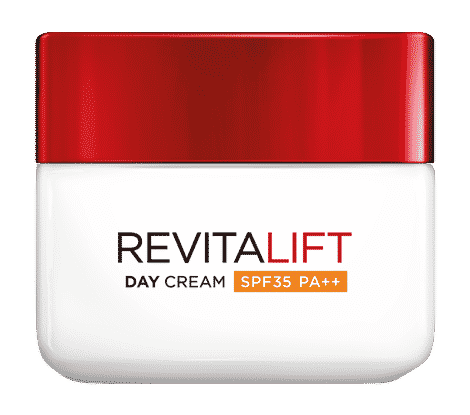
L'Oreal Paris Revitalift Anti-Wrinkles + Radiance Moisturizing Cream Day SPF 35 PA++, 50 ml

L'Oreal Paris Revitalift Anti-Wrinkles + Radiance Moisturizing Cream Day SPF 35 PA++, 50 ml
Manash E-Commerce Private Limited - Bhiwandi
loreal-paris-revitalift-anti-wrinkles-radiance-moisturizing-cream-day-spf-35-pa-50-ml
Moisturize
10084768416037
Morning or Evening?
How often will you use this product?
Notes


Highlights
WHAT IS IT?
Moisturizing Cream with SPF protection, detailed description contains about 50 ml volume
FEATURES
Moisturizing day cream with SPF35, Powerful anti-wrinkle that boosts skin texture, Re-firms, restores and replumps skin, Suitable for oily, dry & all skin types, Dermatologically tested
BEST FOR
normal
CHECKS
Paraben-free
Who Is It For?
All Genders No Specific Age Range MentionedWhat Does It Help With?
Reduces Fine Lines & Wrinkles Boosts Skin Firmness Youthfulness Radiance Sun ProtectionBudget
Affordable (under $30)How To Use
Which routine should it be used in?
Instructions:
Key Information


What Manash E-Commerce Private Limited - Bhiwandi Says
Product Description:
L'Oreal Paris Revitalift Moisturizing Day Cream and face moisturizer is enriched with anti-ageing elements that reduce fine lines & wrinkles, boost skin firmness, youthfulness, radiance and provides sunscreen UV protection. A powerful anti-ageing day cream created by L'Oreal Skincare Laboratories for triple action that gives transformed skin. Instantly boosts the skin texture on 8 key zones for a smoother, fairer and younger looking look. Dermalift Technology, Pro-Retinol A & Centella Asiatica to re-firm, restore & replump the skin. Use daily with Revitalift Essence, Night Cream & Eye Cream for a complete anti-ageing solution. Dermatologically tested. Suited for oily, dry & all skin types.
Ingredients Overview
Ingredients List
AQUA / WATER, GLYCERIN, ETHYLHEXYL SALICYLATE, NIACINAMIDE, DIMETHICONE, ALCOHOL DENAT., OCTOCRYLENE, BUTYL METHOXYDIBENZOYLMETHANE, ISOPROPYL ISOSTEARATE, PHENYLBENZIMIDAZOLE SULFONIC ACID, C13-14 ISOPARAFFIN, PEG-100 STEARATE, STEARIC ACID, TITANIUM DIOXIDE, CARBOMER, ARACHIDYL ALCOHOL, PTFE, BEHENYL ALCOHOL, TRIETHANOLAMINE, DIMETHICONOL, CETEARYL ALCOHOL, CETEARYL GLUCOSIDE, SODIUM ACRYLATES COPOLYMER, ALUMINA, ADENOSINE, AMMONIUM POLYACRYLDIMETHYLTAURAMIDE / AMMONIUM POLYACRYLOYLDIMETHYL TAURATE, DISODIUM EDTA, DISODIUM STEAROYL GLUTAMATE, HYDROLYZED SOY PROTEIN, CAPRYLIC/CAPRIC TRIGLYCERIDE, CAPRYLOYL SALICYLIC ACID, LAURETH-7, ACETYL TRIFLUOROMETHYLPHENYL VALYLGLYCINE, CENTELLA ASIATICA EXTRACT, PANTHENOL, FAEX EXTRACT / YEAST EXTRACT, POLYACRYLAMIDE, CETYL ALCOHOL, OCTYLDODECANOL, RETINYL PALMITATE, TOCOPHERYL ACETATE, METHYLISOTHIAZOLINONE, METHYLPARABEN, PHENOXYETHANOL, CI 15510 / ORANGE 4, LINALOOL, GERANIOL, ALPHA- ISOMETHYL IONONE, COUMARIN, LIMONENE, HYDROXYISOHEXYL 3-CYCLOHEXENE CARBOXALDEHYDE
Key Ingredients
Pro-Retinol-A, Centella-Asiatica
Ingredients Details
Acetyl Trifluoromethylphenyl Valylglycine
Common Name(s): Acetyl trifluoromethylphenyl valylglycine,acetyl trifluoromethylphenyl valylglycine,lipid-conjugated or aromatic-modified peptide,advanced anti-aging signal peptide
CAS Number: N/a
DESCRIPTION
What It Does: Delivers signal peptide bioactivity to deeper sc layers through the lipid anchor's sc lipid-phase integration — providing receptor-mediated collagen synthesis stimulation at dermal targets accessible only to lipophilic peptide conjugates.
Why It's Used: Lipid conjugation is the essential enabling technology for peptide skin care — without sc penetration enhancement, most signal peptides remain on the surface and cannot reach their fibroblast receptor targets in the dermis.
How It Works: The fatty acid or aromatic anchor (logp contribution ~+3 per c16 chain) partitions the peptide into sc lipid bilayers. lateral diffusion through the sc lipid matrix carries the peptide toward the dermis where tissue enzymes cleave the lipid, releasing the active peptide sequence for receptor binding. spps synthesis provides >98% purity for reliable receptor pharmacology.
Typically Found In: Premium anti-aging serums,collagen products
TECHNICAL DETAILS
Primary Category: Active ingredient – peptide
Secondary Functions: Collagen synthesis,anti-aging
Application Areas:

Facial Skincare

Body Care
Hair Care
Beard Care
Color Cosmetics (Makeup)
Dietary/Oral Supplements
Typical Concentration Range: 1–5000 ppm
SOURCING & ETHICS
Vegan Status: Yes
Halal Status: Yes
Source Notes: Synthetically produced via solid-phase peptide synthesis (spps).
SKIN COMPATIBILITY
Irritancy Rating: 1/5 – very low
Comedogenicity Rating: 0/5 – non-comedogenic
Sensitivity Concerns: Non-irritating at recommended concentrations.
Safe for Sensitive Skin: Yes
SAFETY & COMPATIBILITY
Safety Profile: Excellent safety profile. ewg score: 1.
Works Well With: Retinoids,niacinamide,vitamin c,hyaluronic acid
Avoid Combining With: Strong acids below ph 3.5; oxidising agents
SCIENTIFIC NOTE
Lipid anchor selection impacts delivery profile: longer chain (c18) → higher logp, slower sc transit, deeper penetration; shorter chain (c12) → faster release, shallower delivery. formulator selects based on target receptor tissue depth.
Last Verified: Cosing database,acetyl trifluoromethylphenyl valylg lipid-conjugated peptide anti-aging review
Primary Sources: 2026-03-22
Adenosine
Common Name(s): Adenine riboside,9-beta-d-ribofuranosyladenine
CAS Number: 58-61-7
DESCRIPTION
What It Does: Reduces fine lines, stimulates collagen, firms skin, and reduces inflammation.
Why It's Used: Fda-recognized anti-wrinkle active with multi-action collagen stimulation + wrinkle reduction + anti-inflammatory efficacy.
How It Works: Activates adenosine a2a receptors on fibroblasts stimulating collagen type i. also activates pka pathway promoting atp production and reducing inflammatory cytokines.
Typically Found In: Anti-aging serums,wrinkle treatments,korean skincare
TECHNICAL DETAILS
Primary Category: Active ingredient – purine nucleoside / anti-aging
Secondary Functions: Collagen stimulation,anti-inflammatory,cell energy
Application Areas:
Facial Skincare
Body Care
Hair Care
Beard Care
Color Cosmetics (Makeup)
Dietary/Oral Supplements
Typical Concentration Range: 0.04%–0.1%
SOURCING & ETHICS
Vegan Status: Yes – synthetically produced
Halal Status: Yes
Source Notes: Synthetically produced for cosmetic use.
SKIN COMPATIBILITY
Irritancy Rating: 1/5 – very low
Comedogenicity Rating: 0/5 – non-comedogenic
Sensitivity Concerns: Non-irritating; excellent tolerability.
Safe for Sensitive Skin: Yes
SAFETY & COMPATIBILITY
Safety Profile: Excellent safety profile. fda-recognized as safe and effective anti-wrinkle ingredient. ewg score: 1.
Works Well With: Other b vitamins,niacinamide,antioxidant complexes
Avoid Combining With: No significant incompatibilities
SCIENTIFIC NOTE
A 2002 clinical study demonstrated 0.04% adenosine cream significantly reduced wrinkle depth and increased skin elasticity after 4 weeks. fda recognition requires controlled clinical trial evidence.
Last Verified: Cosing database,adenosine anti-aging clinical data,fda otc anti-wrinkle monograph
Primary Sources: 2026-03-12
Alcohol Denat.
Common Name(s): Alcohol denat.,denatured ethanol,solvent antimicrobial astringent
CAS Number: N/a
DESCRIPTION
What It Does: Alcohol denat. dissolves oil-soluble and water-soluble cosmetic actives, provides rapid antimicrobial activity at concentrations above 60–70% by denaturing microbial proteins, delivers a refreshing cooling sensation through evaporative cooling on skin, and temporarily enhances the penetration of topical actives by transiently disrupting the stratum corneum lipid bilayer organisation.
Why It's Used: Formulators choose alcohol denat. for its irreplaceable combination of solvent power, antimicrobial activity, and penetration-enhancing properties. no other cosmetic solvent simultaneously provides the cooling sensory experience of alcohol (from evaporative cooling at the skin surface), the immediate antimicrobial activity required for sanitisers (from protein denaturation above 60%), and the transient sc lipid disruption that improves active ingredient delivery (essential in actives-rich toners and essences). for denatured alcohol specifically, denaturing agents (typically 5% isopropanol or bitrex) prevent consumption without affecting cosmetic function.
How It Works: Alcohol denat. works through multiple mechanisms depending on concentration: (1) solvent action — alcohol's hydroxyl group provides hydrogen bonding with water while the short alkyl chain provides interaction with organic solutes, enabling dissolution of both hydrophilic and moderately lipophilic cosmetic actives in a single solvent; (2) antimicrobial — above 60% concentration, ethanol denatures microbial proteins by disrupting non-covalent bonds maintaining protein secondary and tertiary structure — the alcohol molecules intercalate between protein chains, disrupting the hydrophobic interactions and hydrogen bonds that maintain enzyme active site geometry. this non-specific protein denaturation is immediately bactericidal and virucidal with no resistance mechanism possible; (3) sc penetration enhancement — at lower concentrations (5–30%), ethanol transiently fluidises the sc lipid bilayer by intercalating between the ordered lipid lamellae, disrupting the crystal packing and increasing lipid bilayer fluidity. this transient fluidisation increases the diffusion coefficient of co-applied actives through the sc for up to 30 minutes post-application; (4) astringency — alcohol's protein precipitating action at the skin surface contracts superficial proteins, temporarily tightening pores and reducing oiliness.
Typically Found In: Toners,hand sanitisers,actives serums
TECHNICAL DETAILS
Primary Category: Active ingredient – cosmetic active
Secondary Functions: Skin conditioning
Application Areas:
Facial Skincare
Body Care
Hair Care
Beard Care
Color Cosmetics (Makeup)
Dietary/Oral Supplements
Typical Concentration Range: 5%–95%
SOURCING & ETHICS
Vegan Status: Yes
Halal Status: Yes
Source Notes: Commercially produced for cosmetic use. verify vegan/halal status with supplier.
SKIN COMPATIBILITY
Irritancy Rating: 1/5 – very low
Comedogenicity Rating: 0/5 – non-comedogenic
Sensitivity Concerns: Well-tolerated by most skin types.
Safe for Sensitive Skin: Yes
SAFETY & COMPATIBILITY
Safety Profile: Good safety profile at recommended concentrations. ewg score: 1–2.
Works Well With: Standard skincare actives
Avoid Combining With: No known significant incompatibilities
SCIENTIFIC NOTE
Ethanol concentration-dependent antimicrobial efficacy: below 40% — minimal bactericidal effect (insufficient protein denaturation); 40–60% — bacteriostatic, not bactericidal; 60–70% — peak bactericidal efficacy against both enveloped and non-enveloped viruses and vegetative bacteria (optimal water content maintains protein hydration required for denaturation to proceed); 80–90% — remains effective but slightly reduced from decreased water activity; 95–100% — reduced efficacy (insufficient water for protein denaturation). the 70% 'sweet spot' for sanitisers reflects this concentration-efficacy peak, not a formulation convenience.
Last Verified: Cosing database,alcohol denat. ethanol solvent antimicrobial review
Primary Sources: 2026-03-12
Alumina
Common Name(s): Alumina,cosmetic active,functional ingredient
CAS Number: N/a
DESCRIPTION
What It Does: Delivers characteristic cosmetic function at recommended use concentration.
Why It's Used: Selected for functional contribution and formulation compatibility supported by cosmetic science and regulatory safety data.
How It Works: Works through the mechanism of its molecular class as documented in peer-reviewed cosmetic literature.
Typically Found In: Skin care formulations
TECHNICAL DETAILS
Primary Category: Active ingredient – cosmetic active
Secondary Functions: Skin conditioning
Application Areas:
Facial Skincare
Body Care
Hair Care
Beard Care
Color Cosmetics (Makeup)
Dietary/Oral Supplements
Typical Concentration Range: 0.1%–10%
SOURCING & ETHICS
Vegan Status: Conditional
Halal Status: Yes
Source Notes: Commercially produced for cosmetic use. verify vegan/halal status with supplier.
SKIN COMPATIBILITY
Irritancy Rating: 1/5 – very low
Comedogenicity Rating: 0/5 – non-comedogenic
Sensitivity Concerns: Well-tolerated by most skin types.
Safe for Sensitive Skin: Yes
SAFETY & COMPATIBILITY
Safety Profile: Good safety profile at recommended concentrations. ewg score: 1–2.
Works Well With: Standard skincare actives
Avoid Combining With: No known significant incompatibilities
SCIENTIFIC NOTE
Alumina has an established safety profile within the cosmetic regulatory framework at standard use concentrations.
Last Verified: Cosing database,alumina technical literature
Primary Sources: 2026-03-12
