

L'Oreal Paris
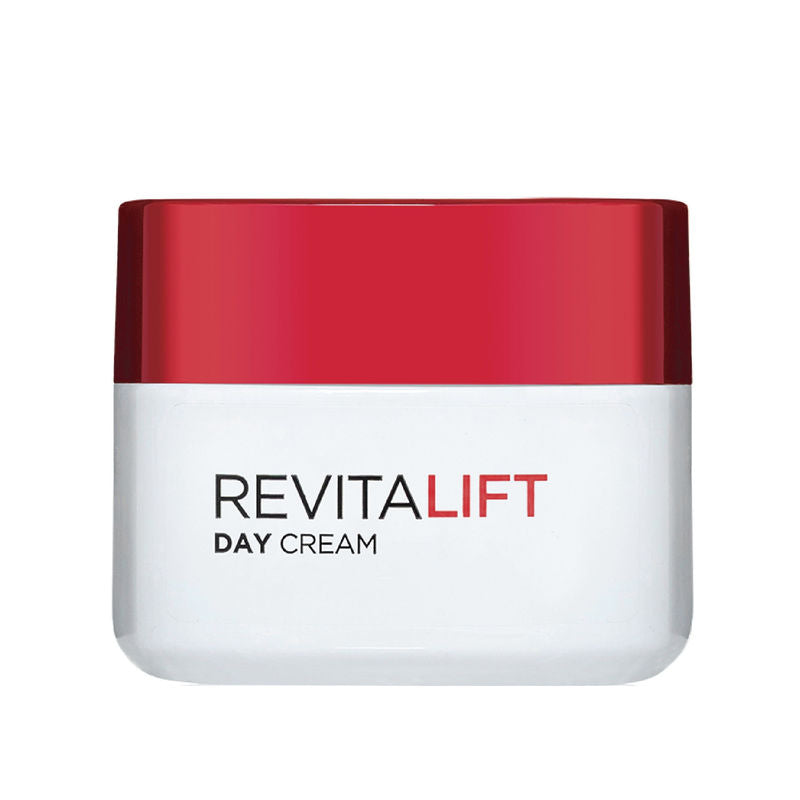
L'Oreal Paris Revitalift Anti-Wrinkles + Radiance Moisturizing Cream Day SPF 35 PA++

L'Oreal Paris Revitalift Anti-Wrinkles + Radiance Moisturizing Cream Day SPF 35 PA++
L'Oreal Paris
loreal-paris-revitalift-anti-wrinkles-radiance-moisturizing-cream-day-spf-35-pa
Moisturize
10084768350501
Morning or Evening?
How often will you use this product?
Notes


Highlights
WHAT IS IT?
Moisturizing Cream with SPF 35, 3 active ingredients
FEATURES
Reduces fine lines & wrinkles, boosts skin firmness, promotes radiance, UV protection SPF 23 PA++, fights wrinkles, regains firmness, boosts skin elasticity
BEST FOR
normal
CHECKS
Who Is It For?
Adults (30-50+) All GendersWhat Does It Help With?
Anti-aging Fine Lines Wrinkles Skin Firmness Skin Elasticity Radiance Uv ProtectionBudget
Affordable (under $30)How To Use
Which routine should it be used in?
Instructions:
Key Information

What L'Oreal Paris Says
Product Description:
Enriched with anti-ageing elements that reduce fine lines & wrinkles, boost skin firmness, youthfulness, radiance and provides UV protection SPF 23 PA++. Fight wrinkles, regain firmness, boost skin elasticity.
Ingredients Overview
Ingredients List
Aqua, glycerin, octocrylene, ethylhexyl salicylate, niacinamide, dimethicone, phenylbenzimidazole sulfonic acid, alcohol, butyl methoxydibenzoylmethane, isopropyl isostearate, triethanolamine, behenyl alcohol, ammonium polyacryloyldimethyl taurate, C13-14 isoparaffin, PEG-100 stearate, PEG-30 dipolyhydroxystearate, Cl 15510, titanium dioxide, stearic acid, linalool, stearyl alcohol, carbomer, sorbitan oleate, dimethiconol, cetearyl alcohol, cetearyl glucoside, ceteareth-6, caffeine, parfum, sodium acrylates copolymer, retinyl palmitate, myristic acid, aluminium hydroxide, palmitic acid, phenoxyethanol, adenosine, disodium stearoyl glutamate, tocopheryl acetate, disodium EDTA, limonene, tocopherol, hydrolyzed soy protein, caprylic/capric triglyceride, capryloyl salicylic acid, laureth-7, citral, panthenol, acetyl trifluoromethylphenyl valylglycine, pentylene glycol, centella asiatica extract, yeast extract, octyldodecanol, cetyl alcohol, polyacrylamide, benzyl salicylate, benzyl alcohol
Key Ingredients
Centella Asiatica, Pro-Retinol A, Dermalift Technology
Ingredients Details
Acetyl Trifluoromethylphenyl Valylglycine
Common Name(s): Acetyl trifluoromethylphenyl valylglycine,acetyl trifluoromethylphenyl valylglycine,lipid-conjugated or aromatic-modified peptide,advanced anti-aging signal peptide
CAS Number: N/a
DESCRIPTION
What It Does: Delivers signal peptide bioactivity to deeper sc layers through the lipid anchor's sc lipid-phase integration — providing receptor-mediated collagen synthesis stimulation at dermal targets accessible only to lipophilic peptide conjugates.
Why It's Used: Lipid conjugation is the essential enabling technology for peptide skin care — without sc penetration enhancement, most signal peptides remain on the surface and cannot reach their fibroblast receptor targets in the dermis.
How It Works: The fatty acid or aromatic anchor (logp contribution ~+3 per c16 chain) partitions the peptide into sc lipid bilayers. lateral diffusion through the sc lipid matrix carries the peptide toward the dermis where tissue enzymes cleave the lipid, releasing the active peptide sequence for receptor binding. spps synthesis provides >98% purity for reliable receptor pharmacology.
Typically Found In: Premium anti-aging serums,collagen products
TECHNICAL DETAILS
Primary Category: Active ingredient – peptide
Secondary Functions: Collagen synthesis,anti-aging
Application Areas:

Facial Skincare

Body Care
Hair Care
Beard Care
Color Cosmetics (Makeup)
Dietary/Oral Supplements
Typical Concentration Range: 1–5000 ppm
SOURCING & ETHICS
Vegan Status: Yes
Halal Status: Yes
Source Notes: Synthetically produced via solid-phase peptide synthesis (spps).
SKIN COMPATIBILITY
Irritancy Rating: 1/5 – very low
Comedogenicity Rating: 0/5 – non-comedogenic
Sensitivity Concerns: Non-irritating at recommended concentrations.
Safe for Sensitive Skin: Yes
SAFETY & COMPATIBILITY
Safety Profile: Excellent safety profile. ewg score: 1.
Works Well With: Retinoids,niacinamide,vitamin c,hyaluronic acid
Avoid Combining With: Strong acids below ph 3.5; oxidising agents
SCIENTIFIC NOTE
Lipid anchor selection impacts delivery profile: longer chain (c18) → higher logp, slower sc transit, deeper penetration; shorter chain (c12) → faster release, shallower delivery. formulator selects based on target receptor tissue depth.
Last Verified: Cosing database,acetyl trifluoromethylphenyl valylg lipid-conjugated peptide anti-aging review
Primary Sources: 2026-03-22
Adenosine
Common Name(s): Adenine riboside,9-beta-d-ribofuranosyladenine
CAS Number: 58-61-7
DESCRIPTION
What It Does: Reduces fine lines, stimulates collagen, firms skin, and reduces inflammation.
Why It's Used: Fda-recognized anti-wrinkle active with multi-action collagen stimulation + wrinkle reduction + anti-inflammatory efficacy.
How It Works: Activates adenosine a2a receptors on fibroblasts stimulating collagen type i. also activates pka pathway promoting atp production and reducing inflammatory cytokines.
Typically Found In: Anti-aging serums,wrinkle treatments,korean skincare
TECHNICAL DETAILS
Primary Category: Active ingredient – purine nucleoside / anti-aging
Secondary Functions: Collagen stimulation,anti-inflammatory,cell energy
Application Areas:
Facial Skincare
Body Care
Hair Care
Beard Care
Color Cosmetics (Makeup)
Dietary/Oral Supplements
Typical Concentration Range: 0.04%–0.1%
SOURCING & ETHICS
Vegan Status: Yes – synthetically produced
Halal Status: Yes
Source Notes: Synthetically produced for cosmetic use.
SKIN COMPATIBILITY
Irritancy Rating: 1/5 – very low
Comedogenicity Rating: 0/5 – non-comedogenic
Sensitivity Concerns: Non-irritating; excellent tolerability.
Safe for Sensitive Skin: Yes
SAFETY & COMPATIBILITY
Safety Profile: Excellent safety profile. fda-recognized as safe and effective anti-wrinkle ingredient. ewg score: 1.
Works Well With: Other b vitamins,niacinamide,antioxidant complexes
Avoid Combining With: No significant incompatibilities
SCIENTIFIC NOTE
A 2002 clinical study demonstrated 0.04% adenosine cream significantly reduced wrinkle depth and increased skin elasticity after 4 weeks. fda recognition requires controlled clinical trial evidence.
Last Verified: Cosing database,adenosine anti-aging clinical data,fda otc anti-wrinkle monograph
Primary Sources: 2026-03-12
Alcohol
Common Name(s): Alcohol,cosmetic active,functional ingredient
CAS Number: N/a
DESCRIPTION
What It Does: Delivers characteristic cosmetic function at recommended use concentration.
Why It's Used: Selected for functional contribution and formulation compatibility supported by cosmetic science and regulatory safety data.
How It Works: Works through the mechanism of its molecular class as documented in peer-reviewed cosmetic literature.
Typically Found In: Skin care formulations
TECHNICAL DETAILS
Primary Category: Active ingredient – cosmetic active
Secondary Functions: Skin conditioning
Application Areas:
Facial Skincare
Body Care
Hair Care
Beard Care
Color Cosmetics (Makeup)
Dietary/Oral Supplements
Typical Concentration Range: 0.1%–10%
SOURCING & ETHICS
Vegan Status: Conditional
Halal Status: Yes
Source Notes: Commercially produced for cosmetic use. verify vegan/halal status with supplier.
SKIN COMPATIBILITY
Irritancy Rating: 1/5 – very low
Comedogenicity Rating: 0/5 – non-comedogenic
Sensitivity Concerns: Well-tolerated by most skin types.
Safe for Sensitive Skin: Yes
SAFETY & COMPATIBILITY
Safety Profile: Good safety profile at recommended concentrations. ewg score: 1–2.
Works Well With: Standard skincare actives
Avoid Combining With: No known significant incompatibilities
SCIENTIFIC NOTE
Alcohol has an established safety profile within the cosmetic regulatory framework at standard use concentrations.
Last Verified: Cosing database,alcohol technical literature
Primary Sources: 2026-03-12
Ammonium Polyacryloyldimethyl Taurate
Common Name(s): Carbomer/acrylate crosspolymer,highly efficient gel former,rheology modifier
CAS Number: N/a
DESCRIPTION
What It Does: Forms transparent to translucent high-viscosity gels at very low concentration, suspends particles and pigments against sedimentation through yield stress, and provides the elegant shear-thinning texture of premium gel serums.
Why It's Used: The most efficient aqueous thickener available — achieving gel viscosity at 0.1% that requires 3–5% of xanthan gum or 2% of cellulose thickeners, enabling clean-label lightweight formulations with high active loading.
How It Works: At ph <4: –cooh groups protonated, polymer coiled compact, low viscosity. neutralisation with naoh/tea deprotonates –cooh to –coo⁻; like-charge repulsion expands polymer coil 100–1000×. above overlap concentration c* (~0.1%), expanded coils entangle forming viscoelastic gel network providing high zero-shear viscosity and shear-thinning.
Typically Found In: Gel serums,transparent toners,suspension systems
TECHNICAL DETAILS
Primary Category: Active ingredient – cosmetic active
Secondary Functions: Skin conditioning
Application Areas:
Facial Skincare
Body Care
Hair Care
Beard Care
Color Cosmetics (Makeup)
Dietary/Oral Supplements
Typical Concentration Range: 0.1%–2%
SOURCING & ETHICS
Vegan Status: Yes
Halal Status: Yes
Source Notes: Commercially produced for cosmetic use. verify vegan/halal status with supplier.
SKIN COMPATIBILITY
Irritancy Rating: 1/5 – very low
Comedogenicity Rating: 0/5 – non-comedogenic
Sensitivity Concerns: Well-tolerated by most skin types.
Safe for Sensitive Skin: Yes
SAFETY & COMPATIBILITY
Safety Profile: Good safety profile at recommended concentrations. ewg score: 1–2.
Works Well With: Standard skincare actives
Avoid Combining With: No known significant incompatibilities
SCIENTIFIC NOTE
Carbomer is edta-sensitive — divalent cation contamination (ca²⁺, mg²⁺ from hard water) can collapse the electrostatic gel network. including edta or citric acid chelation in carbomer-gelled formulas is standard practice to maintain gel integrity.
Last Verified: Cosing database,carbomer polyacrylate gel mechanism review
Primary Sources: 2026-03-12
