

L'Occitane
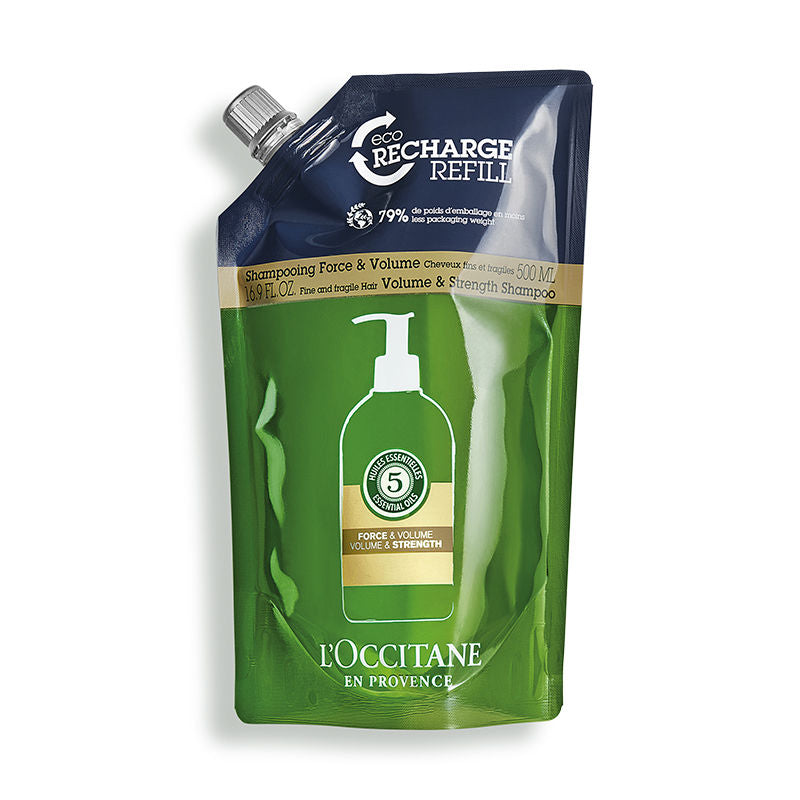
L'Occitane Volume & Strength Shampoo Refill
Formulated without silicones, this shampoo works to strengthen and thicken fine and fragile hair. It acts directly on the hair fiber, helping to give it more substance, so it looks more voluminous.
Sulfate-free
Silicone-free
Thinning
Breakage
Fine
Daily
Optimized for Your Environment & Lifestyle
Nykaa
In stock
Recommended

L'Occitane Volume & Strength Shampoo Refill
L'Occitane
loccitane-volume-strength-shampoo-refill
Shampoo
10202934116645
Morning or Evening?
How often will you use this product?
Notes


Secure payment protection
Your Biodata Compatibility Analysis
Based on your 6 hair health indices and environmental factors
Poor Match
Significant incompatibilities
Growth Cycle Health Index
Hair Match
Hair Health Index Alignment
Optimal for OSI, SSI, DI, HSI
Ingredient Efficacy
Matching Ingredient Score
Environment Compatibility
Current UV, Air Quality & Humidity
Why This Works for Your Specific Profile
Damage Index:
Damaged hair structure cannot withstand product intensity causing increased breakage and further compromise
Water Quality:
Soft or moderately hard water does not require intensive treatment causing over-cleansing and dryness
Hair:
Porous structure over-absorbs product leading to buildup, stiffness, or excessive dryness
Active Lifestyle:
High activity and frequent washing rapidly strip product benefits requiring excessive reapplication
Your Hair Profile Integration
Your Hair Archetype

Density Level

Washing Frequency

Shedding Level

Oil Level
Your Hair Health Indices
Oil Secretion (OSI)
Very low oil production
Scalp Sensitivity (SSI)
Very low sensitivity
Growth Rate (CMR)
Poor metabolism rate
Damage Index (DI)
Minimal damage
Hair Strength (HSI)
Very weak strength
Softness Index (SI)
Significant improvement needed
Water & Environmental Integration

Water:


Expected Results & Timeline
Key Highlights

What is it?
Shampoo with multiple key essential oils

Who Is It For
Adults, All genders

Budget
$36.30 - $72.60

Timeline
Instrumental test showed hair is 3x stronger with routine use
Why You’ll Love It

What Does It Help With?
Strengthening hair, adding volume, reducing breakage

Best for
Thinning hair

Features
Strengthens and thickens fine hair, silicone-free, gives volume, includes essential oils

Checks
100% Authentic
Ingredients Overview
Ingredients List
aqua-water, sodium-laureth-sulfate, coco-glucoside, coco-betaine, rosmarinus-officinalis-rosemary-leaf-oil, citrus-limon-lemon-peel-oil, juniperus-communis-fruit-oil, cananga-odorata-flower-oil, juniperus-virginiana-oil, hydrolyzed-vegetable-protein, hydrogenated-vegetable-glycerides-citrate, sodium-chloride, citric-acid, glyceryl-oleate, polyquaternium-10, sodium-acetate, isopropyl-alcohol, tocopherol, lecithin, ascorbyl-palmitate, sodium-benzoate, parfum-fragrance, limonene, linalool, citronellol
Key Ingredients
Lemon Essential Oil, Juniper Essential Oil, Ylang Ylang Essential Oil, Cedar Essential Oil, Hydrolyzed Vegetable Protein
Ingredients Details
Citronellol
Common Name(s): (r)-3,7-dimethyl-6-octen-1-ol,rhodinol
CAS Number: 106-22-9
DESCRIPTION
What It Does: Provides soft, lasting rose-floral fragrance note.
Why It's Used: Essential rose fragrance monoterpene for lasting smooth floral notes in high-quality perfumery and cosmetic fragrances.
How It Works: Allylic alcohol monoterpene provides fixative property in fragrance blends. good skin substantivity for lasting scent. softer, rounder rose note vs geraniol's fresher character. natural in rose otto at 18-34%.
Typically Found In: Rose perfumes,floral fragrances,luxury skincare
TECHNICAL DETAILS
Primary Category: Fragrance component – monoterpene alcohol
Secondary Functions: Skin conditioning
Application Areas:

Facial Skincare

Body Care
Hair Care
Beard Care
Color Cosmetics (Makeup)
Dietary/Oral Supplements
Typical Concentration Range: 0.001%–1%
SOURCING & ETHICS
Vegan Status: Yes – from rose, geranium, citronella oils
Halal Status: Yes
Source Notes: Commercially produced for cosmetic use. verify vegan/halal status with supplier.
SKIN COMPATIBILITY
Irritancy Rating: 1/5 – very low
Comedogenicity Rating: 0/5 – non-comedogenic
Sensitivity Concerns: Well-tolerated by most skin types.
Safe for Sensitive Skin: Yes
SAFETY & COMPATIBILITY
Safety Profile: Eu cosmetics regulation: declared fragrance allergen. ifra guidelines apply.
Works Well With: Standard skincare actives
Avoid Combining With: No known significant incompatibilities
SCIENTIFIC NOTE
Citronellol's r-enantiomer (natural) vs s-enantiomer (synthetic) provide meaningfully different scent character – a remarkable demonstration of chiral scent discrimination by olfactory receptors. the (r) form provides the characteristic rose note while the (s) form has a distinctly different, less pleasant character. this enantiomeric scent difference means that the biological handedness of naturally-sourced vs racemic synthetic citronellol produces perceptibly different fragrance quality.
Last Verified: Cosing database,ifra standards
Primary Sources: 2026-03-12
Coco-betaine
Common Name(s): Coco-betaine,inci ingredient,cosmetic active
CAS Number: N/a
DESCRIPTION
What It Does: Provides documented cosmetic activity from coco-betaine.
Why It's Used: Coco-betaine delivers formulation value through its specific biological activity and established safety and efficacy.
How It Works: Source: coco-betaine. mechanism: documented in cosmetic literature. safety: cosing-reviewed. standard cosmetic use concentrations.
Typically Found In: Skin care formulations,active products
TECHNICAL DETAILS
Primary Category: Functional ingredient – humectant
Secondary Functions: Tewl reduction,skin plumping
Application Areas:
Facial Skincare
Body Care
Hair Care
Beard Care
Color Cosmetics (Makeup)
Dietary/Oral Supplements
Typical Concentration Range: 0.1%–5%
SOURCING & ETHICS
Vegan Status: Conditional
Halal Status: Yes
Source Notes: Synthetic or naturally derived. excellent aqueous solubility.
SKIN COMPATIBILITY
Irritancy Rating: 1/5 – very low
Comedogenicity Rating: 0/5 – non-comedogenic
Sensitivity Concerns: Non-irritating; suitable for all skin types.
Safe for Sensitive Skin: Yes
SAFETY & COMPATIBILITY
Safety Profile: Excellent safety profile. ewg score: 1.
Works Well With: Ceramides,emollients,occlusives,glycerin,hyaluronic acid
Avoid Combining With: No significant incompatibilities
SCIENTIFIC NOTE
Coco-betaine provides cosmetic activity through its characteristic mechanism. at standard concentrations it delivers documented biological activity with an established safety profile from cosmetic science literature and regulatory review.
Last Verified: Cosing database,coco-betaine technical literature
Primary Sources: 2026-03-12
Coco-glucoside
Common Name(s): Coconut glucoside,apg c8-c16
CAS Number: 68515-73-1
DESCRIPTION
What It Does: Provides gentle, natural-origin cleansing with good foam from mixed coconut chain alkyl glucosides.
Why It's Used: Widely used natural surfactant for green beauty formulations requiring good foam performance with natural-origin and mild credentials.
How It Works: Mixed c8-c16 fatty alcohol chain lengths from coconut provide broader foam stability than single-chain glucosides. non-ionic glucoside headgroup provides mildness. better detergency and rinsing than individual chain-length apgs due to mixed chain distribution.
Typically Found In: Natural shampoos,body washes,facial cleansers
TECHNICAL DETAILS
Primary Category: Functional ingredient – coconut alkyl glucoside
Secondary Functions: Skin conditioning
Application Areas:
Facial Skincare
Body Care
Hair Care
Beard Care
Color Cosmetics (Makeup)
Dietary/Oral Supplements
Typical Concentration Range: 2%–20%
SOURCING & ETHICS
Vegan Status: Yes – from coconut fatty alcohols and glucose
Halal Status: Yes
Source Notes: Commercially produced for cosmetic use. verify vegan/halal status with supplier.
SKIN COMPATIBILITY
Irritancy Rating: 1/5 – very low
Comedogenicity Rating: 0/5 – non-comedogenic
Sensitivity Concerns: Well-tolerated by most skin types.
Safe for Sensitive Skin: Yes
SAFETY & COMPATIBILITY
Safety Profile: Good safety profile at recommended concentrations. ewg score: 1–2.
Works Well With: Standard skincare actives
Avoid Combining With: No known significant incompatibilities
SCIENTIFIC NOTE
Coco-glucoside's natural chain length distribution (c8-c16) provides synergistic surfactant effects where different chain lengths optimize different properties: shorter chains provide initial foam burst, longer chains provide foam stability and soil removal, creating better overall performance than any single chain length alone.
Last Verified: Cosing database,cir safety assessment
Primary Sources: 2026-03-12
Hydrolyzed Vegetable Protein
Common Name(s): Hydrolyzed vegetable,conditioning protein hydrolysate,amino acid film-former
CAS Number: N/a
DESCRIPTION
What It Does: Deposits conditioning protein film on skin and hair through electrostatic and h-bonding surface adsorption, provides amino acid humectancy, reduces friction and improves combability in hair, and temporarily smooths skin surface texture.
Why It's Used: Hydrolysed proteins provide dual-weight-dependent function: high-mw fractions (>5000 da) adsorb on surfaces for film-forming conditioning; low-mw fractions (<500 da) penetrate sc for deeper conditioning and metabolic amino acid delivery.
How It Works: Enzymatic hydrolysis yields a distribution of peptide fragments 100–10,000 da. positively charged (basic) amino acid residues (lysine, arginine) in the peptide fragments electrostatically bind the negatively charged hair cuticle surface; hydrophobic residues provide lipophilic anchoring. the resulting protein film reduces tewl and surface friction while providing amino acid nutrients.
Typically Found In: Hair conditioners,skin serums,protein formulas
TECHNICAL DETAILS
Primary Category: Functional ingredient – humectant
Secondary Functions: Tewl reduction,skin plumping
Application Areas:
Facial Skincare
Body Care
Hair Care
Beard Care
Color Cosmetics (Makeup)
Dietary/Oral Supplements
Typical Concentration Range: 0.1%–5%
SOURCING & ETHICS
Vegan Status: Conditional
Halal Status: Conditional
Source Notes: Synthetic or naturally derived. excellent aqueous solubility.
SKIN COMPATIBILITY
Irritancy Rating: 1/5 – very low
Comedogenicity Rating: 0/5 – non-comedogenic
Sensitivity Concerns: Non-irritating; suitable for all skin types.
Safe for Sensitive Skin: Yes
SAFETY & COMPATIBILITY
Safety Profile: Excellent safety profile. ewg score: 1.
Works Well With: Ceramides,emollients,occlusives,glycerin,hyaluronic acid
Avoid Combining With: No significant incompatibilities
SCIENTIFIC NOTE
Optimal hydrolysis degree for hair conditioning uses mw 1,000–5,000 da fragments — large enough for stable cuticle adsorption but small enough to penetrate damaged cuticle cracks and access internal cortex protein repair sites.
Last Verified: Cosing database,hydrolyzed vegetable protein conditioning review
Primary Sources: 2026-03-12
Personalized Usage Instructions
How to Use
Step 1
Apply to wet hair and gently massage over the scalp with circular movements, applying pressure to help boost microcirculation
Step 2
Only a small amount is needed to produce a light lather
Step 3
Rinse well
Step 4
To refill: Pour into your usual bottle
Step 5
Tightly twist the pump back on
Medical Chemicals

Protein/Moisture
- Protein
pH Level
-

Porosity Taget
- Normal Porosity
Customized for Your Profile
Scalp Condtions
Climate Suitability
Humid, Dry
Clinical Claims
Hair is 3x more resistant as per instrumental test using the Volume & Strength routine
Frequency
Apply to wet hair and gently massage over the scalp with circular movements, applying pressure to help boost microcirculation. Only a small amount is needed to produce a light lather. Rinse well. To refill: Pour into your usual bottle. Tightly twist the pump back on.
Product Information

100% Authentic
