

Living Proof
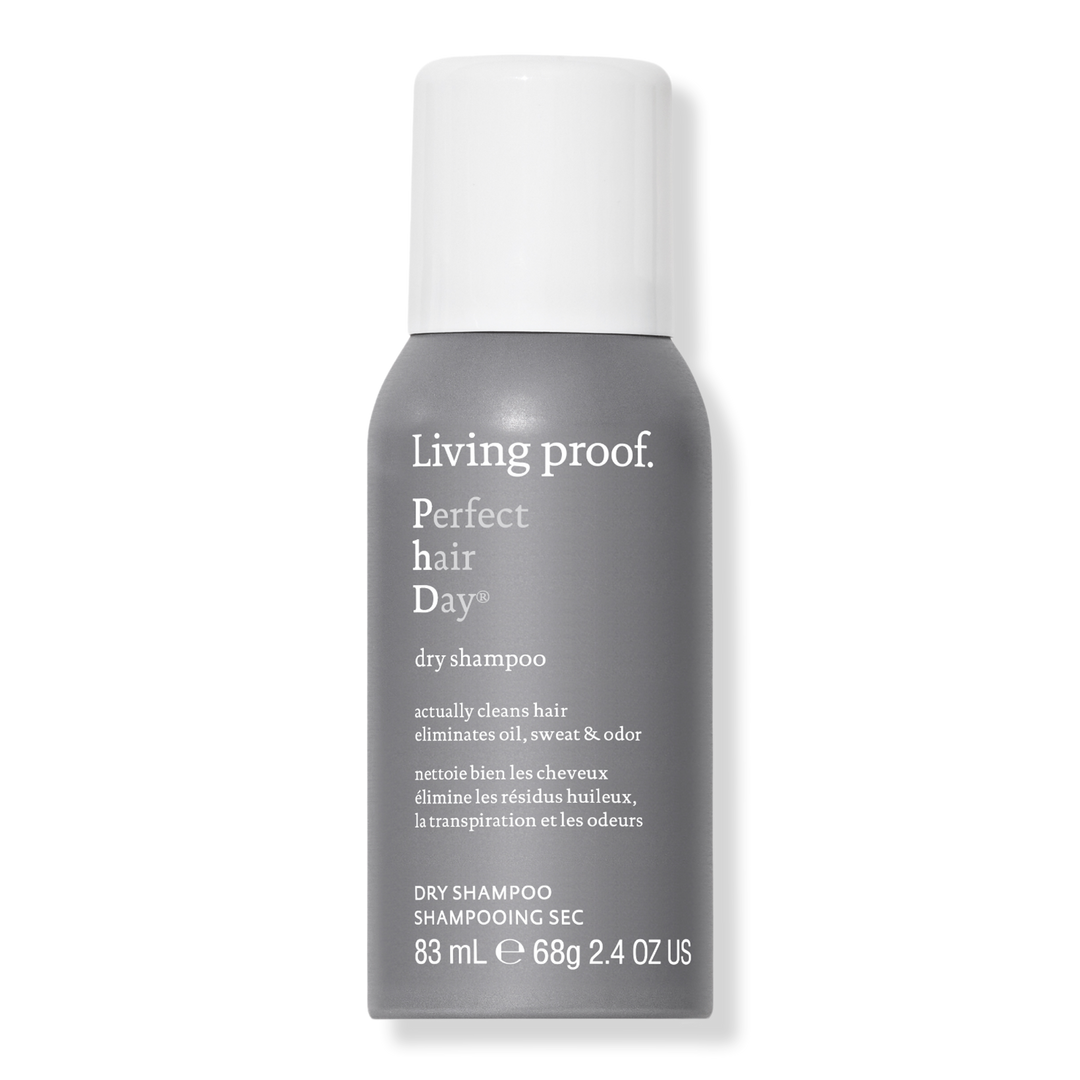
Living Proof Travel Size Perfect Hair Day Dry Shampoo
A dry shampoo that actually cleans hair by absorbing oil, sweat, and odor while also adding body and texture.
Sulfate-free
Paraben-free
Color-safe
Silicone-free
Vegan
Cruelty-free
Optimized for Your Environment & Lifestyle
Nykaa
In stock
Recommended

Living Proof Travel Size Perfect Hair Day Dry Shampoo
Living Proof
living-proof-travel-size-perfect-hair-day-dry-shampoo
Dry Shampoo
10407566770469
Morning or Evening?
How often will you use this product?
Notes


Secure payment protection
Your Biodata Compatibility Analysis
Based on your 6 hair health indices and environmental factors
Poor Match
Significant incompatibilities
Growth Cycle Health Index
Hair Match
Hair Health Index Alignment
Optimal for OSI, SSI, DI, HSI
Ingredient Efficacy
Matching Ingredient Score
Environment Compatibility
Current UV, Air Quality & Humidity
Why This Works for Your Specific Profile
Damage Index:
Damage levels outside specified range may not benefit optimally from product formulation
Water Quality:
Hard water minerals overwhelm gentle formulation causing inadequate cleansing and progressive buildup
Hair:
No porosity-specific conflicts
Active Lifestyle:
Low activity produces insufficient stress or buildup making product intensity unnecessarily harsh
Your Hair Profile Integration
Your Hair Archetype

Density Level

Washing Frequency

Shedding Level

Oil Level
Your Hair Health Indices
Oil Secretion (OSI)
Very low oil production
Scalp Sensitivity (SSI)
Very low sensitivity
Growth Rate (CMR)
Poor metabolism rate
Damage Index (DI)
Minimal damage
Hair Strength (HSI)
Very weak strength
Softness Index (SI)
Significant improvement needed
Water & Environmental Integration

Water:


Expected Results & Timeline
Key Highlights

What is it?
Dry Shampoo with 18 ingredients

Who Is It For
Adults, All Genders

Budget
$18.00 - $36.00

Timeline
Immediate
Why You’ll Love It

What Does It Help With?
Oil absorption, Odor neutralization

Best for
Oily Scalp

Features
Absorbs oil, sweat, and odor; Delivers a fresh, time-release scent; Makes hair look, feel, and smell clean

Checks
Vegan, Cruelty-free, Clean Ingredients, Sustainable Packaging
Ingredients Overview
Ingredients List
Hydrofluorocarbon-152a, Isobutane, Alcohol-Denat., Oryza-Sativa-(Rice)-Starch, Propane, Hydroxypropylcellulose, Microcrystalline-Cellulose, Dipropylene-Glycol, Cetrimonium-Chloride, Caprylyl-Glycol, Disteardimonium-Hectorite, Pentylene-Glycol, Propanediol, Citronellyl-Methylcrotonate, Cellulose, Water/Eau/Aqua, Furcellaria-Lumbricalis-Extract, Zeolite, Ethylcellulose, C12-15-Alketh-2, Fragrance/Parfum, Ethylhexylglycerin, Limonene, Citronellol, Hexyl-Cinnamal, Benzyl-Salicylate, Citral, Linalool
Key Ingredients
Fast-absorbing powders, Odor neutralizers, Time-release fragrance
Ingredients Details
Cellulose
Common Name(s): Cellulose,cosmetic active,functional ingredient
CAS Number: N/a
DESCRIPTION
What It Does: Delivers characteristic cosmetic function at recommended use concentration.
Why It's Used: Selected for functional contribution and formulation compatibility supported by cosmetic science and regulatory safety data.
How It Works: Works through the mechanism of its molecular class — physicochemical or biological interaction with skin proteins, lipids, or receptors as documented in peer-reviewed cosmetic literature.
Typically Found In: Skin care formulations
TECHNICAL DETAILS
Primary Category: Active ingredient – cosmetic active
Secondary Functions: Skin conditioning
Application Areas:

Facial Skincare

Body Care
Hair Care
Beard Care
Color Cosmetics (Makeup)
Dietary/Oral Supplements
Typical Concentration Range: 0.1%–10%
SOURCING & ETHICS
Vegan Status: Conditional
Halal Status: Yes
Source Notes: Commercially produced for cosmetic use. verify vegan/halal status with supplier.
SKIN COMPATIBILITY
Irritancy Rating: 1/5 – very low
Comedogenicity Rating: 0/5 – non-comedogenic
Sensitivity Concerns: Well-tolerated by most skin types.
Safe for Sensitive Skin: Yes
SAFETY & COMPATIBILITY
Safety Profile: Good safety profile at recommended concentrations. ewg score: 1–2.
Works Well With: Standard skincare actives
Avoid Combining With: No known significant incompatibilities
SCIENTIFIC NOTE
Cellulose has an established safety and efficacy profile within the cosmetic regulatory framework at standard use concentrations.
Last Verified: Cosing database,cellulose technical literature
Primary Sources: 2026-03-12
Citral
Common Name(s): 3,7-dimethyl-2,6-octadienal,geranial+neral mix
CAS Number: 5392-40-5
DESCRIPTION
What It Does: Provides the defining intense lemon-citrus fragrance note.
Why It's Used: The lemon scent compound – citral defines the fresh lemon scent in lemon essential oil and lemongrass with potent antimicrobial activity.
How It Works: Mixture of e-isomer (geranial) and z-isomer (neral). antimicrobial via michael addition to thiol enzymes. inhibits nf-kb for anti-inflammatory activity. antioxidant via allylic aldehyde.
Typically Found In: Citrus fragrances,antibacterial products,lemon-scented cosmetics
TECHNICAL DETAILS
Primary Category: Fragrance component – lemon aldehyde
Secondary Functions: Skin conditioning
Application Areas:
Facial Skincare
Body Care
Hair Care
Beard Care
Color Cosmetics (Makeup)
Dietary/Oral Supplements
Typical Concentration Range: 0.001%–0.5%
SOURCING & ETHICS
Vegan Status: Yes – from lemon, lemongrass, melissa oils
Halal Status: Yes
Source Notes: Commercially produced for cosmetic use. verify vegan/halal status with supplier.
SKIN COMPATIBILITY
Irritancy Rating: 1/5 – very low
Comedogenicity Rating: 0/5 – non-comedogenic
Sensitivity Concerns: Well-tolerated by most skin types.
Safe for Sensitive Skin: Yes
SAFETY & COMPATIBILITY
Safety Profile: Eu cosmetics regulation: declared fragrance allergen. high sensitisation potential from alpha,beta-unsaturated aldehyde structure. ifra strict limits.
Works Well With: Standard skincare actives
Avoid Combining With: No known significant incompatibilities
SCIENTIFIC NOTE
Citral's high sensitisation potential (llna ec3 ~0.11%) is a consequence of its alpha,beta-unsaturated aldehyde structure providing a highly reactive michael acceptor for skin protein covalent binding. the e/z mixture (geranial/neral) in natural citral means both isomers contribute to the sensitisation burden – explaining why lemongrass oil (very high citral content, ~60-80%) is one of the more common essential oil allergens.
Last Verified: Cosing database,ifra standards
Primary Sources: 2026-03-12
Citronellol
Common Name(s): (r)-3,7-dimethyl-6-octen-1-ol,rhodinol
CAS Number: 106-22-9
DESCRIPTION
What It Does: Provides soft, lasting rose-floral fragrance note.
Why It's Used: Essential rose fragrance monoterpene for lasting smooth floral notes in high-quality perfumery and cosmetic fragrances.
How It Works: Allylic alcohol monoterpene provides fixative property in fragrance blends. good skin substantivity for lasting scent. softer, rounder rose note vs geraniol's fresher character. natural in rose otto at 18-34%.
Typically Found In: Rose perfumes,floral fragrances,luxury skincare
TECHNICAL DETAILS
Primary Category: Fragrance component – monoterpene alcohol
Secondary Functions: Skin conditioning
Application Areas:
Facial Skincare
Body Care
Hair Care
Beard Care
Color Cosmetics (Makeup)
Dietary/Oral Supplements
Typical Concentration Range: 0.001%–1%
SOURCING & ETHICS
Vegan Status: Yes – from rose, geranium, citronella oils
Halal Status: Yes
Source Notes: Commercially produced for cosmetic use. verify vegan/halal status with supplier.
SKIN COMPATIBILITY
Irritancy Rating: 1/5 – very low
Comedogenicity Rating: 0/5 – non-comedogenic
Sensitivity Concerns: Well-tolerated by most skin types.
Safe for Sensitive Skin: Yes
SAFETY & COMPATIBILITY
Safety Profile: Eu cosmetics regulation: declared fragrance allergen. ifra guidelines apply.
Works Well With: Standard skincare actives
Avoid Combining With: No known significant incompatibilities
SCIENTIFIC NOTE
Citronellol's r-enantiomer (natural) vs s-enantiomer (synthetic) provide meaningfully different scent character – a remarkable demonstration of chiral scent discrimination by olfactory receptors. the (r) form provides the characteristic rose note while the (s) form has a distinctly different, less pleasant character. this enantiomeric scent difference means that the biological handedness of naturally-sourced vs racemic synthetic citronellol produces perceptibly different fragrance quality.
Last Verified: Cosing database,ifra standards
Primary Sources: 2026-03-12
Ethylcellulose
Common Name(s): Ec,ethocel,cellulose ethyl ether
CAS Number: 9004-57-3
DESCRIPTION
What It Does: Provides water-resistant cellulose film for sustained film formation and active encapsulation.
Why It's Used: Water-resistant cellulose film former for long-lasting topical products and active ingredient microencapsulation.
How It Works: Ethyl substitution makes cellulose hydrophobic. dissolves in organic solvents for application, depositing water-resistant film on evaporation. thermoplastic character enables heat processing. used in controlled-release applications for gradual active delivery.
Typically Found In: Long-lasting products,active encapsulation,film-coating applications
TECHNICAL DETAILS
Primary Category: Functional ingredient – cellulose film former
Secondary Functions: Skin conditioning
Application Areas:
Facial Skincare
Body Care
Hair Care
Beard Care
Color Cosmetics (Makeup)
Dietary/Oral Supplements
Typical Concentration Range: 0.1%–10%
SOURCING & ETHICS
Vegan Status: Yes – from cellulose (plant)
Halal Status: Yes
Source Notes: Commercially produced for cosmetic use. verify vegan/halal status with supplier.
SKIN COMPATIBILITY
Irritancy Rating: 1/5 – very low
Comedogenicity Rating: 0/5 – non-comedogenic
Sensitivity Concerns: Well-tolerated by most skin types.
Safe for Sensitive Skin: Yes
SAFETY & COMPATIBILITY
Safety Profile: Good safety profile at recommended concentrations. ewg score: 1–2.
Works Well With: Standard skincare actives
Avoid Combining With: No known significant incompatibilities
SCIENTIFIC NOTE
Ethylcellulose's hydrophobic character (ethyl groups replacing hydroxyl groups) is in complete contrast to its parent cellulose (highly water-soluble hec or cmc). this inversion from hydrophilic to hydrophobic demonstrates that cellulose ether chemistry can produce nearly any desired polarity by choosing the substituting group – providing a family of cellulose derivatives spanning from highly hydrophilic (cmc) to highly hydrophobic (ethylcellulose).
Last Verified: Cosing database,dow ethocel technical data,cir safety assessment
Primary Sources: 2026-03-12
Personalized Usage Instructions
How to Use
Step 1
Shake can extremely well for maximum cleaning results
Step 2
Hold canister six to ten inches away from dry hair
Step 3
Section hair thoroughly and apply product in a sweeping motion to dirty/oily areas
Step 4
Wait 30 seconds for the powders to activate and cleanse
Step 5
Then remove by massaging and shaking at roots with fingers or brush hair
Step 1
Apply more if needed, make sure to shake again
Medical Chemicals

Protein/Moisture
- Moisture
pH Level
-

Porosity Taget
- Normal Porosity
Customized for Your Profile
Scalp Condtions
Oil Control
Climate Suitability
Humid, Dry
Clinical Claims
Frequency
Shake can extremely well for maximum cleaning results. Hold canister six to ten inches away from dry hair. Section hair thoroughly and apply product in a sweeping motion to dirty/oily areas. Wait 30 seconds for the powders to activate and cleanse. Then remove by massaging and shaking at roots with fingers or brush hair. Apply more if needed, make sure to shake again.
Product Information

Vegan
Cruelty-free
Clean Ingredients
Sustainable Packaging
