
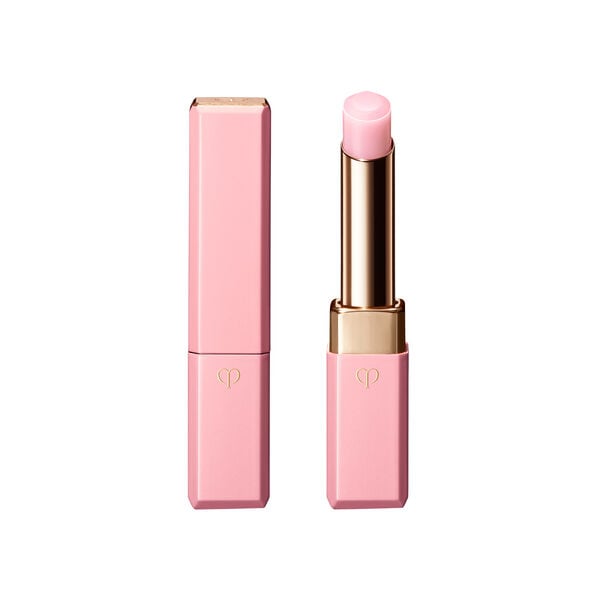

Clé de Peau Beauté
Lip Glorifier - Neutral Pink

Lip Glorifier - Neutral Pink
Clé de Peau Beauté
lip-glorifier-neutral-pink
Lip care
9605075829029
Morning or Evening?
How often will you use this product?
Notes


Highlights
WHAT IS IT?
Tinted lip balm
FEATURES
A hydrating tinted lip balm that delivers sheer color and glow, while protecting lips from dryness.
BEST FOR
All skin types
CHECKS
Alcohol-free
Who Is It For?
Not Specified Likely For AdultsWhat Does It Help With?
Dryness Dullness Preps Lips For LipstickBudget
PremiumHow To Use
Which routine should it be used in?
Instructions:
Key Information

What Clé de Peau Beauté Says
Product Description:
A hydrating tinted lip balm that delivers sheer color and glow, while protecting lips from dryness. Enhances the natural color of the lips for a dewy glow. Intensely hydrates to diminish dryness and cracking, while creating the appearance of fuller lips. When used as a lip primer, the Lip Glorifier improves the performance of lipstick by acting as a lightweight layer that preps and smooths lips. With prolonged use, lips appear deeply moisturized and dullness is visibly diminished.
About the Brand:
Ingredients Overview
Ingredients List
MACADAMIA TERNIFOLIA SEED OIL・HYDROGENATED POLYISOBUTENE・TRIISOSTEARIN・DIISOSTEARYL MALATE・PHYTOSTERYL/OCTYLDODECYL LAUROYL GLUTAMATE・POLYETHYLENE・PENTAERYTHRITYL TETRAETHYLHEXANOATE・MICROCRYSTALLINE WAX(CERA MICROCRISTALLINA/CIRE MICROCRISTALLINE)・EUPHORBIA CERIFERA (CANDELILLA) WAX(CANDELILLA CERA/CIRE DE CANDELILLA)・BUTYROSPERMUM PARKII (SHEA) BUTTER・TOCOPHEROL・STEARYL GLYCYRRHETINATE・TITANIUM DIOXIDE (CI 77891)・FRAGRANCE (PARFUM)・SIMETHICONE・MENTHOL・RED 21 (CI 45380)・IRON OXIDES (CI 77491)・GLYCERYL DIISOSTEARATE・ROSA CANINA FRUIT OIL・CAMELLIA JAPONICA SEED OIL・SIMMONDSIA CHINENSIS (JOJOBA) SEED OIL・CITRONELLOL・LINALOOL・GERANIOL・ALUMINUM HYDROXIDE・RED 7 LAKE (CI 15850)・POLYSILICONE-2・BHT・IRON OXIDES (CI 77499)・IRON OXIDES (CI 77492)・STEARIC ACID・RED 6 (CI 15850)・YELLOW 6 LAKE (CI 15985)・BLUE 1 LAKE (CI 42090)・ASCORBYL DIPALMITATE
Key Ingredients
Tocopherol, Ascorbyl Dipalmitate, Stearyl Glycyrrhetinate, Menthol
Ingredients Details
Butyrospermum Parkii Shea Butter
Common Name(s): Butyrospermum parkii shea butter
DESCRIPTION
What It Does: Delivers targeted skin-conditioning or bioactive benefits through a specific mechanism of action suited to the formulation's intended purpose.
Why It's Used: Specialty actives address specific skin concerns through targeted molecular mechanisms, providing efficacy beyond what base formulation ingredients alone can achieve.
How It Works: The bioactive compound interacts with specific molecular targets in skin cells or the extracellular matrix — enzymes, receptors, structural proteins, or signaling molecules — triggering beneficial biological responses.
Typically Found In: Serums,treatments,moisturizers,specialty products
TECHNICAL DETAILS
Primary Category: Specialty actives
Secondary Functions: Skin-conditioning,anti-aging
Application Areas:

Facial Skincare

Body Care
Hair Care
Beard Care
Color Cosmetics (Makeup)
Dietary/Oral Supplements
Typical Concentration Range: 0.01–5%
SOURCING & ETHICS
Vegan Status: Conditional - supplier confirmation required
Halal Status: Unverified - supplier confirmation required
Source Notes: Specialty active ingredient; check individual sourcing for vegan status. [audit 2026-07-29 rev2: the record's own source_notes does not assert a non-animal origin, or instructs the reader to verify with the supplier; "yes" asserts knowledge the record does not hold. determination requires shariah-panel sign-off.]
SKIN COMPATIBILITY
Irritancy Rating: 1899-12-31 00:00:00 -0800
Sensitivity Concerns: Low sensitization potential at recommended use concentrations.
Safe for Sensitive Skin: Yes
SAFETY & COMPATIBILITY
Safety Profile: Well-characterized cosmetic ingredient with established safety profile. generally non-irritating at typical use concentrations. suitable for leave-on and rinse-off cosmetics.
Works Well With: Niacinamide,hyaluronic acid,vitamin c,peptides
Avoid Combining With: Incompatible with oxidizing agents; check ph stability
SCIENTIFIC NOTE
Specialty actives typically work through enzyme inhibition (e.g., tyrosinase inhibition for brightening, mmp inhibition for anti-aging), receptor activation (e.g., retinoid receptors, ppar-γ for barrier genes), or transcription factor modulation (e.g., nrf2 for antioxidant gene upregulation). structure-activity relationships determine potency and selectivity.
Last Verified: 2025-01-15
Primary Sources: Cosing eu database; pcpc cosmetic ingredient safety reviews; ingredient-specific safety and efficacy literature
Diisostearyl Malate
Common Name(s): Diisostearyl malate,cosmetic active,functional ingredient
CAS Number: N/a
DESCRIPTION
What It Does: Delivers characteristic cosmetic function at recommended use concentration.
Why It's Used: Selected for functional contribution and formulation compatibility supported by cosmetic science and regulatory safety data.
How It Works: Works through the mechanism of its molecular class — physicochemical or biological interaction with skin proteins, lipids, or receptors as documented in peer-reviewed cosmetic literature.
Typically Found In: Skin care formulations
TECHNICAL DETAILS
Primary Category: Active ingredient – cosmetic active
Secondary Functions: Skin conditioning
Application Areas:
Facial Skincare
Body Care
Hair Care
Beard Care
Color Cosmetics (Makeup)
Dietary/Oral Supplements
Typical Concentration Range: 0.1%–10%
SOURCING & ETHICS
Vegan Status: Conditional - supplier confirmation required
Halal Status: Unverified - supplier confirmation required
Source Notes: Commercially produced for cosmetic use. verify vegan/halal status with supplier. [audit 2026-07-29 rev2: the record's own source_notes does not assert a non-animal origin, or instructs the reader to verify with the supplier; "yes" asserts knowledge the record does not hold. determination requires shariah-panel sign-off.]
SKIN COMPATIBILITY
Irritancy Rating: 1/5 – very low
Comedogenicity Rating: 0/5 – non-comedogenic
Sensitivity Concerns: Well-tolerated by most skin types.
Safe for Sensitive Skin: Yes
SAFETY & COMPATIBILITY
Safety Profile: Good safety profile at recommended concentrations. ewg score: 1–2.
Works Well With: Standard skincare actives
Avoid Combining With: No known significant incompatibilities
SCIENTIFIC NOTE
Diisostearyl malate has an established safety and efficacy profile within the cosmetic regulatory framework at standard use concentrations.
Last Verified: 2026-03-12
Primary Sources: Cosing database,diisostearyl malate technical literature
Euphorbia Cerifera Candelilla Wax
Common Name(s): Euphorbia cerifera candelilla wax
DESCRIPTION
What It Does: Provides antioxidant protection, soothing anti-inflammatory effects, and skin-conditioning benefits through plant-derived polyphenols and phytochemicals.
Why It's Used: Plant extracts concentrate bioactive phytochemicals evolved for environmental protection — uv, microbial, and oxidative stressors — that translate to skin benefits.
How It Works: Polyphenols (flavonoids, phenolic acids) inhibit nf-κb-mediated inflammatory signaling, scavenge reactive oxygen species through electron donation, and chelate pro-oxidant metal ions to reduce oxidative skin damage.
Typically Found In: Lipsticks,balms,creams,deodorants
TECHNICAL DETAILS
Primary Category: Waxes
Secondary Functions: Emollient,film former
Application Areas:
Facial Skincare
Body Care
Hair Care
Beard Care
Color Cosmetics (Makeup)
Dietary/Oral Supplements
Typical Concentration Range: 1–40%
SOURCING & ETHICS
Vegan Status: Conditional - supplier confirmation required
Halal Status: Unverified - supplier confirmation required
Source Notes: Plant-derived or synthetic wax; check source for vegan status. [audit 2026-07-29 rev2: the record's own source_notes does not assert a non-animal origin, or instructs the reader to verify with the supplier; "yes" asserts knowledge the record does not hold. determination requires shariah-panel sign-off.]
SKIN COMPATIBILITY
Irritancy Rating: 1899-12-31 00:00:00 -0800
Comedogenicity Rating: 1899-12-31 00:00:00 -0800
Sensitivity Concerns: Low sensitization potential at recommended use concentrations.
Safe for Sensitive Skin: Yes
SAFETY & COMPATIBILITY
Safety Profile: Well-characterized cosmetic ingredient with established safety profile. generally non-irritating at typical use concentrations. suitable for leave-on and rinse-off cosmetics.
Works Well With: Other waxes,emollients,pigments
Avoid Combining With: Strongly alkaline conditions
SCIENTIFIC NOTE
Plant secondary metabolites (flavonoids, terpenes, phenolic acids) are biosynthesized as defense compounds against uv, herbivores, and pathogens. their anti-inflammatory activity typically derives from competitive inhibition of cox-2 and 5-lox enzymes (ic50 1–50 µm), while antioxidant activity involves single electron transfer (set) and hydrogen atom transfer (hat) mechanisms with structure-dependent rate constants.
Last Verified: 2025-01-15
Primary Sources: Cosing eu database; pcpc cosmetic ingredient safety reviews; ingredient-specific safety and efficacy literature
Hydrogenated Polyisobutene
Common Name(s): Polyisobutylene hydrogenated,pib,hpib
DESCRIPTION
What It Does: Provides viscous tacky-free emolliency with excellent adhesion for lip care and occlusive moisturisation.
Why It's Used: The lip care emollient standard — hydrogenated pib provides the ideal lip gloss and lip balm texture: high gloss, high adhesion, long-lasting, and tacky-free in a single hydrocarbon ingredient.
How It Works: Saturated branched polymer provides high viscosity without tackiness (unlike glycols). excellent adhesion to mucous membrane and skin from polymer chain entanglement. occlusive moisture barrier from dense hydrocarbon structure. mineral oil-like properties with higher molecular weight for longer retention.
Typically Found In: Lip gloss,lip balm,occlusive moisturisers,body products
TECHNICAL DETAILS
Primary Category: Functional ingredient – synthetic wax emollient
Secondary Functions: Barrier sealing,softening
Application Areas:
Facial Skincare
Body Care
Hair Care
Beard Care
Color Cosmetics (Makeup)
Dietary/Oral Supplements
Typical Concentration Range: 1%–40%
SOURCING & ETHICS
Vegan Status: Conditional - supplier confirmation required
Halal Status: Unverified - supplier confirmation required
Source Notes: Plant-derived, synthetic or animal-derived. verify source. [audit 2026-07-29 rev2: the record's own source_notes does not assert a non-animal origin, or instructs the reader to verify with the supplier; "yes" asserts knowledge the record does not hold. determination requires shariah-panel sign-off.]
SKIN COMPATIBILITY
Irritancy Rating: 1/5 – very low
Comedogenicity Rating: 1/5 – low; formulation-dependent
Sensitivity Concerns: Non-irritating.
Safe for Sensitive Skin: Yes
SAFETY & COMPATIBILITY
Safety Profile: Excellent safety profile. ewg score: 1.
Works Well With: Humectants,ceramides,actives as carrier
Avoid Combining With: No significant incompatibilities
SCIENTIFIC NOTE
Hydrogenated pib's tacky-free high gloss is attributable to its narrow molecular weight distribution (vs natural waxes' broad distribution) providing uniform polymer chain length. uniform chain length creates ordered surface films that reflect light specularly (high gloss) while the branched polymer structure prevents the intermolecular attractions that cause tackiness in linear polymers.
Last Verified: 2026-03-12
Primary Sources: Cosing database,cir safety assessment