
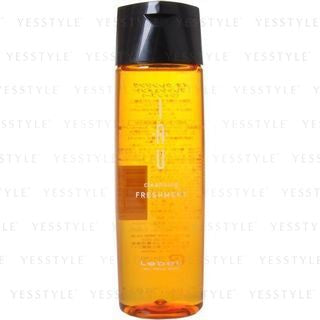

LebeL
LebeL IAU Cleansing Freshment Shampoo
LebeL IAU Cleansing Freshment Shampoo is a professional salon-grade shampoo designed for oily scalps. Formulated with 100% plant-derived ingredients, it gently and effectively cleanses the scalp and hair, restoring balance and ensuring optimal hair condition. The shampoo normalizes sebaceous gland activity, reduces seborrhea and dandruff, has anti-inflammatory properties, and accelerates wound healing. It refreshes the scalp, prevents hair loss, and stimulates hair growth, leaving hair shiny and healthy. The product lathers well and has a refreshing grapefruit scent that adds energy and alleviates stress symptoms.
Sulfate-free
Silicone-free
Natural
Oily Scalp
Dandruff
Hair Loss
Optimized for Your Environment & Lifestyle
Nykaa
In stock
Recommended

LebeL IAU Cleansing Freshment Shampoo
LebeL
lebel-iau-cleansing-freshment-shampoo
Shampoo
10523331559717
Morning or Evening?
How often will you use this product?
Notes


Secure payment protection
Your Biodata Compatibility Analysis
Based on your 6 hair health indices and environmental factors
Poor Match
Significant incompatibilities
Growth Cycle Health Index
Hair Match
Hair Health Index Alignment
Optimal for OSI, SSI, DI, HSI
Ingredient Efficacy
Matching Ingredient Score
Environment Compatibility
Current UV, Air Quality & Humidity
Why This Works for Your Specific Profile
Damage Index:
Damage levels outside specified range may not benefit optimally from product formulation
Water Quality:
No water quality-specific conflicts
Hair:
No porosity-specific conflicts
Active Lifestyle:
Low activity produces insufficient stress or buildup making product intensity unnecessarily harsh
Your Hair Profile Integration
Your Hair Archetype

Density Level

Washing Frequency

Shedding Level

Oil Level
Your Hair Health Indices
Oil Secretion (OSI)
Very low oil production
Scalp Sensitivity (SSI)
Very low sensitivity
Growth Rate (CMR)
Poor metabolism rate
Damage Index (DI)
Minimal damage
Hair Strength (HSI)
Very weak strength
Softness Index (SI)
Significant improvement needed
Water & Environmental Integration

Water:


Expected Results & Timeline
Key Highlights

What is it?
Shampoo with 100% plant-derived ingredients

Who Is It For
All ages, Unisex

Budget
$26.80 - $53.60

Timeline
Immediate freshness; improved scalp condition with regular use
Why You’ll Love It

What Does It Help With?
Oily scalp, dandruff, hair loss

Best for
Oily Scalp

Features
Deep cleansing, normalizes sebaceous glands, reduces dandruff, anti-inflammatory, stimulates hair growth, refreshing grapefruit scent

Checks
Silicone-free
Ingredients Overview
Ingredients List
PEG-3-coconut-fatty-acid-amide-MEA-sulfate-Na, lauroyl-methyl-alanine-Na, cocamide-methyl-MEA, cocamidopropyl-betaine, lauramidopropyl-hydroxysultaine, polysorbate-80, DPG, glycyrrhizic-acid-2K, polyquaternium-10, polyquaternium-47, citric-acid, menthol, sodium-citrate, etidronic-acid, shiikuwasha-pericarp-extract, sodium-benzoate, methylisothiazolinone, EDTA-2Na, BG, fragrance
Key Ingredients
Coconut Amide, Licorice Root Extract, Shekwasha Citrus Cedra Extract
Ingredients Details
Fragrance
Common Name(s): Fragrance ingredient,eu allergen or aromatic component,olfactory/flavour
CAS Number: N/a
DESCRIPTION
What It Does: Provides the complete fragrance profile contributing to product sensory experience and consumer appeal.
Why It's Used: Fragrance is a major consumer purchase driver — up to 70% of consumers make purchasing decisions partially based on product scent.
How It Works: Fragrance blends interact with olfactory receptors providing the sensory profile — complex mixtures activate multiple receptor types for rich, multidimensional scent experiences.
Typically Found In: All fragrance products
TECHNICAL DETAILS
Primary Category: Active ingredient – cosmetic active
Secondary Functions: Skin conditioning
Application Areas:

Facial Skincare

Body Care
Hair Care
Beard Care
Color Cosmetics (Makeup)
Dietary/Oral Supplements
Typical Concentration Range: Standard use levels
SOURCING & ETHICS
Vegan Status: Conditional - supplier confirmation required
Halal Status: Unverified - supplier confirmation required
Source Notes: Commercially produced for cosmetic use. verify vegan/halal status with supplier. [audit 2026-07-29 rev2: the record's own source_notes does not assert a non-animal origin, or instructs the reader to verify with the supplier; "yes" asserts knowledge the record does not hold. determination requires shariah-panel sign-off.]
SKIN COMPATIBILITY
Irritancy Rating: 1/5 – very low
Comedogenicity Rating: 0/5 – non-comedogenic
Sensitivity Concerns: Well-tolerated by most skin types.
Safe for Sensitive Skin: Yes
SAFETY & COMPATIBILITY
Safety Profile: Good safety profile at recommended concentrations. ewg score: 1–2.
Works Well With: Standard skincare actives
Avoid Combining With: No known significant incompatibilities
SCIENTIFIC NOTE
Ifra guidelines set usage limits for fragrance ingredients based on skin sensitisation and phototoxicity assessment for each application category.
Last Verified: 2026-03-12
Primary Sources: Eu regulation 1223/2009 annex iii,ifra standards,fragrance allergen declaration requirements
Licorice Root Extract
Common Name(s): Licorice root extract,licorice extract,glycyrrhiza extract
CAS Number: 84775-66-6
DESCRIPTION
What It Does: Brightens skin and reduces hyperpigmentation through glabridin tyrosinase inhibition while calming inflammation.
Why It's Used: Combined brightening + soothing in one botanical – ideal for hyperpigmentation with skin reactivity where brightening actives (ahas, retinoids) increase sensitivity.
How It Works: Glabridin inhibits uvb-induced melanin synthesis and tyrosinase activity. isoliquiritigenin inhibits melanocyte-stimulating hormone (msh). glycyrrhizinic acid inhibits prostaglandin synthesis for anti-inflammatory activity. licochalcone a inhibits nf-kb.
Typically Found In: Brightening serums,anti-inflammatory formulas,post-sun products,sensitive skin brightening
TECHNICAL DETAILS
Primary Category: Active ingredient – soothing / anti-inflammatory
Secondary Functions: Glabridin tyrosinase inhibition,anti-inflammatory,post-inflammatory hyperpigmentation
Application Areas:
Facial Skincare
Body Care
Hair Care
Beard Care
Color Cosmetics (Makeup)
Dietary/Oral Supplements
Typical Concentration Range: 0.1%–5%
SOURCING & ETHICS
Vegan Status: Yes – glycyrrhiza glabra root-derived
Halal Status: Yes
Source Notes: Plant-derived extract or synthetic.
SKIN COMPATIBILITY
Irritancy Rating: 1/5 – very low
Comedogenicity Rating: 0/5 – non-comedogenic
Sensitivity Concerns: Non-irritating; ideal for reactive and sensitive skin.
Safe for Sensitive Skin: Yes – particularly recommended for sensitive skin
SAFETY & COMPATIBILITY
Safety Profile: Excellent safety profile. ewg score: 1.
Works Well With: Ceramides,panthenol,allantoin,hyaluronic acid,centella asiatica
Avoid Combining With: No significant incompatibilities
SCIENTIFIC NOTE
Glabridin's tyrosinase inhibition mechanism differs from both kojic acid (copper chelation) and arbutin (substrate competition) – it inhibits the enzyme's catalytic conformation without substrate competition, providing a third distinct brightening mechanism suitable for formulation with the other inhibitor types for synergistic brightening.
Last Verified: 2026-03-12
Primary Sources: Cosing database,yokota et al. glabridin study,plenkov et al. licorice review
Menthol
Common Name(s): L-menthol,peppermint camphor,(-)-menthol
CAS Number: 89-78-1
DESCRIPTION
What It Does: Activates trpm8 cold thermoreceptors for intense cooling sensation and analgesic activity.
Why It's Used: The most potent cosmetic cooling agent – direct trpm8 agonist providing cooling sensation without actual temperature reduction for refreshing and analgesic formulations.
How It Works: Potent trpm8 (menthol receptor/cold thermosensor) agonist – activation at room temperature mimics cold sensation without actual cooling. anti-pruritic via trpm8 activation competing with itch c-fiber signaling. antimicrobial via membrane disruption.
Typically Found In: Cooling products,scalp treatments,oral care,pain relief,foot care,after-sun
TECHNICAL DETAILS
Primary Category: Active ingredient – cooling sensory terpenoid
Secondary Functions: Redness reduction,anti-inflammatory,calming
Application Areas:
Facial Skincare
Body Care
Hair Care
Beard Care
Color Cosmetics (Makeup)
Dietary/Oral Supplements
Typical Concentration Range: 0.1%–2%
SOURCING & ETHICS
Vegan Status: Conditional - supplier confirmation required
Halal Status: Unverified - supplier confirmation required
Source Notes: Plant-derived extract or synthetic. [audit 2026-07-29 rev2: status downgraded on audit. determination requires shariah-panel sign-off.]
SKIN COMPATIBILITY
Irritancy Rating: 2/5 – low to moderate; potential sensitizer
Comedogenicity Rating: 0/5 – non-comedogenic
Sensitivity Concerns: Non-irritating; ideal for reactive and sensitive skin.
Safe for Sensitive Skin: Avoid near eyes. use with caution at concentrations above 1% for sensitive skin.
SAFETY & COMPATIBILITY
Safety Profile: Eu max 4.5% (leave-on); regulations vary by application site. avoid on infants' face.
Works Well With: Ceramides,panthenol,allantoin,hyaluronic acid,centella asiatica
Avoid Combining With: No significant incompatibilities
SCIENTIFIC NOTE
Menthol's exceptional cooling potency stems from its ec50 for trpm8 activation of approximately 10μm (vs camphor's ec50 of ~5mm – 500× lower potency). this 500× potency advantage explains why even tiny concentrations of menthol provide intense cooling, while much higher concentrations of camphor are required for equivalent sensation.
Last Verified: 2026-03-12
Primary Sources: Cosing database,mckemy et al. menthol trpm8 discovery,cir safety assessment
Methylisothiazolinone
Common Name(s): Mit,kathon,neolone
CAS Number: 2682-20-4
DESCRIPTION
What It Does: Provides highly potent broad-spectrum preservation at very low concentrations in rinse-off formulations.
Why It's Used: Most potent cosmetic preservative — mit provides effective preservation at concentrations 10-100× lower than most other preservatives, enabling clean-label preservation at minimal ingredient load.
How It Works: Electrophilic isothiazolinone ring reacts with bacterial thiol enzymes (glutathione, coa-dependent enzymes) via michael addition for rapid kill. very potent — mic vs e. coli 0.06μg/ml (vs phenoxyethanol mic ~400μg/ml — 6000× more potent). rapidly biodegradable.
Typically Found In: Rinse-off shampoos,body washes,conditioners
TECHNICAL DETAILS
Primary Category: Functional ingredient – isothiazolinone preservative
Secondary Functions: Skin conditioning
Application Areas:
Facial Skincare
Body Care
Hair Care
Beard Care
Color Cosmetics (Makeup)
Dietary/Oral Supplements
Typical Concentration Range: 0.0015%–0.0015% (max 15ppm eu rinse-off)
SOURCING & ETHICS
Vegan Status: Conditional - supplier confirmation required
Halal Status: Unverified - supplier confirmation required
Source Notes: Commercially produced for cosmetic use. verify vegan/halal status with supplier. [audit 2026-07-29 rev2: the record's own source_notes does not assert a non-animal origin, or instructs the reader to verify with the supplier; "yes" asserts knowledge the record does not hold. determination requires shariah-panel sign-off.]
SKIN COMPATIBILITY
Irritancy Rating: 1/5 – very low
Comedogenicity Rating: 0/5 – non-comedogenic
Sensitivity Concerns: Well-tolerated by most skin types.
Safe for Sensitive Skin: Yes
SAFETY & COMPATIBILITY
Safety Profile: Eu regulation 2014/1298: mit banned from leave-on products. max 15ppm in rinse-off only. contact sensitiser — causes occupational dermatitis epidemic in hairdressers and consumers. sccs noted no safe level for leave-on. 2016 eu restriction driven by major sensitisation epidemic.
Works Well With: Standard skincare actives
Avoid Combining With: No known significant incompatibilities
SCIENTIFIC NOTE
Mit's sensitisation epidemic (2010-2015) is one of the most significant cosmetic safety events in modern dermatology: a dramatic increase in contact allergy patch test positive rates from <1% (2005) to 7% (2015) in the eu was directly traceable to the widespread introduction of mit in leave-on products. this epidemic prompted the fastest eu cosmetic regulatory action in history and demonstrates the critical importance of patch test surveillance in monitoring emerging cosmetic allergens.
Last Verified: 2026-03-12
Primary Sources: Cosing database,eu regulation 2014/1298,yazar et al. mit sensitisation epidemic study
Personalized Usage Instructions
How to Use
Step 1
Pre-lather a small amount of shampoo (5-7 ml, depending on hair length) in the palms with water
Step 2
Apply to wet scalp, add a little water, massage, distribute the foam over the entire length of the hair, rinse out
Step 3
Repeat the procedure again
Medical Chemicals

Protein/Moisture
- Protein/Moisture balance
pH Level
- Acidic

Porosity Taget
- Normal Porosity
Customized for Your Profile
Scalp Condtions
Anti-Dandruff, Seborrheic Dermatitis Safe, Sensitive Scalp, pH Balanced, Oil Control, Dry Scalp
Climate Suitability
Humid, Dry, Hard Water, Soft Water, UV Protection, Pollution Shield, Summer
Clinical Claims
Frequency
Pre-lather a small amount of shampoo (5-7 ml, depending on hair length) in the palms with water. Apply to wet scalp, add a little water, massage, distribute the foam over the entire length of the hair, rinse out. Repeat the procedure again.
Product Information

Silicone-free