

Lakme
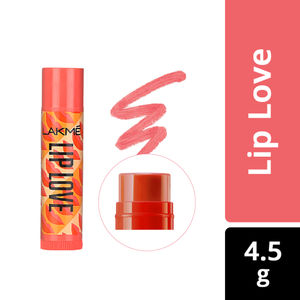
Lakme Lip Love Chapstick - Mango (4.5 g)

Lakme Lip Love Chapstick - Mango (4.5 g)
Lakme
lakme-lip-love-chapstick-mango-4-5-g
Lip care
10084881105189
Morning or Evening?
How often will you use this product?
Notes


Highlights
WHAT IS IT?
Lip balm product with multiple ingredient variants (Mango, Cherry, Strawberry, Apricot, Caramel, Raspberry, Insta Pink color changing) & 7 ingredient variants available
FEATURES
22 hours of intense moisture, SPF 15 protection, nourishing lip balm, available in multiple vibrant shades, including innovative color-changing Insta Pink variant
BEST FOR
sensitive
CHECKS
Does not explicitly list what it excludes; no explicit fragrance-free or preservative-free claim in content but tags suggest preservative-free and fragrance-free
Who Is It For?
What Does It Help With?
Protects And Nourishes Lips Treats Chapped Lips Treats Dry LipsBudget
Affordable (under $30)How To Use
Which routine should it be used in?
Instructions:
Key Information


What Lakme Says
Product Description:
GET SOFT LIPS ALL DAY WITH ALL NEW LAKME LIP LOVELakme Lip Love is a new super moisturizing formula in a convenient and vibrant pack. It gives you 22 hours of intense moisture so you can say bye to dry with soft lips that last all day. It has SPF 15 that helps protect your lips from the harmful rays of the sun. FOR YOUR LIPS WITH LOVEGet intense lip care with just the right touch of color chose from 5 vibrant shades and 1 colorless variant. Introducing an innovative colorchanging ‘Insta Pink’ variant which starts off as sheer and on application transforms into a shade of pink that is unique only to you. One quick swipe and you can seal in the moisture to get soft lips all day. Choose from vibrant shades• Cherry• Strawberry• Caramel• Mango • Apricot• Pure lip care – colorless• Insta Pink – color changing HOW TO APPLYYour everyday easy guide to soft lips Step 1 Uncap the stickStep 2 Twist open the pack such that the bullet comes outStep 3 Roll the bullet across your lips starting from the edges to the centre Step 4 Flaunt soft moisturized lips for 22 hrs
About the Brand:
Ingredients Overview
Ingredients List
Mango,Cherry,Strawberry,Apricot,Caramel,Raspberry,Insta Pink
Key Ingredients
Mango,Cherry,Strawberry,Apricot,Caramel
Ingredients Details
Apricot
Common Name(s): Apricot
DESCRIPTION
What It Does: Delivers targeted skin-conditioning or bioactive benefits through a specific mechanism of action suited to the formulation's intended purpose.
Why It's Used: Specialty actives address specific skin concerns through targeted molecular mechanisms, providing efficacy beyond what base formulation ingredients alone can achieve.
How It Works: The bioactive compound interacts with specific molecular targets in skin cells or the extracellular matrix — enzymes, receptors, structural proteins, or signaling molecules — triggering beneficial biological responses.
Typically Found In: Serums,treatments,moisturizers,specialty products
TECHNICAL DETAILS
Primary Category: Specialty actives
Secondary Functions: Skin-conditioning,anti-aging
Application Areas:

Facial Skincare

Body Care
Hair Care
Beard Care
Color Cosmetics (Makeup)
Dietary/Oral Supplements
Typical Concentration Range: 0.01–5%
SOURCING & ETHICS
Vegan Status: Conditional - supplier confirmation required
Halal Status: Unverified - supplier confirmation required
Source Notes: Specialty active ingredient; check individual sourcing for vegan status. [audit 2026-07-29 rev2: the record's own source_notes does not assert a non-animal origin, or instructs the reader to verify with the supplier; "yes" asserts knowledge the record does not hold. determination requires shariah-panel sign-off.]
SKIN COMPATIBILITY
Irritancy Rating: 1899-12-31 00:00:00 -0800
Sensitivity Concerns: Low sensitization potential at recommended use concentrations.
Safe for Sensitive Skin: Yes
SAFETY & COMPATIBILITY
Safety Profile: Well-characterized cosmetic ingredient with established safety profile. generally non-irritating at typical use concentrations. suitable for leave-on and rinse-off cosmetics.
Works Well With: Niacinamide,hyaluronic acid,vitamin c,peptides
Avoid Combining With: Incompatible with oxidizing agents; check ph stability
SCIENTIFIC NOTE
Specialty actives typically work through enzyme inhibition (e.g., tyrosinase inhibition for brightening, mmp inhibition for anti-aging), receptor activation (e.g., retinoid receptors, ppar-γ for barrier genes), or transcription factor modulation (e.g., nrf2 for antioxidant gene upregulation). structure-activity relationships determine potency and selectivity.
Last Verified: 2025-01-15
Primary Sources: Cosing eu database; pcpc cosmetic ingredient safety reviews; ingredient-specific safety and efficacy literature
Caramel
Common Name(s): Caramel colour,natural brown,e150
CAS Number: 8028-89-5
DESCRIPTION
What It Does: Provides natural warm-brown colour from heat-treated sugar for natural cosmetics.
Why It's Used: Natural brown colorant with food-grade safety credentials for clean beauty formulations requiring warm brown or amber shades.
How It Works: Complex mixture of pyranose-ring condensation products from heat-treated sugars. 5-hmf and melanoidin polymers provide brown colour. ph-stable in acidic formulations. soluble in water and lower alcohols.
Typically Found In: Natural cosmetics,bronzers,hair products
TECHNICAL DETAILS
Primary Category: Colorant – natural brown dye
Secondary Functions: Skin conditioning
Application Areas:
Facial Skincare
Body Care
Hair Care
Beard Care
Color Cosmetics (Makeup)
Dietary/Oral Supplements
Typical Concentration Range: 0.01%–5%
SOURCING & ETHICS
Vegan Status: Conditional - supplier confirmation required
Halal Status: Unverified - supplier confirmation required
Source Notes: Commercially produced for cosmetic use. verify vegan/halal status with supplier. [audit 2026-07-29 rev2: the record's own source_notes does not assert a non-animal origin, or instructs the reader to verify with the supplier; "yes" asserts knowledge the record does not hold. determination requires shariah-panel sign-off.]
SKIN COMPATIBILITY
Irritancy Rating: 1/5 – very low
Comedogenicity Rating: 0/5 – non-comedogenic
Sensitivity Concerns: Well-tolerated by most skin types.
Safe for Sensitive Skin: Yes
SAFETY & COMPATIBILITY
Safety Profile: Good safety profile at recommended concentrations. ewg score: 1–2.
Works Well With: Standard skincare actives
Avoid Combining With: No known significant incompatibilities
SCIENTIFIC NOTE
Caramel's colour develops through the maillard reaction between reducing sugars and amino acids at elevated temperatures, creating a complex mixture of coloured polymer (melanoidin) and small molecule chromophores. unlike single-compound dyes with defined absorption spectra, caramel's broad-spectrum absorption from multiple chromophores provides a naturally warm, complex brown impossible to replicate with a single synthetic dye.
Last Verified: 2026-03-12
Primary Sources: Cosing database,fda 21 cfr color additives