

Lakme
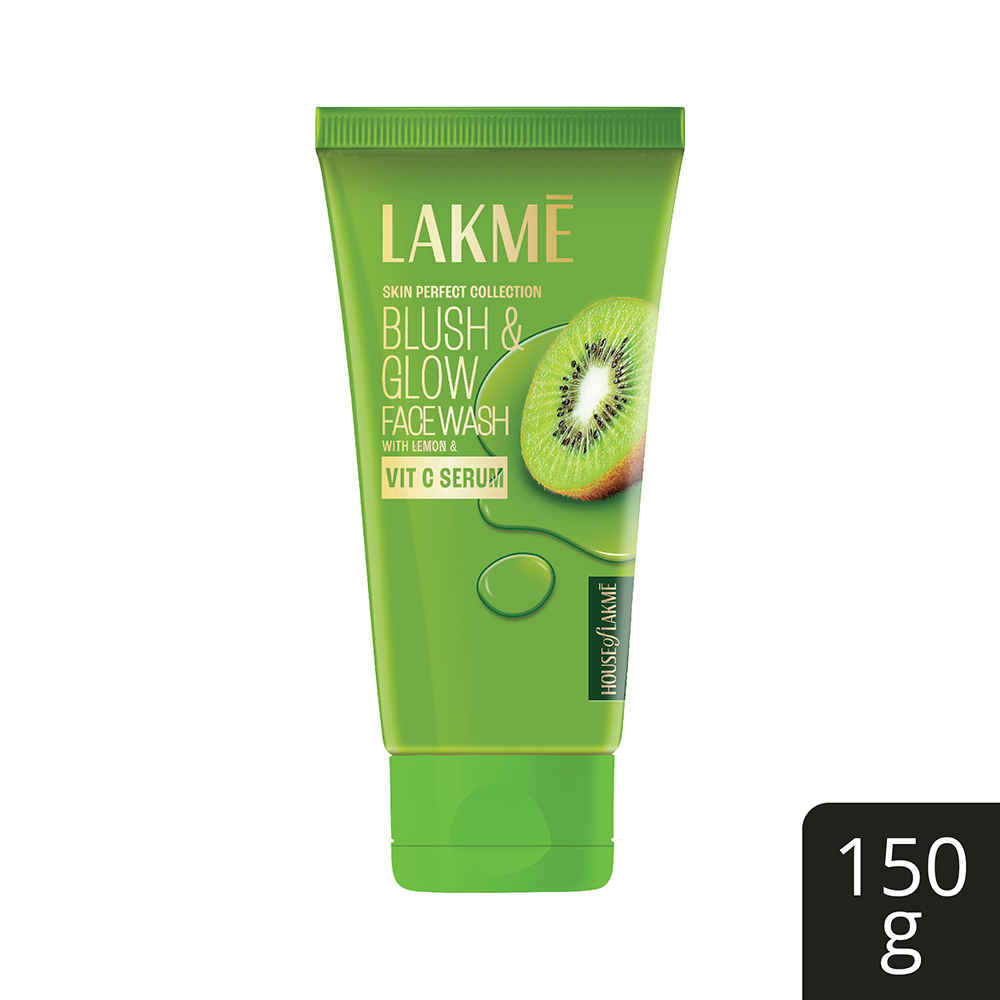
Lakme Blush & Glow Refreshing Face Wash with Vitamin C Serum and Kiwi Fruit Extracts, 150 gm

Lakme Blush & Glow Refreshing Face Wash with Vitamin C Serum and Kiwi Fruit Extracts, 150 gm
Lakme
lakme-blush-glow-refreshing-face-wash-with-vitamin-c-serum-and-kiwi-fruit-extracts-150-gm
Cleanse
10085079286053
Morning or Evening?
How often will you use this product?
Notes


Highlights
WHAT IS IT?
Face Wash with 6 key ingredient variants
FEATURES
Infused with Vitamin C Serum and fruit extracts, reduces dullness, smoothens and softens skin, gently exfoliates, ensures healthy glowing skin
BEST FOR
normal
CHECKS
Does not mention alcohol, preservatives, or parabens explicitly
Who Is It For?
Unisex Adult Skin (no Specific Age Or Gender Mentioned)What Does It Help With?
Dullness Reduction Hydration Smoothening Softening Glowing SkinBudget
Affordable (under $30)How To Use
Which routine should it be used in?
Instructions:
Key Information


What Lakme Says
Product Description:
Want skin that glows all day? Then you got to try Lakme Blush And Glow Facewash. It is infused with Vitamin C Serum and packed with fruits extracts which together help reduces dullness, smoothen and soften skin. It gently exfoliates and ensures healthy, glowing skin, always so that you can glow up every room you enter. Next time you need to step out, don’t fret about dressing up because you will glow up nevertheless! Yes, it really is as good as it sounds, and it only gets better. You can pick and choose between 3 incredible variants. If you’re looking to give your thirsty skin a boost of hydration and moisture, then Lakme Blush And Glow Strawberry Facewash is your definite go-to. If brightness is what you’re looking for, then you must opt for Lakme Blush And Lemon Facewash. If rejuvenated, refreshed skin is the need of the hour, then don’t think twice before picking up the Lakme Blush And Glow Kiwi Facewash. Give your skin the best it deserves with this fabulous range of Lakme Blush And Glow Facewash. Key Ingredients: Fruit extracts and anti-oxidants. About Lakme: Lakme has a vast product range specially crafted by experts for the Indian skin.
About the Brand:
Ingredients Overview
Ingredients List
Kiwi,Niacinamide,Lemon+Vitamin+C,Strawberry,Strawberry Crème,Glycolic Acid
Key Ingredients
Kiwi,Niacinamide,Lemon + Vitamin C
Ingredients Details
Glycolic Acid
Common Name(s): Hydroxyacetic acid,2-hydroxyacetic acid
CAS Number: 79-14-1
DESCRIPTION
What It Does: Provides maximum aha efficacy from the smallest most penetrating alpha-hydroxy acid.
Why It's Used: The most potent aha — glycolic acid's smallest molecular size provides the deepest penetration and highest efficacy of any alpha-hydroxy acid for exfoliation and anti-aging.
How It Works: Smallest aha (mw 76) provides deepest stratum corneum penetration. disrupts corneodesmosomes reducing cohesion. stimulates fibroblast collagen i and iii synthesis. efficacy is ph-dependent — free acid fraction determines activity.
Typically Found In: Chemical peels,body lotions,anti-aging serums,exfoliating toners
TECHNICAL DETAILS
Primary Category: Active ingredient – primary aha
Secondary Functions: Brightening,collagen stimulation
Application Areas:

Facial Skincare
Body Care

Hair Care
Beard Care
Color Cosmetics (Makeup)
Dietary/Oral Supplements
Typical Concentration Range: 1%–10% cosmetic; higher professional
SOURCING & ETHICS
Vegan Status: Yes – synthetic or fermentation-derived
Halal Status: Yes
Source Notes: Fermentation-derived or synthetic. ph must be ≤4.0 for aha activity.
SKIN COMPATIBILITY
Irritancy Rating: 2/5 – low to moderate
Comedogenicity Rating: 0/5 – non-comedogenic
Sensitivity Concerns: Photosensitizing – mandatory spf use. start at low frequency.
Safe for Sensitive Skin: Use with caution – spf required
SAFETY & COMPATIBILITY
Safety Profile: Eu cosmetics: max 10% leave-on, ph ≥3.5, mandatory sun protection advisory. professional peel concentrations regulated separately.
Works Well With: Niacinamide,ceramides,hyaluronic acid,spf
Avoid Combining With: Retinol in same step; multiple exfoliants simultaneously
SCIENTIFIC NOTE
Glycolic acid's ph-dependent efficacy is critical: at ph 3.0 ~100% is in the free acid (membrane-permeable) form; at ph 3.5 ~70%; at ph 4.0 ~50%. the eu ph ≥3.5 requirement reduces free acid proportion, lowering efficacy but also reducing irritation — why professional peel concentrations at lower ph are far more active than equivalent cosmetic concentrations.
Last Verified: Cosing database,eu aha guidelines,cir safety assessment
Primary Sources: 2026-03-12
Niacinamide
Common Name(s): Vitamin b3,nicotinamide,pyridine-3-carboxamide
CAS Number: 98-92-0
DESCRIPTION
What It Does: Niacinamide strengthens the skin barrier, reduces visible pore size, regulates sebum production, fades dark spots, and improves skin texture and tone.
Why It's Used: It is used because it addresses multiple skin concerns at once without irritation, making it suitable for all skin types. it is stable in formulations and pairs well with most other actives.
How It Works: Niacinamide inhibits the transfer of melanosomes (pigment packets) to skin cells, reducing hyperpigmentation. it also stimulates ceramide synthesis to strengthen the skin barrier and reduces inflammation by modulating cytokine activity.
Typically Found In: Serums,moisturizers,toners,cleansers,eye creams,sunscreens,primers
TECHNICAL DETAILS
Primary Category: Active ingredient – vitamin
Secondary Functions: Barrier repair,brightening,anti-inflammatory
Application Areas:
Facial Skincare
Body Care
Hair Care
Beard Care
Color Cosmetics (Makeup)
Dietary/Oral Supplements
Typical Concentration Range: 2%–10% (typical: 5%; higher concentrations may cause flushing in some individuals)
SOURCING & ETHICS
Vegan Status: Yes – synthetically produced
Halal Status: Yes – synthetic origin
Source Notes: Commercially produced via synthesis from nicotinic acid or 3-cyanopyridine. no animal-derived sources used in cosmetic-grade niacinamide.
SKIN COMPATIBILITY
Irritancy Rating: 1/5 – very low; concentrations above 10% may cause temporary flushing in sensitive individuals
Comedogenicity Rating: 0/5 – non-comedogenic
Sensitivity Concerns: At concentrations >10%, some users experience niacin flush (transient redness/tingling). generally very well-tolerated.
Safe for Sensitive Skin: Yes – one of the best-tolerated actives for sensitive skin
SAFETY & COMPATIBILITY
Safety Profile: Extensively studied and considered very safe. ewg hazard score: 1. no significant systemic toxicity concerns at topical concentrations.
Works Well With: Retinol,peptides,ahas/bhas,hyaluronic acid,ceramides,zinc,vitamin c,spf
Avoid Combining With: High concentrations of vitamin c (ascorbic acid) may theoretically convert to niacin – use at different times if using pure l-ascorbic acid above 15%
SCIENTIFIC NOTE
Niacinamide is a precursor to nad+ and nadp+, coenzymes vital to cellular energy metabolism. its benefits for dna repair and mitochondrial function make it a key ingredient in anti-aging strategies.
Last Verified: Cosing database,cir safety assessment,ewg skin deep,pubmed clinical studies
Primary Sources: 2026-03-12
