

Lakme
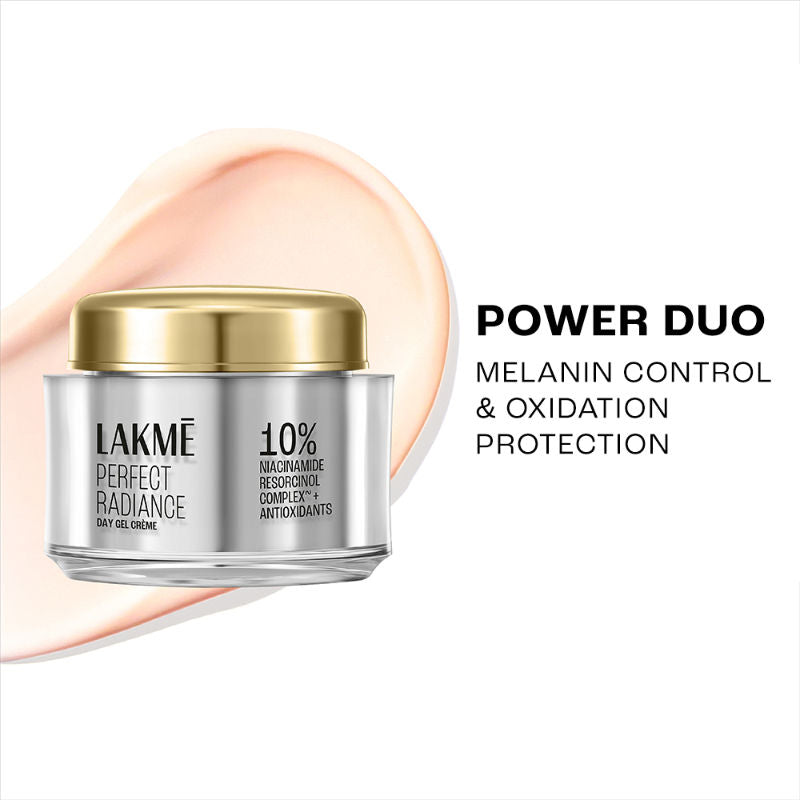
Lakme Absolute Perfect Radiance Skin Brightening Day Creme

Lakme Absolute Perfect Radiance Skin Brightening Day Creme
Lakme
lakme-absolute-perfect-radiance-skin-brightening-day-creme
Moisturize
10084821729573
Morning or Evening?
How often will you use this product?
Notes


Highlights
WHAT IS IT?
Skin Brightening Day Creme, exact ingredient count not provided
FEATURES
Skin brightening, radiance enhancement, moisturizing
BEST FOR
normal
CHECKS
Who Is It For?
General Adult Users Gender Not SpecifiedWhat Does It Help With?
Brightening Skin Enhancing Radiance MoisturizingBudget
Affordable (under $30)How To Use
Which routine should it be used in?
Instructions:
Key Information

What Lakme Says
Product Description:
Explore the entire range of Face Moisturizer & Day Cream available on Nykaa. Shop more Lakme products here. You can browse through the complete world of Lakme Face Moisturizer & Day Cream.
About the Brand:
Ingredients Overview
Ingredients List
Water, Stearic acid, Palmitic acid, Niacinamide, Glycerine, Isopropyl Myristate, Ethylhexyl Methoxycinnamate, Titanium Dioxide, Aluminium Hydroxide, Potassium Hydroxide, Cetyl Alcohol, Dimethicone, Butyl Methoxydibenzoylmethane, Perfume, Sodium Ascorbyl Phosphate, Tocopheryl Acetate, Allantoin, Acrylates/Carbamates Copolymer, Ascorbic Acid Polypeptide, Disodium EDTA, Pyridoxine Hydrochloride, Lycopene, Cl 14700, Methyl Paraben, Phenoxyethanol, Propyl Paraben
Key Ingredients
Niacinamide, Sunscreens
Ingredients Details
Allantoin
Common Name(s): 5-ureidohydantoin,glyoxyldiureide,aluminum dihydroxy allantoinate
CAS Number: 97-59-6
DESCRIPTION
What It Does: Soothes irritation, accelerates wound healing, promotes skin cell renewal, and provides mild keratolytic exfoliation.
Why It's Used: Gold standard multi-function soothing active – one of the most widely used cosmetic ingredients across all product types for its exceptional tolerability and clinically proven multi-action skin conditioning.
How It Works: Promotes keratinocyte proliferation and fibroblast migration for wound healing. mild keratolytic activity by disrupting corneocyte binding. anti-irritant via direct protein binding and anti-inflammatory cytokine reduction. humectant activity via hydroxyl groups.
Typically Found In: Post-procedure products,sensitive skin formulas,wound care,anti-acne treatments,baby products
TECHNICAL DETAILS
Primary Category: Active ingredient – soothing / anti-inflammatory
Secondary Functions: Wound healing,keratolytic,anti-irritant
Application Areas:

Facial Skincare
Body Care

Hair Care
Beard Care
Color Cosmetics (Makeup)
Dietary/Oral Supplements
Typical Concentration Range: 0.1%–2%
SOURCING & ETHICS
Vegan Status: Yes – synthetic or comfrey-derived
Halal Status: Yes
Source Notes: Plant-derived extract or synthetic.
SKIN COMPATIBILITY
Irritancy Rating: 1/5 – very low
Comedogenicity Rating: 0/5 – non-comedogenic
Sensitivity Concerns: Exceptionally well-tolerated; suitable for all skin types including baby and compromised skin.
Safe for Sensitive Skin: Yes – particularly recommended for sensitive skin
SAFETY & COMPATIBILITY
Safety Profile: Excellent safety profile. ewg score: 1.
Works Well With: Ceramides,panthenol,allantoin,hyaluronic acid,centella asiatica
Avoid Combining With: No significant incompatibilities
SCIENTIFIC NOTE
Allantoin's keratinocyte proliferation stimulation occurs via receptor-mediated signaling (possibly machr activation) rather than non-specific irritation-driven proliferation, making it a true wound-healing stimulant rather than a pro-inflammatory proliferative signal.
Last Verified: Cosing database,cir safety assessment,araújo et al. allantoin review
Primary Sources: 2026-03-12
Ascorbic Acid Polypeptide
Common Name(s): Ascorbic acid polypeptide
DESCRIPTION
What It Does: Supports anti-aging skin structure by stimulating collagen and elastin synthesis and modulating skin matrix metalloproteinase activity.
Why It's Used: Peptide sequences mimic endogenous skin communication molecules, triggering cellular responses that decline with age — restoring youthful skin structure.
How It Works: Specific amino acid sequences bind to cell surface receptors or penetrate to fibroblasts where they activate growth factor pathways, tgf-β signaling, or mmp-inhibiting mechanisms, stimulating ecm remodeling.
Typically Found In: Anti-aging serums,ampoules,eye creams,firming moisturizers
TECHNICAL DETAILS
Primary Category: Bioactive peptides
Secondary Functions: Anti-aging,skin-conditioning
Application Areas:
Facial Skincare
Body Care
Hair Care
Beard Care
Color Cosmetics (Makeup)
Dietary/Oral Supplements
Typical Concentration Range: 0.001–2%
SOURCING & ETHICS
Vegan Status: Yes
Halal Status: Yes
Source Notes: Synthetic or recombinant peptide; no animal-derived material.
SKIN COMPATIBILITY
Irritancy Rating: 1
Comedogenicity Rating: 0
Sensitivity Concerns: Low sensitization potential at recommended use concentrations.
Safe for Sensitive Skin: Yes
SAFETY & COMPATIBILITY
Safety Profile: Well-characterized cosmetic ingredient with established safety profile. generally non-irritating at typical use concentrations. suitable for leave-on and rinse-off cosmetics.
Works Well With: Retinol,vitamin c,hyaluronic acid,niacinamide
Avoid Combining With: Proteolytic enzymes (papain, bromelain); extreme ph
SCIENTIFIC NOTE
Cosmetic peptides are typically 2–10 amino acids, short enough for transdermal penetration but specific enough for receptor binding. their bioactivity depends on sequence (primary structure), lipophilization (e.g., palmitoyl modification increases skin penetration 10-fold), and resistance to skin proteases — often achieved through d-amino acid substitution or terminal modifications.
Last Verified: Cosing eu database; pcpc cosmetic ingredient safety reviews; j pept sci peptide cosmetic reviews; j cosmet dermatol clinical studies
Primary Sources: 2025-01-15
Butyl Methoxydibenzoylmethane
Common Name(s): Butyl methoxydibenzoylmethane,organic uv filter,photostabilising sunscreen active
CAS Number: N/a
DESCRIPTION
What It Does: Absorbs uv radiation at specific wavelengths (uva 320–400 nm, uvb 290–320 nm) and dissipates photon energy as heat rather than skin-damaging photochemical reactions.
Why It's Used: Organic uv filters are chosen for their high molar extinction coefficient, specific spectral coverage, and formulation compatibility — individual filters are combined to provide broad-spectrum coverage across uva+uvb.
How It Works: Uv photon absorption by the aromatic chromophore π-system excites the molecule from s₀ ground state to s₁ excited state. rapid internal conversion or photoisomerisation dissipates energy as vibrational heat before it can initiate skin photodamage.
Typically Found In: Sunscreens,photoprotective products
TECHNICAL DETAILS
Primary Category: Active ingredient – cosmetic active
Secondary Functions: Skin conditioning
Application Areas:
Facial Skincare
Body Care
Hair Care
Beard Care
Color Cosmetics (Makeup)
Dietary/Oral Supplements
Typical Concentration Range: Check local sunscreen regulations
SOURCING & ETHICS
Vegan Status: Yes
Halal Status: Yes
Source Notes: Commercially produced for cosmetic use. verify vegan/halal status with supplier.
SKIN COMPATIBILITY
Irritancy Rating: 1/5 – very low
Comedogenicity Rating: 0/5 – non-comedogenic
Sensitivity Concerns: Well-tolerated by most skin types.
Safe for Sensitive Skin: Yes
SAFETY & COMPATIBILITY
Safety Profile: Good safety profile at recommended concentrations. ewg score: 1–2.
Works Well With: Standard skincare actives
Avoid Combining With: No known significant incompatibilities
SCIENTIFIC NOTE
Organic uv filters require photostabilisation (by avobenzone-octocrylene pairing, or triazine stabilisers) as some absorbers degrade on uv exposure — formulator must verify photostability of the chosen filter combination.
Last Verified: Cosing database,butyl methoxydibenzoylmethane organic uv filter review
Primary Sources: 2026-03-12
Cetyl Alcohol
Common Name(s): 1-hexadecanol,palmityl alcohol,n-cetyl alcohol
CAS Number: 36653-82-4
DESCRIPTION
What It Does: Provides c16 fatty alcohol emolliency and thickening for well-textured cosmetic emulsions.
Why It's Used: Lighter-textured fatty alcohol alternative to stearyl alcohol for creams and conditioners requiring less heavy emolliency.
How It Works: C16 chain length provides slightly lower melting point (49°c) than stearyl (60°c) giving softer, lighter emulsion texture. forms lamellar networks for thickening and stability. direct skin and hair conditioning via fatty alcohol film.
Typically Found In: Creams,hair conditioners,lotions
TECHNICAL DETAILS
Primary Category: Functional ingredient – fatty alcohol
Secondary Functions: Barrier sealing,softening
Application Areas:
Facial Skincare
Body Care
Hair Care
Beard Care
Color Cosmetics (Makeup)
Dietary/Oral Supplements
Typical Concentration Range: 1%–15%
SOURCING & ETHICS
Vegan Status: Yes – from vegetable or coconut/palm fatty acids
Halal Status: Yes
Source Notes: Plant-derived, synthetic or animal-derived. verify source.
SKIN COMPATIBILITY
Irritancy Rating: 1/5 – very low
Comedogenicity Rating: 1/5 – low; formulation-dependent
Sensitivity Concerns: Non-irritating.
Safe for Sensitive Skin: Yes
SAFETY & COMPATIBILITY
Safety Profile: Excellent safety profile. ewg score: 1.
Works Well With: Humectants,ceramides,actives as carrier
Avoid Combining With: No significant incompatibilities
SCIENTIFIC NOTE
Cetyl alcohol's c16 chain length is at the approximate thermal transition point for fatty alcohol lamellar crystallization at skin temperature (33°c). this transition (from ordered crystalline to disordered liquid phase near skin temperature) provides the characteristic 'melts on application' sensory profile that makes cetyl alcohol-containing products feel cooling and light on initial application.
Last Verified: Cosing database,cir safety assessment
Primary Sources: 2026-03-12
