

Nykaa E retail limited
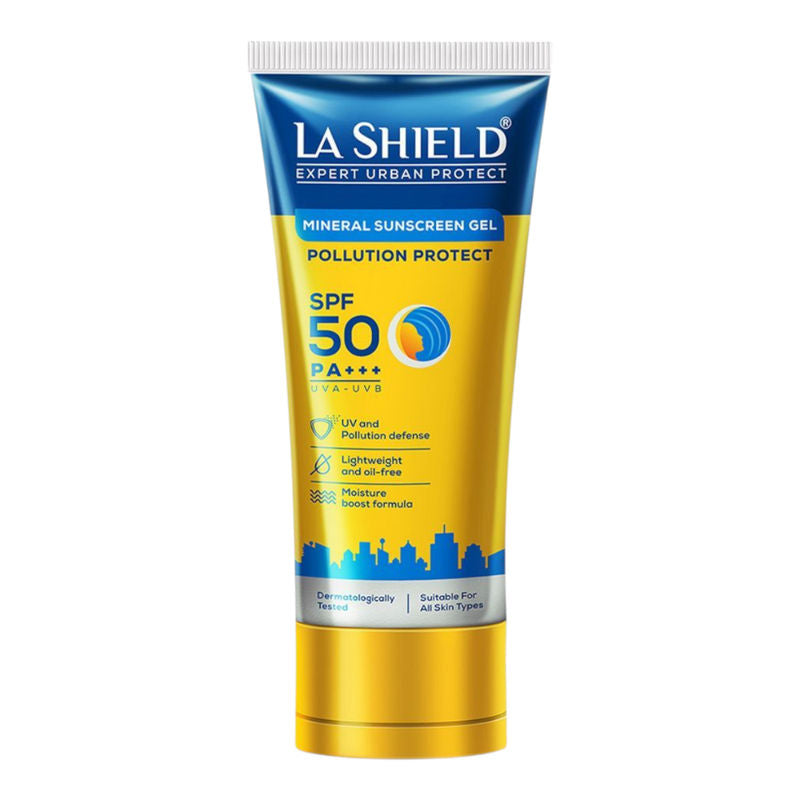
La Shield Mineral Sunscreen Gel Pollution Protect SPF 50 PA+++ UVA/UVB

La Shield Mineral Sunscreen Gel Pollution Protect SPF 50 PA+++ UVA/UVB
Nykaa E retail limited
la-shield-mineral-sunscreen-gel-pollution-protect-spf-50-pa-uva-uvb
Suncare
10085023875365
Morning or Evening?
How often will you use this product?
Notes


Highlights
WHAT IS IT?
Mineral sunscreen gel
FEATURES
Hydrating sunscreen, Moisture boost formula, Enriched with mineral filters (zinc oxide, titanium dioxide), Sweatproof, Water-resistant, Dermatologist prescribed, Paraben-free, Sulfate-free, Alcohol-free
BEST FOR
normal
CHECKS
No alcohol, No parabens, No sulfates
Who Is It For?
What Does It Help With?
Protection From Uva And Uvb Rays Protection From Microparticulate Pollutants Keeps Skin Soft And HydratedBudget
Affordable (under $30)How To Use
Which routine should it be used in?
Instructions:
Key Information

What Nykaa E retail limited Says
Product Description:
La Shield Pollution Protect SPF 50 & PA+++ Mineral Sunscreen Gel intends to protect your skin from such microparticulate pollutants. Its key formulation provides ultimate protection from harmful UVA and UVB rays. With features such as alcohol-free, paraben-free, and lack of color additives, this sunscreen is safe for your skin. This SPF 50 mineral sunscreen gel keeps your skin soft and hydrated at all times. Features: Moisture boost formula: This is a hydrating sunscreen that helps boost skin moisture and makes your skin soft and supple. It makes a good base for makeup as well. Enriched with mineral filters: Key ingredients such as zinc oxide and titanium dioxide help deflect UV rays instead of absorbing them into the skin. Sweatproof and water-resistant: This lightweight sunscreen is sweatproof and non-oily, which makes it last longer on your skin. It is also a water-resistant formulation. Dermatologist prescribed: This sunscreen meets stringent standards for safety and efficacy, ensuring trusted protection for your skin. It comes from Glenmark Pharmaceuticals and is prescribed by dermatologists across India. Paraben and sulphate free: This sunscreen is paraben-free and sulfate-free, eliminating all potentially harmful preservatives for safer sun protection.
About the Brand:
Ingredients Overview
Ingredients List
Purified-Water,Octinoxate,Zinc-Oxide,Titanium-Dioxide,Diisopropyl-Sebacate,Propylene-Glycol,Dicaprylate/dicaprate,Caprylyl-Methicone,C12-15-alkyl-Benzoate,Diisopropyl-Adipate,Bis-Ethylhexyloxyphenol-Methoxyphenyl-Triazine,Cetearyl-Alcohol,Brassica-Campestris/Aleurites-Fordi-Oil-Copolymer,Diethylamino-Hydroxybenzoyl-Hexyl-Benzoate,Diethylhexyl-Butamido-Triazone,Phenoxyethanol,C20-22-Alkyl-Phosphate,Hydroxyethyl-Acrylate/Sodium-Acryloyldimethyl-Taurate-Copolymer,Coco-Glucoside,C20-22-Alcohols,Isohexadecane,Fragrances,Aluminium-Hydroxide,Stearic-Acid,Caprylyl/Capryl-Glucoside,Xantham-Gum,Polysorbate-60,Ethylhexylglycerin,Trolamine,Disodium-Edetate,Sorbitan-Isostearate
Key Ingredients
Zinc Oxide, Titanium Dioxide, Octinoxate
Ingredients Details
Coco-glucoside
Common Name(s): Coconut glucoside,apg c8-c16
CAS Number: 68515-73-1
DESCRIPTION
What It Does: Provides gentle, natural-origin cleansing with good foam from mixed coconut chain alkyl glucosides.
Why It's Used: Widely used natural surfactant for green beauty formulations requiring good foam performance with natural-origin and mild credentials.
How It Works: Mixed c8-c16 fatty alcohol chain lengths from coconut provide broader foam stability than single-chain glucosides. non-ionic glucoside headgroup provides mildness. better detergency and rinsing than individual chain-length apgs due to mixed chain distribution.
Typically Found In: Natural shampoos,body washes,facial cleansers
TECHNICAL DETAILS
Primary Category: Functional ingredient – coconut alkyl glucoside
Secondary Functions: Skin conditioning
Application Areas:

Facial Skincare
Body Care
Hair Care

Beard Care
Color Cosmetics (Makeup)
Dietary/Oral Supplements
Typical Concentration Range: 2%–20%
SOURCING & ETHICS
Vegan Status: Yes – from coconut fatty alcohols and glucose
Halal Status: Yes
Source Notes: Commercially produced for cosmetic use. verify vegan/halal status with supplier.
SKIN COMPATIBILITY
Irritancy Rating: 1/5 – very low
Comedogenicity Rating: 0/5 – non-comedogenic
Sensitivity Concerns: Well-tolerated by most skin types.
Safe for Sensitive Skin: Yes
SAFETY & COMPATIBILITY
Safety Profile: Good safety profile at recommended concentrations. ewg score: 1–2.
Works Well With: Standard skincare actives
Avoid Combining With: No known significant incompatibilities
SCIENTIFIC NOTE
Coco-glucoside's natural chain length distribution (c8-c16) provides synergistic surfactant effects where different chain lengths optimize different properties: shorter chains provide initial foam burst, longer chains provide foam stability and soil removal, creating better overall performance than any single chain length alone.
Last Verified: Cosing database,cir safety assessment
Primary Sources: 2026-03-12
Ethylhexylglycerin
Common Name(s): Octylglycerin,2-ethylhexyl glycerol ether,sensiva sc 10
CAS Number: 70445-33-9
DESCRIPTION
What It Does: Provides antimicrobial skin conditioning with deodorant activity and preservation system enhancement.
Why It's Used: Multifunctional clean beauty preservation active — ethylhexylglycerin provides antimicrobial, deodorant, and skin conditioning in a single ingredient accepted in most natural cosmetic certification schemes.
How It Works: Glycerol ether provides antimicrobial via bacterial membrane phospholipid disruption. deodorant activity via reduction of underarm lipase enzyme activity (similar mechanism to triethyl citrate). skin conditioning from glycerol humectant component. synergistic with phenoxyethanol and diols.
Typically Found In: Natural preservation systems,deodorants,skin conditioning products
TECHNICAL DETAILS
Primary Category: Functional ingredient – antimicrobial glycerol ether
Secondary Functions: Skin conditioning
Application Areas:
Facial Skincare
Body Care
Hair Care
Beard Care
Color Cosmetics (Makeup)
Dietary/Oral Supplements
Typical Concentration Range: 0.1%–0.5%
SOURCING & ETHICS
Vegan Status: Yes – synthetic
Halal Status: Yes
Source Notes: Commercially produced for cosmetic use. verify vegan/halal status with supplier.
SKIN COMPATIBILITY
Irritancy Rating: 1/5 – very low
Comedogenicity Rating: 0/5 – non-comedogenic
Sensitivity Concerns: Well-tolerated by most skin types.
Safe for Sensitive Skin: Yes
SAFETY & COMPATIBILITY
Safety Profile: Good safety profile at recommended concentrations. ewg score: 1–2.
Works Well With: Standard skincare actives
Avoid Combining With: No known significant incompatibilities
SCIENTIFIC NOTE
Ethylhexylglycerin's deodorant mechanism is pharmacologically identical to triethyl citrate: both inhibit skin surface microbial lipase enzymes that convert odourless triglycerides to odorous free fatty acids. the glycerol ether structure of ethylhexylglycerin, combined with the 2-ethylhexyl chain, provides lipase inhibition similar to ester-based lipase inhibitors from a different chemical class.
Last Verified: Cosing database,schülke sensiva sc 10 technical data,cir safety assessment
Primary Sources: 2026-03-12
Isohexadecane
Common Name(s): Permethyl 101a,c16 isoparaffin
DESCRIPTION
What It Does: Provides ultra-lightweight dry-touch emolliency with excellent pigment dispersion for lightweight formulations.
Why It's Used: Premium lightweight emollient for dry-touch formulations — isohexadecane's highly branched structure provides the lightest, driest application feel of common cosmetic hydrocarbons.
How It Works: Highly branched c16 isoparaffin provides very low surface tension for fast spreading. completely non-polar structure provides no water retention (dry feel). excellent pigment wetting for colour cosmetics. very low viscosity (2.5 cst) for fluid application.
Typically Found In: Lightweight foundations,sunscreens,colour cosmetics,dry-touch products
TECHNICAL DETAILS
Primary Category: Functional ingredient – branched hydrocarbon emollient
Secondary Functions: Barrier sealing,softening
Application Areas:
Facial Skincare
Body Care
Hair Care
Beard Care
Color Cosmetics (Makeup)
Dietary/Oral Supplements
Typical Concentration Range: 1%–30%
SOURCING & ETHICS
Vegan Status: Yes – synthetic hydrocarbon
Halal Status: Yes
Source Notes: Plant-derived, synthetic or animal-derived. verify source.
SKIN COMPATIBILITY
Irritancy Rating: 1/5 – very low
Comedogenicity Rating: 0/5 – non-comedogenic
Sensitivity Concerns: Non-irritating.
Safe for Sensitive Skin: Yes
SAFETY & COMPATIBILITY
Safety Profile: Excellent safety profile. ewg score: 1.
Works Well With: Humectants,ceramides,actives as carrier
Avoid Combining With: No significant incompatibilities
SCIENTIFIC NOTE
Isohexadecane's highly branched structure (methyl-substituted hexadecane) prevents the close molecular packing that creates liquid crystalline phases in linear hydrocarbons, resulting in a permanently disordered liquid state with very low viscosity and surface tension. this structural disorder from branching is the molecular basis for the lighter, faster-spreading application feel vs equivalent linear hydrocarbons.
Last Verified: Cosing database,cir safety assessment
Primary Sources: 2026-03-12
Octinoxate
Common Name(s): Octyl methoxycinnamate,omc,parsol mcx
CAS Number: 5466-77-3
DESCRIPTION
What It Does: Provides the most widely used uvb chemical filtration with light, elegant aesthetics.
Why It's Used: The global uvb standard — octyl methoxycinnamate's combination of potent uvb absorption, light texture, and global approval makes it the most-used chemical uvb filter worldwide.
How It Works: Trans-cinnamate chromophore absorbs uvb at λmax 308nm (εmax ~24,000 l/mol·cm). undergoes trans-cis photoisomerisation reducing uv protection over time — requires photostabilisation with avobenzone or octocrylene. oil-soluble for elegant formulation.
Typically Found In: Sunscreens,foundation with spf,tinted moisturisers
TECHNICAL DETAILS
Primary Category: Active ingredient – chemical uvb filter
Secondary Functions: Skin conditioning
Application Areas:
Facial Skincare
Body Care
Hair Care
Beard Care
Color Cosmetics (Makeup)
Dietary/Oral Supplements
Typical Concentration Range: Up to 10% (eu), 7.5% (us fda)
SOURCING & ETHICS
Vegan Status: Yes – synthetic
Halal Status: Yes
Source Notes: Commercially produced for cosmetic use. verify vegan/halal status with supplier.
SKIN COMPATIBILITY
Irritancy Rating: 1/5 – very low
Comedogenicity Rating: 0/5 – non-comedogenic
Sensitivity Concerns: Well-tolerated by most skin types.
Safe for Sensitive Skin: Yes
SAFETY & COMPATIBILITY
Safety Profile: Eu max 10%. aquatic toxicity/coral reef concerns; hawaii and some us states restrict omc. requires photostabilisation for durable spf. ewg score: 5.
Works Well With: Standard skincare actives
Avoid Combining With: No known significant incompatibilities
SCIENTIFIC NOTE
Omc's trans-cis photoisomerisation (absorbing uv → converting trans to less-absorbing cis form) was identified as the mechanism for sunscreen product spf decay after uv exposure. this photodegradation led to development of octocrylene and avobenzone photostabilisation strategies — a pharmacokinetic discovery that fundamentally changed sunscreen formulation science.
Last Verified: Cosing database,fda uv filter otc monograph,eu cosmetics annex vi
Primary Sources: 2026-03-12
