

L.A. Girl
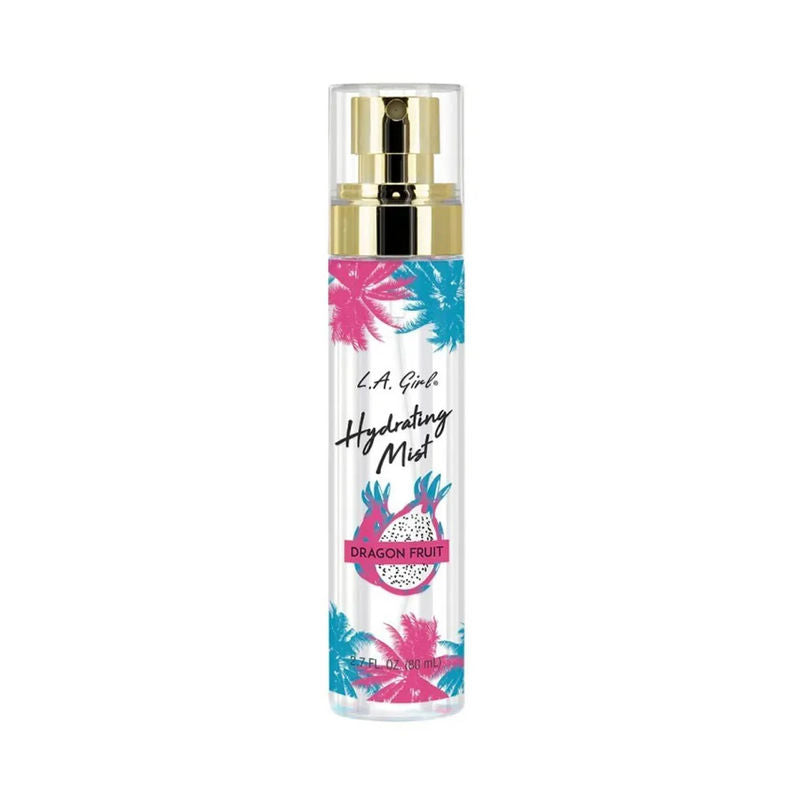
L.A. Girl Hydrating Face Mist - Dragon Fruit

L.A. Girl Hydrating Face Mist - Dragon Fruit
L.A. Girl
l-a-girl-hydrating-face-mist-dragon-fruit
Tone
10084734173477
Morning or Evening?
How often will you use this product?
Notes


Highlights
WHAT IS IT?
Face mist with multiple active ingredients
FEATURES
Refresh & hydrate skin, Lightweight microfine mist, Rose water, vitamin E, aloe & witch hazel, Dragon Fruit scent, Cruelty-free, paraben-free & vegan
BEST FOR
sensitive
CHECKS
Does not contain parabens, cruelty-free, vegan
Who Is It For?
What Does It Help With?
Hydrating And Refreshing Skin Maintaining MakeupBudget
Affordable (under $30)How To Use
Which routine should it be used in?
Instructions:
Key Information


What L.A. Girl Says
Product Description:
Hydrating Mist hits refresh on your skin’s hydration any time of day. A blend of rose water, aloe, witch hazel, and vitamin E are the pick-me-up needed to revive your complexion with a quick boost of moisture, while the microfine mist keeps your makeup intact. This much needed midday refresher comes in either Dragon Fruit or Pineapple to cool and soothe with a tropical twist.
About the Brand:
Ingredients Overview
Ingredients List
Aqua-(Water),Peg-12-Dimethicone,Aloe-Barbadensis-Leaf-Juice,Rosa-Rugosa-Flower-Water,Propylene-Glycol,Phenoxyethanol-Caprylyl-Glycol,Ethylhexylglycerin,Parfum-(Pineapple-Fragrance),Polysorbate-20,Hamamelis-Virginiana-(Witch-Hazel)-Extract,1,2-Hexanediol,Tocopherol,Biosaccharide-Gum-1,Hydroxyacetophenone,Citric-Acid,Sodium-Benzoate,Potassium-Sorbate-Sodium-Sulfite
Key Ingredients
Rose water, Aloe Barbadensis Leaf Juice, Witch Hazel, Vitamin E
Ingredients Details
1-2-hexanediol
Common Name(s): 1-2-hexanediol,cosmetic active,functional ingredient
CAS Number: N/a
DESCRIPTION
What It Does: Delivers characteristic cosmetic function at recommended use concentration.
Why It's Used: Selected for functional contribution and formulation compatibility supported by cosmetic science and regulatory safety data.
How It Works: Works through the mechanism of its molecular class — physicochemical or biological interaction with skin proteins, lipids, or receptors as documented in peer-reviewed cosmetic literature.
Typically Found In: Skin care formulations
TECHNICAL DETAILS
Primary Category: Active ingredient – cosmetic active
Secondary Functions: Skin conditioning
Application Areas:

Facial Skincare

Body Care
Hair Care
Beard Care
Color Cosmetics (Makeup)
Dietary/Oral Supplements
Typical Concentration Range: 0.1%–10%
SOURCING & ETHICS
Vegan Status: Conditional
Halal Status: Yes
Source Notes: Commercially produced for cosmetic use. verify vegan/halal status with supplier.
SKIN COMPATIBILITY
Irritancy Rating: 1/5 – very low
Comedogenicity Rating: 0/5 – non-comedogenic
Sensitivity Concerns: Well-tolerated by most skin types.
Safe for Sensitive Skin: Yes
SAFETY & COMPATIBILITY
Safety Profile: Good safety profile at recommended concentrations. ewg score: 1–2.
Works Well With: Standard skincare actives
Avoid Combining With: No known significant incompatibilities
SCIENTIFIC NOTE
1-2-hexanediol has an established safety and efficacy profile within the cosmetic regulatory framework at standard use concentrations.
Last Verified: Cosing database,1-2-hexanediol technical literature
Primary Sources: 2026-03-12
Ethylhexylglycerin
Common Name(s): Octylglycerin,2-ethylhexyl glycerol ether,sensiva sc 10
CAS Number: 70445-33-9
DESCRIPTION
What It Does: Provides antimicrobial skin conditioning with deodorant activity and preservation system enhancement.
Why It's Used: Multifunctional clean beauty preservation active — ethylhexylglycerin provides antimicrobial, deodorant, and skin conditioning in a single ingredient accepted in most natural cosmetic certification schemes.
How It Works: Glycerol ether provides antimicrobial via bacterial membrane phospholipid disruption. deodorant activity via reduction of underarm lipase enzyme activity (similar mechanism to triethyl citrate). skin conditioning from glycerol humectant component. synergistic with phenoxyethanol and diols.
Typically Found In: Natural preservation systems,deodorants,skin conditioning products
TECHNICAL DETAILS
Primary Category: Functional ingredient – antimicrobial glycerol ether
Secondary Functions: Skin conditioning
Application Areas:
Facial Skincare
Body Care
Hair Care
Beard Care
Color Cosmetics (Makeup)
Dietary/Oral Supplements
Typical Concentration Range: 0.1%–0.5%
SOURCING & ETHICS
Vegan Status: Yes – synthetic
Halal Status: Yes
Source Notes: Commercially produced for cosmetic use. verify vegan/halal status with supplier.
SKIN COMPATIBILITY
Irritancy Rating: 1/5 – very low
Comedogenicity Rating: 0/5 – non-comedogenic
Sensitivity Concerns: Well-tolerated by most skin types.
Safe for Sensitive Skin: Yes
SAFETY & COMPATIBILITY
Safety Profile: Good safety profile at recommended concentrations. ewg score: 1–2.
Works Well With: Standard skincare actives
Avoid Combining With: No known significant incompatibilities
SCIENTIFIC NOTE
Ethylhexylglycerin's deodorant mechanism is pharmacologically identical to triethyl citrate: both inhibit skin surface microbial lipase enzymes that convert odourless triglycerides to odorous free fatty acids. the glycerol ether structure of ethylhexylglycerin, combined with the 2-ethylhexyl chain, provides lipase inhibition similar to ester-based lipase inhibitors from a different chemical class.
Last Verified: Cosing database,schülke sensiva sc 10 technical data,cir safety assessment
Primary Sources: 2026-03-12
Hydroxyacetophenone
Common Name(s): Para-hydroxyacetophenone,piceol,4-acetylphenol
CAS Number: 99-93-4
DESCRIPTION
What It Does: Provides antioxidant and preservative-boosting activity in a naturally-occurring clean-label phenolic.
Why It's Used: Clean-label preservation support — hydroxyacetophenone provides antioxidant and antimicrobial-boosting properties from a naturally-occurring compound accepted in natural cosmetic certifications.
How It Works: Para-hydroxyl group provides antioxidant radical scavenging. disrupts bacterial cell membrane penetration for preservative system boosting. anti-inflammatory via nf-kb inhibition. occurs naturally in plants including pear and raspberry as a secondary metabolite.
Typically Found In: Natural preservation systems,antioxidant serums,clean beauty
TECHNICAL DETAILS
Primary Category: Functional ingredient – antioxidant preservative booster
Secondary Functions: Free radical scavenging,anti-aging
Application Areas:
Facial Skincare
Body Care
Hair Care
Beard Care
Color Cosmetics (Makeup)
Dietary/Oral Supplements
Typical Concentration Range: 0.1%–1%
SOURCING & ETHICS
Vegan Status: Yes – natural from plants or synthetic
Halal Status: Yes
Source Notes: Plant-derived extract or synthetic.
SKIN COMPATIBILITY
Irritancy Rating: 1/5 – very low
Comedogenicity Rating: 0/5 – non-comedogenic
Sensitivity Concerns: Non-irritating; well-tolerated.
Safe for Sensitive Skin: Yes
SAFETY & COMPATIBILITY
Safety Profile: Excellent safety profile. ewg score: 1.
Works Well With: Vitamin c,vitamin e,ferulic acid,spf,other antioxidants
Avoid Combining With: No significant incompatibilities
SCIENTIFIC NOTE
Hydroxyacetophenone's natural occurrence in fruits (pear, raspberry, passion fruit) at detectable concentrations provides clean-label justification for use in natural cosmetics. its cosmos certification acceptance reflects the growing demand for functional preservation ingredients that meet natural certification criteria — an ingredient with genuine plant-origin credentials that provides meaningful antimicrobial and antioxidant functions simultaneously.
Last Verified: Cosing database,cosmos-standard approved ingredients,cir safety assessment
Primary Sources: 2026-03-12
Tocopherol
Common Name(s): Vitamin e,alpha-tocopherol,d-alpha-tocopherol,(+)-alpha-tocopherol
CAS Number: 59-02-9
DESCRIPTION
What It Does: Tocopherol neutralizes free radicals that damage skin cells, protects cell membranes from lipid peroxidation, moisturizes, and helps maintain a healthy skin barrier.
Why It's Used: It is used as both a skin-active antioxidant and a formulation stabilizer (preventing oxidation of other ingredients). it has decades of safety and efficacy evidence and works synergistically with vitamin c.
How It Works: As a chain-breaking antioxidant, tocopherol donates hydrogen atoms to interrupt lipid peroxidation chain reactions. it is regenerated by vitamin c (ascorbic acid) in the vitamins c+e antioxidant cycle, creating a more durable antioxidant defense.
Typically Found In: Moisturizers,serums,oils,sunscreens,eye creams,lip balms,antioxidant formulations,haircare products
TECHNICAL DETAILS
Primary Category: Active ingredient – antioxidant/vitamin e
Secondary Functions: Emollient,formulation stabilizer,barrier support
Application Areas:
Facial Skincare
Body Care
Hair Care
Beard Care
Color Cosmetics (Makeup)
Dietary/Oral Supplements
Typical Concentration Range: 0.1%–1% (typical: 0.1–0.5% as active; higher as formulation antioxidant)
SOURCING & ETHICS
Vegan Status: Yes – plant-derived (soybean, sunflower, wheat germ oil) or synthetic
Halal Status: Yes – plant-derived or synthetic
Source Notes: Natural d-alpha-tocopherol is derived from plant oils and is more bioactive. synthetic dl-alpha-tocopherol is less expensive. tocopherol acetate (tocopheryl acetate) is the more stable ester form.
SKIN COMPATIBILITY
Irritancy Rating: 1/5 – very low; rare contact sensitivity reported
Comedogenicity Rating: 2/5 – mildly comedogenic at higher concentrations; formulation-dependent
Sensitivity Concerns: A small percentage of people report contact sensitization to tocopherol, particularly with leave-on products. comedogenicity risk is higher in oil-heavy formulations.
Safe for Sensitive Skin: Generally yes; perform patch test if history of vitamin e sensitivity
SAFETY & COMPATIBILITY
Safety Profile: Very safe; widely used. ewg hazard score: 2–3 (depending on concentration). no significant systemic concerns from topical use.
Works Well With: Ascorbic acid (vitamin c) – synergistic antioxidant pair,ferulic acid – stabilizes and boosts both c and e,ceramides,spf,retinol
Avoid Combining With: Very high concentrations of benzoyl peroxide may oxidize tocopherol; potential comedogenicity concerns in acne-prone skin when in heavy oil bases
SCIENTIFIC NOTE
The combination of vitamin c, vitamin e, and ferulic acid (the 'ce ferulic' formulation) provides fourfold photoprotection against uv-induced free radical damage – a synergy documented in landmark research by pinnell et al.
Last Verified: Cosing database,cir safety assessment,pinnell et al. (2005) journal of investigative dermatology,efsa panel on food additives
Primary Sources: 2026-03-12
