
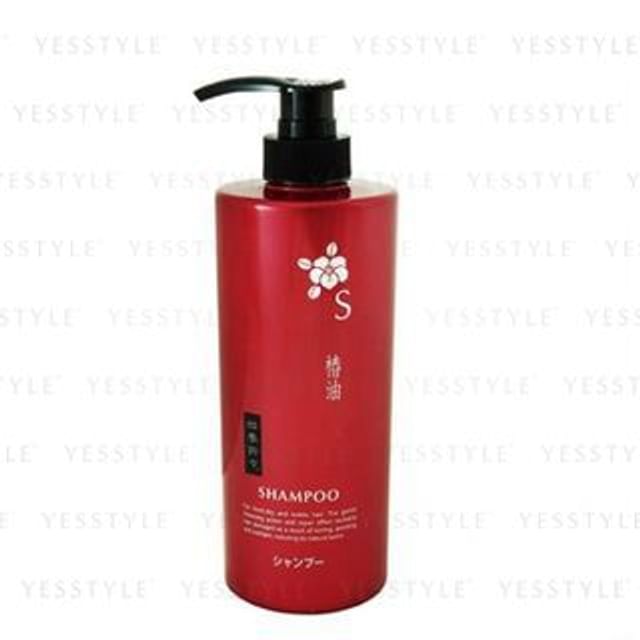

KUMANO COSME
KUMANO COSME - Shikioriori Tsubaki Shampoo
A Japanese shampoo formulated with camellia oil to moisturize hair and scalp, resulting in smooth and glossy hair. It also contains amino acids and ceramide AP to control hair tangling, making hair soft and shiny, while preventing dry scalp. The shampoo is free from silicone and has a mildly acidic pH, nourishing both hair and scalp.
Sulfate-free
Paraben-free
Color-safe
Silicone-free
Natural
Protein-free
Optimized for Your Environment & Lifestyle
Nykaa
In stock
Recommended

KUMANO COSME - Shikioriori Tsubaki Shampoo
KUMANO COSME
kumano-cosme-shikioriori-tsubaki-shampoo
Shampoo
10523329036581
Morning or Evening?
How often will you use this product?
Notes


Secure payment protection
Your Biodata Compatibility Analysis
Based on your 6 hair health indices and environmental factors
Poor Match
Significant incompatibilities
Growth Cycle Health Index
Hair Match
Hair Health Index Alignment
Optimal for OSI, SSI, DI, HSI
Ingredient Efficacy
Matching Ingredient Score
Environment Compatibility
Current UV, Air Quality & Humidity
Why This Works for Your Specific Profile
Damage Index:
Very healthy or severely damaged hair falls outside optimal treatment parameters
Water Quality:
Soft or moderately hard water does not require intensive treatment causing over-cleansing and dryness
Hair:
Closed cuticles resist product penetration causing surface buildup without internal benefits
Active Lifestyle:
High activity and frequent washing rapidly strip product benefits requiring excessive reapplication
Your Hair Profile Integration
Your Hair Archetype

Density Level

Washing Frequency

Shedding Level

Oil Level
Your Hair Health Indices
Oil Secretion (OSI)
Very low oil production
Scalp Sensitivity (SSI)
Very low sensitivity
Growth Rate (CMR)
Poor metabolism rate
Damage Index (DI)
Minimal damage
Hair Strength (HSI)
Very weak strength
Softness Index (SI)
Significant improvement needed
Water & Environmental Integration

Water:


Expected Results & Timeline
Key Highlights

What is it?
Shampoo with 600ml volume

Who Is It For
Adults, Unisex

Budget
$24.40 - $48.80

Timeline
Immediate to 1 week
Why You’ll Love It

What Does It Help With?
Dryness, Frizz, Breakage, Split Ends, Dullness, Scalp Issues

Best for
Damage Repair

Features
Contains camellia oil, amino acids, ceramide AP; free from silicone; mildly acidic pH

Checks
Paraben-free, Silicone-free, Sulfate-free
Ingredients Overview
Ingredients List
water, sodium-laureth-sulfate, propylene-glycol, cocamide-dea, cocamidopropyl-betaine, glycol-distearate, sodium-chloride, stearamidopropyl-dimethylamine, guar-hydroxypropyltrimonium-chloride, camellia-japonica-seed-oil, sodium-hyaluronate, hydrolyzed-silk, cetyl-pg-hydroxyethyl-palmitamide, arginine, glycerin, butylene-glycol, citric-acid, tetrasodium-edta, alcohol-denat, sodium-benzoate, fragrance
Key Ingredients
Camellia Japonica Seed Oil, Sodium Hyaluronate, Hydrolyzed Silk, Amino Acids, Ceramide AP
Ingredients Details
Amino Acids
Common Name(s): Amino acids,cosmetic active,functional ingredient
CAS Number: N/a
DESCRIPTION
What It Does: Delivers characteristic cosmetic function — skin conditioning, protection, preservation, or active biological benefit — at recommended use concentration.
Why It's Used: Selected for its functional contribution and formulation compatibility — supported by cosmetic science literature and regulatory safety assessment.
How It Works: Works through the mechanism of its molecular class — physicochemical interaction with the formulation or biological interaction with skin proteins, lipids, or receptors as documented in peer-reviewed literature.
Typically Found In: Skin care formulations
TECHNICAL DETAILS
Primary Category: Active ingredient – cosmetic active
Secondary Functions: Skin conditioning
Application Areas:

Facial Skincare

Body Care
Hair Care
Beard Care
Color Cosmetics (Makeup)
Dietary/Oral Supplements
Typical Concentration Range: 0.1%–10%
SOURCING & ETHICS
Vegan Status: Conditional
Halal Status: Yes
Source Notes: Commercially produced for cosmetic use. verify vegan/halal status with supplier.
SKIN COMPATIBILITY
Irritancy Rating: 1/5 – very low
Comedogenicity Rating: 0/5 – non-comedogenic
Sensitivity Concerns: Well-tolerated by most skin types.
Safe for Sensitive Skin: Yes
SAFETY & COMPATIBILITY
Safety Profile: Good safety profile at recommended concentrations. ewg score: 1–2.
Works Well With: Standard skincare actives
Avoid Combining With: No known significant incompatibilities
SCIENTIFIC NOTE
Amino acids delivers documented functional benefit with an established safety profile within the cosmetic regulatory framework (cosing eu, cir usa).
Last Verified: Cosing database,amino acids technical literature
Primary Sources: 2026-03-12
Arginine
Common Name(s): L-arginine,2-amino-5-guanidinopentanoic acid
CAS Number: 74-79-3
DESCRIPTION
What It Does: Conditions skin, attracts moisture, supports wound healing, and improves microcirculation via no synthesis.
Why It's Used: Multi-functional amino acid for skin hydration, conditioning, and wound healing in peptide and nmf formulations.
How It Works: Guanidinium group binds water (humectant). substrate for nitric oxide synthase (enos) producing nitric oxide that vasodilates capillaries improving skin nutrition. stimulates fibroblast proliferation for wound healing.
Typically Found In: Anti-aging serums,wound healing products,nmf moisturizers,scalp treatments
TECHNICAL DETAILS
Primary Category: Active ingredient – amino acid
Secondary Functions: Wound healing,microcirculation,nmf component
Application Areas:
Facial Skincare
Body Care
Hair Care
Beard Care
Color Cosmetics (Makeup)
Dietary/Oral Supplements
Typical Concentration Range: 0.5%–5%
SOURCING & ETHICS
Vegan Status: Yes – plant-derived or synthetic
Halal Status: Yes
Source Notes: Fermentation-derived or synthetic. natural skin component.
SKIN COMPATIBILITY
Irritancy Rating: 1/5 – very low
Comedogenicity Rating: 0/5 – non-comedogenic
Sensitivity Concerns: Non-irritating; endogenous skin molecule.
Safe for Sensitive Skin: Yes
SAFETY & COMPATIBILITY
Safety Profile: Excellent safety profile. natural skin nmf component. ewg score: 1.
Works Well With: Hyaluronic acid,ceramides,peptides,other amino acids
Avoid Combining With: No significant incompatibilities
SCIENTIFIC NOTE
Arginine is a conditionally essential amino acid in wound healing where local demand exceeds synthesis capacity. topical arginine provides the nos substrate locally for no-mediated vasodilation and immune cell function in healing tissue.
Last Verified: Cosing database,cir safety assessment,witte & barbul arginine wound healing review
Primary Sources: 2026-03-12
Camellia Japonica Seed Oil
Common Name(s): Camellia japonica seed oil
DESCRIPTION
What It Does: Nourishes and softens skin through its balanced fatty acid profile, while antioxidant compounds protect against oxidative skin damage.
Why It's Used: Plant oils provide physiologically compatible lipid structures that integrate into the skin barrier and deliver fat-soluble antioxidants directly to skin cells.
How It Works: Fatty acids integrate into stratum corneum lipid lamellae, reinforcing the lipid barrier. antioxidants (tocopherols, carotenoids, polyphenols) neutralize ros through electron donation or singlet oxygen quenching.
Typically Found In: Face oils,serums,moisturizers,hair treatments,body oils
TECHNICAL DETAILS
Primary Category: Plant oils
Secondary Functions: Emollient,antioxidant
Application Areas:
Facial Skincare
Body Care
Hair Care
Beard Care
Color Cosmetics (Makeup)
Dietary/Oral Supplements
Typical Concentration Range: 0.5–30%
SOURCING & ETHICS
Vegan Status: Yes
Halal Status: Yes
Source Notes: Cold-pressed or solvent-extracted plant oil; no animal components.
SKIN COMPATIBILITY
Irritancy Rating: 1
Comedogenicity Rating: 2
Sensitivity Concerns: Low sensitization potential at recommended use concentrations.
Safe for Sensitive Skin: Yes
SAFETY & COMPATIBILITY
Safety Profile: Well-characterized cosmetic ingredient with established safety profile. generally non-irritating at typical use concentrations. suitable for leave-on and rinse-off cosmetics.
Works Well With: Vitamin e,ceramides,other plant oils,squalane
Avoid Combining With: Strong oxidizers (accelerate rancidity)
SCIENTIFIC NOTE
Vegetable oils are triglyceride matrices where the fatty acid composition determines skin compatibility, barrier function, and comedogenicity. oleic acid-rich oils (>60%) soften barrier lipids and enhance penetration; linoleic acid-rich oils reinforce ceramide-poor stratum corneum; saturated fatty acid-rich oils provide occlusion without skin penetration.
Last Verified: Cosing eu database; pcpc cosmetic ingredient safety reviews; aocs plant oil composition databases; fatty acid pharmacology reviews
Primary Sources: 2025-01-15
Ceramide Ap
Common Name(s): Ceramide 6 ii,n-(2-hydroxy)-stearoyl phytosphingosine,alpha-hydroxy ceramide
CAS Number: 100403-19-8
DESCRIPTION
What It Does: Provides alpha-hydroxy ceramide for complementary barrier repair alongside ceramide np and eop.
Why It's Used: Essential barrier ceramide trio component — ceramide ap's alpha-hydroxy fatty acid provides the specific lamellar body formation chemistry needed for complete barrier restoration with ceramide np and ceramide eop.
How It Works: N-(2-hydroxyfatty acid) phytosphingosine: 2-hydroxylation of fatty acid is critical for optimal packing of ceramide ap in lamellar lipid bilayers. the alpha-hydroxy group creates stronger intermolecular hydrogen bonding between ceramide ap molecules than non-hydroxylated ceramides. used in combination with ceramide np and ceramide eop for comprehensive barrier repair.
Typically Found In: Complete barrier repair formulas,triple ceramide systems,eczema treatment
TECHNICAL DETAILS
Primary Category: Active ingredient – alpha-hydroxy ceramide
Secondary Functions: Skin conditioning
Application Areas:
Facial Skincare
Body Care
Hair Care
Beard Care
Color Cosmetics (Makeup)
Dietary/Oral Supplements
Typical Concentration Range: 0.01%–1%
SOURCING & ETHICS
Vegan Status: Conditional – plant-derived phytosphingosine available
Halal Status: Yes
Source Notes: Commercially produced for cosmetic use. verify vegan/halal status with supplier.
SKIN COMPATIBILITY
Irritancy Rating: 1/5 – very low
Comedogenicity Rating: 0/5 – non-comedogenic
Sensitivity Concerns: Well-tolerated by most skin types.
Safe for Sensitive Skin: Yes
SAFETY & COMPATIBILITY
Safety Profile: Good safety profile at recommended concentrations. ewg score: 1–2.
Works Well With: Standard skincare actives
Avoid Combining With: No known significant incompatibilities
SCIENTIFIC NOTE
The ceramide np + ceramide ap + ceramide eop triple combination mimics the natural ratio of ceramide classes in healthy stratum corneum (approximately 1:0.5:0.3 ratio). clinical studies comparing single ceramide vs triple ceramide barrier repair show significantly greater tewl reduction with triple ceramide combinations — the complementary molecular packing geometries of different ceramide classes creating a more complete lamellar bilayer than any single ceramide can provide.
Last Verified: Cosing database,elias & feingold barrier ceramide review
Primary Sources: 2026-03-12
Personalized Usage Instructions
How to Use
Step 1
Wet hair, apply an appropriate amount of shampoo, massage gently to create lather, then rinse thoroughly with water
Medical Chemicals

Protein/Moisture
- Moisture
pH Level
- Acidic

Porosity Taget
- Normal Porosity
Customized for Your Profile
Scalp Condtions
Anti-Dandruff, Seborrheic Dermatitis Safe, Sensitive Scalp, pH Balanced, Oil Control, Dry Scalp
Climate Suitability
Humid, Dry, Hard Water, Soft Water, UV Protection, Pollution Shield, Winter, Summer
Clinical Claims
Contains moisturizing ingredients like camellia oil, amino acids, and ceramide AP; free from silicone; mildly acidic pH
Frequency
Wet hair, apply an appropriate amount of shampoo, massage gently to create lather, then rinse thoroughly with water.
Product Information

Paraben-free
Silicone-free
Sulfate-free
